

Ghost Scorpion
This outsized scorpion has a translucent shell, allowing one to see through to the creature’s internal organs.
So named for their eerie, translucent carapaces, ghost scorpions are nocturnal desert hunters. A ghost scorpion’s body is 3 feet long with a 3-foot long tail, and it weighs 45 pounds.
N Small
Vermin includes insects, arachnids, other arthropods, worms, and similar invertebrates. Vermin have the following traits (unless otherwise noted in a creature’s entry).
• Darkvision 60 feet.
• Mindless: No Intelligence score, and immunity to all mind-affecting effects (charms, compulsions, morale effects, patterns, and phantasms).
• Proficient with its natural weapons only.
• Proficient with no armor.
• Vermin breathe, eat, and sleep.
Init +0; Senses 60 ft., 60 ft.; Perception +4
Darkvision is the extraordinary ability to see with no light source at all, out to a range specified. Darkvision is black-and-white only (colors cannot be discerned). It does not allow creatures to see anything that they could not see otherwise—invisible objects are still invisible, and illusions are still visible as what they seem to be. Likewise, darkvision subjects a creature to gaze attacks normally. The presence of light does not spoil darkvision.
Tremorsense (Ex) A creature with tremorsense is sensitive to vibrations in the ground and can automatically pinpoint the location of anything that is in contact with the ground. Aquatic creatures with tremorsense can also sense the location of creatures moving through water. This does not allow the creature to ignore any miss chance for concealment that would otherwise apply.
DEFENSE
AC 12, touch 11, flat-footed 12 (+1 natural, +1 size)
hp 13 (2d8+4)
Fort +5, Ref +0, Will +0
mind-affecting effects
Immunity (Ex or Su) A creature with immunities takes no damage from listed sources. Immunities can also apply to afflictions, conditions, spells (based on level, save type, or school), and other effects. A creature does not suffer any secondary effects that would normally be triggered by an effect it is immune to.
OFFENSE
Speed 30 ft.
Melee 2 claws +2 (1d3), sting +2 (1d3 plus )
Poison (Ex or Su) This creature can deliver poison by the method specified in its entry. The entry gives the poison’s save, frequency, effect, and cure. When no other formula is given, the save is usually Fortitude DC 10 + 1/2 the creature’s racial Hit Dice + its Constitution modifier. Neutralize poison and similar effects remove poison normally.
Special Attacks
Pounce (Ex) When this creature makes a charge, it can make a full attack with any weapons it has (including rake attacks if the creature also has the rake ability). It maintains this ability even when subject to the slow spell, and the full attack on a pounce still receives the extra attack from haste.
STATISTICS
Str 10, Dex 11, Con 14, Int —, Wis 10, Cha 2
Base Atk +1; +0; CMD 10 (22 vs. trip)
When performing a combat maneuver, you must use an action appropriate to the maneuver you are attempting to perform. While many combat maneuvers can be performed as part of an attack action, full-attack action, or attack of opportunity (in place of a melee attack), others require a specific action. Unless otherwise noted, performing a combat maneuver provokes an attack of opportunity from the target of the maneuver. If you are hit by the target, you take the damage normally and apply that amount as a penalty to the attack roll to perform the maneuver. If your target is immobilized, unconscious, or otherwise incapacitated, your maneuver automatically succeeds (treat as if you rolled a natural 20 on the attack roll). If your target is stunned, you receive a +4 bonus on your attack roll to perform a combat maneuver against it.
When you attempt to perform a combat maneuver, make an attack roll and add your CMB in place of your normal attack bonus. Add any bonuses you currently have on attack rolls due to spells, feats, and other effects. These bonuses must be applicable to the weapon or attack used to perform the maneuver. The DC of this maneuver is your target’s Combat Maneuver Defense. Combat maneuvers are attack rolls, so you must roll for concealment and take any other penalties that would normally apply to an attack roll.
If your attack roll equals or exceeds the CMD of the target, your maneuver is a success and has the listed effect. Some maneuvers, such as bull rush, have varying levels of success depending on how much your attack roll exceeds the target’s CMD. Rolling a natural 20 while attempting a combat maneuver is always a success (except when attempting to escape from bonds), while rolling a natural 1 is always a failure.
Skills Perception +4, Stealth +8
Racial Modifiers +4 Perception, +4 Stealth
ECOLOGY
Environment warm deserts or underground
Organization solitary, pair, nest (3–6)
Treasure none
SPECIAL ABILITIES
Poison (Ex) Sting—injury; save Fort DC 13; frequency 1/round for 4 rounds; effect 1 Str damage; cure 1 save.
Jackal
This sandy-colored canine resembles a slender-bodied wolf with short, graceful legs. It watches with dark brown eyes.
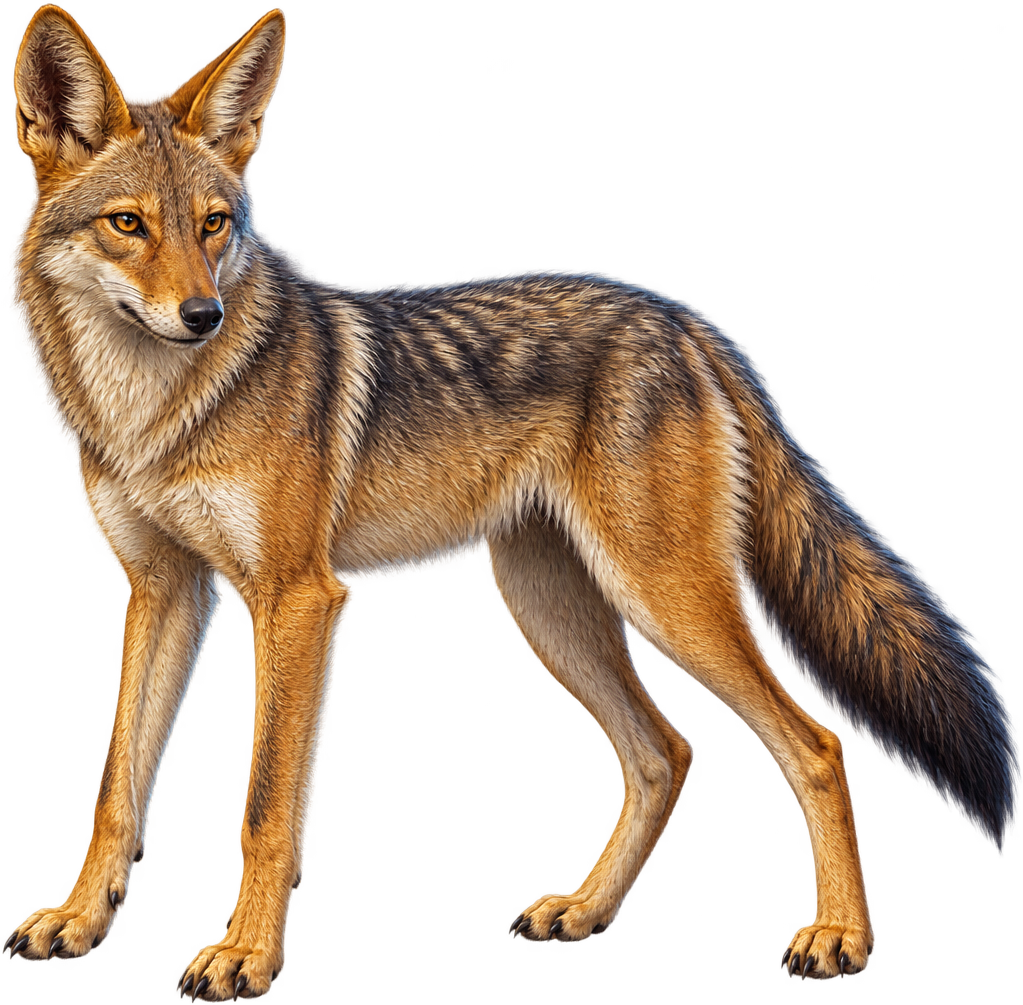
Jackals are usually encountered alone or as a mated pair, but sometimes they associate for a time with a small pack composed of two parents and their adult offspring, with the offspring serving a deferential support role to their parents. Although considered craven and foul by humans, jackals are relatively friendly and gentle with members of their own small packs.
Attracted to the edges of human settlements in their territory, jackals often make opportunistic raids on fruit crops and vulnerable domesticated animals. They’re also attracted to large deposits of garbage that they can sift through for leftover food. Jackals are remarkably adaptable, and readily forage for insects or fruit, feed on found carcasses, or hunt small or vulnerable game as the opportunity presents itself.
Jackals are notorious for their craftiness in evading pursuit, and they’ve been known to feign death when caught in order to lull opponents into complacency and gain another chance to escape. A jackal can attempt a Bluff check opposed by its opponent’s Sense Motive check to play dead. If successful, after combat ends, the jackal can begin a new encounter with surprise. During the surprise round, only the jackal and any opponents who succeeded on their Sense Motive checks can act.
N Small
An animal is a living, nonhuman creature, usually a vertebrate with no magical abilities and no innate capacity for language or culture. Animals usually have additional information on how they can serve as companions. An animal has the following traits (unless otherwise noted in a creature’s entry).
• Low-light vision.
• Intelligence score of 1 or 2 (no creature with an Intelligence score of 3 or higher can be an animal).
• Proficient with its natural weapons only. A noncombative herbivore treats its natural weapons as secondary attacks. Such attacks are made with a –5 penalty on the creature’s attack rolls, and the animal receives only 1/2 its Strength modifier as a damage adjustment.
• Proficient with no armor unless trained for war.
• Animals breathe, eat, and sleep.
Init +2; Senses , ; Perception +5
Low-Light Vision (Ex) A creature with low-light vision can see twice as far as a human in starlight, moonlight, torchlight, and similar conditions of dim light. It retains the ability to distinguish color and detail under these conditions.
Scent (Ex) Scent allows a creature to detect approaching enemies, sniff out hidden foes, and track by sense of smell. Creatures with the scent ability can identify familiar odors just as humans do familiar sights.
The creature can detect opponents within 30 feet by sense of smell. If the opponent is upwind, the range increases to 60 feet; if downwind, it drops to 15 feet. Strong scents, such as smoke or rotting garbage, can be detected at twice the ranges noted above. Overpowering scents, such as skunk musk or troglodyte stench, can be detected at triple normal range.
When a creature detects a scent, the exact location of the source is not revealed—only its presence somewhere within range. The creature can take a move action to note the direction of the scent. When the creature is within 5 feet of the source, it pinpoints the source’s location. This does not allow the creature to ignore any miss chance for concealment that would otherwise apply.
A creature with the scent ability can follow tracks by smell, making a Wisdom (or Survival) check to find or follow a track. The typical DC for a fresh trail is 10 (no matter what kind of surface holds the scent). This DC increases or decreases depending on how strong the quarry’s odor is, the number of creatures, and the age of the trail. For each hour that the trail is cold, the DC increases by 2. The ability otherwise follows the rules for the Survival skill. Creatures tracking by scent ignore the effects of surface conditions and poor visibility.
DEFENSE
AC 14, touch 13, flat-footed 12 (+2 Dex, +1 natural, +1 size)
hp 9 (1d8+5)
Fort +4, Ref +4, Will +1
OFFENSE
Speed 40 ft.
Melee bite +2 (1d4+1 plus )
Trip (Ex) This creature can attempt to trip its opponent as a free action without provoking an attack of opportunity if it hits with the specified attack. If the attempt fails, the creature is not tripped in return.
Special Attacks
STATISTICS
Str 13, Dex 15, Con 14, Int 2, Wis 13, Cha 6
Base Atk +0; +0; CMD 12 (16 vs. trip)
When performing a combat maneuver, you must use an action appropriate to the maneuver you are attempting to perform. While many combat maneuvers can be performed as part of an attack action, full-attack action, or attack of opportunity (in place of a melee attack), others require a specific action. Unless otherwise noted, performing a combat maneuver provokes an attack of opportunity from the target of the maneuver. If you are hit by the target, you take the damage normally and apply that amount as a penalty to the attack roll to perform the maneuver. If your target is immobilized, , or otherwise incapacitated, your maneuver automatically succeeds (treat as if you rolled a natural 20 on the attack roll). If your target is , you receive a +4 bonus on your attack roll to perform a combat maneuver against it.
When you attempt to perform a combat maneuver, make an attack roll and add your CMB in place of your normal attack bonus. Add any bonuses you currently have on attack rolls due to spells, feats, and other effects. These bonuses must be applicable to the weapon or attack used to perform the maneuver. The DC of this maneuver is your target’s Combat Maneuver Defense. Combat maneuvers are attack rolls, so you must roll for concealment and take any other penalties that would normally apply to an attack roll.
If your attack roll equals or exceeds the CMD of the target, your maneuver is a success and has the listed effect. Some maneuvers, such as bull rush, have varying levels of success depending on how much your attack roll exceeds the target’s CMD. Rolling a natural 20 while attempting a combat maneuver is always a success (except when attempting to escape from bonds), while rolling a natural 1 is always a failure.
Unconscious creatures are knocked out and . Unconsciousness can result from having negative hit points (but not more than the creature’s Constitution score), or from nonlethal damage in excess of current hit points.
A helpless character is paralyzed, held, bound, sleeping, unconscious, or otherwise completely at an opponent’s mercy. A helpless target is treated as having a Dexterity of 0 (–5 modifier). Melee attacks against a helpless target get a +4 bonus (equivalent to attacking a prone target). Ranged attacks get no special bonus against helpless targets. Rogues can sneak attack helpless targets.
As a full-round action, an enemy can use a melee weapon to deliver a coup de grace to a helpless foe. An enemy can also use a bow or crossbow, provided he is adjacent to the target. The attacker automatically hits and scores a critical hit. (A rogue also gets his sneak attack damage bonus against a helpless foe when delivering a coup de grace.) If the defender survives, he must make a Fortitude save (DC 10 + damage dealt) or die. Delivering a coup de grace provokes attacks of opportunity.
Creatures that are immune to critical hits do not take critical damage, nor do they need to make Fortitude saves to avoid being killed by a coup de grace.
A stunned creature drops everything held, can’t take actions, takes a –2 penalty to AC, and loses its Dexterity bonus to AC (if any). Attackers receive a +4 bonus on attack rolls to perform combat maneuvers against a stunned opponent.
Feats
Toughness You gain +3 hit points. For every Hit Die you possess beyond 3, you gain an additional +1 hit point. If you have more than 3 Hit Dice, you gain +1 hit points whenever you gain a Hit Die (such as when you gain a level).
Skills Bluff +2, Perception +5, Survival +0 (+4 when tracking by scent)
Racial Modifiers +4 Bluff, +4 Survival when tracking by scent
ECOLOGY
Environment warm deserts or plains
Organization solitary, pair, or pack (3–10)
Treasure none
SPECIAL ABILITIES
Opportunistic Bite (Ex) On a successful bite attack against an opponent it’s flanking or that is denied its Dexterity bonus to AC, a jackal deals 1 additional point of damage.
Kasatha
This strange, four-armed humanoid is sleek and muscled, with two spiked blades raised to strike.
Exiles from an arid world circling a red star, modern kasathas have no idea how they left their home or how to return, but they keep searching for a way back. A clannish and secretive people, they have a matriarchal society, but other races have difficulty recognizing any physical difference between females and males. Kasathas keep their mouths hidden behind clothing, and don’t remove this clothing in the presence of other races. They are omnivores, but prefer meat and salty foods. Upon reaching adulthood, many kasathas leave their clans to search the world for adventure, treasure, and ways to return to their homeworld.
Male kasatha monk 1
LN Medium ()
A humanoid usually has two arms, two legs, and one head, or a human-like torso, arms, and a head. Humanoids have few or no supernatural or extraordinary abilities, but most can speak and usually have well-developed societies. They are usually Small or Medium (with the exception of giants). Every humanoid creature also has a specific subtype to match its race, such as human, giant, goblinoid, reptilian, or tengu.
A humanoid possesses the following traits (unless otherwise noted in a creature’s entry).
• Proficient with all simple weapons, or by character class.
• Proficient with whatever type of armor (light, medium, or heavy) it is described as wearing, or by character class. If a humanoid does not have a class and wears armor, it is proficient with that type of armor and all lighter types. Humanoids not indicated as wearing armor are not proficient with armor. Humanoids are proficient with shields if they are proficient with any form of armor.
• Humanoids breathe, eat, and sleep.
The kasatha subtype is applied to the nimble four-armed humanoids known as kasathas and closely related creatures.
Init +3; Senses Perception +3
DEFENSE
AC 18, touch 18, flat-footed 13 (+3 Dex, +2 dodge, +3 Wis)
hp 10 (1d8+2)
Fort +3, Ref +5, Will +5
OFFENSE
Speed 30 ft.
Melee sai +3 (1d4+1) or unarmed strike +3 (1d6+1) or flurry of blows +2/+2 (1d6+1)
Special Attacks flurry of blows, stunning fist (1/day, DC 13)
STATISTICS
Str 13, Dex 17, Con 12, Int 10, Wis 16, Cha 8
Base Atk +0; +1; CMD 19
When performing a combat maneuver, you must use an action appropriate to the maneuver you are attempting to perform. While many combat maneuvers can be performed as part of an attack action, full-attack action, or attack of opportunity (in place of a melee attack), others require a specific action. Unless otherwise noted, performing a combat maneuver provokes an attack of opportunity from the target of the maneuver. If you are hit by the target, you take the damage normally and apply that amount as a penalty to the attack roll to perform the maneuver. If your target is immobilized, unconscious, or otherwise incapacitated, your maneuver automatically succeeds (treat as if you rolled a natural 20 on the attack roll). If your target is stunned, you receive a +4 bonus on your attack roll to perform a combat maneuver against it.
When you attempt to perform a combat maneuver, make an attack roll and add your CMB in place of your normal attack bonus. Add any bonuses you currently have on attack rolls due to spells, feats, and other effects. These bonuses must be applicable to the weapon or attack used to perform the maneuver. The DC of this maneuver is your target’s Combat Maneuver Defense. Combat maneuvers are attack rolls, so you must roll for concealment and take any other penalties that would normally apply to an attack roll.
If your attack roll equals or exceeds the CMD of the target, your maneuver is a success and has the listed effect. Some maneuvers, such as bull rush, have varying levels of success depending on how much your attack roll exceeds the target’s CMD. Rolling a natural 20 while attempting a combat maneuver is always a success (except when attempting to escape from bonds), while rolling a natural 1 is always a failure.
Feats , , ,
Combat Reflexes You may make a number of additional attacks of opportunity per round equal to your Dexterity bonus. With this feat, you may also make attacks of opportunity while .
Normal: A character without this feat can make only one attack of opportunity per round and can’t make attacks of opportunity while .
Special: The Combat Reflexes feat does not allow a rogue to use her opportunist ability more than once per round.
A creature that has not yet acted during a combat is flat-footed, unable to react normally to the situation. A flat-footed creature cannot take immediate actions and loses their Dexterity bonus to AC and CMD (if any). The creature cannot make attacks of opportunity unless they have the Combat Reflexes feat or Uncanny Dodge class ability.
Improved Unarmed Strike You are considered to be armed even when unarmed—you do not provoke attacks of opportunity when you attack foes while unarmed. Your unarmed strikes can deal lethal or nonlethal damage, at your choice.
Normal: Without this feat, you are considered unarmed when attacking with an unarmed strike, and you can deal only nonlethal damage with such an attack.
Stunning Fist You must declare that you are using this feat before you make your attack roll (thus, a failed attack roll ruins the attempt). Stunning Fist forces a foe damaged by your unarmed attack to make a Fortitude saving throw (DC 10 + 1/2 your character level + your Wis modifier), in addition to dealing damage normally. A defender who fails this saving throw is for 1 round (until just before your next turn). A character drops everything held, can’t take actions, loses any Dexterity bonus to AC, and takes a –2 penalty to AC. You may attempt a stunning attack once per day for every four levels you have attained (but see Special), and no more than once per round. Constructs, oozes, plants, undead, creatures, and creatures immune to critical hits cannot be .
Special: A monk may attempt a stunning attack a number of times per day equal to his monk level, plus one more time per day for every four levels he has in classes other than monk.
A stunned creature drops everything held, can’t take actions, takes a –2 penalty to AC, and loses its Dexterity bonus to AC (if any). Attackers receive a +4 bonus on attack rolls to perform combat maneuvers against a stunned opponent.
Incorporeal (Ex) An incorporeal creature has no physical body. It can be harmed only by other incorporeal creatures, magic weapons or creatures that strike as magic weapons, spells, spell-like abilities, or supernatural abilities. It is immune to all nonmagical attack forms. Even when hit by spells or magic weapons, it takes only half damage from a corporeal source. Although it is not a magical attack, holy water can affect incorporeal undead. Corporeal spells and effects that do not cause damage only have a 50% chance of affecting an incorporeal creature (except for channel energy). Force spells and effects, such as from a magic missile, affect an incorporeal creature normally.
An incorporeal creature has no natural armor bonus, but it has a deflection bonus equal to its Charisma bonus (always at least +1, even if the creature’s Charisma score does not normally provide a bonus).
An incorporeal creature can enter or pass through solid objects, but must remain adjacent to the object’s exterior, and so cannot pass entirely through an object whose space is larger than its own. It can sense the presence of creatures or objects within a square adjacent to its current location, but enemies have total concealment (50% miss chance) from an incorporeal creature that is inside an object. In order to see beyond the object it is in and attack normally, the incorporeal creature must emerge. An incorporeal creature inside an object has total cover, but when it attacks a creature outside the object it only has cover, so a creature outside with a readied action could strike at it as it attacks. An incorporeal creature cannot pass through a force effect.
An incorporeal creature’s attacks pass through (ignore) natural armor, armor, and shields, although deflection bonuses and force effects (such as mage armor) work normally against it. Incorporeal creatures pass through and operate in water as easily as they do in air. Incorporeal creatures can’t fall or take falling damage. They can’t perform trip or grapple combat maneuvers, nor can they be tripped or grappled. In fact, they can’t take any physical actions that would move or manipulate an opponent or its equipment, nor are they subject to such actions. Incorporeal creatures have no weight and do not set off traps that are triggered by weight.
An incorporeal creature moves silently and cannot be heard with Perception checks if it doesn’t wish to be. It has no Strength score, so its Dexterity modifier applies to its melee attacks, ranged attacks, and CMB. Nonvisual senses, such as blindsight and scent, are either ineffective or only partly effective with regard to incorporeal creatures. Incorporeal creatures have an innate sense of direction and can move at full speed even when they cannot see.
Weapon Finesse With a light weapon, rapier, whip, or spiked chain made for a creature of your size category, you may use your Dexterity modifier instead of your Strength modifier on attack rolls. If you carry a shield, its armor check penalty applies to your attack rolls.
Special: Natural weapons are considered light weapons.
Skills Acrobatics +7, Climb +5, Escape Artist +7, Survival +4
Languages Common, Kasatha
SQ , , , ,
ECOLOGY
Environment warm deserts
Organization solitary, band (2–6), sect (2–20), or tribe (20–60)
Treasure NPC gear (sais [2], other treasure)
SPECIAL ABILITIES
Desert Runner (Ex) A kasatha has a +4 racial bonus on Constitution checks and Fortitude saves to avoid fatigue, exhaustion, and other ill effects from running, forced marches, starvation, thirst, and hot or cold environments.
Desert Stride (Ex) A kasatha moves through nonmagical difficult terrain in desert environments at normal speed.
Jumper (Ex) A kasatha is always considered to have a running start when attempting Acrobatics checks to jump.
Multi-Armed (Ex) A kasatha has four arms. One hand is considered its primary hand; all others are considered off hands. It can use any of its hands for other purposes that require free hands.
Stalker (Ex) Perception and Stealth are class skills for a kasatha.
Camel
This shaggy brown, two-humped camel looks defiant and smug.
Camels are large, desert-dwelling herd animals noted for their stamina and ill tempers. A typical camel stands about 6 feet at the shoulder and 7 feet at the hump.
N Large
An animal is a living, nonhuman creature, usually a vertebrate with no magical abilities and no innate capacity for language or culture. Animals usually have additional information on how they can serve as companions. An animal has the following traits (unless otherwise noted in a creature’s entry).
• Low-light vision.
• Intelligence score of 1 or 2 (no creature with an Intelligence score of 3 or higher can be an animal).
• Proficient with its natural weapons only. A noncombative herbivore treats its natural weapons as secondary attacks. Such attacks are made with a –5 penalty on the creature’s attack rolls, and the animal receives only 1/2 its Strength modifier as a damage adjustment.
• Proficient with no armor unless trained for war.
• Animals breathe, eat, and sleep.
Init +3; Senses , ; Perception +5
Low-Light Vision (Ex) A creature with low-light vision can see twice as far as a human in starlight, moonlight, torchlight, and similar conditions of dim light. It retains the ability to distinguish color and detail under these conditions.
Scent (Ex) Scent allows a creature to detect approaching enemies, sniff out hidden foes, and track by sense of smell. Creatures with the scent ability can identify familiar odors just as humans do familiar sights.
The creature can detect opponents within 30 feet by sense of smell. If the opponent is upwind, the range increases to 60 feet; if downwind, it drops to 15 feet. Strong scents, such as smoke or rotting garbage, can be detected at twice the ranges noted above. Overpowering scents, such as skunk musk or troglodyte stench, can be detected at triple normal range.
When a creature detects a scent, the exact location of the source is not revealed—only its presence somewhere within range. The creature can take a move action to note the direction of the scent. When the creature is within 5 feet of the source, it pinpoints the source’s location. This does not allow the creature to ignore any miss chance for concealment that would otherwise apply.
A creature with the scent ability can follow tracks by smell, making a Wisdom (or Survival) check to find or follow a track. The typical DC for a fresh trail is 10 (no matter what kind of surface holds the scent). This DC increases or decreases depending on how strong the quarry’s odor is, the number of creatures, and the age of the trail. For each hour that the trail is cold, the DC increases by 2. The ability otherwise follows the rules for the Survival skill. Creatures tracking by scent ignore the effects of surface conditions and poor visibility.
DEFENSE
AC 13, touch 12, flat-footed 10 (+3 Dex, +1 natural, –1 size)
hp 13 (2d8+4)
Fort +5, Ref +6, Will +0
OFFENSE
Speed 50 ft.
Melee bite +4 (1d4+6)
Special Attacks (+3 ranged touch)
STATISTICS
Str 18, Dex 16, Con 14, Int 2, Wis 11, Cha 4
Base Atk +1; +6; CMD 19 (23 vs. trip)
When performing a combat maneuver, you must use an action appropriate to the maneuver you are attempting to perform. While many combat maneuvers can be performed as part of an attack action, full-attack action, or attack of opportunity (in place of a melee attack), others require a specific action. Unless otherwise noted, performing a combat maneuver provokes an attack of opportunity from the target of the maneuver. If you are hit by the target, you take the damage normally and apply that amount as a penalty to the attack roll to perform the maneuver. If your target is immobilized, unconscious, or otherwise incapacitated, your maneuver automatically succeeds (treat as if you rolled a natural 20 on the attack roll). If your target is stunned, you receive a +4 bonus on your attack roll to perform a combat maneuver against it.
When you attempt to perform a combat maneuver, make an attack roll and add your CMB in place of your normal attack bonus. Add any bonuses you currently have on attack rolls due to spells, feats, and other effects. These bonuses must be applicable to the weapon or attack used to perform the maneuver. The DC of this maneuver is your target’s Combat Maneuver Defense. Combat maneuvers are attack rolls, so you must roll for concealment and take any other penalties that would normally apply to an attack roll.
If your attack roll equals or exceeds the CMD of the target, your maneuver is a success and has the listed effect. Some maneuvers, such as bull rush, have varying levels of success depending on how much your attack roll exceeds the target’s CMD. Rolling a natural 20 while attempting a combat maneuver is always a success (except when attempting to escape from bonds), while rolling a natural 1 is always a failure.
Feats
Endurance You gain a +4 bonus on the following checks and saves: Swim checks made to resist nonlethal damage from ; Constitution checks made to continue running; Constitution checks made to avoid nonlethal damage from a forced march; Constitution checks made to ; Constitution checks made to avoid nonlethal damage from starvation or thirst; Fortitude saves made to avoid nonlethal damage from hot or cold environments; and Fortitude saves made to resist damage from .
You may sleep in light or medium armor without becoming .
Normal: A character without this feat who sleeps in medium or heavier armor is the next day.
An exhausted character moves at half speed, cannot run or charge, and takes a –6 penalty to Strength and Dexterity. After 1 hour of complete rest, an exhausted character becomes . A fatigued character becomes exhausted by doing something else that would normally cause fatigue.
A fatigued character can neither run nor charge and takes a –2 penalty to Strength and Dexterity. Doing anything that would normally cause fatigue causes the fatigued character to become exhausted. After 8 hours of complete rest, fatigued characters are no longer fatigued.
A character who has no air to breathe can hold her breath for 2 rounds per point of Constitution. If a character takes a standard or full-round action, the remaining duration that the character can hold her breath is reduced by 1 round. After this period of time, the character must make a DC 10 Constitution check in order to continue holding her breath. The check must be repeated each round, with the DC increasing by +1 for each previous success. When the character fails one of these Constitution checks, she begins to suffocate. In the first round, she falls (0 hit points). In the following round, she drops to –1 hit points and is dying. In the third round, she suffocates and dies.
Unconscious creatures are knocked out and . Unconsciousness can result from having negative hit points (but not more than the creature’s Constitution score), or from nonlethal damage in excess of current hit points.
A helpless character is paralyzed, held, bound, sleeping, unconscious, or otherwise completely at an opponent’s mercy. A helpless target is treated as having a Dexterity of 0 (–5 modifier). Melee attacks against a helpless target get a +4 bonus (equivalent to attacking a prone target). Ranged attacks get no special bonus against helpless targets. Rogues can sneak attack helpless targets.
As a full-round action, an enemy can use a melee weapon to deliver a coup de grace to a helpless foe. An enemy can also use a bow or crossbow, provided he is adjacent to the target. The attacker automatically hits and scores a critical hit. (A rogue also gets his sneak attack damage bonus against a helpless foe when delivering a coup de grace.) If the defender survives, he must make a Fortitude save (DC 10 + damage dealt) or die. Delivering a coup de grace provokes attacks of opportunity.
Creatures that are immune to critical hits do not take critical damage, nor do they need to make Fortitude saves to avoid being killed by a coup de grace.
A fatigued character can neither run nor charge and takes a –2 penalty to Strength and Dexterity. Doing anything that would normally cause fatigue causes the fatigued character to become . After 8 hours of complete rest, fatigued characters are no longer fatigued.
An exhausted character moves at half speed, cannot run or charge, and takes a –6 penalty to Strength and Dexterity. After 1 hour of complete rest, an exhausted character becomes fatigued. A fatigued character becomes exhausted by doing something else that would normally cause fatigue.
Skills Perception +5
ECOLOGY
Environment warm deserts
Organization solitary
Treasure none
SPECIAL ABILITIES
Spit (Ex) Once per hour, a camel can regurgitate the contents of its stomach, spitting the foul material at a single target within 10 feet. The target must make a DC 13 Fortitude save or be for 1d4 rounds. The save DC is Constitution-based.
A sickened character takes a –2 penalty on all attack rolls, weapon damage rolls, saving throws, skill checks, and ability checks.
Giant Solifugid
This tan-colored creature looks like a ten-legged spider. Oversized jaws grind together slowly beneath beady eyes.
Solifugids are sometimes called “camel spiders,” “wind scorpions,” or “sun spiders,” despite the fact that they are neither spiders nor scorpions but rather their own unique species. They have large pedipalps near their heads, used to grab and hold prey while they feed with their twin sets of vertically aligned mandibles. When hunting in groups, they prefer to attack targets already grappled by other solifugids. The various species of enormous solifugids generally have eight legs, although the front two appendages are large enough that they can easily be mistaken for an additional pair of legs. Some species, like the albino cave solifugid, have fewer legs, but all solifugids are aggressive vermin. The following table lists the most common variants beyond the two presented above. Many of these species have additional unique abilities, such as the razormouth’s ability to cause hideous, bleeding wounds in those it attacks.
N Small
Vermin includes insects, arachnids, other arthropods, worms, and similar invertebrates. Vermin have the following traits (unless otherwise noted in a creature’s entry).
• Darkvision 60 feet.
• Mindless: No Intelligence score, and immunity to all mind-affecting effects (charms, compulsions, morale effects, patterns, and phantasms).
• Proficient with its natural weapons only.
• Proficient with no armor.
• Vermin breathe, eat, and sleep.
Init +2; Senses 60 ft.; Perception +4
Darkvision is the extraordinary ability to see with no light source at all, out to a range specified. Darkvision is black-and-white only (colors cannot be discerned). It does not allow creatures to see anything that they could not see otherwise—invisible objects are still invisible, and illusions are still visible as what they seem to be. Likewise, darkvision subjects a creature to gaze attacks normally. The presence of light does not spoil darkvision.
DEFENSE
AC 14, touch 13, flat-footed 12 (+2 Dex, +1 natural, +1 size)
hp 13 (2d8+4)
Fort +5, Ref +2, Will +0
mind-affecting effects
Immunity (Ex or Su) A creature with immunities takes no damage from listed sources. Immunities can also apply to afflictions, conditions, spells (based on level, save type, or school), and other effects. A creature does not suffer any secondary effects that would normally be triggered by an effect it is immune to.
OFFENSE
Speed 50 ft., 30 ft.
A creature with a Climb speed has a +8 racial bonus on all Climb checks. The creature must make a Climb check to climb any wall or slope with a DC higher than 0, but it can always choose to take 10, even if rushed or threatened while climbing. If a creature with a climb speed chooses an accelerated climb, it moves at double its climb speed (or at its land speed, whichever is slower) and makes a single Climb check at a –5 penalty. Such a creature retains its Dexterity bonus to Armor Class (if any) while climbing, and opponents get no special bonus to their attacks against it. It cannot, however, use the run action while climbing.
Melee bite +3 (1d6+1), 2 claws +3 (1d3+1)
Special Attacks (2 claws, 1d3+1)
Rend (Ex) If it hits with two or more natural attacks in 1 round, this creature causes tremendous damage by latching onto the opponent’s body and tearing flesh. This automatically deals the listed additional damage, but no more than once per round. The type of attacks that must hit and the additional damage are included in the creature’s description.
STATISTICS
Str 12, Dex 15, Con 15, Int —, Wis 11, Cha 2
Base Atk +1; +1; CMD 13 (25 vs. trip)
When performing a combat maneuver, you must use an action appropriate to the maneuver you are attempting to perform. While many combat maneuvers can be performed as part of an attack action, full-attack action, or attack of opportunity (in place of a melee attack), others require a specific action. Unless otherwise noted, performing a combat maneuver provokes an attack of opportunity from the target of the maneuver. If you are hit by the target, you take the damage normally and apply that amount as a penalty to the attack roll to perform the maneuver. If your target is immobilized, unconscious, or otherwise incapacitated, your maneuver automatically succeeds (treat as if you rolled a natural 20 on the attack roll). If your target is stunned, you receive a +4 bonus on your attack roll to perform a combat maneuver against it.
When you attempt to perform a combat maneuver, make an attack roll and add your CMB in place of your normal attack bonus. Add any bonuses you currently have on attack rolls due to spells, feats, and other effects. These bonuses must be applicable to the weapon or attack used to perform the maneuver. The DC of this maneuver is your target’s Combat Maneuver Defense. Combat maneuvers are attack rolls, so you must roll for concealment and take any other penalties that would normally apply to an attack roll.
If your attack roll equals or exceeds the CMD of the target, your maneuver is a success and has the listed effect. Some maneuvers, such as bull rush, have varying levels of success depending on how much your attack roll exceeds the target’s CMD. Rolling a natural 20 while attempting a combat maneuver is always a success (except when attempting to escape from bonds), while rolling a natural 1 is always a failure.
Skills Climb +9, Perception +4, Stealth +10
Racial Modifiers +4 Perception, +4 Stealth
ECOLOGY
Environment warm deserts
Organization solitary, pair, or colony (3–6)
Treasure none
Gnoll
Hunched and feral, this furred, hyena-headed humanoid stands slightly taller than the average human.
Gnolls are a race of hulking, humanoids that resemble hyenas in more than mere appearance; they show a striking affinity with the scavenging animals, to the point of keeping them as pets, and ref lect many of the lesser creatures’ behaviors. Gnolls are capable hunters, but are far happier to scavenge or steal a kill than to go out and track down prey. This laziness impels them to acquire slaves of whatever type is available, whom they force to dig warrens, gather supplies and water, and even hunt for their gnoll masters. Creatures other than hyenas and other gnolls are either meat or slaves, depending upon the temperament of the tribe. Even a dead or fallen comrade is a fresh meal for a gnoll, who might honor a distinguished tribe member with a brief prayer, or thoroughly cook one that has died of a wasting disease, but otherwise view a dead gnoll as little different from any other creature. The more “civilized” gnolls do not eat their prisoners, but instead keep them as slaves, either to defend or improve their lair or to trade with other tribes or slaver bands. Gnolls relish combat, but only when they have the obvious advantage of numbers. In other situations, they prefer to avoid combat except as a means of winning a kill from another hunter, or as a clever ambush to bring down a large meal. These hyena-men see no value in courage or valor, instead preferring to flee once it becomes clear that victory is not possible, noting that it is better to run with tail tucked away than to lose one’s tail entirely. During combat, gnolls use a strange mixture of pack tactics and individual standoffs. If a gnoll feels that it is winning, it attempts to take down a weaker being rather than aiding its fellows. If the gnolls are struggling, they gang up on a powerful leader and try to take that creature down, in the hopes of forcing its allies to flee. Gnoll leaders are typically rangers, although clerics are highly regarded as well. Most gnolls find arcane magic difficult to master, and as a result it is relatively rare to see a gnoll bard, sorcerer, or wizard.
CE Medium (gnoll)
A humanoid usually has two arms, two legs, and one head, or a human-like torso, arms, and a head. Humanoids have few or no supernatural or extraordinary abilities, but most can speak and usually have well-developed societies. They are usually Small or Medium (with the exception of giants). Every humanoid creature also has a specific subtype to match its race, such as human, giant, goblinoid, reptilian, or tengu.
A humanoid possesses the following traits (unless otherwise noted in a creature’s entry).
• Proficient with all simple weapons, or by character class.
• Proficient with whatever type of armor (light, medium, or heavy) it is described as wearing, or by character class. If a humanoid does not have a class and wears armor, it is proficient with that type of armor and all lighter types. Humanoids not indicated as wearing armor are not proficient with armor. Humanoids are proficient with shields if they are proficient with any form of armor.
• Humanoids breathe, eat, and sleep.
Init +0; Senses 60 ft.; Perception +2
Darkvision is the extraordinary ability to see with no light source at all, out to a range specified. Darkvision is black-and-white only (colors cannot be discerned). It does not allow creatures to see anything that they could not see otherwise—invisible objects are still invisible, and illusions are still visible as what they seem to be. Likewise, darkvision subjects a creature to gaze attacks normally. The presence of light does not spoil darkvision.
DEFENSE
AC 15, touch 10, flat-footed 15 (+2 armor, +1 natural, +2 shield)
hp 11 (2d8+2)
Fort +4, Ref +0, Will +0
OFFENSE
Speed 30 ft.
Melee spear +3 (1d8+3/×3)
Ranged spear +1 (1d8+2/×3)
STATISTICS
Str 15, Dex 10, Con 13, Int 8, Wis 11, Cha 8
Base Atk +1; +3; CMD 13
When performing a combat maneuver, you must use an action appropriate to the maneuver you are attempting to perform. While many combat maneuvers can be performed as part of an attack action, full-attack action, or attack of opportunity (in place of a melee attack), others require a specific action. Unless otherwise noted, performing a combat maneuver provokes an attack of opportunity from the target of the maneuver. If you are hit by the target, you take the damage normally and apply that amount as a penalty to the attack roll to perform the maneuver. If your target is immobilized, unconscious, or otherwise incapacitated, your maneuver automatically succeeds (treat as if you rolled a natural 20 on the attack roll). If your target is stunned, you receive a +4 bonus on your attack roll to perform a combat maneuver against it.
When you attempt to perform a combat maneuver, make an attack roll and add your CMB in place of your normal attack bonus. Add any bonuses you currently have on attack rolls due to spells, feats, and other effects. These bonuses must be applicable to the weapon or attack used to perform the maneuver. The DC of this maneuver is your target’s Combat Maneuver Defense. Combat maneuvers are attack rolls, so you must roll for concealment and take any other penalties that would normally apply to an attack roll.
If your attack roll equals or exceeds the CMD of the target, your maneuver is a success and has the listed effect. Some maneuvers, such as bull rush, have varying levels of success depending on how much your attack roll exceeds the target’s CMD. Rolling a natural 20 while attempting a combat maneuver is always a success (except when attempting to escape from bonds), while rolling a natural 1 is always a failure.
Feats
Power Attack You can choose to take a –1 penalty on all melee attack rolls and combat maneuver checks to gain a +2 bonus on all melee damage rolls. This bonus to damage is increased by half (+50%) if you are making an attack with a two-handed weapon, a one-handed weapon using two hands, or a primary natural weapon that adds 1-1/2 times your Strength modifier on damage rolls. This bonus to damage is halved (–50%) if you are making an attack with an off-hand weapon or secondary natural weapon. When your base attack bonus reaches +4, and every 4 points thereafter, the penalty increases by –1 and the bonus to damage increases by +2. You must choose to use this feat before making an attack roll, and its effects last until your next turn. The bonus damage does not apply to touch attacks or effects that do not deal hit point damage.
Skills Perception +2
Languages Gnoll
ECOLOGY
Environment warm plains or desert
Organization solitary, pair, hunting party (2–5 gnolls and 1–2 hyenas), band (10–100 adults plus 50% noncombatant children, 1 sergeant of 3rd level per 20 adults, 1 leader of 4th–6th level, and 5–8 hyenas), or tribe (20–200 plus 1 sergeant of 3rd level per 20 adults, 1 or 2 lieutenants of 4th or 5th level, 1 leader of 6th–8th level, 7–12 hyenas, and 4–7 hyaenodons)
Treasure NPC Gear (leather armor, heavy wooden shield, battleaxe, longbow with 20 arrows, other treasure)
Jackalwere
This armored humanoid has a jackal’s head, bulging muscles, and a gaze that makes the world drift away.
Jackalweres are evil, supernatural jackals born with the ability to assume human form. Some folks superstitiously consider jackalweres to be emissaries of evil spirits or wicked desert gods, and it is easy to understand why, as they can take the shape of a human and possess a keen intellect; however, they also have a taste for murder and humanoid flesh. In its hybrid form, a jackalwere stands 6 feet tall and weighs 150 pounds.
CE Medium ()
Magical beasts are similar to animals but can have Intelligence scores higher than 2 (in which case the magical beast knows at least one language, but can’t necessarily speak). Magical beasts usually have supernatural or extraordinary abilities, but are sometimes merely bizarre in appearance or habits. A magical beast has the following traits (unless otherwise noted in a creature’s entry).
• Darkvision 60 feet and low-light vision.
• Proficient with its natural weapons only.
• Proficient with no armor.
• Magical beasts breathe, eat, and sleep.
A shapechanger has the supernatural ability to assume one or more alternate forms. Many magical effects allow some kind of shapeshifting, and not every creature that can change shapes has the shapechanger subtype. A shapechanger possesses the following traits (unless otherwise noted in a creature’s entry).
• Proficient with its natural weapons, with simple weapons, and with any weapons mentioned in the creature’s description.
• Proficient with any armor mentioned in the creature’s description, as well as all lighter forms. If no form of armor is mentioned, the shapechanger is not proficient with armor. A shapechanger is proficient with shields if it is proficient with any type of armor.
Init +3; Senses 60 ft., , ; Perception +7
Darkvision is the extraordinary ability to see with no light source at all, out to a range specified. Darkvision is black-and-white only (colors cannot be discerned). It does not allow creatures to see anything that they could not see otherwise—invisible objects are still invisible, and illusions are still visible as what they seem to be. Likewise, darkvision subjects a creature to gaze attacks normally. The presence of light does not spoil darkvision.
Low-Light Vision (Ex) A creature with low-light vision can see twice as far as a human in starlight, moonlight, torchlight, and similar conditions of dim light. It retains the ability to distinguish color and detail under these conditions.
Scent (Ex) Scent allows a creature to detect approaching enemies, sniff out hidden foes, and track by sense of smell. Creatures with the scent ability can identify familiar odors just as humans do familiar sights.
The creature can detect opponents within 30 feet by sense of smell. If the opponent is upwind, the range increases to 60 feet; if downwind, it drops to 15 feet. Strong scents, such as smoke or rotting garbage, can be detected at twice the ranges noted above. Overpowering scents, such as skunk musk or troglodyte stench, can be detected at triple normal range.
When a creature detects a scent, the exact location of the source is not revealed—only its presence somewhere within range. The creature can take a move action to note the direction of the scent. When the creature is within 5 feet of the source, it pinpoints the source’s location. This does not allow the creature to ignore any miss chance for concealment that would otherwise apply.
A creature with the scent ability can follow tracks by smell, making a Wisdom (or Survival) check to find or follow a track. The typical DC for a fresh trail is 10 (no matter what kind of surface holds the scent). This DC increases or decreases depending on how strong the quarry’s odor is, the number of creatures, and the age of the trail. For each hour that the trail is cold, the DC increases by 2. The ability otherwise follows the rules for the Survival skill. Creatures tracking by scent ignore the effects of surface conditions and poor visibility.
DEFENSE
AC 17, touch 14, flat-footed 13 (+2 armor, +3 Dex, +1 dodge, +1 natural)
hp 22 (3d10+6)
Fort +5, Ref +6, Will +2
5/cold iron
Damage Reduction (Ex or Su) The creature ignores damage from most weapons and natural attacks. Wounds heal immediately, or the weapon bounces off harmlessly; in either case, the opponent knows the attack was ineffective. The creature takes normal damage from energy attacks, including nonmagical ones, spells, spell-like abilities, and supernatural abilities. A certain kind of weapon can sometimes damage the creature normally, as described below.
The entry indicates the amount of damage ignored, usually 5 to 15 points, and the type of weapon that negates the ability. Some monsters are vulnerable to bludgeoning, piercing, or slashing damage. Others are vulnerable to materials such as adamantine, cold iron, or silver. Attacks from weapons that are not the correct type or material have their damage reduced, although a high enhancement bonus can overcome some forms of damage reduction.
Whenever damage reduction completely negates the damage from an attack, it also negates most special effects that accompany the attack, such as injury poison, injury disease, and effects delivered only when the attack deals damage. Damage reduction does not negate touch attacks, energy damage dealt along with an attack, or energy drain, and it does not affect poisons or diseases delivered by contact, ingestion, or inhalation. If damage reduction completely negates an attack’s damage, that attack does not disrupt a spell being cast.
Damage reduction does not stack with itself. When a creature has more than one form, apply the single form that gives the greatest reduction against the attack; the attacker must overcome only the qualities required by the form being applied.
Some monsters are vulnerable to magic weapons. A weapon with at least a +1 magical enhancement bonus on attack and damage rolls overcomes this damage reduction; the +1 attack bonus from a masterwork weapon does not count as a magical enhancement bonus. Such creatures’ natural weapons, but not their attacks with manufactured weapons, are treated as magic weapons for overcoming damage reduction. Ammunition fired from a projectile weapon with at least a +1 enhancement bonus is treated as magic for overcoming damage reduction.
A few powerful monsters are vulnerable only to epic weapons—magic weapons with at least a +6 enhancement bonus. Such creatures’ natural weapons are also treated as epic weapons for overcoming damage reduction.
Some monsters are vulnerable to chaotic-, evil-, good-, or lawful-aligned weapons. When a cleric casts align weapon, affected weapons might gain one or more of these properties; certain magic weapons also have them. A creature with a chaotic, evil, good, or lawful alignment subtype overcomes matching damage reduction with its natural weapons and wielded weapons as though those attacks had the alignment or alignments matching its subtype. Ammunition fired from an aligned projectile weapon is treated as having that alignment for overcoming damage reduction.
A weapon with a +3 enhancement bonus overcomes damage reduction as though it were made of cold iron and silver. A weapon with a +4 enhancement bonus also overcomes damage reduction as though it were adamantine, but this does not allow it to ignore hardness. A weapon with a +5 enhancement bonus also overcomes alignment-based damage reduction. These equivalences are cumulative with the weapon’s actual material and alignment qualities.
When a damage reduction entry has a — after the slash, no weapon negates it.
If either of two listed attack types can overcome the reduction, a weapon that deals either type does so. If a listed combination is required, the weapon must have every listed type or quality; a weapon with only one remains subject to the damage reduction.
OFFENSE
Speed 30 ft.
Melee mwk battleaxe +6 (1d8+2/×3), bite +0 (1d6+1) or bite +5 (1d6+3)
Special Attacks ,
STATISTICS
Str 15, Dex 17, Con 15, Int 12, Wis 12, Cha 12
Base Atk +3; +5; CMD 19
When performing a combat maneuver, you must use an action appropriate to the maneuver you are attempting to perform. While many combat maneuvers can be performed as part of an attack action, full-attack action, or attack of opportunity (in place of a melee attack), others require a specific action. Unless otherwise noted, performing a combat maneuver provokes an attack of opportunity from the target of the maneuver. If you are hit by the target, you take the damage normally and apply that amount as a penalty to the attack roll to perform the maneuver. If your target is immobilized, unconscious, or otherwise incapacitated, your maneuver automatically succeeds (treat as if you rolled a natural 20 on the attack roll). If your target is stunned, you receive a +4 bonus on your attack roll to perform a combat maneuver against it.
When you attempt to perform a combat maneuver, make an attack roll and add your CMB in place of your normal attack bonus. Add any bonuses you currently have on attack rolls due to spells, feats, and other effects. These bonuses must be applicable to the weapon or attack used to perform the maneuver. The DC of this maneuver is your target’s Combat Maneuver Defense. Combat maneuvers are attack rolls, so you must roll for concealment and take any other penalties that would normally apply to an attack roll.
If your attack roll equals or exceeds the CMD of the target, your maneuver is a success and has the listed effect. Some maneuvers, such as bull rush, have varying levels of success depending on how much your attack roll exceeds the target’s CMD. Rolling a natural 20 while attempting a combat maneuver is always a success (except when attempting to escape from bonds), while rolling a natural 1 is always a failure.
Feats ,
Alertness You get a +2 bonus on Perception and Sense Motive skill checks. If you have 10 or more ranks in one of these skills, the bonus increases to +4 for that skill.
Dodge You gain a +1 dodge bonus to your AC. A condition that makes you lose your Dex bonus to AC also makes you lose the benefits of this feat.
Skills Acrobatics +7, Bluff +6, Perception +7, Sense Motive +3, Stealth +7, Survival +6
Racial Modifiers +2 Bluff, +2 Survival
Languages Common
SQ (human, hybrid, and jackal; polymorph),
Change Shape (Su) A creature with this special quality has the ability to assume the appearance of a specific creature or type of creature (usually a humanoid), but retains most of its own physical qualities. A creature cannot change shape to a form more than one size category smaller or larger than its original form. This ability functions as a polymorph spell, the type of which is listed in the creature’s description, but the creature does not adjust its ability scores (although it gains any other abilities of the creature it mimics). Unless otherwise stated, it can remain in an alternate form indefinitely. Some creatures, such as lycanthropes, can transform into unique forms with special modifiers and abilities. These creatures do adjust their ability scores, as noted in their description.
ECOLOGY
Environment warm deserts
Organization solitary, pair, hunt (1–2 jackalweres and 3–8 jackals), or pack (2–5 plus 3–12 jackals)
Treasure standard (leather armor, masterwork battleaxe, other treasure)
SPECIAL ABILITIES
Change Shape (Su) A jackalwere has three forms. Its natural form is that of a jackal, but it can also take the form of a human or a human-jackal hybrid. A jackalwere’s human form is fixed—it cannot assume different human forms. A jackalwere can use its sleep gaze in any of its forms. In jackal form, it functions as a dog. In its hybrid form, a jackalwere can make a bite attack as a secondary attack, while in human form it lacks its bite attack entirely. A jackalwere can shift into any of its three alternate forms as a move action. Equipment does not meld with the new form between human and hybrid forms but does between those forms and its jackal form.
Jackal Empathy (Ex) A jackalwere can communicate and empathize with jackals (use stats for Small dog) and can use Bluff as if it were Diplomacy to change a jackal’s attitude, receiving a +4 racial bonus to do so.
Sleep Gaze (Su) Sleep for 3 minutes (a standard action rouses the creature, as does damage), 30 feet, Will DC 12 negates. A creature that succeeds at the saving throw cannot be affected by the same jackalwere’s sleep gaze for 24 hours. This is a sleep effect. The save DC is Charisma-based.
Weapon Intuition (Ex) A jackalwere is proficient with simple and martial melee weapons.
Trox
This hulking juggernaut has two massively muscled arms and a group of four smaller ones that jut from under its rib cage.
Trox were once members of a much smaller and more docile race of subterranean burrowers, but were long ago enslaved by the duergar and bred into useful brutes. Eventually, several clans of trox were able to escape their slavers and reach the surface world, though they found the creatures above were just as eager to enslave them. Most trox still live a life of servitude. A free trox tends to be loyal to its true friends and inquisitive, though it can harbor deep grudges and resentments.
Trox barbarian 1
CN Large
Monstrous humanoids are similar to humanoids, but with monstrous or animalistic features. They often have magical abilities as well. A monstrous humanoid has the following traits (unless otherwise noted in a creature’s entry).
• Darkvision 60 feet.
• Proficient with all simple weapons and any weapons mentioned in its entry.
• Proficient with whatever type of armor (light, medium, or heavy) it is described as wearing, as well as all lighter types. Monstrous humanoids not indicated as wearing armor are not proficient with armor. Monstrous humanoids are proficient with shields if they are proficient with any form of armor.
• Monstrous humanoids breathe, eat, and sleep.
Init +1; Senses 60 ft.; Perception +0
Darkvision is the extraordinary ability to see with no light source at all, out to a range specified. Darkvision is black-and-white only (colors cannot be discerned). It does not allow creatures to see anything that they could not see otherwise—invisible objects are still invisible, and illusions are still visible as what they seem to be. Likewise, darkvision subjects a creature to gaze attacks normally. The presence of light does not spoil darkvision.
DEFENSE
AC 10, touch 8, flat-footed 9 (+2 armor, +1 Dex, –2 , –1 size)
hp 17 (1d12+5)
Fort +6, Ref +1, Will +2
OFFENSE
Speed 40 ft., 20 ft.
A creature with a Burrow speed can tunnel through dirt, but not through rock unless the descriptive text says otherwise. Creatures cannot charge or run while burrowing. Most burrowing creatures do not leave behind tunnels other creatures can use (either because the material they tunnel through fills in behind them or because they do not actually dislocate any material when burrowing).
Melee warhammer +7 (2d6+7/×3)
Space 10 ft.; Reach 10 ft.
Special Attacks , rage (6 rounds/day)
STATISTICS
Str 25, Dex 13, Con 18, Int 8, Wis 10, Cha 6
Base Atk +1; +9 (+11 grapple); CMD 18 (20 vs. grapple)
When performing a combat maneuver, you must use an action appropriate to the maneuver you are attempting to perform. While many combat maneuvers can be performed as part of an attack action, full-attack action, or attack of opportunity (in place of a melee attack), others require a specific action. Unless otherwise noted, performing a combat maneuver provokes an attack of opportunity from the target of the maneuver. If you are hit by the target, you take the damage normally and apply that amount as a penalty to the attack roll to perform the maneuver. If your target is immobilized, unconscious, or otherwise incapacitated, your maneuver automatically succeeds (treat as if you rolled a natural 20 on the attack roll). If your target is stunned, you receive a +4 bonus on your attack roll to perform a combat maneuver against it.
When you attempt to perform a combat maneuver, make an attack roll and add your CMB in place of your normal attack bonus. Add any bonuses you currently have on attack rolls due to spells, feats, and other effects. These bonuses must be applicable to the weapon or attack used to perform the maneuver. The DC of this maneuver is your target’s Combat Maneuver Defense. Combat maneuvers are attack rolls, so you must roll for concealment and take any other penalties that would normally apply to an attack roll.
If your attack roll equals or exceeds the CMD of the target, your maneuver is a success and has the listed effect. Some maneuvers, such as bull rush, have varying levels of success depending on how much your attack roll exceeds the target’s CMD. Rolling a natural 20 while attempting a combat maneuver is always a success (except when attempting to escape from bonds), while rolling a natural 1 is always a failure.
Feats ,
Improved Grapple You do not provoke an attack of opportunity when performing a grapple combat maneuver. In addition, you receive a +2 bonus on checks made to grapple a foe. You also receive a +2 bonus to your Combat Maneuver Defense whenever an opponent tries to grapple you.
Normal: You provoke an attack of opportunity when performing a grapple combat maneuver.
Power Attack You can choose to take a –1 penalty on all melee attack rolls and combat maneuver checks to gain a +2 bonus on all melee damage rolls. This bonus to damage is increased by half (+50%) if you are making an attack with a two-handed weapon, a one-handed weapon using two hands, or a primary natural weapon that adds 1-1/2 times your Strength modifier on damage rolls. This bonus to damage is halved (–50%) if you are making an attack with an off-hand weapon or secondary natural weapon. When your base attack bonus reaches +4, and every 4 points thereafter, the penalty increases by –1 and the bonus to damage increases by +2. You must choose to use this feat before making an attack roll, and its effects last until your next turn. The bonus damage does not apply to touch attacks or effects that do not deal hit point damage.
Skills Climb +11, Intimidate +2, Survival +4
Languages Terran
SQ fast movement,
ECOLOGY
Environment tropical deserts
Organization solitary, band (2–8), or clan (9–20)
Treasure NPC gear (leather armor, warhammer, other treasure)
SPECIAL ABILITIES
Frenzy (Ex) Once per day when a trox takes damage, it flies into a frenzy for 1 minute, gaining a +2 racial bonus to Constitution and Strength, but a –2 penalty to AC.
Grabbing Appendages (Ex) A trox’s smaller arms are useful for little more than aiding grappling. Trox gain Improved Grapple as a bonus feat, and can maintain a grapple and still make attacks with their main arms.
Rage (Ex) The effects of rage are built into the statistics above. If the Trox is not raging, AC increases by +2, Strength and Constitution reduce by 4 each (lowering attack bonus, damage, saves and hp accordingly), and the +2 Will save bonus is removed.
Scarab Swarm
This mass of iridescent blue-black insects emits a foul stench and carries with it a cloud of filthy dust.
Scarab beetles often mass in swarms and terrorize remote desert regions. These vermin are a threat to ancient tombs as they chew their way through the interred. A scarab swarm comprises thousands of scarab beetles, each filthy from its constant contact with dung and carrion. Normally inattentive toward other creatures, scarab swarms subject those who get in their way to thousands of sharp bites as well as an infectious disease. Indeed, the bites of a scarab swarm are the least of their victims’ worries, as the disease they carry claims far more lives than their hunger. Some religious scholars theorize that scarabs are prone to swarming because they’re drawn to the same malign energy that causes undead to rise, though most people regard this explanation as pure superstition. Some worshipers of gods of death see the arrival of a scarab swarm as a portent of ill fortune.
N Fine ()
Vermin includes insects, arachnids, other arthropods, worms, and similar invertebrates. Vermin have the following traits (unless otherwise noted in a creature’s entry).
• Darkvision 60 feet.
• Mindless: No Intelligence score, and immunity to all mind-affecting effects (charms, compulsions, morale effects, patterns, and phantasms).
• Proficient with its natural weapons only.
• Proficient with no armor.
• Vermin breathe, eat, and sleep.
A swarm is a collection of Fine, Diminutive, or Tiny creatures that acts as a single creature. A swarm has the characteristics of its type, except as noted here. A swarm has a single pool of Hit Dice and hit points, a single initiative modifier, a single speed, and a single Armor Class. A swarm makes saving throws as a single creature. A single swarm occupies a square (if it is made up of nonflying creatures) or a cube (of flying creatures) 10 feet on a side, but its reach is 0 feet, like its component creatures. In order to attack, it moves into an opponent’s space, which provokes an attack of opportunity. It can occupy the same space as a creature of any size, since it crawls all over its prey. A swarm can move through squares occupied by enemies and vice versa without impediment, although the swarm provokes an attack of opportunity if it does so. A swarm can move through cracks or holes large enough for its component creatures.
A swarm of Tiny creatures consists of 300 nonflying creatures or 1,000 flying creatures. A swarm of Diminutive creatures consists of 1,500 nonflying creatures or 5,000 flying creatures. A swarm of Fine creatures consists of 10,000 creatures, whether they are flying or not. Swarms of nonflying creatures include many more creatures than could normally fit in a 10-foot square based on their normal space, because creatures in a swarm are packed tightly together and generally crawl over each other and their prey when moving or attacking. Larger swarms are represented by multiples of single swarms. The area occupied by a large swarm is completely shapeable, though the swarm usually remains in contiguous squares.
• Swarm Traits (Ex) The dedicated swarm traits popup under DEFENSE contains the swarm’s weapon-damage, targeting, area-effect, maneuver, and dispersal rules.
• Swarm Attack (Ex) A swarm attacks creatures whose spaces it occupies without making an ordinary attack roll; the complete automatic-damage rule belongs at its top-level offensive occurrence.
• Distraction (Ex) A living creature vulnerable to a swarm’s distraction can become nauseated when it begins its turn in the swarm; the complete rule belongs at its top-level Special Attacks occurrence.
Init +0; Senses 60 ft.; Perception +4
Darkvision is the extraordinary ability to see with no light source at all, out to a range specified. Darkvision is black-and-white only (colors cannot be discerned). It does not allow creatures to see anything that they could not see otherwise—invisible objects are still invisible, and illusions are still visible as what they seem to be. Likewise, darkvision subjects a creature to gaze attacks normally. The presence of light does not spoil darkvision.
DEFENSE
AC 18, touch 18, flat-footed 18 (+8 size)
hp 22 (4d8+4)
Fort +5, Ref +1, Will +1; +4 vs. disease and paralysis
Defensive Abilities ; mind-affecting effects, weapon damage
Swarm Traits (Ex) A swarm has no clear front or back and no discernible anatomy, so it is not subject to critical hits or flanking. A swarm made up of Tiny creatures takes half damage from slashing and piercing weapons. A swarm composed of Fine or Diminutive creatures is immune to all weapon damage. Reducing a swarm to 0 hit points or less causes it to break up, though damage taken until that point does not degrade its ability to attack or resist attack. Swarms are never staggered or reduced to a dying state by damage. Also, they cannot be tripped, grappled, or bull rushed, and they cannot grapple an opponent.
A swarm is immune to any spell or effect that targets a specific number of creatures (including single-target spells such as disintegrate), with the exception of mind-affecting effects (charms, compulsions, morale effects, patterns, and phantasms) if the swarm has an Intelligence score and a hive mind. A swarm takes half again as much damage (+50%) from spells or effects that affect an area, such as splash weapons and many evocation spells.
Swarms made up of Diminutive or Fine creatures are susceptible to high winds, such as those created by a gust of wind spell. For purposes of determining the effects of wind on a swarm, treat the swarm as a creature of the same size as its constituent creatures. A swarm rendered unconscious by means of nonlethal damage becomes disorganized and dispersed, and does not reform until its hit points exceed its nonlethal damage.
Immunity (Ex or Su) A creature with immunities takes no damage from listed sources. Immunities can also apply to afflictions, conditions, spells (based on level, save type, or school), and other effects. A creature does not suffer any secondary effects that would normally be triggered by an effect it is immune to.
OFFENSE
Speed 30 ft., 10 ft., 20 ft. (clumsy)
A creature with a Climb speed has a +8 racial bonus on all Climb checks. The creature must make a Climb check to climb any wall or slope with a DC higher than 0, but it can always choose to take 10, even if rushed or threatened while climbing. If a creature with a climb speed chooses an accelerated climb, it moves at double its climb speed (or at its land speed, whichever is slower) and makes a single Climb check at a –5 penalty. Such a creature retains its Dexterity bonus to Armor Class (if any) while climbing, and opponents get no special bonus to their attacks against it. It cannot, however, use the run action while climbing.
A creature with a Fly speed can cease or resume flight as a free action on its turn. Without making a check, a flying creature can remain flying at the end of its turn so long as it moves a distance greater than half its speed. It can also turn up to 45 degrees during its turn by sacrificing 5 feet of movement, can rise at half speed at an angle of 45 degrees (ignoring the penalty for diagonal movement), and can descend at any angle at normal speed. At the beginning of its turn, a flying creature can move in a different direction than it did previously without needing a Fly check.
A creature with a natural fly speed receives a bonus (or penalty) on Fly skill checks depending on its maneuverability:
• Clumsy –8
• Poor –4
• Average +0
• Good +4
• Perfect +8
Creatures without a maneuverability rating are assumed to have average maneuverability and take no penalty on Fly checks. These modifiers are already included in the creature’s stat block.
Melee (1d6 plus and distraction)
Swarm Attack (Ex) Creatures with the Swarm subtype don’t make standard melee attacks. Instead, they deal automatic damage to any creature whose space they occupy at the end of their move, with no attack roll needed. Swarm attacks are not subject to a miss chance for concealment or cover.
A swarm’s attacks are nonmagical, unless the swarm’s description states otherwise. Damage reduction sufficient to reduce a swarm attack’s damage to 0, being incorporeal, or other special abilities usually give a creature immunity (or at least resistance) to damage from a swarm. Some swarms also have acid, blood drain, poison, or other special attacks in addition to normal damage.
Swarms do not threaten creatures, and do not make attacks of opportunity with their swarm attack. However, they distract foes whose squares they occupy.
Disease (Ex or Su) This creature can transmit a disease. Its entry specifies the disease’s effects, saving throw, frequency, and cure. When no other formula is given, the save is usually Fortitude DC 10 + 1/2 the creature’s racial Hit Dice + its Constitution modifier. Remove disease and similar effects can cure the disease as normal.
Space 10 ft.; Reach 0 ft.
Special Attacks (DC 13)
Distraction (Ex) This creature can the creatures that it damages. Any living creature that takes damage from a creature with the distraction ability is nauseated for 1 round; a Fortitude save (DC 10 + 1/2 creature’s HD + creature’s Con modifier) negates the effect.
Creatures with the nauseated condition experience stomach distress. Nauseated creatures are unable to attack, cast spells, concentrate on spells, or do anything else requiring attention. The only action such a character can take is a single move action per turn.
STATISTICS
Str 1, Dex 10, Con 13, Int —, Wis 11, Cha 2
Base Atk +3; —; CMD —
When performing a combat maneuver, you must use an action appropriate to the maneuver you are attempting to perform. While many combat maneuvers can be performed as part of an attack action, full-attack action, or attack of opportunity (in place of a melee attack), others require a specific action. Unless otherwise noted, performing a combat maneuver provokes an attack of opportunity from the target of the maneuver. If you are hit by the target, you take the damage normally and apply that amount as a penalty to the attack roll to perform the maneuver. If your target is immobilized, unconscious, or otherwise incapacitated, your maneuver automatically succeeds (treat as if you rolled a natural 20 on the attack roll). If your target is stunned, you receive a +4 bonus on your attack roll to perform a combat maneuver against it.
When you attempt to perform a combat maneuver, make an attack roll and add your CMB in place of your normal attack bonus. Add any bonuses you currently have on attack rolls due to spells, feats, and other effects. These bonuses must be applicable to the weapon or attack used to perform the maneuver. The DC of this maneuver is your target’s Combat Maneuver Defense. Combat maneuvers are attack rolls, so you must roll for concealment and take any other penalties that would normally apply to an attack roll.
If your attack roll equals or exceeds the CMD of the target, your maneuver is a success and has the listed effect. Some maneuvers, such as bull rush, have varying levels of success depending on how much your attack roll exceeds the target’s CMD. Rolling a natural 20 while attempting a combat maneuver is always a success (except when attempting to escape from bonds), while rolling a natural 1 is always a failure.
Skills Climb +8, Fly +0, Perception +4
Racial Modifiers +4 Perception
ECOLOGY
Environment warm deserts
Organization solitary, pair, or infestation (3–6)
Treasure none
SPECIAL ABILITIES
Disease (Ex) Filth fever: Swarm—injury; save Fort DC 13; onset 1d3 days; frequency 1 day; effect 1d3 Dex damage and 1d3 Con damage; cure 2 consecutive saves.
Dust Digger
A tremendous starfish-like creature emerges from the sand, its five long arms surrounding a circular toothy maw.
Dust diggers most resemble mammoth starfish, with thick sandy-colored exoskeletons covered with rough, burr-like spines. Its five arms are long and thin, and covered with hundreds of barbed, tubular cilia that the creature uses to move as well at grab and grapple prey. At the fleshy center of the creature’s body gapes a circular maw lined with large sharp teeth. As ambush predators, dust diggers spend the majority of their lives buried beneath the sand, waiting patiently for prey to stumble over their ambush site. Dust diggers are asexual. They reproduce by budding, splitting off young three to four times over the course of their 10-year lives—smaller versions of themselves that must immediately move away from the parent to avoid being snatched up and eaten. Dust digger young are just over 4 feet across, and can move relatively quickly through sand (their burrow speed is 40 feet). Usually, a young dust digger travels at least a mile from its parent before it settles down to create its first ambush—the amount of life in the region it has chosen as its new lair often determines whether the new dust digger thrives or starves to death, for once it digs its first ambush, it rarely moves more than a few hundred feet away over the course of its life.
N Large
An aberration has a bizarre anatomy, strange abilities, an alien mindset, or any combination of the three. They possess the following traits:
• Darkvision 60 feet.
• Proficient with its natural weapons. If generally humanoid in form, proficient with all simple weapons and any weapon it is described as using.
• Proficient with whatever type of armor (light, medium, or heavy) it is described as wearing, as well as all lighter types. Aberrations not indicated as wearing armor are not proficient with armor. Aberrations are proficient with shields if they are proficient with any form of armor.
• Aberrations breathe, eat, and sleep.
Init +4; Senses 60 ft., 60 ft.; Perception +5
Darkvision is the extraordinary ability to see with no light source at all, out to a range specified. Darkvision is black-and-white only (colors cannot be discerned). It does not allow creatures to see anything that they could not see otherwise—invisible objects are still invisible, and illusions are still visible as what they seem to be. Likewise, darkvision subjects a creature to gaze attacks normally. The presence of light does not spoil darkvision.
Tremorsense (Ex) A creature with tremorsense is sensitive to vibrations in the ground and can automatically pinpoint the location of anything that is in contact with the ground. Aquatic creatures with tremorsense can also sense the location of creatures moving through water. This does not allow the creature to ignore any miss chance for concealment that would otherwise apply.
DEFENSE
AC 16, touch 9, flat-footed 16 (+7 natural, –1 size)
hp 42 (5d8+20)
Fort +5, Ref +1, Will +4
OFFENSE
Speed 10 ft., 20 ft.
A creature with a Burrow speed can tunnel through dirt, but not through rock unless the descriptive text says otherwise. Creatures cannot charge or run while burrowing. Most burrowing creatures do not leave behind tunnels other creatures can use (either because the material they tunnel through fills in behind them or because they do not actually dislocate any material when burrowing).
Melee bite +5 (1d8+3 plus grab), 5 tentacles +3 (1d4+1 plus )
Grab (Ex) If this creature hits with the indicated attack, it deals normal damage and attempts to start a as a free action without provoking an attack of opportunity. The creature has the option to conduct the grapple normally, or simply use the part of its body it used in the grab to hold the opponent. If it chooses to do the latter, it takes a –20 penalty on its CMB check to make and maintain the grapple, but does not gain the grappled condition itself. A successful hold does not deal any extra damage unless the creature also has the constrict special attack. If the creature does not constrict, each successful grapple check it makes during successive rounds automatically deals the damage indicated for the attack that established the hold. Otherwise, it deals constriction damage as well (the amount is given in the creature’s descriptive text).
Creatures with the grab special attack receive a +4 bonus on combat maneuver checks made to start and maintain a grapple.
Unless otherwise noted, grab can only be used against targets of a size equal to or smaller than the creature with this ability. If the creature can use grab on creatures of other sizes, it is noted in the creature’s Special Attacks line.
A grappled creature is restrained by a creature, trap, or effect. Grappled creatures cannot move and take a –4 penalty to Dexterity. A grappled creature takes a –2 penalty on all attack rolls and combat maneuver checks, except those made to grapple or escape a grapple. In addition, grappled creatures can take no action that requires two hands to perform. A grappled character who attempts to cast a spell or use a spell-like ability must make a concentration check (DC 10 + grappler’s CMB + spell level), or lose the spell. Grappled creatures cannot make attacks of opportunity.
A grappled creature cannot use Stealth to hide from the creature grappling it, even if a special ability, such as hide in plain sight, would normally allow it to do so. If a grappled creature becomes invisible, through a spell or other ability, it gains a +2 circumstance bonus on its CMD to avoid being grappled, but receives no other benefit.
Space 10 ft.; Reach 10 ft.
Special Attacks , (2d8+4 bludgeoning, AC 13, 4 hp)
Swallow Whole (Ex) If this creature begins its turn with an opponent grappled in its mouth (see ), it can attempt a new combat maneuver check (as though attempting to pin the opponent). If it succeeds, it swallows its prey, and the opponent takes bite damage. Unless otherwise noted, the opponent can be up to one size category smaller than the swallowing creature. Being swallowed causes a creature to take damage each round. The amount and type of damage vary and are given in the creature’s statistics. A swallowed creature keeps the grappled condition, while the creature that did the swallowing does not. A swallowed creature can try to cut its way free with any light slashing or piercing weapon (the amount of cutting damage required to get free is equal to 1/10 the creature’s total hit points), or it can just try to escape the grapple. The Armor Class of the interior of a creature that swallows whole is normally 10 + 1/2 its natural armor bonus, with no modifiers for size or Dexterity. If a swallowed creature cuts its way out, the swallowing creature cannot use swallow whole again until the damage is healed. If the swallowed creature escapes the grapple, success puts it back in the attacker’s mouth, where it may be bitten or swallowed again.
If this creature hits with the indicated attack, it deals normal damage and attempts to start a as a free action without provoking an attack of opportunity. The creature has the option to conduct the grapple normally, or simply use the part of its body it used in the grab to hold the opponent. If it chooses to do the latter, it takes a –20 penalty on its CMB check to make and maintain the grapple, but does not gain the grappled condition itself. A successful hold does not deal any extra damage unless the creature also has the constrict special attack. If the creature does not constrict, each successful grapple check it makes during successive rounds automatically deals the damage indicated for the attack that established the hold. Otherwise, it deals constriction damage as well (the amount is given in the creature’s descriptive text).
Creatures with the grab special attack receive a +4 bonus on combat maneuver checks made to start and maintain a grapple.
Unless otherwise noted, grab can only be used against targets of a size equal to or smaller than the creature with this ability. If the creature can use grab on creatures of other sizes, it is noted in the creature’s Special Attacks line.
A grappled creature is restrained by a creature, trap, or effect. Grappled creatures cannot move and take a –4 penalty to Dexterity. A grappled creature takes a –2 penalty on all attack rolls and combat maneuver checks, except those made to grapple or escape a grapple. In addition, grappled creatures can take no action that requires two hands to perform. A grappled character who attempts to cast a spell or use a spell-like ability must make a concentration check (DC 10 + grappler’s CMB + spell level), or lose the spell. Grappled creatures cannot make attacks of opportunity.
A grappled creature cannot use Stealth to hide from the creature grappling it, even if a special ability, such as hide in plain sight, would normally allow it to do so. If a grappled creature becomes invisible, through a spell or other ability, it gains a +2 circumstance bonus on its CMD to avoid being grappled, but receives no other benefit.
STATISTICS
Str 17, Dex 11, Con 18, Int 2, Wis 11, Cha 10
Base Atk +3; +7; CMD 17
When performing a combat maneuver, you must use an action appropriate to the maneuver you are attempting to perform. While many combat maneuvers can be performed as part of an attack action, full-attack action, or attack of opportunity (in place of a melee attack), others require a specific action. Unless otherwise noted, performing a combat maneuver provokes an attack of opportunity from the target of the maneuver. If you are hit by the target, you take the damage normally and apply that amount as a penalty to the attack roll to perform the maneuver. If your target is immobilized, unconscious, or otherwise incapacitated, your maneuver automatically succeeds (treat as if you rolled a natural 20 on the attack roll). If your target is stunned, you receive a +4 bonus on your attack roll to perform a combat maneuver against it.
When you attempt to perform a combat maneuver, make an attack roll and add your CMB in place of your normal attack bonus. Add any bonuses you currently have on attack rolls due to spells, feats, and other effects. These bonuses must be applicable to the weapon or attack used to perform the maneuver. The DC of this maneuver is your target’s Combat Maneuver Defense. Combat maneuvers are attack rolls, so you must roll for concealment and take any other penalties that would normally apply to an attack roll.
If your attack roll equals or exceeds the CMD of the target, your maneuver is a success and has the listed effect. Some maneuvers, such as bull rush, have varying levels of success depending on how much your attack roll exceeds the target’s CMD. Rolling a natural 20 while attempting a combat maneuver is always a success (except when attempting to escape from bonds), while rolling a natural 1 is always a failure.
Feats , , (Stealth)
Improved Initiative You get a +4 bonus on initiative checks.
Multiattack The creature’s secondary attacks with natural weapons take only a –2 penalty.
Normal: Without this feat, the creature’s secondary attacks with natural weapons take a –5 penalty.
Skill Focus (Stealth) You get a +3 bonus on all checks involving the chosen skill. If you have 10 or more ranks in that skill, this bonus increases to +6.
Skills Perception +5, Stealth +5 (+13 in ambush)
Racial Modifiers +8 Stealth in ambush
ECOLOGY
Environment warm deserts
Organization solitary, pair, or colony (3–10)
Treasure none
SPECIAL ABILITIES
Sinkhole (Ex) A dust digger can burrow into sand, loose soil, or dirt to lie in ambush just under the surface. When it feels (via tremorsense) prey walk into a square it threatens, it can deflate its body as an immediate action, causing the sand and other loose soil above to shift and slide. All creatures who were standing in the dust digger’s reach must make a DC 15 Reflex save or become as long as they remain in the dust digger’s reach. All creatures who were standing at least partially in the dust digger’s actual space must make a DC 15 Reflex save or become and fall —if such a creature makes this save, it immediately moves to the closest adjacent unoccupied square. If this results in more than a 5-foot move, the creature moves that distance and then falls . The save DC is Strength-based.
The character is ensnared. Being entangled impedes movement, but does not entirely prevent it unless the bonds are anchored to an immobile object or tethered by an opposing force. An entangled creature moves at half speed, cannot run or charge, and takes a –2 penalty on all attack rolls and a –4 penalty to Dexterity. An entangled character who attempts to cast a spell must make a concentration check (DC 15 + spell level) or lose the spell.
The character is lying on the ground. A prone attacker has a –4 penalty on melee attack rolls and cannot use a ranged weapon (except for a crossbow). A prone defender gains a +4 bonus to Armor Class against ranged attacks, but takes a –4 penalty to AC against melee attacks. Standing up is a move-equivalent action that provokes an attack of opportunity.
Janni
This regal figure looks like a tall, well-proportioned human, save that its eyes sparkle with strange light.
The jann (singular janni) are the weakest of the genies. Jann are formed out of all four elements and must therefore spend most of their time on the Material Plane. Some lore even casts the janni as the most “human” of the genie races, although most jann are quick to correct this insult, usually with the edge of a sword. A janni is human-sized, standing about 6 feet tall and weighing about 180 pounds. Jann are physically strong and courageous, and do not take kindly to insult or injury. Most are quite prone to seeing insult even when none is intended by the speaker. If overwhelmed in battle, they escape using flight and invisibility, returning later with reinforcements. Jann enjoy their privacy, preferring the solitude of the deep desert and isolated oases. They are usually suspicious of humans, but are often willing to give them the benefit of the doubt. Jann have a strong cultural tradition of hospitality, and will never turn away someone in need of food, water, or shelter, though they might expect payment in the form of a favor at some later date. Among the other genie races, jann generally have good relations with both djinn and shaitans. While not actively enemies, jann dislike the proud and aloof marids. Jann have a distinct aversion to the efreet, who often try to enslave them or conscript them into their armies.
N Medium ()
An outsider is at least partially composed of the essence (but not necessarily the material) of some plane other than the Material Plane. Some creatures start out as some other type and become outsiders when they attain a higher (or lower) state of spiritual existence. An outsider has the following traits:
• Darkvision 60 feet.
• Unlike most living creatures, an outsider does not have a dual nature—its soul and body form one unit. When an outsider is slain, no soul is set loose. Spells that restore souls to their bodies, such as raise dead, reincarnate, and resurrection, don’t work on an outsider. It takes a different magical effect, such as limited wish, wish, miracle, or true resurrection to restore it to life.
• Proficient with all simple and martial weapons and any weapons mentioned in its entry.
• Proficient with whatever type of armor (light, medium, or heavy) it is described as wearing, as well as all lighter types. Outsiders not indicated as wearing armor are not proficient with armor. Outsiders are proficient with shields if they are proficient with any form of armor.
• Outsiders breathe, but do not need to eat or sleep (although they can do so if they wish).
This subtype is applied only to outsiders. Creatures with this subtype are native to the Material Plane. These creatures have mortal ancestors or a strong connection to the Material Plane and can be raised, reincarnated, or resurrected just as other living creatures can be. Unlike true outsiders, native outsiders need to eat and sleep.
Init +6; Senses 60 ft.; Perception +11
Darkvision is the extraordinary ability to see with no light source at all, out to a range specified. Darkvision is black-and-white only (colors cannot be discerned). It does not allow creatures to see anything that they could not see otherwise—invisible objects are still invisible, and illusions are still visible as what they seem to be. Likewise, darkvision subjects a creature to gaze attacks normally. The presence of light does not spoil darkvision.
DEFENSE
AC 20, touch 13, flat-footed 17 (+6 armor, +2 Dex, +1 dodge, +1 natural)
hp 39 (6d10+6)
Fort +6, Ref +7, Will +4
fire 10
Resistance (Ex) This creature ignores some damage of the indicated type each time it takes damage of that kind, commonly acid, cold, electricity, or fire. The entry indicates the amount and type of damage ignored. Resistance is not immunity, and it applies whether the damage has a mundane or magical source. When resistance completely negates damage from an energy attack, that attack does not disrupt spellcasting. This resistance does not stack with resistance provided by a spell.
OFFENSE
Speed 30 ft., 20 ft. (perfect); 20 ft., 15 ft. (perfect) in chainmail
A creature with a Fly speed can cease or resume flight as a free action on its turn. Without making a check, a flying creature can remain flying at the end of its turn so long as it moves a distance greater than half its speed. It can also turn up to 45 degrees during its turn by sacrificing 5 feet of movement, can rise at half speed at an angle of 45 degrees (ignoring the penalty for diagonal movement), and can descend at any angle at normal speed. At the beginning of its turn, a flying creature can move in a different direction than it did previously without needing a Fly check.
A creature with a natural fly speed receives a bonus (or penalty) on Fly skill checks depending on its maneuverability:
• Clumsy –8
• Poor –4
• Average +0
• Good +4
• Perfect +8
Creatures without a maneuverability rating are assumed to have average maneuverability and take no penalty on Fly checks. These modifiers are already included in the creature’s stat block.
Melee scimitar +9/+4 (1d6+4/18–20)
Ranged composite longbow +8/+3 (1d8+3/×3)
Special Attacks
(CL 8th; concentration +9)
Spell-like abilities are magical and work just like spells (though they are not spells and so have no verbal, somatic, focus, or material components). They go away in an antimagic field and are subject to spell resistance if the spell the ability is based on would be subject to spell resistance.
A spell-like ability usually has a limit on how often it can be used. A constant spell-like ability or one that can be used at will has no use limit; unless otherwise stated, a creature can only use a constant spell-like ability on itself. Reactivating a constant spell-like ability is a swift action. Using all other spell-like abilities is a standard action unless noted otherwise, and doing so provokes attacks of opportunity. It is possible to make a concentration check to use a spell-like ability defensively and avoid provoking an attack of opportunity, just as when casting a spell. A spell-like ability can be disrupted just as a spell can be. Spell-like abilities cannot be used to counterspell, nor can they be counterspelled.
For creatures with spell-like abilities, a designated caster level determines how difficult it is to dispel their spell-like effects and defines any level-dependent variables (such as range and duration) the abilities might have. The creature’s caster level never affects which spell-like abilities the creature has; sometimes the given caster level is lower than the level a spellcasting character would need to cast the spell of the same name. If no caster level is specified, the caster level is equal to the creature’s Hit Dice. The saving throw (if any) against a spell-like ability is 10 + the level of the spell the ability resembles or duplicates + the creature’s Charisma modifier unless the creature’s entry explicitly declares another ability-score basis; that individual declaration governs its block and is not overridden by this generic popup.
Some spell-like abilities duplicate spells that work differently when cast by characters of different classes. A monster’s spell-like abilities are presumed to be the sorcerer/wizard versions. If the spell in question is not a sorcerer/wizard spell, then default to cleric, druid, bard, paladin, and ranger, in that order.
3/day—invisibility (self only), plane shift (willing targets to elemental planes, Astral Plane, or Material Plane only), speak with animals
1/day—create food and water, ethereal jaunt (for 1 hour)
STATISTICS
Str 16, Dex 15, Con 12, Int 14, Wis 15, Cha 13
Base Atk +6; +9; CMD 22
When performing a combat maneuver, you must use an action appropriate to the maneuver you are attempting to perform. While many combat maneuvers can be performed as part of an attack action, full-attack action, or attack of opportunity (in place of a melee attack), others require a specific action. Unless otherwise noted, performing a combat maneuver provokes an attack of opportunity from the target of the maneuver. If you are hit by the target, you take the damage normally and apply that amount as a penalty to the attack roll to perform the maneuver. If your target is immobilized, unconscious, or otherwise incapacitated, your maneuver automatically succeeds (treat as if you rolled a natural 20 on the attack roll). If your target is stunned, you receive a +4 bonus on your attack roll to perform a combat maneuver against it.
When you attempt to perform a combat maneuver, make an attack roll and add your CMB in place of your normal attack bonus. Add any bonuses you currently have on attack rolls due to spells, feats, and other effects. These bonuses must be applicable to the weapon or attack used to perform the maneuver. The DC of this maneuver is your target’s Combat Maneuver Defense. Combat maneuvers are attack rolls, so you must roll for concealment and take any other penalties that would normally apply to an attack roll.
If your attack roll equals or exceeds the CMD of the target, your maneuver is a success and has the listed effect. Some maneuvers, such as bull rush, have varying levels of success depending on how much your attack roll exceeds the target’s CMD. Rolling a natural 20 while attempting a combat maneuver is always a success (except when attempting to escape from bonds), while rolling a natural 1 is always a failure.
Feats , , ,
Combat Reflexes You may make a number of additional attacks of opportunity per round equal to your Dexterity bonus. With this feat, you may also make attacks of opportunity while .
Normal: A character without this feat can make only one attack of opportunity per round and can’t make attacks of opportunity while .
Special: The Combat Reflexes feat does not allow a rogue to use her opportunist ability more than once per round.
A creature that has not yet acted during a combat is flat-footed, unable to react normally to the situation. A flat-footed creature cannot take immediate actions and loses their Dexterity bonus to AC and CMD (if any). The creature cannot make attacks of opportunity unless they have the Combat Reflexes feat or Uncanny Dodge class ability.
Dodge You gain a +1 dodge bonus to your AC. A condition that makes you lose your Dex bonus to AC also makes you lose the benefits of this feat.
Improved Initiative You get a +4 bonus on initiative checks.
Mobility You get a +4 dodge bonus to Armor Class against attacks of opportunity caused when you move out of or within a threatened area. A condition that makes you lose your Dexterity bonus to Armor Class (if any) also makes you lose dodge bonuses.
Dodge bonuses stack with each other, unlike most types of bonuses.
Skills Appraise +11, Craft (any one—usually weaponsmith) +11, Fly +14, Perception +11, Ride +6, Sense Motive +11, Spellcraft +11, Stealth +6
Languages Common, one elemental language (Aquan, Auran, Ignan, or Terran), one planar language (Abyssal, Celestial, or Infernal); 100 ft.
Telepathy (Su) This creature can mentally communicate with any other creature within a certain range (specified in the creature’s entry, usually 100 feet) that has a language. It is possible to address multiple creatures at once telepathically, although maintaining a telepathic conversation with more than one creature at a time is just as difficult as simultaneously speaking and listening to multiple people at the same time.
SQ
ECOLOGY
Environment warm deserts
Organization solitary, pair, company (3–6), or band (7–12)
Treasure standard (chainmail, composite longbow [+3 Str], scimitar, other gear)
SPECIAL ABILITIES
Change Size (Sp) Twice per day, a janni can magically change a creature’s size. This works just like an enlarge person or reduce person spell (the janni chooses when using the ability), except that the ability can work on the janni. A DC 13 Fortitude save negates the effect. The save DC is Charisma-based. This is the equivalent of a 2nd-level spell.
Elemental Endurance (Ex) Jann can remain on the Planes of Air, Earth, Fire, or Water for up to 48 hours at a time. Failure to return to the Material Plane before that time expires causes a janni to take 1 point of damage per additional hour spent on the elemental plane, until it dies or returns to the Material Plane.
Noble Jann CR 7
A small percentage of jann are noble. Noble jann, often called sheikhs or amirs, have 9 Hit Dice, Strength 19, and Intelligence 18, and gain the following spell-like abilities:
3/day—augury, detect magic, and divination.
A noble janni’s caster level for its spell-like abilities is 12th.
Karkadann
A single wicked horn grows from the forehead of this stocky, oryx-like creature.
Karkadanns roam the barren and wind-swept deserts of the world where their deep bellows can be heard for miles. Their solitary horns have led many to assume that they are a breed or variant of unicorn, but karkadanns bristle at that claim. Known for their aggression and physical power, karkadanns are proud warriors that rarely back down from a fight. They readily charge into combat, seeking to impale their foes on their wicked horns. Legend says that the only thing that can calm an enraged karkadann is the song of a ring dove. Some desert travelers seek out karkadanns because of their mystical ability to purge a creature of toxins. Many a traveler stung by a giant scorpion or bitten by a viper hopes for nothing more than to come across a karkadann. This treatment isn’t granted lightly. Karkadanns are narcissistic and self-serving, so they often demand outlandish favors in return for curing a poisoned creature. They size up what the person can reliably pay and demand just a bit more. Some alchemists, however, have learned that the ability to purge poisons isn’t just supernatural, and that some part of that power lies within the karkadann’s devious horn.
KARKADANN HORN
A karkadann’s horn is a potent ingredient in treating most poisons. When combined with rare herbs and minerals worth 100gp, a karkadann horn can be used as an additional material component when casting neutralize poison to grant the caster a +5 competence bonus on her caster level checks to end the poisons’ effects. When using karkadann horn as an ingredient while making a Heal check to treat poison, the user gains a +5 bonus on the check, and, if successful, the treated character gains a +8 competence bonus on her saving throw against the poison instead of +4.
N Large
Magical beasts are similar to animals but can have Intelligence scores higher than 2 (in which case the magical beast knows at least one language, but can’t necessarily speak). Magical beasts usually have supernatural or extraordinary abilities, but are sometimes merely bizarre in appearance or habits. A magical beast has the following traits (unless otherwise noted in a creature’s entry).
• Darkvision 60 feet and low-light vision.
• Proficient with its natural weapons only.
• Proficient with no armor.
• Magical beasts breathe, eat, and sleep.
Init +2; Senses 60 ft., detect evil, detect good, , ; Perception +10
Darkvision is the extraordinary ability to see with no light source at all, out to a range specified. Darkvision is black-and-white only (colors cannot be discerned). It does not allow creatures to see anything that they could not see otherwise—invisible objects are still invisible, and illusions are still visible as what they seem to be. Likewise, darkvision subjects a creature to gaze attacks normally. The presence of light does not spoil darkvision.
Low-Light Vision (Ex) A creature with low-light vision can see twice as far as a human in starlight, moonlight, torchlight, and similar conditions of dim light. It retains the ability to distinguish color and detail under these conditions.
Scent (Ex) Scent allows a creature to detect approaching enemies, sniff out hidden foes, and track by sense of smell. Creatures with the scent ability can identify familiar odors just as humans do familiar sights.
The creature can detect opponents within 30 feet by sense of smell. If the opponent is upwind, the range increases to 60 feet; if downwind, it drops to 15 feet. Strong scents, such as smoke or rotting garbage, can be detected at twice the ranges noted above. Overpowering scents, such as skunk musk or troglodyte stench, can be detected at triple normal range.
When a creature detects a scent, the exact location of the source is not revealed—only its presence somewhere within range. The creature can take a move action to note the direction of the scent. When the creature is within 5 feet of the source, it pinpoints the source’s location. This does not allow the creature to ignore any miss chance for concealment that would otherwise apply.
A creature with the scent ability can follow tracks by smell, making a Wisdom (or Survival) check to find or follow a track. The typical DC for a fresh trail is 10 (no matter what kind of surface holds the scent). This DC increases or decreases depending on how strong the quarry’s odor is, the number of creatures, and the age of the trail. For each hour that the trail is cold, the DC increases by 2. The ability otherwise follows the rules for the Survival skill. Creatures tracking by scent ignore the effects of surface conditions and poor visibility.
DEFENSE
AC 17, touch 11, flat-footed 15 (+2 Dex, +6 natural, –1 size)
hp 42 (5d10+15)
Fort +7, Ref +6, Will +6
disease, poison; fire 5
Immunity (Ex or Su) A creature with immunities takes no damage from listed sources. Immunities can also apply to afflictions, conditions, spells (based on level, save type, or school), and other effects. A creature does not suffer any secondary effects that would normally be triggered by an effect it is immune to.
Resistance (Ex) This creature ignores some damage of the indicated type each time it takes damage of that kind, commonly acid, cold, electricity, or fire. The entry indicates the amount and type of damage ignored. Resistance is not immunity, and it applies whether the damage has a mundane or magical source. When resistance completely negates damage from an energy attack, that attack does not disrupt spellcasting. This resistance does not stack with resistance provided by a spell.
OFFENSE
Speed 50 ft.
Melee gore +8 (1d8+4), 2 hooves +6 (1d6+2)
Space 10 ft.; Reach 5 ft.
Special Attacks (gore, 2d8+8)
Powerful Charge (Ex) When this creature charges, its attack deals extra damage in addition to the normal benefits and hazards of a charge. The attack and the damage from the attack are given in the creature’s description.
(CL 9th; concentration +14)
Spell-like abilities are magical and work just like spells (though they are not spells and so have no verbal, somatic, focus, or material components). They go away in an antimagic field and are subject to spell resistance if the spell the ability is based on would be subject to spell resistance.
A spell-like ability usually has a limit on how often it can be used. A constant spell-like ability or one that can be used at will has no use limit; unless otherwise stated, a creature can only use a constant spell-like ability on itself. Reactivating a constant spell-like ability is a swift action. Using all other spell-like abilities is a standard action unless noted otherwise, and doing so provokes attacks of opportunity. It is possible to make a concentration check to use a spell-like ability defensively and avoid provoking an attack of opportunity, just as when casting a spell. A spell-like ability can be disrupted just as a spell can be. Spell-like abilities cannot be used to counterspell, nor can they be counterspelled.
For creatures with spell-like abilities, a designated caster level determines how difficult it is to dispel their spell-like effects and defines any level-dependent variables (such as range and duration) the abilities might have. The creature’s caster level never affects which spell-like abilities the creature has; sometimes the given caster level is lower than the level a spellcasting character would need to cast the spell of the same name. If no caster level is specified, the caster level is equal to the creature’s Hit Dice. The saving throw (if any) against a spell-like ability is 10 + the level of the spell the ability resembles or duplicates + the creature’s Charisma modifier.
Some spell-like abilities duplicate spells that work differently when cast by characters of different classes. A monster’s spell-like abilities are presumed to be the sorcerer/wizard versions. If the spell in question is not a sorcerer/wizard spell, then default to cleric, druid, bard, paladin, and ranger, in that order.
Constant—detect evil, detect good
3/day—cause fear (DC 16)
1/day—dimension door, neutralize poison (DC 19)
STATISTICS
Str 18, Dex 15, Con 16, Int 11, Wis 17, Cha 20
Base Atk +5; +10; CMD 22 (26 vs. trip)
When performing a combat maneuver, you must use an action appropriate to the maneuver you are attempting to perform. While many combat maneuvers can be performed as part of an attack action, full-attack action, or attack of opportunity (in place of a melee attack), others require a specific action. Unless otherwise noted, performing a combat maneuver provokes an attack of opportunity from the target of the maneuver. If you are hit by the target, you take the damage normally and apply that amount as a penalty to the attack roll to perform the maneuver. If your target is immobilized, unconscious, or otherwise incapacitated, your maneuver automatically succeeds (treat as if you rolled a natural 20 on the attack roll). If your target is stunned, you receive a +4 bonus on your attack roll to perform a combat maneuver against it.
When you attempt to perform a combat maneuver, make an attack roll and add your CMB in place of your normal attack bonus. Add any bonuses you currently have on attack rolls due to spells, feats, and other effects. These bonuses must be applicable to the weapon or attack used to perform the maneuver. The DC of this maneuver is your target’s Combat Maneuver Defense. Combat maneuvers are attack rolls, so you must roll for concealment and take any other penalties that would normally apply to an attack roll.
If your attack roll equals or exceeds the CMD of the target, your maneuver is a success and has the listed effect. Some maneuvers, such as bull rush, have varying levels of success depending on how much your attack roll exceeds the target’s CMD. Rolling a natural 20 while attempting a combat maneuver is always a success (except when attempting to escape from bonds), while rolling a natural 1 is always a failure.
Feats , ,
Iron Will You get a +2 bonus on all Will saving throws.
Multiattack The creature’s secondary attacks with natural weapons take only a –2 penalty.
Normal: Without this feat, the creature’s secondary attacks with natural weapons take a –5 penalty.
Power Attack You can choose to take a –1 penalty on all melee attack rolls and combat maneuver checks to gain a +2 bonus on all melee damage rolls. This bonus to damage is increased by half (+50%) if you are making an attack with a two-handed weapon, a one-handed weapon using two hands, or a primary natural weapon that adds 1-1/2 times your Strength modifier on damage rolls. This bonus to damage is halved (–50%) if you are making an attack with an off-hand weapon or secondary natural weapon. When your base attack bonus reaches +4, and every 4 points thereafter, the penalty increases by –1 and the bonus to damage increases by +2. You must choose to use this feat before making an attack roll, and its effects last until your next turn. The bonus damage does not apply to touch attacks or effects that do not deal hit point damage.
Skills Acrobatics +9, Perception +10, Survival +5
Languages Common
SQ ,
ECOLOGY
Environment warm deserts
Organization solitary, pair, or bristle (3–6)
Treasure none
SPECIAL ABILITIES
Magical Strike (Ex) A karkadann’s gore attack is treated as a magic cold iron weapon for the purpose of overcoming damage reduction.
Sure-Footed (Ex) A karkadann takes no penalty to speed or on Acrobatics or Stealth checks when moving through sandy or desert terrain.
Ghul
Draped in fine dark robes, this undead creature’s body seems to be made of equal parts bone, leathery flesh, and blood-red smoke.
Ghuls are undead jann whose eternal existence was twisted by fate and wrought through the displeasure of Ahriman, Lord of the Divs. As if the curse of undeath and ravenous hunger were not enough, these once-majestic creatures now bear donkey hooves as feet. Despite their horrific undead appearance, this feature shames them the most, and they hide their feet from view. Ghuls, like ghouls and ghasts, haunt cemeteries and other places of the dead hoping to feed on corpses. They also hunt mourners and grave tenders, as they enjoy the taste of living prey as well as that of the dead. Selective in their diets, ghuls choose their victims by personality, believing innocence and youth taste more delicious than the barely palatable flesh of the bitter and old. Sometimes a ghul follows a funeral procession in hyena form, keeping a safe distance until the ceremony, whereupon it changes into its true form to attack and feast. Sorrow and despair taste as delicious as innocence to a ghul. While not directly affected by sunlight, ghuls despise its presence and only move about during the day if forced to by necessity. They primarily hunt at night, sometimes straying far from their graveyard lairs and burial caves in search of fresh prey to sate their hunger. The longer a ghul goes without feeding, the more ferocious and primal the creature becomes. A well-sated ghul organizes with others of its kind and lesser undead, tormenting nearby towns and settlements. A ghul involved with this level of organization often has a scattered set of lairs throughout the desert. These allow the ghul to strike far from its home lair and hide again without having to travel during the blistering daylight sun. When a ghul goes for too long without feeding, it becomes increasingly feral and violent—its statistics don’t change, but it grows less concerned with fleeing combat, even when it is obviously outmatched. Ghuls stand 6 feet tall and weigh 90 pounds.
CE Medium ()
Undead are once-living creatures animated by spiritual or supernatural forces. An undead creature has the following traits (unless otherwise noted in a creature’s entry).
• Darkvision 60 feet.
• Undead Traits (Ex) The dedicated undead traits popup under Immune contains the undead’s mind-affecting and condition immunities, nonlethal/ability/energy-drain protections, physical-ability damage protections, Fortitude-save immunity, and massive-damage/destruction rules.
• No Constitution score. Undead use their Charisma score in place of their Constitution score when calculating hit points, Fortitude saves, and any special ability that relies on Constitution (such as when calculating a breath weapon’s DC).
• Cannot heal damage on its own if it has no Intelligence score, although it can be healed. Negative energy (such as an inflict spell) can heal undead creatures. The fast healing special quality works regardless of the creature’s Intelligence score.
• Not affected by raise dead and reincarnate spells or abilities. Resurrection and true resurrection can affect undead creatures. These spells turn undead creatures back into the living creatures they were before becoming undead.
• Proficient with its natural weapons, all simple weapons, and any weapons mentioned in its entry.
• Proficient with whatever type of armor (light, medium, or heavy) it is described as wearing, as well as all lighter types. Undead not indicated as wearing armor are not proficient with armor. Undead are proficient with shields if they are proficient with any form of armor.
• Undead do not breathe, eat, or sleep.
A shapechanger has the supernatural ability to assume one or more alternate forms. Many magical effects allow some kind of shapeshifting, and not every creature that can change shapes has the shapechanger subtype. A shapechanger possesses the following traits (unless otherwise noted in a creature’s entry).
• Proficient with its natural weapons, with simple weapons, and with any weapons mentioned in the creature’s description.
• Proficient with any armor mentioned in the creature’s description, as well as all lighter forms. If no form of armor is mentioned, the shapechanger is not proficient with armor. A shapechanger is proficient with shields if it is proficient with any type of armor.
Init +2; Senses 60 ft.; Perception +15
Darkvision is the extraordinary ability to see with no light source at all, out to a range specified. Darkvision is black-and-white only (colors cannot be discerned). It does not allow creatures to see anything that they could not see otherwise—invisible objects are still invisible, and illusions are still visible as what they seem to be. Likewise, darkvision subjects a creature to gaze attacks normally. The presence of light does not spoil darkvision.
DEFENSE
AC 18, touch 12, flat-footed 16 (+2 Dex, +6 natural)
hp 51 (6d8+24)
Fort +8, Ref +4, Will +7
5/good; ; fire 10
Damage Reduction (Ex or Su) The creature ignores damage from most weapons and natural attacks. Wounds heal immediately, or the weapon bounces off harmlessly; in either case, the opponent knows the attack was ineffective. The creature takes normal damage from energy attacks, including nonmagical ones, spells, spell-like abilities, and supernatural abilities. A certain kind of weapon can sometimes damage the creature normally, as described below.
The entry indicates the amount of damage ignored, usually 5 to 15 points, and the type of weapon that negates the ability. Some monsters are vulnerable to bludgeoning, piercing, or slashing damage. Others are vulnerable to materials such as adamantine, cold iron, or silver. Attacks from weapons that are not the correct type or material have their damage reduced, although a high enhancement bonus can overcome some forms of damage reduction.
Whenever damage reduction completely negates the damage from an attack, it also negates most special effects that accompany the attack, such as injury poison, injury disease, and effects delivered only when the attack deals damage. Damage reduction does not negate touch attacks, energy damage dealt along with an attack, or energy drain, and it does not affect poisons or diseases delivered by contact, ingestion, or inhalation. If damage reduction completely negates an attack’s damage, that attack does not disrupt a spell being cast.
Damage reduction does not stack with itself. When a creature has more than one form, apply the single form that gives the greatest reduction against the attack; the attacker must overcome only the qualities required by the form being applied.
Some monsters are vulnerable to magic weapons. A weapon with at least a +1 magical enhancement bonus on attack and damage rolls overcomes this damage reduction; the +1 attack bonus from a masterwork weapon does not count as a magical enhancement bonus. Such creatures’ natural weapons, but not their attacks with manufactured weapons, are treated as magic weapons for overcoming damage reduction. Ammunition fired from a projectile weapon with at least a +1 enhancement bonus is treated as magic for overcoming damage reduction.
A few powerful monsters are vulnerable only to epic weapons—magic weapons with at least a +6 enhancement bonus. Such creatures’ natural weapons are also treated as epic weapons for overcoming damage reduction.
Some monsters are vulnerable to chaotic-, evil-, good-, or lawful-aligned weapons. When a cleric casts align weapon, affected weapons might gain one or more of these properties; certain magic weapons also have them. A creature with a chaotic, evil, good, or lawful alignment subtype overcomes matching damage reduction with its natural weapons and wielded weapons as though those attacks had the alignment or alignments matching its subtype. Ammunition fired from an aligned projectile weapon is treated as having that alignment for overcoming damage reduction.
A weapon with a +3 enhancement bonus overcomes damage reduction as though it were made of cold iron and silver. A weapon with a +4 enhancement bonus also overcomes damage reduction as though it were adamantine, but this does not allow it to ignore hardness. A weapon with a +5 enhancement bonus also overcomes alignment-based damage reduction. These equivalences are cumulative with the weapon’s actual material and alignment qualities.
When a damage reduction entry has a — after the slash, no weapon negates it.
If either of two listed attack types can overcome the reduction, a weapon that deals either type does so. If a listed combination is required, the weapon must have every listed type or quality; a weapon with only one remains subject to the damage reduction.
Immunity (Ex or Su) A creature with immunities takes no damage from listed sources. Immunities can also apply to afflictions, conditions, spells (based on level, save type, or school), and other effects. A creature does not suffer any secondary effects that would normally be triggered by an effect it is immune to.
Undead Traits (Ex)
• Immunity to all mind-affecting effects (charms, compulsions, morale effects, patterns, and phantasms).
• Immunity to bleed, death effects, disease, paralysis, poison, sleep effects, and stunning.
• Not subject to nonlethal damage, ability drain, or energy drain. Immune to damage to its physical ability scores (Constitution, Dexterity, and Strength), as well as to exhaustion and fatigue effects.
• Immunity to any effect that requires a Fortitude save (unless the effect also works on objects or is harmless).
• Not at risk of death from massive damage, but is immediately destroyed when reduced to 0 hit points.
Resistance (Ex) This creature ignores some damage of the indicated type each time it takes damage of that kind, commonly acid, cold, electricity, or fire. The entry indicates the amount and type of damage ignored. Resistance is not immunity, and it applies whether the damage has a mundane or magical source. When resistance completely negates damage from an energy attack, that attack does not disrupt spellcasting. This resistance does not stack with resistance provided by a spell.
OFFENSE
Speed 40 ft., 20 ft.
A creature with a Climb speed has a +8 racial bonus on all Climb checks. The creature must make a Climb check to climb any wall or slope with a DC higher than 0, but it can always choose to take 10, even if rushed or threatened while climbing. If a creature with a climb speed chooses an accelerated climb, it moves at double its climb speed (or at its land speed, whichever is slower) and makes a single Climb check at a –5 penalty. Such a creature retains its Dexterity bonus to Armor Class (if any) while climbing, and opponents get no special bonus to their attacks against it. It cannot, however, use the run action while climbing.
Melee bite +10 (1d6+6), 2 claws +10 (1d4+6 plus )
Bleed (Ex) This creature causes wounds that continue to , inflicting additional damage each round at the start of the affected creature’s turn. The amount of damage each round is determined in the creature’s entry.
A creature that is taking bleed damage takes the listed amount of damage at the beginning of its turn. If bleed damage is expressed as a die roll, the damage is rerolled for each round. Bleeding can be stopped by a DC 15 Heal check or through the application of any spell that cures hit point damage (even if the bleed is ability damage). Some bleed effects cause ability damage or even ability drain. Bleed effects do not stack with each other unless they deal different kinds of damage. When two or more bleed effects deal the same kind of damage, take the worse effect. In this case, ability drain is worse than ability damage.
Special Attacks (1), , (2 claws, 1d6+6)
Rend (Ex) If it hits with two or more natural attacks in 1 round, this creature causes tremendous damage by latching onto the opponent’s body and tearing flesh. This automatically deals the listed additional damage, but no more than once per round. The type of attacks that must hit and the additional damage are included in the creature’s description.
STATISTICS
Str 22, Dex 15, Con —, Int 14, Wis 15, Cha 18
Base Atk +4; +10; CMD 22
When performing a combat maneuver, you must use an action appropriate to the maneuver you are attempting to perform. While many combat maneuvers can be performed as part of an attack action, full-attack action, or attack of opportunity (in place of a melee attack), others require a specific action. Unless otherwise noted, performing a combat maneuver provokes an attack of opportunity from the target of the maneuver. If you are hit by the target, you take the damage normally and apply that amount as a penalty to the attack roll to perform the maneuver. If your target is immobilized, unconscious, or otherwise incapacitated, your maneuver automatically succeeds (treat as if you rolled a natural 20 on the attack roll). If your target is stunned, you receive a +4 bonus on your attack roll to perform a combat maneuver against it.
When you attempt to perform a combat maneuver, make an attack roll and add your CMB in place of your normal attack bonus. Add any bonuses you currently have on attack rolls due to spells, feats, and other effects. These bonuses must be applicable to the weapon or attack used to perform the maneuver. The DC of this maneuver is your target’s Combat Maneuver Defense. Combat maneuvers are attack rolls, so you must roll for concealment and take any other penalties that would normally apply to an attack roll.
If your attack roll equals or exceeds the CMD of the target, your maneuver is a success and has the listed effect. Some maneuvers, such as bull rush, have varying levels of success depending on how much your attack roll exceeds the target’s CMD. Rolling a natural 20 while attempting a combat maneuver is always a success (except when attempting to escape from bonds), while rolling a natural 1 is always a failure.
Feats , ,
Great Fortitude You get a +2 bonus on all Fortitude saving throws.
Power Attack You can choose to take a –1 penalty on all melee attack rolls and combat maneuver checks to gain a +2 bonus on all melee damage rolls. This bonus to damage is increased by half (+50%) if you are making an attack with a two-handed weapon, a one-handed weapon using two hands, or a primary natural weapon that adds 1-1/2 times your Strength modifier on damage rolls. This bonus to damage is halved (–50%) if you are making an attack with an off-hand weapon or secondary natural weapon. When your base attack bonus reaches +4, and every 4 points thereafter, the penalty increases by –1 and the bonus to damage increases by +2. You must choose to use this feat before making an attack roll, and its effects last until your next turn. The bonus damage does not apply to touch attacks or effects that do not deal hit point damage.
Step Up Whenever an adjacent foe attempts to take a 5-foot step away from you, you may also make a 5-foot step as an immediate action so long as you end up adjacent to the foe that triggered this ability. If you take this step, you cannot take a 5-foot step during your next turn. If you take an action to move during your next turn, subtract 5 feet from your total movement.
Skills Bluff +10, Climb +18, Diplomacy +7, Disguise +11, Intimidate +11, Perception +15, Stealth +11, Survival +8 (+16 when following tracks)
Racial Modifiers +4 Perception, +8 Survival when following tracks
Languages Common, one elemental language (Aquan, Auran, Ignan, or Terran), one planar language (Abyssal, Celestial, or Infernal)
SQ (hyena; does not detect as undead in this form; beast shape I),
Change Shape (Su) A creature with this special quality has the ability to assume the appearance of a specific creature or type of creature (usually a humanoid), but retains most of its own physical qualities. A creature cannot change shape to a form more than one size category smaller or larger than its original form. This ability functions as a polymorph spell, the type of which is listed in the creature’s description, but the creature does not adjust its ability scores (although it gains any other abilities of the creature it mimics). Unless otherwise stated, it can remain in an alternate form indefinitely. Some creatures, such as lycanthropes, can transform into unique forms with special modifiers and abilities. These creatures do adjust their ability scores, as noted in their description.
ECOLOGY
Environment warm deserts
Organization solitary or pack (2–8)
Treasure standard
SPECIAL ABILITIES
Cursed Claws (Ex) A ghul’s claws count as both cold iron and magic for the purpose of bypassing damage reduction.
Genie-kin (Ex) For all race-related effects (such as a ranger’s favored enemy), a ghul is considered a genie even though its type is undead.
Giant Ant Lion
This gigantic burrowing insect has an oversized abdomen. A terrifying set of long, hooked mandibles protrudes from its head.
Perils of the desert depths, giant ant lions construct traps from the shifting sands. These beasts lurk at the base of these pits, half buried and patiently awaiting unwary prey.
N Large
Vermin includes insects, arachnids, other arthropods, worms, and similar invertebrates. Vermin have the following traits (unless otherwise noted in a creature’s entry).
• Darkvision 60 feet.
• Mindless: No Intelligence score, and immunity to all mind-affecting effects (charms, compulsions, morale effects, patterns, and phantasms).
• Proficient with its natural weapons only.
• Proficient with no armor.
• Vermin breathe, eat, and sleep.
Init +0; Senses 60 ft., 60 ft.; Perception +0
Darkvision is the extraordinary ability to see with no light source at all, out to a range specified. Darkvision is black-and-white only (colors cannot be discerned). It does not allow creatures to see anything that they could not see otherwise—invisible objects are still invisible, and illusions are still visible as what they seem to be. Likewise, darkvision subjects a creature to gaze attacks normally. The presence of light does not spoil darkvision.
Tremorsense (Ex) A creature with tremorsense is sensitive to vibrations in the ground and can automatically pinpoint the location of anything that is in contact with the ground. Aquatic creatures with tremorsense can also sense the location of creatures moving through water. This does not allow the creature to ignore any miss chance for concealment that would otherwise apply.
DEFENSE
AC 19, touch 9, flat-footed 19 (+10 natural, –1 size)
hp 60 (8d8+24)
Fort +9, Ref +2, Will +2
mind-affecting effects
Immunity (Ex or Su) A creature with immunities takes no damage from listed sources. Immunities can also apply to afflictions, conditions, spells (based on level, save type, or school), and other effects. A creature does not suffer any secondary effects that would normally be triggered by an effect it is immune to.
OFFENSE
Speed 30 ft., 10 ft.
A creature with a Burrow speed can tunnel through dirt, but not through rock unless the descriptive text says otherwise. Creatures cannot charge or run while burrowing. Most burrowing creatures do not leave behind tunnels other creatures can use (either because the material they tunnel through fills in behind them or because they do not actually dislocate any material when burrowing).
Melee bite +10 (2d8+7 plus )
Grab (Ex) If this creature hits with the indicated attack, it deals normal damage and attempts to start a as a free action without provoking an attack of opportunity. The creature has the option to conduct the grapple normally, or simply use the part of its body it used in the grab to hold the opponent. If it chooses to do the latter, it takes a –20 penalty on its CMB check to make and maintain the grapple, but does not gain the grappled condition itself. A successful hold does not deal any extra damage unless the creature also has the constrict special attack. If the creature does not constrict, each successful grapple check it makes during successive rounds automatically deals the damage indicated for the attack that established the hold. Otherwise, it deals constriction damage as well (the amount is given in the creature’s descriptive text).
Creatures with the grab special attack receive a +4 bonus on combat maneuver checks made to start and maintain a grapple.
Unless otherwise noted, grab can only be used against targets of a size equal to or smaller than the creature with this ability. If the creature can use grab on creatures of other sizes, it is noted in the creature’s Special Attacks line.
A grappled creature is restrained by a creature, trap, or effect. Grappled creatures cannot move and take a –4 penalty to Dexterity. A grappled creature takes a –2 penalty on all attack rolls and combat maneuver checks, except those made to grapple or escape a grapple. In addition, grappled creatures can take no action that requires two hands to perform. A grappled character who attempts to cast a spell or use a spell-like ability must make a concentration check (DC 10 + grappler’s CMB + spell level), or lose the spell. Grappled creatures cannot make attacks of opportunity.
A grappled creature cannot use Stealth to hide from the creature grappling it, even if a special ability, such as hide in plain sight, would normally allow it to do so. If a grappled creature becomes invisible, through a spell or other ability, it gains a +2 circumstance bonus on its CMD to avoid being grappled, but receives no other benefit.
Space 10 ft.; Reach 5 ft.
Special Attacks
STATISTICS
Str 20, Dex 11, Con 17, Int —, Wis 11, Cha 10
Base Atk +6; +12 (+16 grapple); CMD 22 (30 vs. trip)
When performing a combat maneuver, you must use an action appropriate to the maneuver you are attempting to perform. While many combat maneuvers can be performed as part of an attack action, full-attack action, or attack of opportunity (in place of a melee attack), others require a specific action. Unless otherwise noted, performing a combat maneuver provokes an attack of opportunity from the target of the maneuver. If you are hit by the target, you take the damage normally and apply that amount as a penalty to the attack roll to perform the maneuver. If your target is immobilized, unconscious, or otherwise incapacitated, your maneuver automatically succeeds (treat as if you rolled a natural 20 on the attack roll). If your target is stunned, you receive a +4 bonus on your attack roll to perform a combat maneuver against it.
When you attempt to perform a combat maneuver, make an attack roll and add your CMB in place of your normal attack bonus. Add any bonuses you currently have on attack rolls due to spells, feats, and other effects. These bonuses must be applicable to the weapon or attack used to perform the maneuver. The DC of this maneuver is your target’s Combat Maneuver Defense. Combat maneuvers are attack rolls, so you must roll for concealment and take any other penalties that would normally apply to an attack roll.
If your attack roll equals or exceeds the CMD of the target, your maneuver is a success and has the listed effect. Some maneuvers, such as bull rush, have varying levels of success depending on how much your attack roll exceeds the target’s CMD. Rolling a natural 20 while attempting a combat maneuver is always a success (except when attempting to escape from bonds), while rolling a natural 1 is always a failure.
ECOLOGY
Environment warm deserts
Organization solitary or nest (2–4)
Treasure incidental
SPECIAL ABILITIES
Sand Trap (Ex) A giant ant lion can create a 60-foot-diameter, 20-foot-deep pit in any sand or soft earth surface. Creating a sand trap takes 1 hour. A DC 15 Perception check allows a creature to realize such a depression in the sand is in fact a trap. Any creature that steps into the trap slides to the center if it fails a DC 14 Reflex save—such victims take no damage, but they do fall . A giant ant lion can make an attack of opportunity against any creature that falls to the bottom of its sand trap. The save DC is Dexterity-based. These creatures can move across sand traps at their normal speed and are immune to the trap’s effects. Other creatures can navigate the trap’s walls with a DC 20 Climb check.
The character is lying on the ground. A prone attacker has a –4 penalty on melee attack rolls and cannot use a ranged weapon (except for a crossbow). A prone defender gains a +4 bonus to Armor Class against ranged attacks, but takes a –4 penalty to AC against melee attacks. Standing up is a move-equivalent action that provokes an attack of opportunity.
Lacewing
This spindly insect, borne aloft on four delicate wings, snaps its mandibles in obvious hunger.
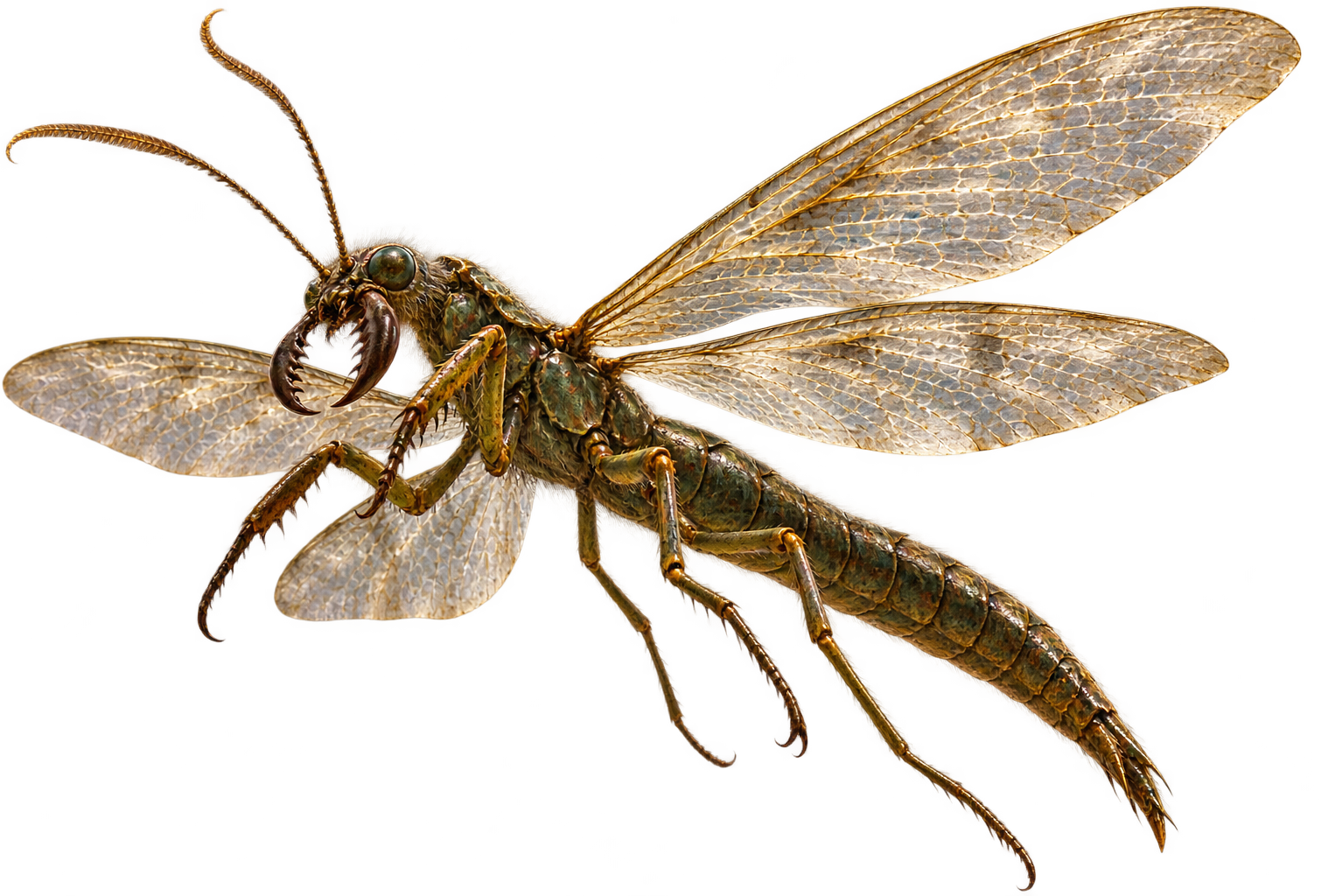
When a giant ant lion reaches maturity, it creates a cocoon of sand and dirt around itself. Over the course of a month, the ant lion undergoes a dramatic metamorphosis—when it emerges, its body has become elongated and thin and it has gained a set of enormous, lacy wings. Depending on the region, giant adult ant lions are often called giant lacewings, giant damselflies, or giant spindleflies, but regardless of their regional name, they remain ravenous and deadly, replacing the sand trap cunning of their larval form with swift flight and greater battlefield mobility.
N Huge
Vermin includes insects, arachnids, other arthropods, worms, and similar invertebrates. Vermin have the following traits (unless otherwise noted in a creature’s entry).
• Darkvision 60 feet.
• Mindless: No Intelligence score, and immunity to all mind-affecting effects (charms, compulsions, morale effects, patterns, and phantasms).
• Proficient with its natural weapons only.
• Proficient with no armor.
• Vermin breathe, eat, and sleep.
Init +3; Senses 60 ft.; Perception +0
Darkvision is the extraordinary ability to see with no light source at all, out to a range specified. Darkvision is black-and-white only (colors cannot be discerned). It does not allow creatures to see anything that they could not see otherwise—invisible objects are still invisible, and illusions are still visible as what they seem to be. Likewise, darkvision subjects a creature to gaze attacks normally. The presence of light does not spoil darkvision.
DEFENSE
AC 19, touch 11, flat-footed 16 (+3 Dex, +8 natural, –2 size)
hp 85 (10d8+40)
Fort +11, Ref +6, Will +3
mind-affecting effects
Immunity (Ex or Su) A creature with immunities takes no damage from listed sources. Immunities can also apply to afflictions, conditions, spells (based on level, save type, or school), and other effects. A creature does not suffer any secondary effects that would normally be triggered by an effect it is immune to.
OFFENSE
Speed 30 ft., 60 ft. (good)
A creature with a Fly speed can cease or resume flight as a free action on its turn. Without making a check, a flying creature can remain flying at the end of its turn so long as it moves a distance greater than half its speed. It can also turn up to 45 degrees during its turn by sacrificing 5 feet of movement, can rise at half speed at an angle of 45 degrees (ignoring the penalty for diagonal movement), and can descend at any angle at normal speed. At the beginning of its turn, a flying creature can move in a different direction than it did previously without needing a Fly check.
A creature with a natural fly speed receives a bonus (or penalty) on Fly skill checks depending on its maneuverability:
• Clumsy –8
• Poor –4
• Average +0
• Good +4
• Perfect +8
Creatures without a maneuverability rating are assumed to have average maneuverability and take no penalty on Fly checks. These modifiers are already included in the creature’s stat block.
Melee bite +12 (3d8+10)
Space 15 ft.; Reach 10 ft.
STATISTICS
Str 24, Dex 16, Con 19, Int —, Wis 11, Cha 10
Base Atk +7; +16; CMD 29 (37 vs. trip)
When performing a combat maneuver, you must use an action appropriate to the maneuver you are attempting to perform. While many combat maneuvers can be performed as part of an attack action, full-attack action, or attack of opportunity (in place of a melee attack), others require a specific action. Unless otherwise noted, performing a combat maneuver provokes an attack of opportunity from the target of the maneuver. If you are hit by the target, you take the damage normally and apply that amount as a penalty to the attack roll to perform the maneuver. If your target is immobilized, unconscious, or otherwise incapacitated, your maneuver automatically succeeds (treat as if you rolled a natural 20 on the attack roll). If your target is stunned, you receive a +4 bonus on your attack roll to perform a combat maneuver against it.
When you attempt to perform a combat maneuver, make an attack roll and add your CMB in place of your normal attack bonus. Add any bonuses you currently have on attack rolls due to spells, feats, and other effects. These bonuses must be applicable to the weapon or attack used to perform the maneuver. The DC of this maneuver is your target’s Combat Maneuver Defense. Combat maneuvers are attack rolls, so you must roll for concealment and take any other penalties that would normally apply to an attack roll.
If your attack roll equals or exceeds the CMD of the target, your maneuver is a success and has the listed effect. Some maneuvers, such as bull rush, have varying levels of success depending on how much your attack roll exceeds the target’s CMD. Rolling a natural 20 while attempting a combat maneuver is always a success (except when attempting to escape from bonds), while rolling a natural 1 is always a failure.
Skills Fly +3
ECOLOGY
Environment warm deserts
Organization solitary or cloud (2–12)
Treasure none
Saguaroi
This humanoid plant creature has the prickly hide of a cactus, and smaller cactuses seemingly sprout from its flesh.
Saguarois, also called cactusfolk by desert-dwelling humanoids, make their homes in rocky badlands, hot scrublands on the edge of vast deserts, and sandy dunes baked by the sun. They are generous but territorial, offering aid to travelers who brave the blistering deserts—often in the form of their own watery blood—but don’t tolerate guests who overstay their welcome. Civilization rarely attempts to push far into the deserts, leaving these creatures relatively isolated from other intelligent races. In cases where belligerent settlements threaten the way of life for tribes of saguarois, however, the cactusfolk respond with terrifying violence. Saguarois live in small nomadic tribes, traveling under the life-giving sun by day and rooting themselves each night in places where they can draw minerals from the pebbly and sandy soil and absorb water. Saguarois produce flowers once a year that go to seed and grow into young saguarois if the adult creatures properly care for them. If planted, a seed must be attended by one or more saguarois over the course of a year before the infant saguaroi sprouts. After sprouting, it takes 4 years before the infant saguaroi can uproot itself and move about, and decades more to reach maturity. Some saguarois have lived for hundreds of years, and these old cactusfolk often sprout additional limbs or strange twisting growths stretching out from their cylindrical torsos. Usually these additional limbs and growths are nonfunctional, but significantly advanced saguarois have been known to learn how to use them as if they were their primary arms and legs.
N Medium
The plant type comprises vegetable creatures. Note that regular plants, such as one finds growing in gardens and fields, lack Wisdom and Charisma scores and are not creatures, but objects, even though they are alive. A plant creature has the following traits (unless otherwise noted in a creature’s entry).
• Low-light vision.
• Plant Traits (Ex) The dedicated plant traits popup under Immune contains immunity to mind-affecting effects, paralysis, poison, polymorph, sleep effects, and stunning.
• Proficient with its natural weapons only.
• Not proficient with armor.
• Plants breathe and eat, but do not sleep.
Init +8; Senses ; Perception +10
Low-Light Vision (Ex) A creature with low-light vision can see twice as far as a human in starlight, moonlight, torchlight, and similar conditions of dim light. It retains the ability to distinguish color and detail under these conditions.
DEFENSE
AC 18, touch 14, flat-footed 14 (+4 Dex, +4 natural)
hp 59 (7d8+28); 5 (fire)
Regeneration (Ex) Regeneration is an extraordinary ability which makes a creature difficult to kill. Creatures with regeneration heal damage to themselves at a fixed rate, as with fast healing, but they cannot die as long as their regeneration is still functioning, although they still fall unconscious when their hit points are below 0. Certain damage types, typically acid and fire, cause regeneration to stop functioning on the round following the attack. During that round, the creature does not heal damage and can die normally. The creature’s descriptive text identifies the damage types that suppress its regeneration.
Attacks that do not deal hit point damage are not healed by regeneration. Regeneration also does not restore hit points lost from starvation, suffocation, or thirst. Regenerating creatures can regrow lost body parts and can reattach severed limbs or body parts if they are brought together within 1 hour of severing. Severed parts that are not reattached wither and die normally.
A creature must have a Constitution score to have regeneration.
Fort +9, Ref +8, Will +4
Defensive Abilities ;
Immunity (Ex or Su) A creature with immunities takes no damage from listed sources. Immunities can also apply to afflictions, conditions, spells (based on level, save type, or school), and other effects. A creature does not suffer any secondary effects that would normally be triggered by an effect it is immune to.
Plant Traits (Ex)
• Immunity to all mind-affecting effects (charms, compulsions, morale effects, patterns, and phantasms).
• Immunity to paralysis, poison, polymorph, sleep effects, and stunning.
OFFENSE
Speed 40 ft.
Melee 2 slams +10 (1d6+5)
Special Attacks
STATISTICS
Str 20, Dex 18, Con 18, Int 7, Wis 15, Cha 11
Base Atk +5; +10; CMD 24
When performing a combat maneuver, you must use an action appropriate to the maneuver you are attempting to perform. While many combat maneuvers can be performed as part of an attack action, full-attack action, or attack of opportunity (in place of a melee attack), others require a specific action. Unless otherwise noted, performing a combat maneuver provokes an attack of opportunity from the target of the maneuver. If you are hit by the target, you take the damage normally and apply that amount as a penalty to the attack roll to perform the maneuver. If your target is immobilized, unconscious, or otherwise incapacitated, your maneuver automatically succeeds (treat as if you rolled a natural 20 on the attack roll). If your target is stunned, you receive a +4 bonus on your attack roll to perform a combat maneuver against it.
When you attempt to perform a combat maneuver, make an attack roll and add your CMB in place of your normal attack bonus. Add any bonuses you currently have on attack rolls due to spells, feats, and other effects. These bonuses must be applicable to the weapon or attack used to perform the maneuver. The DC of this maneuver is your target’s Combat Maneuver Defense. Combat maneuvers are attack rolls, so you must roll for concealment and take any other penalties that would normally apply to an attack roll.
If your attack roll equals or exceeds the CMD of the target, your maneuver is a success and has the listed effect. Some maneuvers, such as bull rush, have varying levels of success depending on how much your attack roll exceeds the target’s CMD. Rolling a natural 20 while attempting a combat maneuver is always a success (except when attempting to escape from bonds), while rolling a natural 1 is always a failure.
Feats , , ,
Alertness You get a +2 bonus on Perception and Sense Motive skill checks. If you have 10 or more ranks in one of these skills, the bonus increases to +4 for that skill.
Combat Reflexes You may make a number of additional attacks of opportunity per round equal to your Dexterity bonus. With this feat, you may also make attacks of opportunity while .
Normal: A character without this feat can make only one attack of opportunity per round and can’t make attacks of opportunity while .
Special: The Combat Reflexes feat does not allow a rogue to use her opportunist ability more than once per round.
A creature that has not yet acted during a combat is flat-footed, unable to react normally to the situation. A flat-footed creature cannot take immediate actions and loses their Dexterity bonus to AC and CMD (if any). The creature cannot make attacks of opportunity unless they have the Combat Reflexes feat or Uncanny Dodge class ability.
Improved Initiative You get a +4 bonus on initiative checks.
Lightning Reflexes You get a +2 bonus on all Reflex saving throws.
Skills Perception +10, Sense Motive +5, Survival +5
Languages Sylvan
SQ ,
Freeze (Ex) This creature can hold itself so still it appears to be an inanimate object of the appropriate shape (a statue, patch of fungus, and so on). The creature can take 20 on its Stealth check to hide in plain sight as this kind of inanimate object.
ECOLOGY
Environment warm deserts
Organization solitary, pair, party (3–9), or tribe (10–20)
Treasure standard
SPECIAL ABILITIES
Needle Cone (Ex) Three times per day, as a standard action a saguaroi can eject a barrage of needles from its body. This effect creates a 15-foot-cone burst of needles that deals 4d6 points of piercing damage to all creatures in the area (Reflex DC 20 for half). The save DC is Constitution-based.
Needle Hide (Ex) A saguaroi is covered with needles and spines, and its slam attacks deal both bludgeoning and piercing damage. Any creature grappling a saguaroi or attacking it with a natural attack or unarmed strike takes 1d4 points of piercing damage (manufactured weapons with the reach special feature do not endanger the user this way). A creature grappling a saguaroi takes this damage each round of the grapple.
Produce Water (Ex) As a standard action once per hour, a saguaroi can cut itself (taking 1 point of damage) to produce 1 gallon of water. After producing 4 gallons, it becomes . After producing 8 gallons, it becomes and cannot produce more water for 24 hours.
A fatigued character can neither run nor charge and takes a –2 penalty to Strength and Dexterity. Doing anything that would normally cause fatigue causes the fatigued character to become . After 8 hours of complete rest, fatigued characters are no longer fatigued.
An exhausted character moves at half speed, cannot run or charge, and takes a –6 penalty to Strength and Dexterity. After 1 hour of complete rest, an exhausted character becomes fatigued. A fatigued character becomes exhausted by doing something else that would normally cause fatigue.
An exhausted character moves at half speed, cannot run or charge, and takes a –6 penalty to Strength and Dexterity. After 1 hour of complete rest, an exhausted character becomes . A fatigued character becomes exhausted by doing something else that would normally cause fatigue.
A fatigued character can neither run nor charge and takes a –2 penalty to Strength and Dexterity. Doing anything that would normally cause fatigue causes the fatigued character to become exhausted. After 8 hours of complete rest, fatigued characters are no longer fatigued.
Death Worm
This large worm’s body is muscular and scaly, its mouth a nightmare of row upon row of triangular teeth.
The reclusive death worm is much feared in the deserts, badlands, and steppes in which it dwells, for it brings to a battle multiple harrowing ways of inflicting death upon its foes—acid, lightning, poison, and its ravenous jaws. The creatures are remarkably good at hiding amid the sands and rocks of their favored terrain, and devilishly efficient at selecting foes that they can easily kill. This combination makes stories of these creatures hard to confirm, and in most urban centers, common wisdom is that the tales of death worms are fabrications— attempts to impress city folk or hallucinations born of too much drink. A death worm is 15 feet long and weighs 1,200 pounds— although rumors of much larger death worms persist.
N Large
Magical beasts are similar to animals but can have Intelligence scores higher than 2 (in which case the magical beast knows at least one language, but can’t necessarily speak). Magical beasts usually have supernatural or extraordinary abilities, but are sometimes merely bizarre in appearance or habits. A magical beast has the following traits (unless otherwise noted in a creature’s entry).
• Darkvision 60 feet and low-light vision.
• Proficient with its natural weapons only.
• Proficient with no armor.
• Magical beasts breathe, eat, and sleep.
Init +1; Senses 60 ft., , 60 ft.; Perception +11
Darkvision is the extraordinary ability to see with no light source at all, out to a range specified. Darkvision is black-and-white only (colors cannot be discerned). It does not allow creatures to see anything that they could not see otherwise—invisible objects are still invisible, and illusions are still visible as what they seem to be. Likewise, darkvision subjects a creature to gaze attacks normally. The presence of light does not spoil darkvision.
Low-Light Vision (Ex) A creature with low-light vision can see twice as far as a human in starlight, moonlight, torchlight, and similar conditions of dim light. It retains the ability to distinguish color and detail under these conditions.
Tremorsense (Ex) A creature with tremorsense is sensitive to vibrations in the ground and can automatically pinpoint the location of anything that is in contact with the ground. Aquatic creatures with tremorsense can also sense the location of creatures moving through water. This does not allow the creature to ignore any miss chance for concealment that would otherwise apply.
DEFENSE
AC 19, touch 10, flat-footed 18 (+1 Dex, +9 natural, –1 size)
hp 68 (8d10+24)
Fort +9, Ref +7, Will +4
Defensive Abilities , ; acid, electricity, poison
Immunity (Ex or Su) A creature with immunities takes no damage from listed sources. Immunities can also apply to afflictions, conditions, spells (based on level, save type, or school), and other effects. A creature does not suffer any secondary effects that would normally be triggered by an effect it is immune to.
OFFENSE
Speed 20 ft., 20 ft.
A creature with a Burrow speed can tunnel through dirt, but not through rock unless the descriptive text says otherwise. Creatures cannot charge or run while burrowing. Most burrowing creatures do not leave behind tunnels other creatures can use (either because the material they tunnel through fills in behind them or because they do not actually dislocate any material when burrowing).
Melee bite +11 (2d8+6 plus )
Poison (Ex or Su) This creature can deliver poison by the method specified in its entry. The entry gives the poison’s save, frequency, effect, and cure. When no other formula is given, the save is usually Fortitude DC 10 + 1/2 the creature’s racial Hit Dice + its Constitution modifier. Neutralize poison and similar effects remove poison normally.
Ranged +8 ranged touch (4d6 electricity)
Space 10 ft.; Reach 5 ft.
Special Attacks (30-ft. line, 8d6 acid damage, Reflex DC 17 for half, usable every 1d4 rounds)
Breath Weapon (Su) This creature has the ability to exhale a cone, line, or cloud of energy or other magical effect. A breath weapon attack usually deals damage and is often based on some type of energy. Breath weapons allow a Reflex save for half damage (DC 10 + 1/2 breathing creature’s racial HD + Con modifier; the exact DC is given in the creature’s descriptive text). A creature is immune to its own breath weapon unless otherwise noted. Some breath weapons allow a Fortitude save or a Will save instead of a Reflex save. Each breath weapon also specifies how often it can be used, including any per-day limit.
STATISTICS
Str 18, Dex 13, Con 16, Int 3, Wis 11, Cha 5
Base Atk +8; +13; CMD 24
When performing a combat maneuver, you must use an action appropriate to the maneuver you are attempting to perform. While many combat maneuvers can be performed as part of an attack action, full-attack action, or attack of opportunity (in place of a melee attack), others require a specific action. Unless otherwise noted, performing a combat maneuver provokes an attack of opportunity from the target of the maneuver. If you are hit by the target, you take the damage normally and apply that amount as a penalty to the attack roll to perform the maneuver. If your target is immobilized, unconscious, or otherwise incapacitated, your maneuver automatically succeeds (treat as if you rolled a natural 20 on the attack roll). If your target is stunned, you receive a +4 bonus on your attack roll to perform a combat maneuver against it.
When you attempt to perform a combat maneuver, make an attack roll and add your CMB in place of your normal attack bonus. Add any bonuses you currently have on attack rolls due to spells, feats, and other effects. These bonuses must be applicable to the weapon or attack used to perform the maneuver. The DC of this maneuver is your target’s Combat Maneuver Defense. Combat maneuvers are attack rolls, so you must roll for concealment and take any other penalties that would normally apply to an attack roll.
If your attack roll equals or exceeds the CMD of the target, your maneuver is a success and has the listed effect. Some maneuvers, such as bull rush, have varying levels of success depending on how much your attack roll exceeds the target’s CMD. Rolling a natural 20 while attempting a combat maneuver is always a success (except when attempting to escape from bonds), while rolling a natural 1 is always a failure.
Feats , , ,
Cleave As a standard action, you can make a single attack at your full base attack bonus against a foe within reach. If you hit, you deal damage normally and can make an additional attack (using your full base attack bonus) against a foe that is adjacent to the first and also within reach. You can only make one additional attack per round with this feat. When you use this feat, you take a –2 penalty to your Armor Class until your next turn.
Improved Overrun You do not provoke an attack of opportunity when performing an overrun combat maneuver. In addition, you receive a +2 bonus on checks made to overrun a foe. You also receive a +2 bonus to your Combat Maneuver Defense whenever an opponent tries to overrun you. Targets of your overrun attempt may not choose to avoid you.
Normal: You provoke an attack of opportunity when performing an overrun combat maneuver.
Iron Will You get a +2 bonus on all Will saving throws.
Power Attack You can choose to take a –1 penalty on all melee attack rolls and combat maneuver checks to gain a +2 bonus on all melee damage rolls. This bonus to damage is increased by half (+50%) if you are making an attack with a two-handed weapon, a one-handed weapon using two hands, or a primary natural weapon that adds 1-1/2 times your Strength modifier on damage rolls. This bonus to damage is halved (–50%) if you are making an attack with an off-hand weapon or secondary natural weapon. When your base attack bonus reaches +4, and every 4 points thereafter, the penalty increases by –1 and the bonus to damage increases by +2. You must choose to use this feat before making an attack roll, and its effects last until your next turn. The bonus damage does not apply to touch attacks or effects that do not deal hit point damage.
Skills Perception +11, Stealth –3 (+13 in deserts)
Racial Modifiers +16 Stealth in deserts or rocky areas
Languages Terran
ECOLOGY
Environment warm deserts, plains, or hills
Organization solitary
Treasure none
SPECIAL ABILITIES
Corrosive Blood (Ex) A death worm’s blood can corrode metal on contact. If a creature damages a death worm with a piercing or slashing weapon made of metal, the creature’s blood deals 3d6 points of acid damage to the metal weapon (unlike most forms of energy damage, this damage is not halved when applied to a metal object, although it does still have to penetrate the metal’s hardness). The weapon’s wielder can halve the damage the weapon takes by making a successful DC 17 Reflex save. Creatures made of metal that deal slashing or piercing damage to a death worm with a natural attack take 3d6 points of acid damage (a DC 17 Reflex save halves this damage). The corrosive elements of the blood fade 1 round after it leaves the worm’s body or the worm dies. The save DC is Constitution-based.
Electrical Jolt (Su) A death worm can fire a jolt of electricity from its mouth as a standard action. The range increment for this ranged touch attack is 60 feet.
Poison (Ex) Bite—injury, or skin—contact; save Fort DC 17; frequency 1/round for 6 rounds; effect 1d2 Con damage; cure 2 saves.
Venomous Skin (Ex) A death worm’s skin secretes a noxious, waxy substance. This venomous sheen poisons any creature that touches a death worm, either by making a successful attack with an unarmed strike or natural weapon or with a touch attack. A creature that grapples a death worm is also exposed to the creature’s venomous skin.
Giant Scarab
This glossy beetle is the size of a cow, and has a hard, blue-black carapace spattered with dust and dung.
Scarabs are small, six-legged insects with sharp protrusions on their front legs that they use for burrowing. They are primarily coprophagous, eating dung for sustenance. An individual scarab often spends days rolling a single ball of dung across the desert until it can find the perfect place to bury it and deposit eggs. Because they burrow underground to create life, scarab beetles are associated with burial rites. Some say scarab beetles’ connection with the dead gives them powers greater than those of normal beetles, but as of yet there is no evidence this is true.
N Large
Vermin includes insects, arachnids, other arthropods, worms, and similar invertebrates. Vermin have the following traits (unless otherwise noted in a creature’s entry).
• Darkvision 60 feet.
• Mindless: No Intelligence score, and immunity to all mind-affecting effects (charms, compulsions, morale effects, patterns, and phantasms).
• Proficient with its natural weapons only.
• Proficient with no armor.
• Vermin breathe, eat, and sleep.
Init +1; Senses 60 ft.; Perception +4
Darkvision is the extraordinary ability to see with no light source at all, out to a range specified. Darkvision is black-and-white only (colors cannot be discerned). It does not allow creatures to see anything that they could not see otherwise—invisible objects are still invisible, and illusions are still visible as what they seem to be. Likewise, darkvision subjects a creature to gaze attacks normally. The presence of light does not spoil darkvision.
DEFENSE
AC 20, touch 10, flat-footed 19 (+1 Dex, +10 natural, –1 size)
hp 67 (9d8+27)
Fort +9, Ref +4, Will +3; +4 vs. disease and paralysis
mind-affecting effects
Immunity (Ex or Su) A creature with immunities takes no damage from listed sources. Immunities can also apply to afflictions, conditions, spells (based on level, save type, or school), and other effects. A creature does not suffer any secondary effects that would normally be triggered by an effect it is immune to.
OFFENSE
Speed 40 ft., 20 ft., 20 ft. (average)
A creature with a Climb speed has a +8 racial bonus on all Climb checks. The creature must make a Climb check to climb any wall or slope with a DC higher than 0, but it can always choose to take 10, even if rushed or threatened while climbing. If a creature with a climb speed chooses an accelerated climb, it moves at double its climb speed (or at its land speed, whichever is slower) and makes a single Climb check at a –5 penalty. Such a creature retains its Dexterity bonus to Armor Class (if any) while climbing, and opponents get no special bonus to their attacks against it. It cannot, however, use the run action while climbing.
A creature with a Fly speed can cease or resume flight as a free action on its turn. Without making a check, a flying creature can remain flying at the end of its turn so long as it moves a distance greater than half its speed. It can also turn up to 45 degrees during its turn by sacrificing 5 feet of movement, can rise at half speed at an angle of 45 degrees (ignoring the penalty for diagonal movement), and can descend at any angle at normal speed. At the beginning of its turn, a flying creature can move in a different direction than it did previously without needing a Fly check.
A creature with a natural fly speed receives a bonus (or penalty) on Fly skill checks depending on its maneuverability:
• Clumsy –8
• Poor –4
• Average +0
• Good +4
• Perfect +8
Creatures without a maneuverability rating are assumed to have average maneuverability and take no penalty on Fly checks. These modifiers are already included in the creature’s stat block.
Melee bite +13 (2d4+12 plus and )
Disease (Ex or Su) This creature can transmit a disease. Its entry specifies the disease’s effects, saving throw, frequency, and cure. When no other formula is given, the save is usually Fortitude DC 10 + 1/2 the creature’s racial Hit Dice + its Constitution modifier. Remove disease and similar effects can cure the disease as normal.
Space 10 ft.; Reach 5 ft.
STATISTICS
Str 27, Dex 12, Con 16, Int —, Wis 10, Cha 1
Base Atk +6; +15; CMD 26 (34 vs. trip)
When performing a combat maneuver, you must use an action appropriate to the maneuver you are attempting to perform. While many combat maneuvers can be performed as part of an attack action, full-attack action, or attack of opportunity (in place of a melee attack), others require a specific action. Unless otherwise noted, performing a combat maneuver provokes an attack of opportunity from the target of the maneuver. If you are hit by the target, you take the damage normally and apply that amount as a penalty to the attack roll to perform the maneuver. If your target is immobilized, unconscious, or otherwise incapacitated, your maneuver automatically succeeds (treat as if you rolled a natural 20 on the attack roll). If your target is stunned, you receive a +4 bonus on your attack roll to perform a combat maneuver against it.
When you attempt to perform a combat maneuver, make an attack roll and add your CMB in place of your normal attack bonus. Add any bonuses you currently have on attack rolls due to spells, feats, and other effects. These bonuses must be applicable to the weapon or attack used to perform the maneuver. The DC of this maneuver is your target’s Combat Maneuver Defense. Combat maneuvers are attack rolls, so you must roll for concealment and take any other penalties that would normally apply to an attack roll.
If your attack roll equals or exceeds the CMD of the target, your maneuver is a success and has the listed effect. Some maneuvers, such as bull rush, have varying levels of success depending on how much your attack roll exceeds the target’s CMD. Rolling a natural 20 while attempting a combat maneuver is always a success (except when attempting to escape from bonds), while rolling a natural 1 is always a failure.
Skills Climb +16, Fly –1, Perception +4
Racial Modifiers +4 Perception
ECOLOGY
Environment warm deserts
Organization solitary or swarm (3–9)
Treasure none
SPECIAL ABILITIES
Disease (Ex) Filth fever: Bite—injury; save Fort DC 17; onset 1d3 days; frequency 1 day; effect 1d3 Dex damage and 1d3 Con damage; cure 2 consecutive saves.
Gnaw (Ex) Scarabs deal 1d4+6 additional points of damage and 1 point of Strength damage on a successful bite. This is doubled against creatures with no armor or natural armor, but creatures in heavy armor or with a natural armor bonus of +10 or greater are immune, as are fleshless creatures and those immune to critical hits.
Criosphinx
This creature has the wings of a bird, the body of a lion, and the head of a ram with sad, wise eyes.
Perhaps the least leonine of all sphinxes, the ram-headed criosphinx lacks the intellect of androsphinxes and gynosphinxes, but still outmatches the dimwitted hieracosphinxes. Like hieracosphinxes and androsphinxes, criosphinxes are always male. At the start of a battle, a criosphinx lowers its horns and crashes into foes, clawing enemies it has engaged. It favors charging down on foes from great heights. Criosphinxes crave wealth over nearly all other things, habitually extorting tolls for safe passage from any who pass their lands. Groups who cannot pay must yield one of their number or a pair of mounts for the criosphinx’s meal— single travelers must fight or die. Unlike gynosphinxes, no mere riddle suffices—only the shine of metal or the gleam of jewels can satisfy a criosphinx. Little can convince a criosphinx to part with even a single coin save the lust that its kind bears for the gynosphinx. Criosphinxes crave mating with gynosphinxes above all else, and pay well for the whereabouts of a female, or better yet, a well-crafted riddle that might impress one. For their part, gynosphinxes prefer to have little to do with what they mock as the sheep of sphinxes, though they sometimes lower themselves to a brief assignation in the rare event a criosphinx manages to impress them with wealth or wit. Some criosphinxes set themselves as soothsayers of the desert, trading upon the storied wisdom of androsphinxes and gynosphinxes to deceive gullible travelers. Like their more blustering brethren, they seek wealth from passersby, but for the purposes of dispersing information rather than in exchange for safe passage. Such reliable information as they possess usually comes from idle conversation with the creatures of the desert, with criosphinxes using their inborn ability to speak with animals. A criosphinx lacking in sound information usually fabricates a pleasing lie. Criosphinxes detest hieracosphinxes, regarding them as little more than beasts and a disgrace to their noble race. They drive off their falcon-headed cousins with mock-charges and posturing, escalating to full-fledged attacks if ignored. Androsphinxes they view with mixed fear and respect, and gynosphinxes with disdain and lust.
N Large
Magical beasts are similar to animals but can have Intelligence scores higher than 2 (in which case the magical beast knows at least one language, but can’t necessarily speak). Magical beasts usually have supernatural or extraordinary abilities, but are sometimes merely bizarre in appearance or habits. A magical beast has the following traits (unless otherwise noted in a creature’s entry).
• Darkvision 60 feet and low-light vision.
• Proficient with its natural weapons only.
• Proficient with no armor.
• Magical beasts breathe, eat, and sleep.
Init +0; Senses 60 ft., ; Perception +10
Darkvision is the extraordinary ability to see with no light source at all, out to a range specified. Darkvision is black-and-white only (colors cannot be discerned). It does not allow creatures to see anything that they could not see otherwise—invisible objects are still invisible, and illusions are still visible as what they seem to be. Likewise, darkvision subjects a creature to gaze attacks normally. The presence of light does not spoil darkvision.
Low-Light Vision (Ex) A creature with low-light vision can see twice as far as a human in starlight, moonlight, torchlight, and similar conditions of dim light. It retains the ability to distinguish color and detail under these conditions.
DEFENSE
AC 20, touch 9, flat-footed 20 (+11 natural, –1 size)
hp 85 (10d10+30)
Fort +10, Ref +7, Will +4
OFFENSE
Speed 30 ft., 60 ft. (poor)
A creature with a Fly speed can cease or resume flight as a free action on its turn. Without making a check, a flying creature can remain flying at the end of its turn so long as it moves a distance greater than half its speed. It can also turn up to 45 degrees during its turn by sacrificing 5 feet of movement, can rise at half speed at an angle of 45 degrees (ignoring the penalty for diagonal movement), and can descend at any angle at normal speed. At the beginning of its turn, a flying creature can move in a different direction than it did previously without needing a Fly check.
A creature with a natural fly speed receives a bonus (or penalty) on Fly skill checks depending on its maneuverability:
• Clumsy –8
• Poor –4
• Average +0
• Good +4
• Perfect +8
Creatures without a maneuverability rating are assumed to have average maneuverability and take no penalty on Fly checks. These modifiers are already included in the creature’s stat block.
Melee 2 claws +15 (1d6+6), gore +16 (2d4+6/19–20)
Space 10 ft.; Reach 5 ft.
Special Attacks (gore, 4d4+12)
(CL 10th; concentration +10)
Spell-like abilities are magical and work just like spells (though they are not spells and so have no verbal, somatic, focus, or material components). They go away in an antimagic field and are subject to spell resistance if the spell the ability is based on would be subject to spell resistance.
A spell-like ability usually has a limit on how often it can be used. A constant spell-like ability or one that can be used at will has no use limit; unless otherwise stated, a creature can only use a constant spell-like ability on itself. Reactivating a constant spell-like ability is a swift action. Using all other spell-like abilities is a standard action unless noted otherwise, and doing so provokes attacks of opportunity. It is possible to make a concentration check to use a spell-like ability defensively and avoid provoking an attack of opportunity, just as when casting a spell. A spell-like ability can be disrupted just as a spell can be. Spell-like abilities cannot be used to counterspell, nor can they be counterspelled.
For creatures with spell-like abilities, a designated caster level determines how difficult it is to dispel their spell-like effects and defines any level-dependent variables (such as range and duration) the abilities might have. The creature’s caster level never affects which spell-like abilities the creature has; sometimes the given caster level is lower than the level a spellcasting character would need to cast the spell of the same name. If no caster level is specified, the caster level is equal to the creature’s Hit Dice. The saving throw (if any) against a spell-like ability is 10 + the level of the spell the ability resembles or duplicates + the creature’s Charisma modifier.
Some spell-like abilities duplicate spells that work differently when cast by characters of different classes. A monster’s spell-like abilities are presumed to be the sorcerer/wizard versions. If the spell in question is not a sorcerer/wizard spell, then default to cleric, druid, bard, paladin, and ranger, in that order.
Constant—speak with animals
STATISTICS
Str 23, Dex 10, Con 17, Int 12, Wis 12, Cha 11
Base Atk +10; +17 (+19 bull rush); CMD 27 (29 vs. bull rush, 31 vs. trip)
When performing a combat maneuver, you must use an action appropriate to the maneuver you are attempting to perform. While many combat maneuvers can be performed as part of an attack action, full-attack action, or attack of opportunity (in place of a melee attack), others require a specific action. Unless otherwise noted, performing a combat maneuver provokes an attack of opportunity from the target of the maneuver. If you are hit by the target, you take the damage normally and apply that amount as a penalty to the attack roll to perform the maneuver. If your target is immobilized, unconscious, or otherwise incapacitated, your maneuver automatically succeeds (treat as if you rolled a natural 20 on the attack roll). If your target is stunned, you receive a +4 bonus on your attack roll to perform a combat maneuver against it.
When you attempt to perform a combat maneuver, make an attack roll and add your CMB in place of your normal attack bonus. Add any bonuses you currently have on attack rolls due to spells, feats, and other effects. These bonuses must be applicable to the weapon or attack used to perform the maneuver. The DC of this maneuver is your target’s Combat Maneuver Defense. Combat maneuvers are attack rolls, so you must roll for concealment and take any other penalties that would normally apply to an attack roll.
If your attack roll equals or exceeds the CMD of the target, your maneuver is a success and has the listed effect. Some maneuvers, such as bull rush, have varying levels of success depending on how much your attack roll exceeds the target’s CMD. Rolling a natural 20 while attempting a combat maneuver is always a success (except when attempting to escape from bonds), while rolling a natural 1 is always a failure.
Feats , (gore), , (Intimidate), (gore)
Improved Bull Rush You do not provoke an attack of opportunity when performing a bull rush combat maneuver. In addition, you receive a +2 bonus on checks made to bull rush a foe. You also receive a +2 bonus to your Combat Maneuver Defense whenever an opponent tries to bull rush you.
Normal: You provoke an attack of opportunity when performing a bull rush combat maneuver.
Improved Critical (gore) When using the weapon you selected, your threat range is doubled.
Special: This effect doesn’t stack with any other effect that expands the threat range of a weapon.
Power Attack You can choose to take a –1 penalty on all melee attack rolls and combat maneuver checks to gain a +2 bonus on all melee damage rolls. This bonus to damage is increased by half (+50%) if you are making an attack with a two-handed weapon, a one-handed weapon using two hands, or a primary natural weapon that adds 1-1/2 times your Strength modifier on damage rolls. This bonus to damage is halved (–50%) if you are making an attack with an off-hand weapon or secondary natural weapon. When your base attack bonus reaches +4, and every 4 points thereafter, the penalty increases by –1 and the bonus to damage increases by +2. You must choose to use this feat before making an attack roll, and its effects last until your next turn. The bonus damage does not apply to touch attacks or effects that do not deal hit point damage.
Skill Focus (Intimidate) You get a +3 bonus on all checks involving the chosen skill. If you have 10 or more ranks in that skill, this bonus increases to +6.
Weapon Focus (gore) You gain a +1 bonus on all attack rolls you make using the selected weapon.
Skills Bluff +10, Fly +1, Intimidate +16, Perception +10
Languages Common, Sphinx; speak with animals
ECOLOGY
Environment warm deserts or hills
Organization solitary
Treasure standard
SPECIAL ABILITIES
Swooping Charge (Ex) A charging criosphinx deals 4d4+12 points of damage with its gore attack. A flying criosphinx who drops at least 20 feet in altitude as part of a charge deals 6d4+18 points instead.
Desert Drake
This sleek dragon has scales mottled in desert colors, lacks forelimbs, and sports massive wings on its lissome back.
Among the fiercest of their kind, desert drakes exhibit a lust for destruction as merciless as any desert storm. These fierce, ambush predators hunt by finding high perches among rocky outcroppings and surveying their surroundings. When likely prey wanders into sight, a desert drake dives into the sand and burrows toward its quarry or flies low with cover from dunes or other outcroppings. Drawing near the likely path of its victims, it bursts from the sand or dives from above to catch foes off guard, preferring to attack targets that exhibit the most fear first. Before enemies can recover from the initial onslaught, a desert drake exhales a cloud of electrified dust, using its superior senses to press the attack. Mated pairs of desert drakes hunt larger prey and groups of victims, and rampages of the beasts might gather near overland trade routes to devour whole caravans. A typical desert drake measures 15 feet long from nose to tail tip, has a supple, wormlike build, and weighs about 2,500 pounds.
NE Large ()
A dragon is a reptile-like creature, usually winged, with magical or unusual abilities. A dragon possesses the following traits (unless otherwise noted in a creature’s entry).
• Darkvision 60 feet and low-light vision.
• Immunity to magic sleep effects and paralysis effects.
• Proficient with its natural weapons only unless humanoid in form (or capable of assuming humanoid form), in which case proficient with all simple weapons and any weapons mentioned in its entry.
• Proficient with no armor.
• Dragons breathe, eat, and sleep.
The earth subtype is usually used for outsiders with a connection to the Elemental Plane of Earth. Earth creatures usually have burrow speeds, and most earth creatures can burrow through solid rock. Earth creatures with a burrow speed possess tremorsense.
Init +6; Senses 60 ft., , , 30 ft.; Perception +12
Darkvision is the extraordinary ability to see with no light source at all, out to a range specified. Darkvision is black-and-white only (colors cannot be discerned). It does not allow creatures to see anything that they could not see otherwise—invisible objects are still invisible, and illusions are still visible as what they seem to be. Likewise, darkvision subjects a creature to gaze attacks normally. The presence of light does not spoil darkvision.
Low-Light Vision (Ex) A creature with low-light vision can see twice as far as a human in starlight, moonlight, torchlight, and similar conditions of dim light. It retains the ability to distinguish color and detail under these conditions.
Scent (Ex) Scent allows a creature to detect approaching enemies, sniff out hidden foes, and track by sense of smell. Creatures with the scent ability can identify familiar odors just as humans do familiar sights.
The creature can detect opponents within 30 feet by sense of smell. If the opponent is upwind, the range increases to 60 feet; if downwind, it drops to 15 feet. Strong scents, such as smoke or rotting garbage, can be detected at twice the ranges noted above. Overpowering scents, such as skunk musk or troglodyte stench, can be detected at triple normal range.
When a creature detects a scent, the exact location of the source is not revealed—only its presence somewhere within range. The creature can take a move action to note the direction of the scent. When the creature is within 5 feet of the source, it pinpoints the source’s location. This does not allow the creature to ignore any miss chance for concealment that would otherwise apply.
A creature with the scent ability can follow tracks by smell, making a Wisdom (or Survival) check to find or follow a track. The typical DC for a fresh trail is 10 (no matter what kind of surface holds the scent). This DC increases or decreases depending on how strong the quarry’s odor is, the number of creatures, and the age of the trail. For each hour that the trail is cold, the DC increases by 2. The ability otherwise follows the rules for the Survival skill. Creatures tracking by scent ignore the effects of surface conditions and poor visibility.
Tremorsense (Ex) A creature with tremorsense is sensitive to vibrations in the ground and can automatically pinpoint the location of anything that is in contact with the ground. Aquatic creatures with tremorsense can also sense the location of creatures moving through water. This does not allow the creature to ignore any miss chance for concealment that would otherwise apply.
DEFENSE
AC 21, touch 11, flat-footed 19 (+2 Dex, +10 natural, –1 size)
hp 103 (9d12+45)
Fort +11, Ref +8, Will +8
paralysis, sleep; electricity 20
Immunity (Ex or Su) A creature with immunities takes no damage from listed sources. Immunities can also apply to afflictions, conditions, spells (based on level, save type, or school), and other effects. A creature does not suffer any secondary effects that would normally be triggered by an effect it is immune to.
Resistance (Ex) This creature ignores some damage of the indicated type each time it takes damage of that kind, commonly acid, cold, electricity, or fire. The entry indicates the amount and type of damage ignored. Resistance is not immunity, and it applies whether the damage has a mundane or magical source. When resistance completely negates damage from an energy attack, that attack does not disrupt spellcasting. This resistance does not stack with resistance provided by a spell.
OFFENSE
Speed 30 ft., 20 ft., 60 ft. (average)
A creature with a Burrow speed can tunnel through dirt, but not through rock unless the descriptive text says otherwise. Creatures cannot charge or run while burrowing. Most burrowing creatures do not leave behind tunnels other creatures can use (either because the material they tunnel through fills in behind them or because they do not actually dislocate any material when burrowing).
A creature with a Fly speed can cease or resume flight as a free action on its turn. Without making a check, a flying creature can remain flying at the end of its turn so long as it moves a distance greater than half its speed. It can also turn up to 45 degrees during its turn by sacrificing 5 feet of movement, can rise at half speed at an angle of 45 degrees (ignoring the penalty for diagonal movement), and can descend at any angle at normal speed. At the beginning of its turn, a flying creature can move in a different direction than it did previously without needing a Fly check.
A creature with a natural fly speed receives a bonus (or penalty) on Fly skill checks depending on its maneuverability:
• Clumsy –8
• Poor –4
• Average +0
• Good +4
• Perfect +8
Creatures without a maneuverability rating are assumed to have average maneuverability and take no penalty on Fly checks. These modifiers are already included in the creature’s stat block.
Melee bite +15 (2d6+9/19–20 plus 1d10 electricity), tail slap +9 (1d8+3 plus push)
Space 10 ft.; Reach 10 ft.
Special Attacks , (tail slap, 10 ft.), ,
Push (Ex) This creature can choose to make a free combat maneuver check with a certain successful attack (often a slam attack). If successful, this check pushes a creature directly away as with a bull rush, but the distance moved is set by this ability. The type of attack that causes the push and the distance pushed are included in the creature’s description. This ability only works on creatures of a size equal to or smaller than the pushing creature. Creatures pushed in this way do not provoke attacks of opportunity and stop if the push would move them into a solid object or creature.
STATISTICS
Str 22, Dex 15, Con 21, Int 8, Wis 11, Cha 12
Base Atk +9; +16; CMD 28
When performing a combat maneuver, you must use an action appropriate to the maneuver you are attempting to perform. While many combat maneuvers can be performed as part of an attack action, full-attack action, or attack of opportunity (in place of a melee attack), others require a specific action. Unless otherwise noted, performing a combat maneuver provokes an attack of opportunity from the target of the maneuver. If you are hit by the target, you take the damage normally and apply that amount as a penalty to the attack roll to perform the maneuver. If your target is immobilized, unconscious, or otherwise incapacitated, your maneuver automatically succeeds (treat as if you rolled a natural 20 on the attack roll). If your target is stunned, you receive a +4 bonus on your attack roll to perform a combat maneuver against it.
When you attempt to perform a combat maneuver, make an attack roll and add your CMB in place of your normal attack bonus. Add any bonuses you currently have on attack rolls due to spells, feats, and other effects. These bonuses must be applicable to the weapon or attack used to perform the maneuver. The DC of this maneuver is your target’s Combat Maneuver Defense. Combat maneuvers are attack rolls, so you must roll for concealment and take any other penalties that would normally apply to an attack roll.
If your attack roll equals or exceeds the CMD of the target, your maneuver is a success and has the listed effect. Some maneuvers, such as bull rush, have varying levels of success depending on how much your attack roll exceeds the target’s CMD. Rolling a natural 20 while attempting a combat maneuver is always a success (except when attempting to escape from bonds), while rolling a natural 1 is always a failure.
Feats , , , , (bite)
Dazzling Display While wielding the weapon in which you have Weapon Focus, you can perform a bewildering show of prowess as a full-round action. Make an Intimidate check to demoralize all foes within 30 feet who can see your display.
Improved Initiative You get a +4 bonus on initiative checks.
Iron Will You get a +2 bonus on all Will saving throws.
Power Attack You can choose to take a –1 penalty on all melee attack rolls and combat maneuver checks to gain a +2 bonus on all melee damage rolls. This bonus to damage is increased by half (+50%) if you are making an attack with a two-handed weapon, a one-handed weapon using two hands, or a primary natural weapon that adds 1-1/2 times your Strength modifier on damage rolls. This bonus to damage is halved (–50%) if you are making an attack with an off-hand weapon or secondary natural weapon. When your base attack bonus reaches +4, and every 4 points thereafter, the penalty increases by –1 and the bonus to damage increases by +2. You must choose to use this feat before making an attack roll, and its effects last until your next turn. The bonus damage does not apply to touch attacks or effects that do not deal hit point damage.
Weapon Focus (bite) You gain a +1 bonus on all attack rolls you make using the selected weapon.
Skills Fly +12, Intimidate +13, Perception +12, Stealth +10, Survival +12
Languages Draconic
SQ
ECOLOGY
Environment warm deserts
Organization solitary, pair, or rampage (3–12)
Treasure standard
SPECIAL ABILITIES
Dazzling Emergence (Ex) During a surprise round, a desert drake can use Dazzling Display as a standard action.
Sandstorm Breath (Su) As a standard action, a desert drake can spit a ball of electrically charged sand that bursts into a cloud. This attack has a range of 60 feet and deals 3d6 points of slashing damage plus 4d8 points of electricity damage in a 15-footradius spread (Reflex DC 19 half). The cloud remains for 1d4 rounds, dealing no damage but otherwise acting as obscuring mist. Once a desert drake uses its breath, it cannot do so again for 1d6 rounds. The save DC is Constitution-based.
Savage Bite (Ex) A desert drake applies 1-1/2 times its Strength modifier to damage dealt with its bite attack, and it threatens a critical hit on a 19–20.
Speed Surge (Ex) Three times per day as a swift action, a desert drake can draw on its draconic heritage for a boost of strength and speed that allows it to take an additional move action that round.
Girtablilu
The body of a spear-wielding woman rises from the front of this monstrously huge scorpion.
Girtablilus fiercely guard ancient places and treasures lost to history. Far from civilized eyes, they thrive and piously protect their charges with the aid of monstrously large scorpions that girtablilus keep as pets. All girtablilus share a zeal for religion, although the objects of veneration vary from tribe to tribe. Some girtablilu tribes still serve long-forgotten deities, preserving the divinities’ names and holy rituals. Others embrace religions derived from prehistoric worship, devoted to the idea of gods that once were or might never have been. Girtablilu leaders are clerics or oracles, and are responsible for the tribe’s religious observances and laws. Tradition and service to the group are important. Those who violate tribal beliefs are killed or exiled into the harsh wasteland. Girtablilus believe that no sacrifice in life (including death in the service of the gods) goes unrewarded in the hereafter; this belief makes them fierce and fearless fighters. A girtablilu is 13 feet long and weighs 800 pounds.
N Large
Monstrous humanoids are similar to humanoids, but with monstrous or animalistic features. They often have magical abilities as well. A monstrous humanoid has the following traits (unless otherwise noted in a creature’s entry).
• Darkvision 60 feet.
• Proficient with all simple weapons and any weapons mentioned in its entry.
• Proficient with whatever type of armor (light, medium, or heavy) it is described as wearing, as well as all lighter types. Monstrous humanoids not indicated as wearing armor are not proficient with armor. Monstrous humanoids are proficient with shields if they are proficient with any form of armor.
• Monstrous humanoids breathe, eat, and sleep.
Init +6; Senses 60 ft., 30 ft.; Perception +14
Darkvision is the extraordinary ability to see with no light source at all, out to a range specified. Darkvision is black-and-white only (colors cannot be discerned). It does not allow creatures to see anything that they could not see otherwise—invisible objects are still invisible, and illusions are still visible as what they seem to be. Likewise, darkvision subjects a creature to gaze attacks normally. The presence of light does not spoil darkvision.
Tremorsense (Ex) A creature with tremorsense is sensitive to vibrations in the ground and can automatically pinpoint the location of anything that is in contact with the ground. Aquatic creatures with tremorsense can also sense the location of creatures moving through water. This does not allow the creature to ignore any miss chance for concealment that would otherwise apply.
DEFENSE
AC 22, touch 12, flat-footed 19 (+2 armor, +2 Dex, +1 dodge, +8 natural, –1 size)
hp 105 (10d10+50)
Fort +8, Ref +11, Will +9
OFFENSE
Speed 50 ft.
Melee mwk spear +15/+10 (1d8+7/×3), 2 claws +9 (1d6+2 plus ), sting +9 (1d6+2 plus )
Grab (Ex) If this creature hits with the indicated attack, it deals normal damage and attempts to start a as a free action without provoking an attack of opportunity. The creature has the option to conduct the grapple normally, or simply use the part of its body it used in the grab to hold the opponent. If it chooses to do the latter, it takes a –20 penalty on its CMB check to make and maintain the grapple, but does not gain the grappled condition itself. A successful hold does not deal any extra damage unless the creature also has the constrict special attack. If the creature does not constrict, each successful grapple check it makes during successive rounds automatically deals the damage indicated for the attack that established the hold. Otherwise, it deals constriction damage as well (the amount is given in the creature’s descriptive text).
Creatures with the grab special attack receive a +4 bonus on combat maneuver checks made to start and maintain a grapple.
Unless otherwise noted, grab can only be used against targets of a size equal to or smaller than the creature with this ability. If the creature can use grab on creatures of other sizes, it is noted in the creature’s Special Attacks line.
A grappled creature is restrained by a creature, trap, or effect. Grappled creatures cannot move and take a –4 penalty to Dexterity. A grappled creature takes a –2 penalty on all attack rolls and combat maneuver checks, except those made to grapple or escape a grapple. In addition, grappled creatures can take no action that requires two hands to perform. A grappled character who attempts to cast a spell or use a spell-like ability must make a concentration check (DC 10 + grappler’s CMB + spell level), or lose the spell. Grappled creatures cannot make attacks of opportunity.
A grappled creature cannot use Stealth to hide from the creature grappling it, even if a special ability, such as hide in plain sight, would normally allow it to do so. If a grappled creature becomes invisible, through a spell or other ability, it gains a +2 circumstance bonus on its CMD to avoid being grappled, but receives no other benefit.
Poison (Ex or Su) This creature can deliver poison by the method specified in its entry. The entry gives the poison’s save, frequency, effect, and cure. When no other formula is given, the save is usually Fortitude DC 10 + 1/2 the creature’s racial Hit Dice + its Constitution modifier. Neutralize poison and similar effects remove poison normally.
Ranged mwk spear +12 (1d8+5/×3)
Space 10 ft.; Reach 10 ft.
Special Attacks (1d6+5)
Constrict (Ex) This creature can crush an opponent when it makes a successful check, dealing bludgeoning damage in addition to any other effects caused by a successful check, including additional damage. The amount of damage is given in the creature’s entry and is typically equal to the amount of damage caused by the creature’s melee attack.
A grappled creature is restrained by a creature, trap, or effect. Grappled creatures cannot move and take a –4 penalty to Dexterity. A grappled creature takes a –2 penalty on all attack rolls and combat maneuver checks, except those made to grapple or escape a grapple. In addition, grappled creatures can take no action that requires two hands to perform. A grappled character who attempts to cast a spell or use a spell-like ability must make a concentration check (DC 10 + grappler’s CMB + spell level), or lose the spell. Grappled creatures cannot make attacks of opportunity.
A grappled creature cannot use Stealth to hide from the creature grappling it, even if a special ability, such as hide in plain sight, would normally allow it to do so. If a grappled creature becomes invisible, through a spell or other ability, it gains a +2 circumstance bonus on its CMD to avoid being grappled, but receives no other benefit.
(CL 10th; concentration +10)
Spell-like abilities are magical and work just like spells (though they are not spells and so have no verbal, somatic, focus, or material components). They go away in an antimagic field and are subject to spell resistance if the spell the ability is based on would be subject to spell resistance.
A spell-like ability usually has a limit on how often it can be used. A constant spell-like ability or one that can be used at will has no use limit; unless otherwise stated, a creature can only use a constant spell-like ability on itself. Reactivating a constant spell-like ability is a swift action. Using all other spell-like abilities is a standard action unless noted otherwise, and doing so provokes attacks of opportunity. It is possible to make a concentration check to use a spell-like ability defensively and avoid provoking an attack of opportunity, just as when casting a spell. A spell-like ability can be disrupted just as a spell can be. Spell-like abilities cannot be used to counterspell, nor can they be counterspelled.
For creatures with spell-like abilities, a designated caster level determines how difficult it is to dispel their spell-like effects and defines any level-dependent variables (such as range and duration) the abilities might have. The creature’s caster level never affects which spell-like abilities the creature has; sometimes the given caster level is lower than the level a spellcasting character would need to cast the spell of the same name. If no caster level is specified, the caster level is equal to the creature’s Hit Dice. The saving throw (if any) against a spell-like ability is 10 + the level of the spell the ability resembles or duplicates + the creature’s Charisma modifier.
Some spell-like abilities duplicate spells that work differently when cast by characters of different classes. A monster’s spell-like abilities are presumed to be the sorcerer/wizard versions. If the spell in question is not a sorcerer/wizard spell, then default to cleric, druid, bard, paladin, and ranger, in that order.
1/day—summon nature’s ally V (1d3 giant scorpions)
STATISTICS
Str 20, Dex 15, Con 21, Int 10, Wis 14, Cha 11
Base Atk +10; +16 (+20 grapple); CMD 29 (41 vs. trip)
When performing a combat maneuver, you must use an action appropriate to the maneuver you are attempting to perform. While many combat maneuvers can be performed as part of an attack action, full-attack action, or attack of opportunity (in place of a melee attack), others require a specific action. Unless otherwise noted, performing a combat maneuver provokes an attack of opportunity from the target of the maneuver. If you are hit by the target, you take the damage normally and apply that amount as a penalty to the attack roll to perform the maneuver. If your target is immobilized, unconscious, or otherwise incapacitated, your maneuver automatically succeeds (treat as if you rolled a natural 20 on the attack roll). If your target is stunned, you receive a +4 bonus on your attack roll to perform a combat maneuver against it.
When you attempt to perform a combat maneuver, make an attack roll and add your CMB in place of your normal attack bonus. Add any bonuses you currently have on attack rolls due to spells, feats, and other effects. These bonuses must be applicable to the weapon or attack used to perform the maneuver. The DC of this maneuver is your target’s Combat Maneuver Defense. Combat maneuvers are attack rolls, so you must roll for concealment and take any other penalties that would normally apply to an attack roll.
If your attack roll equals or exceeds the CMD of the target, your maneuver is a success and has the listed effect. Some maneuvers, such as bull rush, have varying levels of success depending on how much your attack roll exceeds the target’s CMD. Rolling a natural 20 while attempting a combat maneuver is always a success (except when attempting to escape from bonds), while rolling a natural 1 is always a failure.
Feats , , , ,
Dodge You gain a +1 dodge bonus to your AC. A condition that makes you lose your Dex bonus to AC also makes you lose the benefits of this feat.
Improved Initiative You get a +4 bonus on initiative checks.
Lightning Reflexes You get a +2 bonus on all Reflex saving throws.
Mobility You get a +4 dodge bonus to Armor Class against attacks of opportunity caused when you move out of or within a threatened area. A condition that makes you lose your Dexterity bonus to Armor Class (if any) also makes you lose dodge bonuses.
Dodge bonuses stack with each other, unlike most types of bonuses.
Vital Strike When you use the attack action, you can make one attack at your highest base attack bonus that deals additional damage. Roll the weapon’s damage dice for the attack twice and add the results together before adding bonuses from Strength, weapon abilities (such as flaming), precision-based damage, and other damage bonuses. These extra weapon damage dice are not multiplied on a critical hit, but are added to the total.
Skills Climb +17, Craft (any one) +8, Knowledge (history) +5, Perception +14, Sense Motive +7, Stealth +10, Survival +15
Racial Modifiers +4 Climb, +4 Perception, +4 Stealth
Languages Common, Girtablilu
SQ +10,
Undersized Weapons (Ex) This creature uses manufactured weapons as if it were one size category smaller than the creature’s actual size.
ECOLOGY
Environment warm deserts
Organization solitary, pair, patrol (3–5 plus 2–4 giant scorpions), or cult (6–14 plus 3–6 temple guardians of 3rd level, 1 cleric or oracle leader of 6th level, and 4–9 giant scorpions)
Treasure standard (leather armor, masterwork spear)
SPECIAL ABILITIES
Poison (Ex) Sting—injury; save Fort DC 20; frequency 1/round for 6 rounds; effect 1d4 Dex; cure 2 consecutive saves.
Scorpion Empathy (Ex) This ability functions as a druid’s wild empathy ability, save that it works only on scorpions. A girtablilu uses its Hit Dice (normally 10) as its effective druid level. Scorpions are normally mindless, but this empathic communication imparts upon them a modicum of implanted intelligence, allowing girtablilus to train scorpions and use them as guardians (though it does not grant them skills or feats).
Gynosphinx
This creature has the body of a lion, the wings of a falcon, and the head and torso of a beautiful human woman.
Although there are many different species of sphinx, the one certain scholars refer to as the “gynosphinx” (a name many sphinxes find insulting) is a wise and majestic creature that is nevertheless terrifying when angered. Less moralistic than their male counterparts (the “androsphinx”—a different creature entirely than the sphinx presented here), sphinxes are careful and methodical in their decision-making, and pride themselves on their cold logic and impartiality. They have little patience for the lesser sphinx variants, seeing them as little better than animals. Sphinxes love riddles and complicated dilemmas, and treasure strange facts and arcane trivia far more than gold or gems While not great scholars in any traditional sense, sphinxes’ great appreciation of puzzles leads them to research shallowly in a wide variety of subjects, and they can often be invaluable sources of information, especially when making use of their magical abilities. They are usually happy to barter with other races, and regularly trade material goods for information or new and interesting quandaries. They make excellent guardians for temples, tombs, and other important locations, so long as they are kept adequately entertained. Sphinxes place great value on politeness, but can be dangerously temperamental—while they may decide to share their latest riddles with travelers out of altruism, they think little of devouring those who don’t give their dilemmas adequate attention or provide useful insight. Sphinxes are typically 10 feet long and about 800 pounds. While their wings are capable of holding them aloft for long periods of time, they are poor fliers, and prefer to land before engaging foes, lashing out with their powerful claws. Though fiercely territorial, they tend to give intruders plenty of warning before attacking.
N Large
Magical beasts are similar to animals but can have Intelligence scores higher than 2 (in which case the magical beast knows at least one language, but can’t necessarily speak). Magical beasts usually have supernatural or extraordinary abilities, but are sometimes merely bizarre in appearance or habits. A magical beast has the following traits (unless otherwise noted in a creature’s entry).
• Darkvision 60 feet and low-light vision.
• Proficient with its natural weapons only.
• Proficient with no armor.
• Magical beasts breathe, eat, and sleep.
Init +5; Senses 60 ft., ; Perception +21
Darkvision is the extraordinary ability to see with no light source at all, out to a range specified. Darkvision is black-and-white only (colors cannot be discerned). It does not allow creatures to see anything that they could not see otherwise—invisible objects are still invisible, and illusions are still visible as what they seem to be. Likewise, darkvision subjects a creature to gaze attacks normally. The presence of light does not spoil darkvision.
Low-Light Vision (Ex) A creature with low-light vision can see twice as far as a human in starlight, moonlight, torchlight, and similar conditions of dim light. It retains the ability to distinguish color and detail under these conditions.
DEFENSE
AC 21, touch 10, flat-footed 20 (+1 Dex, +11 natural, –1 size)
hp 102 (12d10+36)
Fort +11, Ref +9, Will +10
OFFENSE
Speed 40 ft., 60 ft. (poor)
A creature with a Fly speed can cease or resume flight as a free action on its turn. Without making a check, a flying creature can remain flying at the end of its turn so long as it moves a distance greater than half its speed. It can also turn up to 45 degrees during its turn by sacrificing 5 feet of movement, can rise at half speed at an angle of 45 degrees (ignoring the penalty for diagonal movement), and can descend at any angle at normal speed. At the beginning of its turn, a flying creature can move in a different direction than it did previously without needing a Fly check.
A creature with a natural fly speed receives a bonus (or penalty) on Fly skill checks depending on its maneuverability:
• Clumsy –8
• Poor –4
• Average +0
• Good +4
• Perfect +8
Creatures without a maneuverability rating are assumed to have average maneuverability and take no penalty on Fly checks. These modifiers are already included in the creature’s stat block.
Melee 2 claws +17 (2d6+6/19–20)
Space 10 ft.; Reach 5 ft.
Special Attacks , (2 claws +17, 2d6+6)
Pounce (Ex) When this creature makes a charge, it can make a full attack with any weapons it has (including rake attacks if the creature also has the rake ability). It maintains this ability even when subject to the slow spell, and the full attack on a pounce still receives the extra attack from haste.
Rake (Ex) This creature gains extra natural attacks under certain conditions, typically when it its foe. In addition to the options available to all grapplers, a monster with the rake ability gains two free claw attacks that it can use only against a grappled foe. The attack bonus and damage for these attacks are included in the creature’s description. A monster with the rake ability must begin its turn already grappling to use its rake—it can’t begin a grapple and rake in the same turn.
A grappled creature is restrained by a creature, trap, or effect. Grappled creatures cannot move and take a –4 penalty to Dexterity. A grappled creature takes a –2 penalty on all attack rolls and combat maneuver checks, except those made to grapple or escape a grapple. In addition, grappled creatures can take no action that requires two hands to perform. A grappled character who attempts to cast a spell or use a spell-like ability must make a concentration check (DC 10 + grappler’s CMB + spell level), or lose the spell. Grappled creatures cannot make attacks of opportunity.
A grappled creature cannot use Stealth to hide from the creature grappling it, even if a special ability, such as hide in plain sight, would normally allow it to do so. If a grappled creature becomes invisible, through a spell or other ability, it gains a +2 circumstance bonus on its CMD to avoid being grappled, but receives no other benefit.
(CL 12th; concentration +16)
Spell-like abilities are magical and work just like spells (though they are not spells and so have no verbal, somatic, focus, or material components). They go away in an antimagic field and are subject to spell resistance if the spell the ability is based on would be subject to spell resistance.
A spell-like ability usually has a limit on how often it can be used. A constant spell-like ability or one that can be used at will has no use limit; unless otherwise stated, a creature can only use a constant spell-like ability on itself. Reactivating a constant spell-like ability is a swift action. Using all other spell-like abilities is a standard action unless noted otherwise, and doing so provokes attacks of opportunity. It is possible to make a concentration check to use a spell-like ability defensively and avoid provoking an attack of opportunity, just as when casting a spell. A spell-like ability can be disrupted just as a spell can be. Spell-like abilities cannot be used to counterspell, nor can they be counterspelled.
For creatures with spell-like abilities, a designated caster level determines how difficult it is to dispel their spell-like effects and defines any level-dependent variables (such as range and duration) the abilities might have. The creature’s caster level never affects which spell-like abilities the creature has; sometimes the given caster level is lower than the level a spellcasting character would need to cast the spell of the same name. If no caster level is specified, the caster level is equal to the creature’s Hit Dice. The saving throw (if any) against a spell-like ability is 10 + the level of the spell the ability resembles or duplicates + the creature’s Charisma modifier unless the creature’s entry explicitly declares another ability-score basis; that individual declaration governs its block and is not overridden by this generic popup.
Some spell-like abilities duplicate spells that work differently when cast by characters of different classes. A monster’s spell-like abilities are presumed to be the sorcerer/wizard versions. If the spell in question is not a sorcerer/wizard spell, then default to cleric, druid, bard, paladin, and ranger, in that order.
Constant—comprehend languages, detect magic, read magic, see invisibility
3/day—clairaudience/clairvoyance
1/day—dispel magic, locate object, remove curse, legend lore
1/week—any one of the following: symbol of fear (DC 20), symbol of pain (DC 19), symbol of persuasion (DC 20), symbol of sleep (DC 19), symbol of stunning (DC 21); all symbols last for 1 week maximum
STATISTICS
Str 22, Dex 13, Con 16, Int 18, Wis 19, Cha 19
Base Atk +12; +19; CMD 30 (34 vs. trip)
When performing a combat maneuver, you must use an action appropriate to the maneuver you are attempting to perform. While many combat maneuvers can be performed as part of an attack action, full-attack action, or attack of opportunity (in place of a melee attack), others require a specific action. Unless otherwise noted, performing a combat maneuver provokes an attack of opportunity from the target of the maneuver. If you are hit by the target, you take the damage normally and apply that amount as a penalty to the attack roll to perform the maneuver. If your target is immobilized, unconscious, or otherwise incapacitated, your maneuver automatically succeeds (treat as if you rolled a natural 20 on the attack roll). If your target is stunned, you receive a +4 bonus on your attack roll to perform a combat maneuver against it.
When you attempt to perform a combat maneuver, make an attack roll and add your CMB in place of your normal attack bonus. Add any bonuses you currently have on attack rolls due to spells, feats, and other effects. These bonuses must be applicable to the weapon or attack used to perform the maneuver. The DC of this maneuver is your target’s Combat Maneuver Defense. Combat maneuvers are attack rolls, so you must roll for concealment and take any other penalties that would normally apply to an attack roll.
If your attack roll equals or exceeds the CMD of the target, your maneuver is a success and has the listed effect. Some maneuvers, such as bull rush, have varying levels of success depending on how much your attack roll exceeds the target’s CMD. Rolling a natural 20 while attempting a combat maneuver is always a success (except when attempting to escape from bonds), while rolling a natural 1 is always a failure.
Feats , , , (claw), ,
Alertness You get a +2 bonus on Perception and Sense Motive skill checks. If you have 10 or more ranks in one of these skills, the bonus increases to +4 for that skill.
Combat Casting You get a +4 bonus on concentration checks made to cast a spell or use a spell-like ability when casting on the defensive or while .
A grappled creature is restrained by a creature, trap, or effect. Grappled creatures cannot move and take a –4 penalty to Dexterity. A grappled creature takes a –2 penalty on all attack rolls and combat maneuver checks, except those made to grapple or escape a grapple. In addition, grappled creatures can take no action that requires two hands to perform. A grappled character who attempts to cast a spell or use a spell-like ability must make a concentration check (DC 10 + grappler’s CMB + spell level), or lose the spell. Grappled creatures cannot make attacks of opportunity.
A grappled creature cannot use Stealth to hide from the creature grappling it, even if a special ability, such as hide in plain sight, would normally allow it to do so. If a grappled creature becomes invisible, through a spell or other ability, it gains a +2 circumstance bonus on its CMD to avoid being grappled, but receives no other benefit.
Hover A creature with this feat can halt its movement while flying, allowing it to hover without needing to make a Fly skill check.
If a creature of size Large or larger with this feat hovers within 20 feet of the ground in an area with lots of loose debris, the draft from its wings creates a hemispherical cloud with a radius of 60 feet. The winds generated can snuff torches, small campfires, exposed lanterns, and other small, open flames of non-magical origin. Clear vision within the cloud is limited to 10 feet. Creatures have concealment at 15 to 20 feet (20% miss chance). At 25 feet or more, creatures have total concealment (50% miss chance, and opponents cannot use sight to locate the creature).
Normal: Without this feat, a creature must make a Fly skill check to hover and the creature does not create a cloud of debris while hovering.
Improved Critical (claw) When using the weapon you selected, your threat range is doubled.
Special: This effect doesn’t stack with any other effect that expands the threat range of a weapon.
Improved Initiative You get a +4 bonus on initiative checks.
Iron Will You get a +2 bonus on all Will saving throws.
Skills Bluff +14, Diplomacy +14, Fly +7, Intimidate +14, Knowledge (any two) +6, Perception +21, Sense Motive +19, Spellcraft +12
Languages Common, Draconic, Sphinx
ECOLOGY
Environment warm deserts and hills
Organization solitary, pair, or cult (3–6)
Treasure double
Androsphinx
This regal, bird-winged lion has a human’s head, clad in the golden raiment of a powerful pharaoh.
The mightiest of the common sphinxes, androsphinxes see themselves as all that is worthy and noble in the species and carry themselves as though the weight of the world rests upon their good example. They view criosphinxes with paternalistic condescension, hieracosphinxes with poorly veiled disgust, and gynosphinxes as the only other sphinxes worthy of their time. Androsphinxes put on a gruff and cantankerous front to outsiders. They make no effort to hide annoyance when displeased. Androsphinxes tend to be territorial, though less so than other sphinxes. They almost invariably warn and bluster before attacking, and nearly always heed a call to parley. Androsphinxes barter information and conversation for safe passage, not treasure. Androsphinxes are 12 feet tall and weigh 1,000 pounds.
CG Large
Magical beasts are similar to animals but can have Intelligence scores higher than 2 (in which case the magical beast knows at least one language, but can’t necessarily speak). Magical beasts usually have supernatural or extraordinary abilities, but are sometimes merely bizarre in appearance or habits. A magical beast has the following traits (unless otherwise noted in a creature’s entry).
• Darkvision 60 feet and low-light vision.
• Proficient with its natural weapons only.
• Proficient with no armor.
• Magical beasts breathe, eat, and sleep.
Init +0; Senses 60 ft., ; Perception +23
Darkvision is the extraordinary ability to see with no light source at all, out to a range specified. Darkvision is black-and-white only (colors cannot be discerned). It does not allow creatures to see anything that they could not see otherwise—invisible objects are still invisible, and illusions are still visible as what they seem to be. Likewise, darkvision subjects a creature to gaze attacks normally. The presence of light does not spoil darkvision.
Low-Light Vision (Ex) A creature with low-light vision can see twice as far as a human in starlight, moonlight, torchlight, and similar conditions of dim light. It retains the ability to distinguish color and detail under these conditions.
DEFENSE
AC 23, touch 9, flat-footed 23 (+14 natural, –1 size)
hp 123 (13d10+52)
Fort +12, Ref +8, Will +7
OFFENSE
Speed 40 ft., 60 ft. (poor)
A creature with a Fly speed can cease or resume flight as a free action on its turn. Without making a check, a flying creature can remain flying at the end of its turn so long as it moves a distance greater than half its speed. It can also turn up to 45 degrees during its turn by sacrificing 5 feet of movement, can rise at half speed at an angle of 45 degrees (ignoring the penalty for diagonal movement), and can descend at any angle at normal speed. At the beginning of its turn, a flying creature can move in a different direction than it did previously without needing a Fly check.
A creature with a natural fly speed receives a bonus (or penalty) on Fly skill checks depending on its maneuverability:
• Clumsy –8
• Poor –4
• Average +0
• Good +4
• Perfect +8
Creatures without a maneuverability rating are assumed to have average maneuverability and take no penalty on Fly checks. These modifiers are already included in the creature’s stat block.
Melee 2 claws +20 (2d6+8/19–20 plus )
Grab (Ex) If this creature hits with the indicated attack, it deals normal damage and attempts to start a as a free action without provoking an attack of opportunity. The creature has the option to conduct the grapple normally, or simply use the part of its body it used in the grab to hold the opponent. If it chooses to do the latter, it takes a –20 penalty on its CMB check to make and maintain the grapple, but does not gain the grappled condition itself. A successful hold does not deal any extra damage unless the creature also has the constrict special attack. If the creature does not constrict, each successful grapple check it makes during successive rounds automatically deals the damage indicated for the attack that established the hold. Otherwise, it deals constriction damage as well (the amount is given in the creature’s descriptive text).
Creatures with the grab special attack receive a +4 bonus on combat maneuver checks made to start and maintain a grapple.
Unless otherwise noted, grab can only be used against targets of a size equal to or smaller than the creature with this ability. If the creature can use grab on creatures of other sizes, it is noted in the creature’s Special Attacks line.
A grappled creature is restrained by a creature, trap, or effect. Grappled creatures cannot move and take a –4 penalty to Dexterity. A grappled creature takes a –2 penalty on all attack rolls and combat maneuver checks, except those made to grapple or escape a grapple. In addition, grappled creatures can take no action that requires two hands to perform. A grappled character who attempts to cast a spell or use a spell-like ability must make a concentration check (DC 10 + grappler’s CMB + spell level), or lose the spell. Grappled creatures cannot make attacks of opportunity.
A grappled creature cannot use Stealth to hide from the creature grappling it, even if a special ability, such as hide in plain sight, would normally allow it to do so. If a grappled creature becomes invisible, through a spell or other ability, it gains a +2 circumstance bonus on its CMD to avoid being grappled, but receives no other benefit.
Space 10 ft.; Reach 5 ft.
Special Attacks , (2 claws +20, 2d6+8),
Pounce (Ex) When this creature makes a charge, it can make a full attack with any weapons it has (including rake attacks if the creature also has the rake ability). It maintains this ability even when subject to the slow spell, and the full attack on a pounce still receives the extra attack from haste.
Rake (Ex) This creature gains extra natural attacks under certain conditions, typically when it its foe. In addition to the options available to all grapplers, a monster with the rake ability gains two free claw attacks that it can use only against a grappled foe. The attack bonus and damage for these attacks are included in the creature’s description. A monster with the rake ability must begin its turn already grappling to use its rake—it can’t begin a grapple and rake in the same turn.
A grappled creature is restrained by a creature, trap, or effect. Grappled creatures cannot move and take a –4 penalty to Dexterity. A grappled creature takes a –2 penalty on all attack rolls and combat maneuver checks, except those made to grapple or escape a grapple. In addition, grappled creatures can take no action that requires two hands to perform. A grappled character who attempts to cast a spell or use a spell-like ability must make a concentration check (DC 10 + grappler’s CMB + spell level), or lose the spell. Grappled creatures cannot make attacks of opportunity.
A grappled creature cannot use Stealth to hide from the creature grappling it, even if a special ability, such as hide in plain sight, would normally allow it to do so. If a grappled creature becomes invisible, through a spell or other ability, it gains a +2 circumstance bonus on its CMD to avoid being grappled, but receives no other benefit.
(CL 6th; concentration +9)
Spells This creature casts spells as a member of the spellcasting class named in its entry. It counts as a member of that class for effects and abilities that depend on its spellcasting, can use spell-completion and spell-trigger items appropriate to that class, and can benefit from items that affect that class or its spellcasting. If the creature also has actual levels in that class, those class levels stack with its innate spellcasting level unless its entry says otherwise. The creature’s entry explains any other class-related abilities it gains or any unusual spellcasting abilities unavailable to ordinary members of the class.
3rd—bestow curse (DC 16), searing light, speak with dead
2nd—bull’s strength, calm emotions (DC 15), cure moderate wounds, resist energy
1st—comprehend languages, divine favor, remove fear, shield of faith
0—detect magic, guidance, purify food and drink, stabilize
STATISTICS
Str 27, Dex 10, Con 18, Int 16, Wis 17, Cha 17
Base Atk +13; +22; CMD 32 (36 vs. trip)
When performing a combat maneuver, you must use an action appropriate to the maneuver you are attempting to perform. While many combat maneuvers can be performed as part of an attack action, full-attack action, or attack of opportunity (in place of a melee attack), others require a specific action. Unless otherwise noted, performing a combat maneuver provokes an attack of opportunity from the target of the maneuver. If you are hit by the target, you take the damage normally and apply that amount as a penalty to the attack roll to perform the maneuver. If your target is immobilized, unconscious, or otherwise incapacitated, your maneuver automatically succeeds (treat as if you rolled a natural 20 on the attack roll). If your target is stunned, you receive a +4 bonus on your attack roll to perform a combat maneuver against it.
When you attempt to perform a combat maneuver, make an attack roll and add your CMB in place of your normal attack bonus. Add any bonuses you currently have on attack rolls due to spells, feats, and other effects. These bonuses must be applicable to the weapon or attack used to perform the maneuver. The DC of this maneuver is your target’s Combat Maneuver Defense. Combat maneuvers are attack rolls, so you must roll for concealment and take any other penalties that would normally apply to an attack roll.
If your attack roll equals or exceeds the CMD of the target, your maneuver is a success and has the listed effect. Some maneuvers, such as bull rush, have varying levels of success depending on how much your attack roll exceeds the target’s CMD. Rolling a natural 20 while attempting a combat maneuver is always a success (except when attempting to escape from bonds), while rolling a natural 1 is always a failure.
Feats , , , , , (claw),
Alertness You get a +2 bonus on Perception and Sense Motive skill checks. If you have 10 or more ranks in one of these skills, the bonus increases to +4 for that skill.
Cleave As a standard action, you can make a single attack at your full base attack bonus against a foe within reach. If you hit, you deal damage normally and can make an additional attack (using your full base attack bonus) against a foe that is adjacent to the first and also within reach. You can only make one additional attack per round with this feat. When you use this feat, you take a –2 penalty to your Armor Class until your next turn.
Flyby Attack When flying, the creature can take a move action and another standard action at any point during the move. The creature cannot take a second move action during a round when it makes a flyby attack.
Normal: Without this feat, the creature takes a standard action either before or after its move.
Great Cleave As a standard action, you can make a single attack at your full base attack bonus against a foe within reach. If you hit, you deal damage normally and can make an additional attack (using your full base attack bonus) against a foe that is adjacent to the previous foe and also within reach. If you hit, you can continue to make attacks against foes adjacent to the previous foe, so long as they are within your reach. You cannot attack an individual foe more than once during this attack action. When you use this feat, you take a –2 penalty to your Armor Class until your next turn.
Hover A creature with this feat can halt its movement while flying, allowing it to hover without needing to make a Fly skill check.
If a creature of size Large or larger with this feat hovers within 20 feet of the ground in an area with lots of loose debris, the draft from its wings creates a hemispherical cloud with a radius of 60 feet. The winds generated can snuff torches, small campfires, exposed lanterns, and other small, open flames of non-magical origin. Clear vision within the cloud is limited to 10 feet. Creatures have concealment at 15 to 20 feet (20% miss chance). At 25 feet or more, creatures have total concealment (50% miss chance, and opponents cannot use sight to locate the creature).
Normal: Without this feat, a creature must make a Fly skill check to hover and the creature does not create a cloud of debris while hovering.
Improved Critical (claw) When using the weapon you selected, your threat range is doubled.
Special: This effect doesn’t stack with any other effect that expands the threat range of a weapon.
Power Attack You can choose to take a –1 penalty on all melee attack rolls and combat maneuver checks to gain a +2 bonus on all melee damage rolls. This bonus to damage is increased by half (+50%) if you are making an attack with a two-handed weapon, a one-handed weapon using two hands, or a primary natural weapon that adds 1-1/2 times your Strength modifier on damage rolls. This bonus to damage is halved (–50%) if you are making an attack with an off-hand weapon or secondary natural weapon. When your base attack bonus reaches +4, and every 4 points thereafter, the penalty increases by –1 and the bonus to damage increases by +2. You must choose to use this feat before making an attack roll, and its effects last until your next turn. The bonus damage does not apply to touch attacks or effects that do not deal hit point damage.
Skills Fly +5, Intimidate +13, Knowledge (any one) +16, Perception +23, Sense Motive +13, Survival +16
Languages Common, Draconic, Sphinx
ECOLOGY
Environment warm deserts or hills
Organization solitary
Treasure standard
SPECIAL ABILITIES
Roar (Su) An androsphinx can roar up to three times per day as a standard action. Each progressive roar has a different effect, depending upon whether it is the first, second, or third of the androsphinx’s roars for that day. All of these roars are sonic effects that fill a 60-foot-radius burst, centered on the androsphinx; the save DCs are Charisma-based. Sphinxes are immune to all of the effects of an androsphinx’s roars.
First Roar: Affected creatures become for 2d6 rounds (DC 19 Will negates). This is a mind-affecting fear effect in addition to being a sonic effect.
A frightened creature flees from the source of its fear as best it can. If unable to flee, it may fight. A frightened creature takes a –2 penalty on all attack rolls, saving throws, skill checks, and ability checks. A frightened creature can use special abilities, including spells, to flee; indeed, the creature must use such means if they are the only way to escape. Frightened is like , except that the creature must flee if possible. is a more extreme state of fear.
A shaken character takes a –2 penalty on attack rolls, saving throws, skill checks, and ability checks. Shaken is a less severe state of fear than frightened or panicked.
A panicked creature must drop anything it holds and flee at top speed from the source of its fear, as well as any other dangers it encounters, along a random path. It can’t take any other actions. In addition, the creature takes a –2 penalty on all saving throws, skill checks, and ability checks. If cornered, a panicked creature and does not attack, typically using the total defense action in combat. A panicked creature can use special abilities, including spells, to flee; indeed, the creature must use such means if they are the only way to escape. Panicked is a more extreme state of fear than shaken or frightened.
The character is frozen in fear and can take no actions. A cowering character takes a –2 penalty to Armor Class and loses their Dexterity bonus (if any).
Second Roar: Affected creatures are with fear and for 1d4 rounds (DC 19 Will negates). This is a mind-affecting fear effect in addition to being a sonic effect.
A paralyzed character is frozen in place and unable to move or act. A paralyzed character has effective Dexterity and Strength scores of 0 and is , but can take purely mental actions (such as the use of a SLA). A winged creature flying in the air at the time that it becomes paralyzed cannot flap its wings and falls. A paralyzed swimmer can’t swim and may drown. A creature can move through a space occupied by a paralyzed creature—ally or not. Each square occupied by a paralyzed creature, however, counts as 2 squares to move through.
A helpless character is paralyzed, held, bound, sleeping, unconscious, or otherwise completely at an opponent’s mercy. A helpless target is treated as having a Dexterity of 0 (–5 modifier). Melee attacks against a helpless target get a +4 bonus (equivalent to attacking a prone target). Ranged attacks get no special bonus against helpless targets. Rogues can sneak attack helpless targets.
As a full-round action, an enemy can use a melee weapon to deliver a coup de grace to a helpless foe. An enemy can also use a bow or crossbow, provided he is adjacent to the target. The attacker automatically hits and scores a critical hit. (A rogue also gets his sneak attack damage bonus against a helpless foe when delivering a coup de grace.) If the defender survives, he must make a Fortitude save (DC 10 + damage dealt) or die. Delivering a coup de grace provokes attacks of opportunity.
Creatures that are immune to critical hits do not take critical damage, nor do they need to make Fortitude saves to avoid being killed by a coup de grace.
A deafened character cannot hear. He takes a –4 penalty on initiative checks, automatically fails Perception checks based on sound, takes a –4 penalty on opposed Perception checks, and has a 20% chance of spell failure when casting spells with verbal components. Characters who remain deafened for a long time grow accustomed to these drawbacks and can overcome some of them.
Third Roar: Affected creatures take a 2d4 penalty to Strength for 2d4 rounds and take 2d8 points of sonic damage. Creatures smaller than the androsphinx are knocked . A DC 19 Fortitude save negates the Strength penalty and being knocked .
The character is lying on the ground. A prone attacker has a –4 penalty on melee attack rolls and cannot use a ranged weapon (except for a crossbow). A prone defender gains a +4 bonus to Armor Class against ranged attacks, but takes a –4 penalty to AC against melee attacks. Standing up is a move-equivalent action that provokes an attack of opportunity.
Spells An androsphinx casts divine spells as a 6th-level cleric. They do not gain access to domains or other cleric abilities.
Desert Giant
Loose robes conceal the sand-etched features of this lanky giant. In each hand she grips a scimitar nearly the length of a human.
Desert giants rove the stark and majestic sands, rarely dwelling in permanent camps. They roam from oasis to oasis, sleeping beneath the stars or in easily dismantled yurts, breaking camp as whim strikes or when food sources grow scarce. Desert giants stand 15 feet tall on average, but have slender builds and rarely weigh more than 2,000 pounds, a fact that greatly contributes to their grace and speed. The giants favor loose robes with keffiyehs for protection from the scouring desert winds, as well as traveling leathers worn beneath the robes. They require little water, and are able to survive for as long as 2 weeks on food alone. When such goods are available, they drink water, milk, and juices in prodigious amounts, but they spurn beer, wine, and stronger spirits. The bulk of their diet comes from figs, olives, and similar bounty of the oases, supplemented by meat if required. The eldest desert giants live as long as 300 years. Despite their nomadic ways, desert giants guard their territory fiercely, driving away all interlopers, whether intelligent or bestial.
LN Large ()
A humanoid usually has two arms, two legs, and one head, or a human-like torso, arms, and a head. Humanoids have few or no supernatural or extraordinary abilities, but most can speak and usually have well-developed societies. They are usually Small or Medium (with the exception of giants). Every humanoid creature also has a specific subtype to match its race, such as human, giant, goblinoid, reptilian, or tengu.
A humanoid possesses the following traits (unless otherwise noted in a creature’s entry).
• Proficient with all simple weapons, or by character class.
• Proficient with whatever type of armor (light, medium, or heavy) it is described as wearing, or by character class. If a humanoid does not have a class and wears armor, it is proficient with that type of armor and all lighter types. Humanoids not indicated as wearing armor are not proficient with armor. Humanoids are proficient with shields if they are proficient with any form of armor.
• Humanoids breathe, eat, and sleep.
A giant is a humanoid creature of great strength, usually Large or larger. Giants have racial Hit Dice rather than substituting those Hit Dice for class levels, possess low-light vision, and treat Intimidate and Perception as class skills.
Init +3; Senses ; Perception +9
Low-Light Vision (Ex) A creature with low-light vision can see twice as far as a human in starlight, moonlight, torchlight, and similar conditions of dim light. It retains the ability to distinguish color and detail under these conditions.
DEFENSE
AC 24, touch 13, flat-footed 20 (+2 armor, +3 Dex, +1 dodge, +9 natural, –1 size)
hp 123 (13d8+65)
Fort +9, Ref +11, Will +5
Defensive Abilities ; fire
Rock Catching (Ex) This creature can catch Small, Medium, or Large rocks (or projectiles of similar shape). Once per round, a creature that would normally be hit by a rock can make a Reflex save to catch it as a free action. The DC is 15 for a Small rock, 20 for a Medium one, and 25 for a Large one. (If the projectile provides a magical bonus on attack rolls, the DC increases by that amount.) The creature must be aware of the attack in order to make a rock catching attempt.
Immunity (Ex or Su) A creature with immunities takes no damage from listed sources. Immunities can also apply to afflictions, conditions, spells (based on level, save type, or school), and other effects. A creature does not suffer any secondary effects that would normally be triggered by an effect it is immune to.
OFFENSE
Speed 50 ft.
Melee mwk scimitars +16/+16/+11/+11 (1d8+8/15–20) or 2 slams +16 (1d8+8)
Ranged rock +12 (1d8+12)
Space 10 ft.; Reach 10 ft.
Special Attacks (100 ft.),
Rock Throwing (Ex) This creature is an accomplished rock thrower and has a +1 racial bonus on attack rolls with thrown rocks. It can hurl rocks up to two categories smaller than its size; for example, a Large hill giant can hurl Small rocks. A “rock” is any large, bulky, and relatively regularly shaped object made of any material with a hardness of at least 5 (equal to wood). The creature can hurl the rock up to five range increments. The size of the range increment varies with the creature. Damage from a thrown rock is generally twice the creature’s base slam damage plus 1-1/2 times its Strength bonus.
STATISTICS
Str 26, Dex 17, Con 21, Int 13, Wis 12, Cha 10
Base Atk +9; +18; CMD 32 (36 vs. disarm or sunder)
When performing a combat maneuver, you must use an action appropriate to the maneuver you are attempting to perform. While many combat maneuvers can be performed as part of an attack action, full-attack action, or attack of opportunity (in place of a melee attack), others require a specific action. Unless otherwise noted, performing a combat maneuver provokes an attack of opportunity from the target of the maneuver. If you are hit by the target, you take the damage normally and apply that amount as a penalty to the attack roll to perform the maneuver. If your target is immobilized, unconscious, or otherwise incapacitated, your maneuver automatically succeeds (treat as if you rolled a natural 20 on the attack roll). If your target is stunned, you receive a +4 bonus on your attack roll to perform a combat maneuver against it.
When you attempt to perform a combat maneuver, make an attack roll and add your CMB in place of your normal attack bonus. Add any bonuses you currently have on attack rolls due to spells, feats, and other effects. These bonuses must be applicable to the weapon or attack used to perform the maneuver. The DC of this maneuver is your target’s Combat Maneuver Defense. Combat maneuvers are attack rolls, so you must roll for concealment and take any other penalties that would normally apply to an attack roll.
If your attack roll equals or exceeds the CMD of the target, your maneuver is a success and has the listed effect. Some maneuvers, such as bull rush, have varying levels of success depending on how much your attack roll exceeds the target’s CMD. Rolling a natural 20 while attempting a combat maneuver is always a success (except when attempting to escape from bonds), while rolling a natural 1 is always a failure.
Feats , , (scimitar), , , , (scimitar)
Combat Reflexes You may make a number of additional attacks of opportunity per round equal to your Dexterity bonus. With this feat, you may also make attacks of opportunity while .
Normal: A character without this feat can make only one attack of opportunity per round and can’t make attacks of opportunity while .
Special: The Combat Reflexes feat does not allow a rogue to use her opportunist ability more than once per round.
A creature that has not yet acted during a combat is flat-footed, unable to react normally to the situation. A flat-footed creature cannot take immediate actions and loses their Dexterity bonus to AC and CMD (if any). The creature cannot make attacks of opportunity unless they have the Combat Reflexes feat or Uncanny Dodge class ability.
Dodge You gain a +1 dodge bonus to your AC. A condition that makes you lose your Dex bonus to AC also makes you lose the benefits of this feat.
Improved Critical (scimitar) When using the weapon you selected, your threat range is doubled.
Special: This effect doesn’t stack with any other effect that expands the threat range of a weapon.
Improved Two-Weapon Fighting In addition to the standard single extra attack you get with an off-hand weapon, you get a second attack with it, albeit at a –5 penalty.
Normal: Without this feat, you can only get a single extra attack with an off-hand weapon.
Mobility You get a +4 dodge bonus to Armor Class against attacks of opportunity caused when you move out of or within a threatened area. A condition that makes you lose your Dexterity bonus to Armor Class (if any) also makes you lose dodge bonuses.
Dodge bonuses stack with each other, unlike most types of bonuses.
Two-Weapon Fighting Your penalties on attack rolls for fighting with two weapons are reduced. The penalty for your primary hand lessens by 2 and the one for your off hand lessens by 6. See Two-Weapon Fighting in Combat.
Normal: If you wield a second weapon in your off hand, you can get one extra attack per round with that weapon. When fighting in this way, you suffer a –6 penalty with your regular attack or attacks with your primary hand and a –10 penalty to the attack with your off hand. If your off-hand weapon is light, the penalties are reduced by 2 each. An unarmed strike is always considered light.
Weapon Focus (scimitar) You gain a +1 bonus on all attack rolls you make using the selected weapon.
Skills Acrobatics +16 (+24 when jumping), Intimidate +11, Perception +9, Survival +17
Languages Common, Giant
SQ
ECOLOGY
Environment warm desert
Organization solitary, gang (2–4), band (5–8), raiding party (9–12 plus 1 fighter of 1st–3rd level), or tribe (10–30 plus 35% noncombatants, 1–3 clerics of 2nd–4th level, 2–4 fighters of 1st–3rd level, and 1 fighter sheik of 4th–6th level, 50% chance of 10–20 human slaves)
Treasure standard (2 masterwork scimitars, leather armor, other treasure)
SPECIAL ABILITIES
Sandwalking (Ex) A desert giant travels at full speed across sand, rocky ground, or dust, and leaves no trail behind unless it chooses to.
Scimitar Training (Ex) All desert giants are proficient with scimitars, and can wield them as if they were light weapons. A desert giant adds its full Strength bonus to attacks made with a scimitar wielded in its off hand, and gains a +4 bonus to CMD versus disarm and sunder attempts when fighting with a scimitar in each hand.
Shedu
This noble creature stands strong and tall with the body of a powerful bull and the head of a wise-looking human.
Shedus live far from the hustle and bustle of humanity in harsh deserts. There they populate caves, ruins, or ancient temples reclaimed from the shifting sands. In these places of refuge, shedus contemplate the struggle between good and evil throughout the universe. Tireless vehicles of good and kindness, shedus fight against outsiders who corrupt and threaten humanity. Skilled in healing, shedus focus on eliminating plagues, even hunting down outsiders and undead working in that destructive medium. Shedus rarely make their homes near each other. This is not out of any sort of animosity, but rather from a feeling that having two or more shedus within close proximity wastes the opportunity to provide aid to a larger region. When a shedu roams through the lands of another, it always seeks out the local shedu for an opportunity to talk and share knowledge over the course of 3 days.
LG Large
Magical beasts are similar to animals but can have Intelligence scores higher than 2 (in which case the magical beast knows at least one language, but can’t necessarily speak). Magical beasts usually have supernatural or extraordinary abilities, but are sometimes merely bizarre in appearance or habits. A magical beast has the following traits (unless otherwise noted in a creature’s entry).
• Darkvision 60 feet and low-light vision.
• Proficient with its natural weapons only.
• Proficient with no armor.
• Magical beasts breathe, eat, and sleep.
Init +7; Senses 60 ft., detect chaos, detect evil, lowlight vision, true seeing; Perception +20
Darkvision is the extraordinary ability to see with no light source at all, out to a range specified. Darkvision is black-and-white only (colors cannot be discerned). It does not allow creatures to see anything that they could not see otherwise—invisible objects are still invisible, and illusions are still visible as what they seem to be. Likewise, darkvision subjects a creature to gaze attacks normally. The presence of light does not spoil darkvision.
DEFENSE
AC 24, touch 16, flat-footed 23 (+1 Dex, +6 insight, +8 natural, –1 size)
hp 115 (11d10+55); 5
Fast Healing (Ex) This creature regains hit points swiftly, usually 1 or more per round, as given in the creature’s entry. Except as noted below, fast healing is just like natural healing. Fast healing does not restore hit points lost from starvation, suffocation, or thirst, nor does it allow a creature to regrow lost body parts. Unless otherwise stated, it does not allow lost body parts to be reattached. Fast healing continues to function (even at negative hit points) until a creature dies, at which point the effects of fast healing end immediately.
Fort +12, Ref +14, Will +11
Defensive Abilities ; 10/evil; electricity 10, fire 10; 20
Damage Reduction (Ex or Su) The creature ignores damage from most weapons and natural attacks. Wounds heal immediately, or the weapon bounces off harmlessly; in either case, the opponent knows the attack was ineffective. The creature takes normal damage from energy attacks, including nonmagical ones, spells, spell-like abilities, and supernatural abilities. A certain kind of weapon can sometimes damage the creature normally, as described below.
The entry indicates the amount of damage ignored, usually 5 to 15 points, and the type of weapon that negates the ability. Some monsters are vulnerable to bludgeoning, piercing, or slashing damage. Others are vulnerable to materials such as adamantine, cold iron, or silver. Attacks from weapons that are not the correct type or material have their damage reduced, although a high enhancement bonus can overcome some forms of damage reduction.
Whenever damage reduction completely negates the damage from an attack, it also negates most special effects that accompany the attack, such as injury poison, injury disease, and effects delivered only when the attack deals damage. Damage reduction does not negate touch attacks, energy damage dealt along with an attack, or energy drain, and it does not affect poisons or diseases delivered by contact, ingestion, or inhalation. If damage reduction completely negates an attack’s damage, that attack does not disrupt a spell being cast.
Damage reduction does not stack with itself. When a creature has more than one form, apply the single form that gives the greatest reduction against the attack; the attacker must overcome only the qualities required by the form being applied.
Some monsters are vulnerable to magic weapons. A weapon with at least a +1 magical enhancement bonus on attack and damage rolls overcomes this damage reduction; the +1 attack bonus from a masterwork weapon does not count as a magical enhancement bonus. Such creatures’ natural weapons, but not their attacks with manufactured weapons, are treated as magic weapons for overcoming damage reduction. Ammunition fired from a projectile weapon with at least a +1 enhancement bonus is treated as magic for overcoming damage reduction.
A few powerful monsters are vulnerable only to epic weapons—magic weapons with at least a +6 enhancement bonus. Such creatures’ natural weapons are also treated as epic weapons for overcoming damage reduction.
Some monsters are vulnerable to chaotic-, evil-, good-, or lawful-aligned weapons. When a cleric casts align weapon, affected weapons might gain one or more of these properties; certain magic weapons also have them. A creature with a chaotic, evil, good, or lawful alignment subtype overcomes matching damage reduction with its natural weapons and wielded weapons as though those attacks had the alignment or alignments matching its subtype. Ammunition fired from an aligned projectile weapon is treated as having that alignment for overcoming damage reduction.
A weapon with a +3 enhancement bonus overcomes damage reduction as though it were made of cold iron and silver. A weapon with a +4 enhancement bonus also overcomes damage reduction as though it were adamantine, but this does not allow it to ignore hardness. A weapon with a +5 enhancement bonus also overcomes alignment-based damage reduction. These equivalences are cumulative with the weapon’s actual material and alignment qualities.
When a damage reduction entry has a — after the slash, no weapon negates it.
If either of two listed attack types can overcome the reduction, a weapon that deals either type does so. If a listed combination is required, the weapon must have every listed type or quality; a weapon with only one remains subject to the damage reduction.
Resistance (Ex) This creature ignores some damage of the indicated type each time it takes damage of that kind, commonly acid, cold, electricity, or fire. The entry indicates the amount and type of damage ignored. Resistance is not immunity, and it applies whether the damage has a mundane or magical source. When resistance completely negates damage from an energy attack, that attack does not disrupt spellcasting. This resistance does not stack with resistance provided by a spell.
A creature with Spell Resistance has the extraordinary ability to avoid the effects of spells and spell-like abilities that directly affect it. To determine if a spell or spell-like ability works against a creature with spell resistance, the caster must make a caster level check (1d20 + caster level). If the result equals or exceeds the creature’s spell resistance, the spell works normally, although the creature is still allowed a saving throw.
OFFENSE
Speed 30 ft., 60 ft. (good)
A creature with a Fly speed can cease or resume flight as a free action on its turn. Without making a check, a flying creature can remain flying at the end of its turn so long as it moves a distance greater than half its speed. It can also turn up to 45 degrees during its turn by sacrificing 5 feet of movement, can rise at half speed at an angle of 45 degrees (ignoring the penalty for diagonal movement), and can descend at any angle at normal speed. At the beginning of its turn, a flying creature can move in a different direction than it did previously without needing a Fly check.
A creature with a natural fly speed receives a bonus (or penalty) on Fly skill checks depending on its maneuverability:
• Clumsy –8
• Poor –4
• Average +0
• Good +4
• Perfect +8
Creatures without a maneuverability rating are assumed to have average maneuverability and take no penalty on Fly checks. These modifiers are already included in the creature’s stat block.
Melee gore +17 (2d8+7/19–20), 2 hooves +12 (1d6+3), 2 wings +12 (1d6+3)
Space 10 ft.; Reach 5 ft.
Special Attacks (2d6+10, DC 22)
Trample (Ex) As a full-round action, this creature can attempt to overrun any creature that is at least one size category smaller than itself. This works like the overrun combat maneuver, but the trampling creature does not attempt a check; it merely moves over opponents in its path. Targets take damage equal to the trampling creature’s slam damage + 1-1/2 times its Strength modifier. A target can make an attack of opportunity at a –4 penalty. If it forgoes that attack, it can attempt a Reflex save to avoid the trampling creature and take half damage. The save DC is 10 + 1/2 the creature’s Hit Dice + its Strength modifier; the exact DC appears in the creature’s descriptive text. A trampling creature deals trample damage to each target only once per round, regardless of how many times it moves over that target, and can move up to twice its land speed as part of the trample.
(CL 12th; concentration +16)
Spell-like abilities are magical and work just like spells (though they are not spells and so have no verbal, somatic, focus, or material components). They go away in an antimagic field and are subject to spell resistance if the spell the ability is based on would be subject to spell resistance.
A spell-like ability usually has a limit on how often it can be used. A constant spell-like ability or one that can be used at will has no use limit; unless otherwise stated, a creature can only use a constant spell-like ability on itself. Reactivating a constant spell-like ability is a swift action. Using all other spell-like abilities is a standard action unless noted otherwise, and doing so provokes attacks of opportunity. It is possible to make a concentration check to use a spell-like ability defensively and avoid provoking an attack of opportunity, just as when casting a spell. A spell-like ability can be disrupted just as a spell can be. Spell-like abilities cannot be used to counterspell, nor can they be counterspelled.
For creatures with spell-like abilities, a designated caster level determines how difficult it is to dispel their spell-like effects and defines any level-dependent variables (such as range and duration) the abilities might have. The creature’s caster level never affects which spell-like abilities the creature has; sometimes the given caster level is lower than the level a spellcasting character would need to cast the spell of the same name. If no caster level is specified, the caster level is equal to the creature’s Hit Dice. The saving throw (if any) against a spell-like ability is 10 + the level of the spell the ability resembles or duplicates + the creature’s Charisma modifier.
Some spell-like abilities duplicate spells that work differently when cast by characters of different classes. A monster’s spell-like abilities are presumed to be the sorcerer/wizard versions. If the spell in question is not a sorcerer/wizard spell, then default to cleric, druid, bard, paladin, and ranger, in that order.
Constant—detect chaos, detect evil, true seeing
3/day—empowered cure moderate wounds, dispel magic, magic circle against evil, remove disease, shield other
1/day—dismissal (DC 19), flame strike (DC 19), restoration
STATISTICS
Str 24, Dex 13, Con 20, Int 19, Wis 22, Cha 19
Base Atk +11; +19 (+23 bull rush); CMD 36 (38 vs. bull rush, 40 vs. trip)
When performing a combat maneuver, you must use an action appropriate to the maneuver you are attempting to perform. While many combat maneuvers can be performed as part of an attack action, full-attack action, or attack of opportunity (in place of a melee attack), others require a specific action. Unless otherwise noted, performing a combat maneuver provokes an attack of opportunity from the target of the maneuver. If you are hit by the target, you take the damage normally and apply that amount as a penalty to the attack roll to perform the maneuver. If your target is immobilized, unconscious, or otherwise incapacitated, your maneuver automatically succeeds (treat as if you rolled a natural 20 on the attack roll). If your target is stunned, you receive a +4 bonus on your attack roll to perform a combat maneuver against it.
When you attempt to perform a combat maneuver, make an attack roll and add your CMB in place of your normal attack bonus. Add any bonuses you currently have on attack rolls due to spells, feats, and other effects. These bonuses must be applicable to the weapon or attack used to perform the maneuver. The DC of this maneuver is your target’s Combat Maneuver Defense. Combat maneuvers are attack rolls, so you must roll for concealment and take any other penalties that would normally apply to an attack roll.
If your attack roll equals or exceeds the CMD of the target, your maneuver is a success and has the listed effect. Some maneuvers, such as bull rush, have varying levels of success depending on how much your attack roll exceeds the target’s CMD. Rolling a natural 20 while attempting a combat maneuver is always a success (except when attempting to escape from bonds), while rolling a natural 1 is always a failure.
Feats (cure moderate wounds), , , (gore), ,
Empower Spell-Like Ability (cure moderate wounds) Choose one of the creature’s spell-like abilities, subject to the restrictions below. The creature can use that ability as an empowered spell-like ability three times per day (or less, if the ability is normally usable only once or twice per day).
When a creature uses an empowered spell-like ability, all variable, numeric effects of the spell-like ability are increased by half (+50%). Saving throws and opposed rolls are not affected. Spell-like abilities without random variables are not affected.
The creature can only select a spell-like ability duplicating a spell with a level less than or equal to 1/2 its caster level (round down) – 2. For a summary, see the table in the description of the Quicken Spell-Like Ability.
| Spell Level | Caster Level to Empower | Caster Level to Quicken |
| 0 | 4th | 8th |
| 1st | 6th | 10th |
| 2nd | 8th | 12th |
| 3rd | 10th | 14th |
| 4th | 12th | 16th |
| 5th | 14th | 18th |
| 6th | 16th | 20th |
| 7th | 18th | — |
| 8th | 20th | — |
| 9th | — | — |
Greater Bull Rush You receive a +2 bonus on checks made to bull rush a foe. This bonus stacks with the bonus granted by Improved Bull Rush. Whenever you bull rush an opponent, his movement provokes attacks of opportunity from all of your allies (but not you).
Normal: Creatures moved by bull rush do not provoke attacks of opportunity.
Improved Bull Rush You do not provoke an attack of opportunity when performing a bull rush combat maneuver. In addition, you receive a +2 bonus on checks made to bull rush a foe. You also receive a +2 bonus to your Combat Maneuver Defense whenever an opponent tries to bull rush you.
Normal: You provoke an attack of opportunity when performing a bull rush combat maneuver.
Improved Critical (gore) When using the weapon you selected, your threat range is doubled.
Special: This effect doesn’t stack with any other effect that expands the threat range of a weapon.
Iron Will You get a +2 bonus on all Will saving throws.
Power Attack You can choose to take a –1 penalty on all melee attack rolls and combat maneuver checks to gain a +2 bonus on all melee damage rolls. This bonus to damage is increased by half (+50%) if you are making an attack with a two-handed weapon, a one-handed weapon using two hands, or a primary natural weapon that adds 1-1/2 times your Strength modifier on damage rolls. This bonus to damage is halved (–50%) if you are making an attack with an off-hand weapon or secondary natural weapon. When your base attack bonus reaches +4, and every 4 points thereafter, the penalty increases by –1 and the bonus to damage increases by +2. You must choose to use this feat before making an attack roll, and its effects last until your next turn. The bonus damage does not apply to touch attacks or effects that do not deal hit point damage.
Skills Diplomacy +15, Fly +17, Knowledge (planes) +15, Knowledge (religion) +15, Perception +20, Sense Motive +17
Languages Auran, Celestial, Common; 100 ft.
Telepathy (Su) This creature can mentally communicate with any other creature within a certain range (specified in the creature’s entry, usually 100 feet) that has a language. It is possible to address multiple creatures at once telepathically, although maintaining a telepathic conversation with more than one creature at a time is just as difficult as simultaneously speaking and listening to multiple people at the same time.
ECOLOGY
Environment warm deserts
Organization solitary
Treasure standard
SPECIAL ABILITIES
Prescience (Su) A shedu can see all the possible outcomes of any of its own futures. This grants the creature an insight bonus to its AC and on initiative checks and Reflex saves equal to its Wisdom bonus (+6 for most shedus).
Brass Dragon
A crest of horns sweeps back from the head of this dragon, leading to a long neck and serpentine brass body.
Consummate conversationalists, brass dragons prefer to talk instead of fight. Brass dragons lair near humanoid settlements, where they can hear the most recent news and gossip.
CR 3 XP 8005 XP 1,6007 XP 3,2008 XP 4,80010 XP 9,60011 XP 12,80012 XP 19,20014 XP 38,40015 XP 51,20016 XP 76,80017 XP 102,40019 XP 204,800
CG TinySmallMediumMediumLargeLargeLargeHugeHugeHugeHugeGargantuan ()
A Dragon is a reptile-like creature, usually winged, with magical or unusual abilities. A dragon possesses the following traits (unless otherwise noted in a creature’s entry).
• Immunity to magic sleep effects and paralysis effects.
• Proficient with its natural weapons only unless humanoid in form (or capable of assuming humanoid form), in which case proficient with all simple weapons and any weapons mentioned in its entry.
• Proficient with no armor.
• Dragons breathe, eat, and sleep.
A creature with the fire subtype has immunity to fire and vulnerability to cold.
Init +366655544433; Senses ; Perception +91214192124262931343639
Dragons have 120 ft. and 60 ft. They see four times as well as a human in dim light and twice as well in normal light.
Darkvision is the extraordinary ability to see with no light source at all, out to a range specified. Darkvision is black-and-white only (colors cannot be discerned). It does not allow creatures to see anything that they could not see otherwise—invisible objects are still invisible, and illusions are still visible as what they seem to be. Likewise, darkvision subjects a creature to gaze attacks normally. The presence of light does not spoil darkvision.
Using extraordinary nonvisual senses, such as acute smell or hearing, a creature with blindsense notices things it cannot see. The creature usually does not need to make Perception checks to pinpoint the location of a creature within range of its blindsense ability, provided that it has line of effect to that creature. Any opponent the creature cannot see still has total concealment against the creature with blindsense, and the creature still has the normal miss chance when attacking foes that have concealment. Visibility still affects the movement of a creature with blindsense. A creature with blindsense is still denied its Dexterity bonus to Armor Class against attacks from creatures it cannot see.
Aura (180 ft., DC 20)
Frightful Presence (Ex) This special quality makes a creature’s very presence unsettling to foes. Activating this ability is a free action that is usually part of an attack or charge. This ability can only be used once per turn. Opponents within range who witness the action may become , or . Unless specified otherwise the range is 30 feet and the duration is 5d6 rounds. This ability affects only opponents with fewer Hit Dice than the creature has. An opponent can resist the effects with a successful Will save (DC 10 + 1/2 the frightful creature’s racial HD + the frightful creature’s Cha modifier; the exact DC is given in the creature’s descriptive text). An opponent that succeeds on the saving throw is immune to further effects from that same creature’s frightful presence for 24 hours. On a failed save, the opponent is , or if it is already shaken. A frightened opponent who fails their save becomes instead, and any creature with 4 Hit Dice or fewer automatically becomes panicked on any failed save. Frightful presence is a mind-affecting fear effect.
A shaken character takes a –2 penalty on attack rolls, saving throws, skill checks, and ability checks.
A frightened creature flees from the source of its fear as best it can. If unable to flee, it may fight. A frightened creature takes a –2 penalty on all attack rolls, saving throws, skill checks, and ability checks. A frightened creature can use special abilities, including spells, to flee; indeed, the creature must use such means if they are the only way to escape. Frightened is like shaken, except that the creature must flee if possible.
A panicked creature must drop anything it holds and flee at top speed from the source of its fear, as well as any other dangers it encounters, along a random path. It can’t take any other actions. In addition, the creature takes a –2 penalty on all saving throws, skill checks, and ability checks. If cornered, a panicked creature and does not attack, typically using the total defense action in combat. A panicked creature can use special abilities, including spells, to flee; indeed, the creature must use such means if they are the only way to escape. Panicked is a more extreme state of fear than shaken or frightened.
The character is frozen in fear and can take no actions. A cowering character takes a –2 penalty to Armor Class and loses their Dexterity bonus (if any).
Aura (210 ft., DC 21)
Frightful Presence (Ex) This special quality makes a creature’s very presence unsettling to foes. Activating this ability is a free action that is usually part of an attack or charge. This ability can only be used once per turn. Opponents within range who witness the action may become , or . Unless specified otherwise the range is 30 feet and the duration is 5d6 rounds. This ability affects only opponents with fewer Hit Dice than the creature has. An opponent can resist the effects with a successful Will save (DC 10 + 1/2 the frightful creature’s racial HD + the frightful creature’s Cha modifier; the exact DC is given in the creature’s descriptive text). An opponent that succeeds on the saving throw is immune to further effects from that same creature’s frightful presence for 24 hours. On a failed save, the opponent is , or if it is already shaken. A frightened opponent who fails their save becomes instead, and any creature with 4 Hit Dice or fewer automatically becomes panicked on any failed save. Frightful presence is a mind-affecting fear effect.
A shaken character takes a –2 penalty on attack rolls, saving throws, skill checks, and ability checks.
A frightened creature flees from the source of its fear as best it can. If unable to flee, it may fight. A frightened creature takes a –2 penalty on all attack rolls, saving throws, skill checks, and ability checks. A frightened creature can use special abilities, including spells, to flee; indeed, the creature must use such means if they are the only way to escape. Frightened is like shaken, except that the creature must flee if possible.
A panicked creature must drop anything it holds and flee at top speed from the source of its fear, as well as any other dangers it encounters, along a random path. It can’t take any other actions. In addition, the creature takes a –2 penalty on all saving throws, skill checks, and ability checks. If cornered, a panicked creature and does not attack, typically using the total defense action in combat. A panicked creature can use special abilities, including spells, to flee; indeed, the creature must use such means if they are the only way to escape. Panicked is a more extreme state of fear than shaken or frightened.
The character is frozen in fear and can take no actions. A cowering character takes a –2 penalty to Armor Class and loses their Dexterity bonus (if any).
Aura (240 ft., DC 23)
Frightful Presence (Ex) This special quality makes a creature’s very presence unsettling to foes. Activating this ability is a free action that is usually part of an attack or charge. This ability can only be used once per turn. Opponents within range who witness the action may become , or . Unless specified otherwise the range is 30 feet and the duration is 5d6 rounds. This ability affects only opponents with fewer Hit Dice than the creature has. An opponent can resist the effects with a successful Will save (DC 10 + 1/2 the frightful creature’s racial HD + the frightful creature’s Cha modifier; the exact DC is given in the creature’s descriptive text). An opponent that succeeds on the saving throw is immune to further effects from that same creature’s frightful presence for 24 hours. On a failed save, the opponent is , or if it is already shaken. A frightened opponent who fails their save becomes instead, and any creature with 4 Hit Dice or fewer automatically becomes panicked on any failed save. Frightful presence is a mind-affecting fear effect.
A shaken character takes a –2 penalty on attack rolls, saving throws, skill checks, and ability checks.
A frightened creature flees from the source of its fear as best it can. If unable to flee, it may fight. A frightened creature takes a –2 penalty on all attack rolls, saving throws, skill checks, and ability checks. A frightened creature can use special abilities, including spells, to flee; indeed, the creature must use such means if they are the only way to escape. Frightened is like shaken, except that the creature must flee if possible.
A panicked creature must drop anything it holds and flee at top speed from the source of its fear, as well as any other dangers it encounters, along a random path. It can’t take any other actions. In addition, the creature takes a –2 penalty on all saving throws, skill checks, and ability checks. If cornered, a panicked creature and does not attack, typically using the total defense action in combat. A panicked creature can use special abilities, including spells, to flee; indeed, the creature must use such means if they are the only way to escape. Panicked is a more extreme state of fear than shaken or frightened.
The character is frozen in fear and can take no actions. A cowering character takes a –2 penalty to Armor Class and loses their Dexterity bonus (if any).
Aura (270 ft., DC 24)
Frightful Presence (Ex) This special quality makes a creature’s very presence unsettling to foes. Activating this ability is a free action that is usually part of an attack or charge. This ability can only be used once per turn. Opponents within range who witness the action may become , or . Unless specified otherwise the range is 30 feet and the duration is 5d6 rounds. This ability affects only opponents with fewer Hit Dice than the creature has. An opponent can resist the effects with a successful Will save (DC 10 + 1/2 the frightful creature’s racial HD + the frightful creature’s Cha modifier; the exact DC is given in the creature’s descriptive text). An opponent that succeeds on the saving throw is immune to further effects from that same creature’s frightful presence for 24 hours. On a failed save, the opponent is , or if it is already shaken. A frightened opponent who fails their save becomes instead, and any creature with 4 Hit Dice or fewer automatically becomes panicked on any failed save. Frightful presence is a mind-affecting fear effect.
A shaken character takes a –2 penalty on attack rolls, saving throws, skill checks, and ability checks.
A frightened creature flees from the source of its fear as best it can. If unable to flee, it may fight. A frightened creature takes a –2 penalty on all attack rolls, saving throws, skill checks, and ability checks. A frightened creature can use special abilities, including spells, to flee; indeed, the creature must use such means if they are the only way to escape. Frightened is like shaken, except that the creature must flee if possible.
A panicked creature must drop anything it holds and flee at top speed from the source of its fear, as well as any other dangers it encounters, along a random path. It can’t take any other actions. In addition, the creature takes a –2 penalty on all saving throws, skill checks, and ability checks. If cornered, a panicked creature and does not attack, typically using the total defense action in combat. A panicked creature can use special abilities, including spells, to flee; indeed, the creature must use such means if they are the only way to escape. Panicked is a more extreme state of fear than shaken or frightened.
The character is frozen in fear and can take no actions. A cowering character takes a –2 penalty to Armor Class and loses their Dexterity bonus (if any).
Aura (300 ft., DC 26)
Frightful Presence (Ex) This special quality makes a creature’s very presence unsettling to foes. Activating this ability is a free action that is usually part of an attack or charge. This ability can only be used once per turn. Opponents within range who witness the action may become , or . Unless specified otherwise the range is 30 feet and the duration is 5d6 rounds. This ability affects only opponents with fewer Hit Dice than the creature has. An opponent can resist the effects with a successful Will save (DC 10 + 1/2 the frightful creature’s racial HD + the frightful creature’s Cha modifier; the exact DC is given in the creature’s descriptive text). An opponent that succeeds on the saving throw is immune to further effects from that same creature’s frightful presence for 24 hours. On a failed save, the opponent is , or if it is already shaken. A frightened opponent who fails their save becomes instead, and any creature with 4 Hit Dice or fewer automatically becomes panicked on any failed save. Frightful presence is a mind-affecting fear effect.
A shaken character takes a –2 penalty on attack rolls, saving throws, skill checks, and ability checks.
A frightened creature flees from the source of its fear as best it can. If unable to flee, it may fight. A frightened creature takes a –2 penalty on all attack rolls, saving throws, skill checks, and ability checks. A frightened creature can use special abilities, including spells, to flee; indeed, the creature must use such means if they are the only way to escape. Frightened is like shaken, except that the creature must flee if possible.
A panicked creature must drop anything it holds and flee at top speed from the source of its fear, as well as any other dangers it encounters, along a random path. It can’t take any other actions. In addition, the creature takes a –2 penalty on all saving throws, skill checks, and ability checks. If cornered, a panicked creature and does not attack, typically using the total defense action in combat. A panicked creature can use special abilities, including spells, to flee; indeed, the creature must use such means if they are the only way to escape. Panicked is a more extreme state of fear than shaken or frightened.
The character is frozen in fear and can take no actions. A cowering character takes a –2 penalty to Armor Class and loses their Dexterity bonus (if any).
Aura (330 ft., DC 27)
Frightful Presence (Ex) This special quality makes a creature’s very presence unsettling to foes. Activating this ability is a free action that is usually part of an attack or charge. This ability can only be used once per turn. Opponents within range who witness the action may become , or . Unless specified otherwise the range is 30 feet and the duration is 5d6 rounds. This ability affects only opponents with fewer Hit Dice than the creature has. An opponent can resist the effects with a successful Will save (DC 10 + 1/2 the frightful creature’s racial HD + the frightful creature’s Cha modifier; the exact DC is given in the creature’s descriptive text). An opponent that succeeds on the saving throw is immune to further effects from that same creature’s frightful presence for 24 hours. On a failed save, the opponent is , or if it is already shaken. A frightened opponent who fails their save becomes instead, and any creature with 4 Hit Dice or fewer automatically becomes panicked on any failed save. Frightful presence is a mind-affecting fear effect.
A shaken character takes a –2 penalty on attack rolls, saving throws, skill checks, and ability checks.
A frightened creature flees from the source of its fear as best it can. If unable to flee, it may fight. A frightened creature takes a –2 penalty on all attack rolls, saving throws, skill checks, and ability checks. A frightened creature can use special abilities, including spells, to flee; indeed, the creature must use such means if they are the only way to escape. Frightened is like shaken, except that the creature must flee if possible.
A panicked creature must drop anything it holds and flee at top speed from the source of its fear, as well as any other dangers it encounters, along a random path. It can’t take any other actions. In addition, the creature takes a –2 penalty on all saving throws, skill checks, and ability checks. If cornered, a panicked creature and does not attack, typically using the total defense action in combat. A panicked creature can use special abilities, including spells, to flee; indeed, the creature must use such means if they are the only way to escape. Panicked is a more extreme state of fear than shaken or frightened.
The character is frozen in fear and can take no actions. A cowering character takes a –2 penalty to Armor Class and loses their Dexterity bonus (if any).
Aura (360 ft., DC 29)
Frightful Presence (Ex) This special quality makes a creature’s very presence unsettling to foes. Activating this ability is a free action that is usually part of an attack or charge. This ability can only be used once per turn. Opponents within range who witness the action may become , or . Unless specified otherwise the range is 30 feet and the duration is 5d6 rounds. This ability affects only opponents with fewer Hit Dice than the creature has. An opponent can resist the effects with a successful Will save (DC 10 + 1/2 the frightful creature’s racial HD + the frightful creature’s Cha modifier; the exact DC is given in the creature’s descriptive text). An opponent that succeeds on the saving throw is immune to further effects from that same creature’s frightful presence for 24 hours. On a failed save, the opponent is , or if it is already shaken. A frightened opponent who fails their save becomes instead, and any creature with 4 Hit Dice or fewer automatically becomes panicked on any failed save. Frightful presence is a mind-affecting fear effect.
A shaken character takes a –2 penalty on attack rolls, saving throws, skill checks, and ability checks.
A frightened creature flees from the source of its fear as best it can. If unable to flee, it may fight. A frightened creature takes a –2 penalty on all attack rolls, saving throws, skill checks, and ability checks. A frightened creature can use special abilities, including spells, to flee; indeed, the creature must use such means if they are the only way to escape. Frightened is like shaken, except that the creature must flee if possible.
A panicked creature must drop anything it holds and flee at top speed from the source of its fear, as well as any other dangers it encounters, along a random path. It can’t take any other actions. In addition, the creature takes a –2 penalty on all saving throws, skill checks, and ability checks. If cornered, a panicked creature and does not attack, typically using the total defense action in combat. A panicked creature can use special abilities, including spells, to flee; indeed, the creature must use such means if they are the only way to escape. Panicked is a more extreme state of fear than shaken or frightened.
The character is frozen in fear and can take no actions. A cowering character takes a –2 penalty to Armor Class and loses their Dexterity bonus (if any).
DEFENSE
AC 18, touch 15, flat-footed 15 (+3 Dex, +3 natural, +2 size)19, touch 13, flat-footed 17 (+2 Dex, +6 natural, +1 size)21, touch 12, flat-footed 19 (+2 Dex, +9 natural)24, touch 12, flat-footed 22 (+2 Dex, +12 natural)25, touch 10, flat-footed 24 (+1 Dex, +15 natural, –1 size)28, touch 10, flat-footed 27 (+1 Dex, +18 natural, –1 size)31, touch 10, flat-footed 30 (+1 Dex, +21 natural, –1 size)32, touch 8, flat-footed 32 (+24 natural, –2 size)35, touch 8, flat-footed 35 (+27 natural, –2 size)38, touch 7, flat-footed 38 (–1 Dex, +30 natural, –2 size)41, touch 7, flat-footed 41 (–1 Dex, +33 natural, –2 size)41, touch 5, flat-footed 41 (–1 Dex, +36 natural, –4 size)
hp 30 (4d12+4)51 (6d12+12)76 (8d12+24)105 (10d12+40)126 (12d12+48)161 (14d12+70)184 (16d12+80)225 (18d12+108)250 (20d12+120)297 (22d12+154)324 (24d12+168)377 (26d12+208)
Fort +579111214151718202123, Ref +7789910111112131314, Will +46791012131516181921
5/magic;
A dragon with DR ignores damage from most weapons and natural attacks. Wounds heal immediately, or the weapon bounces off harmlessly (in either case, the opponent knows the attack was ineffective). The dragon takes normal damage from energy attacks (even nonmagical ones), spells, spell-like abilities, and supernatural abilities. A certain kind of weapon can sometimes damage the dragon normally, as noted below.
The entry indicates the amount of damage ignored and the type of weapon that negates the ability.
Some dragons are vulnerable to piercing, bludgeoning, or slashing damage. Others are vulnerable to certain materials, such as adamantine, alchemical silver, or cold-forged iron. Attacks from weapons that are not of the correct type or made of the correct material have their damage reduced, although a high enhancement bonus can overcome some forms of damage reduction.
Some dragons are vulnerable to magic weapons. Any weapon with at least a +1 magical enhancement bonus on attack and damage rolls overcomes the damage reduction of these dragons. Such dragons’ natural weapons (but not their attacks with weapons) are treated as magic weapons for the purpose of overcoming damage reduction.
A few very powerful dragons are vulnerable only to epic weapons—that is, magic weapons with at least a +6 enhancement bonus. Such dragons’ natural weapons are also treated as epic weapons for the purpose of overcoming damage reduction.
Some dragons are vulnerable to good-, evil-, chaotically, or lawfully aligned weapons. When a cleric or inquisitor casts align weapon, affected weapons might gain one or more of these properties, and certain magic weapons have these properties as well. A dragon with an alignment subtype (chaotic, evil, good, or lawful) can overcome this type of damage reduction with its natural weapons and weapons it wields as if the weapons or natural weapons had an alignment (or alignments) that matched the subtype(s) of the dragon.
When a damage reduction entry has a — after the slash, no weapon negates the damage reduction.
A few dragons are harmed by more than one kind of weapon. A weapon that inflicts damage of either type overcomes this damage reduction.
A few other dragons require combinations of different types of attacks to overcome their damage reduction, and a weapon must be both types to overcome this type of damage reduction. A weapon that is only one type is still subject to damage reduction. 5/magic;
A dragon with DR ignores damage from most weapons and natural attacks. Wounds heal immediately, or the weapon bounces off harmlessly (in either case, the opponent knows the attack was ineffective). The dragon takes normal damage from energy attacks (even nonmagical ones), spells, spell-like abilities, and supernatural abilities. A certain kind of weapon can sometimes damage the dragon normally, as noted below.
The entry indicates the amount of damage ignored and the type of weapon that negates the ability.
Some dragons are vulnerable to piercing, bludgeoning, or slashing damage. Others are vulnerable to certain materials, such as adamantine, alchemical silver, or cold-forged iron. Attacks from weapons that are not of the correct type or made of the correct material have their damage reduced, although a high enhancement bonus can overcome some forms of damage reduction.
Some dragons are vulnerable to magic weapons. Any weapon with at least a +1 magical enhancement bonus on attack and damage rolls overcomes the damage reduction of these dragons. Such dragons’ natural weapons (but not their attacks with weapons) are treated as magic weapons for the purpose of overcoming damage reduction.
A few very powerful dragons are vulnerable only to epic weapons—that is, magic weapons with at least a +6 enhancement bonus. Such dragons’ natural weapons are also treated as epic weapons for the purpose of overcoming damage reduction.
Some dragons are vulnerable to good-, evil-, chaotically, or lawfully aligned weapons. When a cleric or inquisitor casts align weapon, affected weapons might gain one or more of these properties, and certain magic weapons have these properties as well. A dragon with an alignment subtype (chaotic, evil, good, or lawful) can overcome this type of damage reduction with its natural weapons and weapons it wields as if the weapons or natural weapons had an alignment (or alignments) that matched the subtype(s) of the dragon.
When a damage reduction entry has a — after the slash, no weapon negates the damage reduction.
A few dragons are harmed by more than one kind of weapon. A weapon that inflicts damage of either type overcomes this damage reduction.
A few other dragons require combinations of different types of attacks to overcome their damage reduction, and a weapon must be both types to overcome this type of damage reduction. A weapon that is only one type is still subject to damage reduction. 10/magic;
A dragon with DR ignores damage from most weapons and natural attacks. Wounds heal immediately, or the weapon bounces off harmlessly (in either case, the opponent knows the attack was ineffective). The dragon takes normal damage from energy attacks (even nonmagical ones), spells, spell-like abilities, and supernatural abilities. A certain kind of weapon can sometimes damage the dragon normally, as noted below.
The entry indicates the amount of damage ignored and the type of weapon that negates the ability.
Some dragons are vulnerable to piercing, bludgeoning, or slashing damage. Others are vulnerable to certain materials, such as adamantine, alchemical silver, or cold-forged iron. Attacks from weapons that are not of the correct type or made of the correct material have their damage reduced, although a high enhancement bonus can overcome some forms of damage reduction.
Some dragons are vulnerable to magic weapons. Any weapon with at least a +1 magical enhancement bonus on attack and damage rolls overcomes the damage reduction of these dragons. Such dragons’ natural weapons (but not their attacks with weapons) are treated as magic weapons for the purpose of overcoming damage reduction.
A few very powerful dragons are vulnerable only to epic weapons—that is, magic weapons with at least a +6 enhancement bonus. Such dragons’ natural weapons are also treated as epic weapons for the purpose of overcoming damage reduction.
Some dragons are vulnerable to good-, evil-, chaotically, or lawfully aligned weapons. When a cleric or inquisitor casts align weapon, affected weapons might gain one or more of these properties, and certain magic weapons have these properties as well. A dragon with an alignment subtype (chaotic, evil, good, or lawful) can overcome this type of damage reduction with its natural weapons and weapons it wields as if the weapons or natural weapons had an alignment (or alignments) that matched the subtype(s) of the dragon.
When a damage reduction entry has a — after the slash, no weapon negates the damage reduction.
A few dragons are harmed by more than one kind of weapon. A weapon that inflicts damage of either type overcomes this damage reduction.
A few other dragons require combinations of different types of attacks to overcome their damage reduction, and a weapon must be both types to overcome this type of damage reduction. A weapon that is only one type is still subject to damage reduction. 10/magic;
A dragon with DR ignores damage from most weapons and natural attacks. Wounds heal immediately, or the weapon bounces off harmlessly (in either case, the opponent knows the attack was ineffective). The dragon takes normal damage from energy attacks (even nonmagical ones), spells, spell-like abilities, and supernatural abilities. A certain kind of weapon can sometimes damage the dragon normally, as noted below.
The entry indicates the amount of damage ignored and the type of weapon that negates the ability.
Some dragons are vulnerable to piercing, bludgeoning, or slashing damage. Others are vulnerable to certain materials, such as adamantine, alchemical silver, or cold-forged iron. Attacks from weapons that are not of the correct type or made of the correct material have their damage reduced, although a high enhancement bonus can overcome some forms of damage reduction.
Some dragons are vulnerable to magic weapons. Any weapon with at least a +1 magical enhancement bonus on attack and damage rolls overcomes the damage reduction of these dragons. Such dragons’ natural weapons (but not their attacks with weapons) are treated as magic weapons for the purpose of overcoming damage reduction.
A few very powerful dragons are vulnerable only to epic weapons—that is, magic weapons with at least a +6 enhancement bonus. Such dragons’ natural weapons are also treated as epic weapons for the purpose of overcoming damage reduction.
Some dragons are vulnerable to good-, evil-, chaotically, or lawfully aligned weapons. When a cleric or inquisitor casts align weapon, affected weapons might gain one or more of these properties, and certain magic weapons have these properties as well. A dragon with an alignment subtype (chaotic, evil, good, or lawful) can overcome this type of damage reduction with its natural weapons and weapons it wields as if the weapons or natural weapons had an alignment (or alignments) that matched the subtype(s) of the dragon.
When a damage reduction entry has a — after the slash, no weapon negates the damage reduction.
A few dragons are harmed by more than one kind of weapon. A weapon that inflicts damage of either type overcomes this damage reduction.
A few other dragons require combinations of different types of attacks to overcome their damage reduction, and a weapon must be both types to overcome this type of damage reduction. A weapon that is only one type is still subject to damage reduction. 15/magic;
A dragon with DR ignores damage from most weapons and natural attacks. Wounds heal immediately, or the weapon bounces off harmlessly (in either case, the opponent knows the attack was ineffective). The dragon takes normal damage from energy attacks (even nonmagical ones), spells, spell-like abilities, and supernatural abilities. A certain kind of weapon can sometimes damage the dragon normally, as noted below.
The entry indicates the amount of damage ignored and the type of weapon that negates the ability.
Some dragons are vulnerable to piercing, bludgeoning, or slashing damage. Others are vulnerable to certain materials, such as adamantine, alchemical silver, or cold-forged iron. Attacks from weapons that are not of the correct type or made of the correct material have their damage reduced, although a high enhancement bonus can overcome some forms of damage reduction.
Some dragons are vulnerable to magic weapons. Any weapon with at least a +1 magical enhancement bonus on attack and damage rolls overcomes the damage reduction of these dragons. Such dragons’ natural weapons (but not their attacks with weapons) are treated as magic weapons for the purpose of overcoming damage reduction.
A few very powerful dragons are vulnerable only to epic weapons—that is, magic weapons with at least a +6 enhancement bonus. Such dragons’ natural weapons are also treated as epic weapons for the purpose of overcoming damage reduction.
Some dragons are vulnerable to good-, evil-, chaotically, or lawfully aligned weapons. When a cleric or inquisitor casts align weapon, affected weapons might gain one or more of these properties, and certain magic weapons have these properties as well. A dragon with an alignment subtype (chaotic, evil, good, or lawful) can overcome this type of damage reduction with its natural weapons and weapons it wields as if the weapons or natural weapons had an alignment (or alignments) that matched the subtype(s) of the dragon.
When a damage reduction entry has a — after the slash, no weapon negates the damage reduction.
A few dragons are harmed by more than one kind of weapon. A weapon that inflicts damage of either type overcomes this damage reduction.
A few other dragons require combinations of different types of attacks to overcome their damage reduction, and a weapon must be both types to overcome this type of damage reduction. A weapon that is only one type is still subject to damage reduction. 15/magic;
A dragon with DR ignores damage from most weapons and natural attacks. Wounds heal immediately, or the weapon bounces off harmlessly (in either case, the opponent knows the attack was ineffective). The dragon takes normal damage from energy attacks (even nonmagical ones), spells, spell-like abilities, and supernatural abilities. A certain kind of weapon can sometimes damage the dragon normally, as noted below.
The entry indicates the amount of damage ignored and the type of weapon that negates the ability.
Some dragons are vulnerable to piercing, bludgeoning, or slashing damage. Others are vulnerable to certain materials, such as adamantine, alchemical silver, or cold-forged iron. Attacks from weapons that are not of the correct type or made of the correct material have their damage reduced, although a high enhancement bonus can overcome some forms of damage reduction.
Some dragons are vulnerable to magic weapons. Any weapon with at least a +1 magical enhancement bonus on attack and damage rolls overcomes the damage reduction of these dragons. Such dragons’ natural weapons (but not their attacks with weapons) are treated as magic weapons for the purpose of overcoming damage reduction.
A few very powerful dragons are vulnerable only to epic weapons—that is, magic weapons with at least a +6 enhancement bonus. Such dragons’ natural weapons are also treated as epic weapons for the purpose of overcoming damage reduction.
Some dragons are vulnerable to good-, evil-, chaotically, or lawfully aligned weapons. When a cleric or inquisitor casts align weapon, affected weapons might gain one or more of these properties, and certain magic weapons have these properties as well. A dragon with an alignment subtype (chaotic, evil, good, or lawful) can overcome this type of damage reduction with its natural weapons and weapons it wields as if the weapons or natural weapons had an alignment (or alignments) that matched the subtype(s) of the dragon.
When a damage reduction entry has a — after the slash, no weapon negates the damage reduction.
A few dragons are harmed by more than one kind of weapon. A weapon that inflicts damage of either type overcomes this damage reduction.
A few other dragons require combinations of different types of attacks to overcome their damage reduction, and a weapon must be both types to overcome this type of damage reduction. A weapon that is only one type is still subject to damage reduction. 20/magic;
A dragon with DR ignores damage from most weapons and natural attacks. Wounds heal immediately, or the weapon bounces off harmlessly (in either case, the opponent knows the attack was ineffective). The dragon takes normal damage from energy attacks (even nonmagical ones), spells, spell-like abilities, and supernatural abilities. A certain kind of weapon can sometimes damage the dragon normally, as noted below.
The entry indicates the amount of damage ignored and the type of weapon that negates the ability.
Some dragons are vulnerable to piercing, bludgeoning, or slashing damage. Others are vulnerable to certain materials, such as adamantine, alchemical silver, or cold-forged iron. Attacks from weapons that are not of the correct type or made of the correct material have their damage reduced, although a high enhancement bonus can overcome some forms of damage reduction.
Some dragons are vulnerable to magic weapons. Any weapon with at least a +1 magical enhancement bonus on attack and damage rolls overcomes the damage reduction of these dragons. Such dragons’ natural weapons (but not their attacks with weapons) are treated as magic weapons for the purpose of overcoming damage reduction.
A few very powerful dragons are vulnerable only to epic weapons—that is, magic weapons with at least a +6 enhancement bonus. Such dragons’ natural weapons are also treated as epic weapons for the purpose of overcoming damage reduction.
Some dragons are vulnerable to good-, evil-, chaotically, or lawfully aligned weapons. When a cleric or inquisitor casts align weapon, affected weapons might gain one or more of these properties, and certain magic weapons have these properties as well. A dragon with an alignment subtype (chaotic, evil, good, or lawful) can overcome this type of damage reduction with its natural weapons and weapons it wields as if the weapons or natural weapons had an alignment (or alignments) that matched the subtype(s) of the dragon.
When a damage reduction entry has a — after the slash, no weapon negates the damage reduction.
A few dragons are harmed by more than one kind of weapon. A weapon that inflicts damage of either type overcomes this damage reduction.
A few other dragons require combinations of different types of attacks to overcome their damage reduction, and a weapon must be both types to overcome this type of damage reduction. A weapon that is only one type is still subject to damage reduction. 20/magic;
A dragon with DR ignores damage from most weapons and natural attacks. Wounds heal immediately, or the weapon bounces off harmlessly (in either case, the opponent knows the attack was ineffective). The dragon takes normal damage from energy attacks (even nonmagical ones), spells, spell-like abilities, and supernatural abilities. A certain kind of weapon can sometimes damage the dragon normally, as noted below.
The entry indicates the amount of damage ignored and the type of weapon that negates the ability.
Some dragons are vulnerable to piercing, bludgeoning, or slashing damage. Others are vulnerable to certain materials, such as adamantine, alchemical silver, or cold-forged iron. Attacks from weapons that are not of the correct type or made of the correct material have their damage reduced, although a high enhancement bonus can overcome some forms of damage reduction.
Some dragons are vulnerable to magic weapons. Any weapon with at least a +1 magical enhancement bonus on attack and damage rolls overcomes the damage reduction of these dragons. Such dragons’ natural weapons (but not their attacks with weapons) are treated as magic weapons for the purpose of overcoming damage reduction.
A few very powerful dragons are vulnerable only to epic weapons—that is, magic weapons with at least a +6 enhancement bonus. Such dragons’ natural weapons are also treated as epic weapons for the purpose of overcoming damage reduction.
Some dragons are vulnerable to good-, evil-, chaotically, or lawfully aligned weapons. When a cleric or inquisitor casts align weapon, affected weapons might gain one or more of these properties, and certain magic weapons have these properties as well. A dragon with an alignment subtype (chaotic, evil, good, or lawful) can overcome this type of damage reduction with its natural weapons and weapons it wields as if the weapons or natural weapons had an alignment (or alignments) that matched the subtype(s) of the dragon.
When a damage reduction entry has a — after the slash, no weapon negates the damage reduction.
A few dragons are harmed by more than one kind of weapon. A weapon that inflicts damage of either type overcomes this damage reduction.
A few other dragons require combinations of different types of attacks to overcome their damage reduction, and a weapon must be both types to overcome this type of damage reduction. A weapon that is only one type is still subject to damage reduction. fire, paralysis, sleep; 21
A dragon with Spell Resistance has the extraordinary ability to avoid the effects of spells and spell-like abilities that directly affect it. To determine if a spell or spell-like ability works against a dragon with spell resistance, the caster must make a caster level check (1d20 + caster level). If the result equals or exceeds the dragon’s spell resistance, the spell works normally, although the dragon is still allowed a saving throw.; 22
A dragon with Spell Resistance has the extraordinary ability to avoid the effects of spells and spell-like abilities that directly affect it. To determine if a spell or spell-like ability works against a dragon with spell resistance, the caster must make a caster level check (1d20 + caster level). If the result equals or exceeds the dragon’s spell resistance, the spell works normally, although the dragon is still allowed a saving throw.; 23
A dragon with Spell Resistance has the extraordinary ability to avoid the effects of spells and spell-like abilities that directly affect it. To determine if a spell or spell-like ability works against a dragon with spell resistance, the caster must make a caster level check (1d20 + caster level). If the result equals or exceeds the dragon’s spell resistance, the spell works normally, although the dragon is still allowed a saving throw.; 25
A dragon with Spell Resistance has the extraordinary ability to avoid the effects of spells and spell-like abilities that directly affect it. To determine if a spell or spell-like ability works against a dragon with spell resistance, the caster must make a caster level check (1d20 + caster level). If the result equals or exceeds the dragon’s spell resistance, the spell works normally, although the dragon is still allowed a saving throw.; 26
A dragon with Spell Resistance has the extraordinary ability to avoid the effects of spells and spell-like abilities that directly affect it. To determine if a spell or spell-like ability works against a dragon with spell resistance, the caster must make a caster level check (1d20 + caster level). If the result equals or exceeds the dragon’s spell resistance, the spell works normally, although the dragon is still allowed a saving throw.; 27
A dragon with Spell Resistance has the extraordinary ability to avoid the effects of spells and spell-like abilities that directly affect it. To determine if a spell or spell-like ability works against a dragon with spell resistance, the caster must make a caster level check (1d20 + caster level). If the result equals or exceeds the dragon’s spell resistance, the spell works normally, although the dragon is still allowed a saving throw.; 28
A dragon with Spell Resistance has the extraordinary ability to avoid the effects of spells and spell-like abilities that directly affect it. To determine if a spell or spell-like ability works against a dragon with spell resistance, the caster must make a caster level check (1d20 + caster level). If the result equals or exceeds the dragon’s spell resistance, the spell works normally, although the dragon is still allowed a saving throw.; 30
A dragon with Spell Resistance has the extraordinary ability to avoid the effects of spells and spell-like abilities that directly affect it. To determine if a spell or spell-like ability works against a dragon with spell resistance, the caster must make a caster level check (1d20 + caster level). If the result equals or exceeds the dragon’s spell resistance, the spell works normally, although the dragon is still allowed a saving throw.
A dragon with immunities takes no damage from listed sources. Immunities can also apply to afflictions, conditions, spells (based on school, level, or save type), and other effects. A dragon that is immune does not suffer from these effects, or any secondary effects that are triggered due to an immune effect.
Weaknesses to cold
A creature with vulnerabilities takes half again as much damage (+50%) from a specific energy type, regardless of whether a saving throw is allowed or if the save is a success or failure. Creatures with a vulnerability that is not an energy type instead take a –4 penalty on saves against spells and effects that cause or use the listed vulnerability (such as spells with the light descriptor). Some creatures might suffer additional effects, as noted in their descriptions.
OFFENSE
Speed 60 ft., 30 ft., 100 ft. (average)150 ft. (average)150 ft. (average)150 ft. (average)200 ft. (poor)200 ft. (poor)200 ft. (poor)200 ft. (poor)200 ft. (poor)200 ft. (poor)200 ft. (poor)250 ft. (clumsy)
A dragon with a Burrow speed can tunnel through dirt, but not through rock unless the descriptive text says otherwise. Dragons cannot charge or run while burrowing. Dragons do not leave behind tunnels other creatures can use (because the material they tunnel through fills in behind them).
A dragon with a Fly speed can cease or resume flight as a free action on their turn. Without making a check, a flying dragon can remain flying at the end of its turn so long as it moves a distance greater than half its speed. It can also turn up to 45 degrees during its turn by sacrificing 5 feet of movement, can rise at half speed at an angle of 45 degrees (ignoring the penalty for diagonal movement), and can descend at any angle at normal speed. At the beginning of their turn a flying dragon can move in a different direction than it did previously without needing a Fly check.
A dragon with a natural fly speed receives a bonus (or penalty) on Fly skill checks depending on its maneuverability:
• Clumsy –8
• Poor –4
• Average +0
• Good +4
• Perfect +8
Dragons without a maneuverability rating are assumed to have average maneuverability and take no penalty on Fly checks. These modifiers are already included in the dragon’s statblock.
Melee bite +6 (1d4), 2 claws +6 (1d3)bite +9 (1d6+3), 2 claws +9 (1d4+2)bite +12 (1d8+6), 2 claws +12 (1d6+4), 2 wings +7 (1d4+2)bite +15 (1d8+7), 2 claws +15 (1d6+5), 2 wings +10 (1d4+2)bite +17 (2d6+9), 2 claws +17 (1d8+6), 2 wings +12 (1d6+3), tail slap +12 (1d8+9)bite +20 (2d6+10), 2 claws +20 (1d8+7), 2 wings +15 (1d6+3), tail slap +15 (1d8+10)bite +23 (2d6+12), 2 claws +23 (1d8+8), 2 wings +21 (1d6+4), tail slap +21 (1d8+12)bite +25 (2d8+13), 2 claws +25 (2d6+9), 2 wings +23 (1d8+4), tail slap +23 (2d6+13)bite +28 (2d8+15), 2 claws +28 (2d6+10), 2 wings +26 (1d8+5), tail slap +26 (2d6+15)bite +31 (2d8+16), 2 claws +31 (2d6+11), 2 wings +29 (1d8+5), tail slap +29 (2d6+16)bite +34 (2d8+18), 2 claws +34 (2d6+12), 2 wings +32 (1d8+6), tail slap +32 (2d6+18)bite +35 (4d6+19), 2 claws +35 (2d8+13), 2 wings +33 (2d6+7), tail slap +33 (2d8+19)
Space 2-1/25551010101515151520 ft.; Reach 0 ft. (5 ft. with bite)5 ft.5 ft. (10 ft. with bite)5 ft. (10 ft. with bite)5 ft. (10 ft. with bite)5 ft. (10 ft. with bite)5 ft. (10 ft. with bite)10 ft. (15 ft. with bite)10 ft. (15 ft. with bite)10 ft. (15 ft. with bite)10 ft. (15 ft. with bite)15 ft. (20 ft. with bite)
Special Attacks (30-ft. line, 2d4 fire, Reflex DC 13 half), (15-ft. cone, 1d6+1 rounds, Will DC 13)(40-ft. line, 4d4 fire, Reflex DC 15 half), (20-ft. cone, 1d6+2 rounds, Will DC 15)(60-ft. line, 6d4 fire, Reflex DC 17 half), (30-ft. cone, 1d6+3 rounds, Will DC 17)(60-ft. line, 8d4 fire, Reflex DC 19 half), , (30-ft. cone, 1d6+4 rounds, Will DC 19)(80-ft. line, 10d4 fire, Reflex DC 20 half), , (40-ft. cone, 1d6+5 rounds, Will DC 20)(80-ft. line, 12d4 fire, Reflex DC 22 half), , (40-ft. cone, 1d6+6 rounds, Will DC 22)(80-ft. line, 14d4 fire, Reflex DC 23 half), , (40-ft. cone, 1d6+7 rounds, Will DC 23)(100-ft. line, 16d4 fire, Reflex DC 25 half), (Small creatures, DC 25, 2d8+13), , (50-ft. cone, 1d6+8 rounds, Will DC 25)
Crush (Ex) A flying or jumping Huge or larger dragon can land on foes as a standard action, using its whole body to crush them. Crush attacks are effective only against opponents three or more size categories smaller than the dragon. A crush attack affects as many creatures as fit in the dragon’s space. Creatures in the affected area must succeed on a Reflex save (DC equal to that of the dragon’s breath weapon) or be pinned, automatically taking bludgeoning damage during the next round unless the dragon moves off them. If the dragon chooses to maintain the pin, it must succeed at a combat maneuver check as normal. Pinned foes take damage from the crush each round if they don’t escape. A crush attack deals the indicated damage plus 1-1/2 times the dragon’s Strength bonus.(100-ft. line, 18d4 fire, Reflex DC 26 half), (Small creatures, DC 26, 2d8+15), , (50-ft. cone, 1d6+9 rounds, Will DC 26)
Crush (Ex) A flying or jumping Huge or larger dragon can land on foes as a standard action, using its whole body to crush them. Crush attacks are effective only against opponents three or more size categories smaller than the dragon. A crush attack affects as many creatures as fit in the dragon’s space. Creatures in the affected area must succeed on a Reflex save (DC equal to that of the dragon’s breath weapon) or be pinned, automatically taking bludgeoning damage during the next round unless the dragon moves off them. If the dragon chooses to maintain the pin, it must succeed at a combat maneuver check as normal. Pinned foes take damage from the crush each round if they don’t escape. A crush attack deals the indicated damage plus 1-1/2 times the dragon’s Strength bonus.(100-ft. line, 20d4 fire, Reflex DC 28 half), (Small creatures, DC 28, 2d8+16), , , (50-ft. cone, 1d6+10 rounds, Will DC 28)
Crush (Ex) A flying or jumping Huge or larger dragon can land on foes as a standard action, using its whole body to crush them. Crush attacks are effective only against opponents three or more size categories smaller than the dragon. A crush attack affects as many creatures as fit in the dragon’s space. Creatures in the affected area must succeed on a Reflex save (DC equal to that of the dragon’s breath weapon) or be pinned, automatically taking bludgeoning damage during the next round unless the dragon moves off them. If the dragon chooses to maintain the pin, it must succeed at a combat maneuver check as normal. Pinned foes take damage from the crush each round if they don’t escape. A crush attack deals the indicated damage plus 1-1/2 times the dragon’s Strength bonus.(100-ft. line, 22d4 fire, Reflex DC 29 half), (Small creatures, DC 29, 2d8+18), , , (50-ft. cone, 1d6+11 rounds, Will DC 29)
Crush (Ex) A flying or jumping Huge or larger dragon can land on foes as a standard action, using its whole body to crush them. Crush attacks are effective only against opponents three or more size categories smaller than the dragon. A crush attack affects as many creatures as fit in the dragon’s space. Creatures in the affected area must succeed on a Reflex save (DC equal to that of the dragon’s breath weapon) or be pinned, automatically taking bludgeoning damage during the next round unless the dragon moves off them. If the dragon chooses to maintain the pin, it must succeed at a combat maneuver check as normal. Pinned foes take damage from the crush each round if they don’t escape. A crush attack deals the indicated damage plus 1-1/2 times the dragon’s Strength bonus.(120-ft. line, 24d4 fire, Reflex DC 31 half), (Medium creatures, DC 31, 4d6+19), , , (60-ft. cone, 1d6+12 rounds, Will DC 31), (30-ft., 2d6+19, DC 31)
Crush (Ex) A flying or jumping Huge or larger dragon can land on foes as a standard action, using its whole body to crush them. Crush attacks are effective only against opponents three or more size categories smaller than the dragon. A crush attack affects as many creatures as fit in the dragon’s space. Creatures in the affected area must succeed on a Reflex save (DC equal to that of the dragon’s breath weapon) or be pinned, automatically taking bludgeoning damage during the next round unless the dragon moves off them. If the dragon chooses to maintain the pin, it must succeed at a combat maneuver check as normal. Pinned foes take damage from the crush each round if they don’t escape. A crush attack deals the indicated damage plus 1-1/2 times the dragon’s Strength bonus.
Breath Weapon (Su) Dragons have the ability to exhale a cone, line, or cloud of energy or other magical effect. A breath weapon attack usually deals damage and is often based on some type of energy. Breath weapons allow a Reflex save for half damage (DC 10 + 1/2 breathing dragon’s racial HD + Con modifier; the exact DC is given in the dragon’s descriptive text). A dragon is immune to its own breath weapon unless otherwise noted. Some breath weapons allow a Fortitude save or a Will save instead of a Reflex save. Using a breath weapon is a standard action. A dragon can use its breath weapon once every 1d4 rounds, even if it possesses more than one breath weapon.
Tail Sweep (Ex) This allows a Gargantuan or larger dragon to sweep with its tail as a standard action. The sweep affects a half-circle with a radius of 30 feet (or 40 feet for a Colossal dragon), extending from an intersection on the edge of the dragon’s space in any direction. Creatures within the swept area are affected if they are four or more size categories smaller than the dragon. A tail sweep automatically deals the indicated damage plus 1-1/2 times the dragon’s Strength bonus (round down). Affected creatures can attempt Reflex saves to take half damage (DC equal to that of the dragon’s breath weapon).
(CL 6th; concentration +7)
Spell-like abilities are magical and work just like spells (though they are not spells and so have no verbal, somatic, focus, or material components). They go away in an antimagic field and are subject to spell resistance if the spell the ability is based on would be subject to spell resistance.
A spell-like ability usually has a limit on how often it can be used. A constant spell-like ability or one that can be used at will has no use limit; unless otherwise stated, a creature can only use a constant spell-like ability on itself. Reactivating a constant spell-like ability is a swift action. Using all other spell-like abilities is a standard action unless noted otherwise, and doing so provokes attacks of opportunity. It is possible to make a concentration check to use a spell-like ability defensively and avoid provoking an attack of opportunity, just as when casting a spell. A spell-like ability can be disrupted just as a spell can be. Spell-like abilities cannot be used to counterspell, nor can they be counterspelled.
For creatures with spell-like abilities, a designated caster level determines how difficult it is to dispel their spell-like effects and defines any level-dependent variables (such as range and duration) the abilities might have. The creature’s caster level never affects which spell-like abilities the creature has; sometimes the given caster level is lower than the level a spellcasting character would need to cast the spell of the same name. If no caster level is specified, the caster level is equal to the creature’s Hit Dice. The saving throw (if any) against a spell-like ability is 10 + the level of the spell the ability resembles or duplicates + the creature’s Charisma modifier unless the creature’s entry explicitly declares another ability-score basis; that individual declaration governs its block and is not overridden by this generic popup.
Some spell-like abilities duplicate spells that work differently when cast by characters of different classes. A monster’s spell-like abilities are presumed to be the sorcerer/wizard versions. If the spell in question is not a sorcerer/wizard spell, then default to cleric, druid, bard, paladin, and ranger, in that order.
At will—speak with animals
(CL 8th; concentration +9)
Spell-like abilities are magical and work just like spells (though they are not spells and so have no verbal, somatic, focus, or material components). They go away in an antimagic field and are subject to spell resistance if the spell the ability is based on would be subject to spell resistance.
A spell-like ability usually has a limit on how often it can be used. A constant spell-like ability or one that can be used at will has no use limit; unless otherwise stated, a creature can only use a constant spell-like ability on itself. Reactivating a constant spell-like ability is a swift action. Using all other spell-like abilities is a standard action unless noted otherwise, and doing so provokes attacks of opportunity. It is possible to make a concentration check to use a spell-like ability defensively and avoid provoking an attack of opportunity, just as when casting a spell. A spell-like ability can be disrupted just as a spell can be. Spell-like abilities cannot be used to counterspell, nor can they be counterspelled.
For creatures with spell-like abilities, a designated caster level determines how difficult it is to dispel their spell-like effects and defines any level-dependent variables (such as range and duration) the abilities might have. The creature’s caster level never affects which spell-like abilities the creature has; sometimes the given caster level is lower than the level a spellcasting character would need to cast the spell of the same name. If no caster level is specified, the caster level is equal to the creature’s Hit Dice. The saving throw (if any) against a spell-like ability is 10 + the level of the spell the ability resembles or duplicates + the creature’s Charisma modifier unless the creature’s entry explicitly declares another ability-score basis; that individual declaration governs its block and is not overridden by this generic popup.
Some spell-like abilities duplicate spells that work differently when cast by characters of different classes. A monster’s spell-like abilities are presumed to be the sorcerer/wizard versions. If the spell in question is not a sorcerer/wizard spell, then default to cleric, druid, bard, paladin, and ranger, in that order.
At will—speak with animals
(CL 10th; concentration +12)
Spell-like abilities are magical and work just like spells (though they are not spells and so have no verbal, somatic, focus, or material components). They go away in an antimagic field and are subject to spell resistance if the spell the ability is based on would be subject to spell resistance.
A spell-like ability usually has a limit on how often it can be used. A constant spell-like ability or one that can be used at will has no use limit; unless otherwise stated, a creature can only use a constant spell-like ability on itself. Reactivating a constant spell-like ability is a swift action. Using all other spell-like abilities is a standard action unless noted otherwise, and doing so provokes attacks of opportunity. It is possible to make a concentration check to use a spell-like ability defensively and avoid provoking an attack of opportunity, just as when casting a spell. A spell-like ability can be disrupted just as a spell can be. Spell-like abilities cannot be used to counterspell, nor can they be counterspelled.
For creatures with spell-like abilities, a designated caster level determines how difficult it is to dispel their spell-like effects and defines any level-dependent variables (such as range and duration) the abilities might have. The creature’s caster level never affects which spell-like abilities the creature has; sometimes the given caster level is lower than the level a spellcasting character would need to cast the spell of the same name. If no caster level is specified, the caster level is equal to the creature’s Hit Dice. The saving throw (if any) against a spell-like ability is 10 + the level of the spell the ability resembles or duplicates + the creature’s Charisma modifier unless the creature’s entry explicitly declares another ability-score basis; that individual declaration governs its block and is not overridden by this generic popup.
Some spell-like abilities duplicate spells that work differently when cast by characters of different classes. A monster’s spell-like abilities are presumed to be the sorcerer/wizard versions. If the spell in question is not a sorcerer/wizard spell, then default to cleric, druid, bard, paladin, and ranger, in that order.
At will—endure elements, speak with animals
(CL 12th; concentration +14)
Spell-like abilities are magical and work just like spells (though they are not spells and so have no verbal, somatic, focus, or material components). They go away in an antimagic field and are subject to spell resistance if the spell the ability is based on would be subject to spell resistance.
A spell-like ability usually has a limit on how often it can be used. A constant spell-like ability or one that can be used at will has no use limit; unless otherwise stated, a creature can only use a constant spell-like ability on itself. Reactivating a constant spell-like ability is a swift action. Using all other spell-like abilities is a standard action unless noted otherwise, and doing so provokes attacks of opportunity. It is possible to make a concentration check to use a spell-like ability defensively and avoid provoking an attack of opportunity, just as when casting a spell. A spell-like ability can be disrupted just as a spell can be. Spell-like abilities cannot be used to counterspell, nor can they be counterspelled.
For creatures with spell-like abilities, a designated caster level determines how difficult it is to dispel their spell-like effects and defines any level-dependent variables (such as range and duration) the abilities might have. The creature’s caster level never affects which spell-like abilities the creature has; sometimes the given caster level is lower than the level a spellcasting character would need to cast the spell of the same name. If no caster level is specified, the caster level is equal to the creature’s Hit Dice. The saving throw (if any) against a spell-like ability is 10 + the level of the spell the ability resembles or duplicates + the creature’s Charisma modifier unless the creature’s entry explicitly declares another ability-score basis; that individual declaration governs its block and is not overridden by this generic popup.
Some spell-like abilities duplicate spells that work differently when cast by characters of different classes. A monster’s spell-like abilities are presumed to be the sorcerer/wizard versions. If the spell in question is not a sorcerer/wizard spell, then default to cleric, druid, bard, paladin, and ranger, in that order.
At will—endure elements, speak with animals
(CL 14th; concentration +17)
Spell-like abilities are magical and work just like spells (though they are not spells and so have no verbal, somatic, focus, or material components). They go away in an antimagic field and are subject to spell resistance if the spell the ability is based on would be subject to spell resistance.
A spell-like ability usually has a limit on how often it can be used. A constant spell-like ability or one that can be used at will has no use limit; unless otherwise stated, a creature can only use a constant spell-like ability on itself. Reactivating a constant spell-like ability is a swift action. Using all other spell-like abilities is a standard action unless noted otherwise, and doing so provokes attacks of opportunity. It is possible to make a concentration check to use a spell-like ability defensively and avoid provoking an attack of opportunity, just as when casting a spell. A spell-like ability can be disrupted just as a spell can be. Spell-like abilities cannot be used to counterspell, nor can they be counterspelled.
For creatures with spell-like abilities, a designated caster level determines how difficult it is to dispel their spell-like effects and defines any level-dependent variables (such as range and duration) the abilities might have. The creature’s caster level never affects which spell-like abilities the creature has; sometimes the given caster level is lower than the level a spellcasting character would need to cast the spell of the same name. If no caster level is specified, the caster level is equal to the creature’s Hit Dice. The saving throw (if any) against a spell-like ability is 10 + the level of the spell the ability resembles or duplicates + the creature’s Charisma modifier unless the creature’s entry explicitly declares another ability-score basis; that individual declaration governs its block and is not overridden by this generic popup.
Some spell-like abilities duplicate spells that work differently when cast by characters of different classes. A monster’s spell-like abilities are presumed to be the sorcerer/wizard versions. If the spell in question is not a sorcerer/wizard spell, then default to cleric, druid, bard, paladin, and ranger, in that order.
At will—endure elements, speak with animals, suggestion (DC 18)
(CL 16th; concentration +19)
Spell-like abilities are magical and work just like spells (though they are not spells and so have no verbal, somatic, focus, or material components). They go away in an antimagic field and are subject to spell resistance if the spell the ability is based on would be subject to spell resistance.
A spell-like ability usually has a limit on how often it can be used. A constant spell-like ability or one that can be used at will has no use limit; unless otherwise stated, a creature can only use a constant spell-like ability on itself. Reactivating a constant spell-like ability is a swift action. Using all other spell-like abilities is a standard action unless noted otherwise, and doing so provokes attacks of opportunity. It is possible to make a concentration check to use a spell-like ability defensively and avoid provoking an attack of opportunity, just as when casting a spell. A spell-like ability can be disrupted just as a spell can be. Spell-like abilities cannot be used to counterspell, nor can they be counterspelled.
For creatures with spell-like abilities, a designated caster level determines how difficult it is to dispel their spell-like effects and defines any level-dependent variables (such as range and duration) the abilities might have. The creature’s caster level never affects which spell-like abilities the creature has; sometimes the given caster level is lower than the level a spellcasting character would need to cast the spell of the same name. If no caster level is specified, the caster level is equal to the creature’s Hit Dice. The saving throw (if any) against a spell-like ability is 10 + the level of the spell the ability resembles or duplicates + the creature’s Charisma modifier unless the creature’s entry explicitly declares another ability-score basis; that individual declaration governs its block and is not overridden by this generic popup.
Some spell-like abilities duplicate spells that work differently when cast by characters of different classes. A monster’s spell-like abilities are presumed to be the sorcerer/wizard versions. If the spell in question is not a sorcerer/wizard spell, then default to cleric, druid, bard, paladin, and ranger, in that order.
At will—endure elements, speak with animals, suggestion (DC 18)
(CL 18th; concentration +22)
Spell-like abilities are magical and work just like spells (though they are not spells and so have no verbal, somatic, focus, or material components). They go away in an antimagic field and are subject to spell resistance if the spell the ability is based on would be subject to spell resistance.
A spell-like ability usually has a limit on how often it can be used. A constant spell-like ability or one that can be used at will has no use limit; unless otherwise stated, a creature can only use a constant spell-like ability on itself. Reactivating a constant spell-like ability is a swift action. Using all other spell-like abilities is a standard action unless noted otherwise, and doing so provokes attacks of opportunity. It is possible to make a concentration check to use a spell-like ability defensively and avoid provoking an attack of opportunity, just as when casting a spell. A spell-like ability can be disrupted just as a spell can be. Spell-like abilities cannot be used to counterspell, nor can they be counterspelled.
For creatures with spell-like abilities, a designated caster level determines how difficult it is to dispel their spell-like effects and defines any level-dependent variables (such as range and duration) the abilities might have. The creature’s caster level never affects which spell-like abilities the creature has; sometimes the given caster level is lower than the level a spellcasting character would need to cast the spell of the same name. If no caster level is specified, the caster level is equal to the creature’s Hit Dice. The saving throw (if any) against a spell-like ability is 10 + the level of the spell the ability resembles or duplicates + the creature’s Charisma modifier unless the creature’s entry explicitly declares another ability-score basis; that individual declaration governs its block and is not overridden by this generic popup.
Some spell-like abilities duplicate spells that work differently when cast by characters of different classes. A monster’s spell-like abilities are presumed to be the sorcerer/wizard versions. If the spell in question is not a sorcerer/wizard spell, then default to cleric, druid, bard, paladin, and ranger, in that order.
At will—control winds, endure elements, speak with animals, suggestion (DC 19)
(CL 20th; concentration +24)
Spell-like abilities are magical and work just like spells (though they are not spells and so have no verbal, somatic, focus, or material components). They go away in an antimagic field and are subject to spell resistance if the spell the ability is based on would be subject to spell resistance.
A spell-like ability usually has a limit on how often it can be used. A constant spell-like ability or one that can be used at will has no use limit; unless otherwise stated, a creature can only use a constant spell-like ability on itself. Reactivating a constant spell-like ability is a swift action. Using all other spell-like abilities is a standard action unless noted otherwise, and doing so provokes attacks of opportunity. It is possible to make a concentration check to use a spell-like ability defensively and avoid provoking an attack of opportunity, just as when casting a spell. A spell-like ability can be disrupted just as a spell can be. Spell-like abilities cannot be used to counterspell, nor can they be counterspelled.
For creatures with spell-like abilities, a designated caster level determines how difficult it is to dispel their spell-like effects and defines any level-dependent variables (such as range and duration) the abilities might have. The creature’s caster level never affects which spell-like abilities the creature has; sometimes the given caster level is lower than the level a spellcasting character would need to cast the spell of the same name. If no caster level is specified, the caster level is equal to the creature’s Hit Dice. The saving throw (if any) against a spell-like ability is 10 + the level of the spell the ability resembles or duplicates + the creature’s Charisma modifier unless the creature’s entry explicitly declares another ability-score basis; that individual declaration governs its block and is not overridden by this generic popup.
Some spell-like abilities duplicate spells that work differently when cast by characters of different classes. A monster’s spell-like abilities are presumed to be the sorcerer/wizard versions. If the spell in question is not a sorcerer/wizard spell, then default to cleric, druid, bard, paladin, and ranger, in that order.
At will—control winds, endure elements, speak with animals, suggestion (DC 19)
(CL 22nd; concentration +27)
Spell-like abilities are magical and work just like spells (though they are not spells and so have no verbal, somatic, focus, or material components). They go away in an antimagic field and are subject to spell resistance if the spell the ability is based on would be subject to spell resistance.
A spell-like ability usually has a limit on how often it can be used. A constant spell-like ability or one that can be used at will has no use limit; unless otherwise stated, a creature can only use a constant spell-like ability on itself. Reactivating a constant spell-like ability is a swift action. Using all other spell-like abilities is a standard action unless noted otherwise, and doing so provokes attacks of opportunity. It is possible to make a concentration check to use a spell-like ability defensively and avoid provoking an attack of opportunity, just as when casting a spell. A spell-like ability can be disrupted just as a spell can be. Spell-like abilities cannot be used to counterspell, nor can they be counterspelled.
For creatures with spell-like abilities, a designated caster level determines how difficult it is to dispel their spell-like effects and defines any level-dependent variables (such as range and duration) the abilities might have. The creature’s caster level never affects which spell-like abilities the creature has; sometimes the given caster level is lower than the level a spellcasting character would need to cast the spell of the same name. If no caster level is specified, the caster level is equal to the creature’s Hit Dice. The saving throw (if any) against a spell-like ability is 10 + the level of the spell the ability resembles or duplicates + the creature’s Charisma modifier unless the creature’s entry explicitly declares another ability-score basis; that individual declaration governs its block and is not overridden by this generic popup.
Some spell-like abilities duplicate spells that work differently when cast by characters of different classes. A monster’s spell-like abilities are presumed to be the sorcerer/wizard versions. If the spell in question is not a sorcerer/wizard spell, then default to cleric, druid, bard, paladin, and ranger, in that order.
At will—control weather, control winds, endure elements, speak with animals, suggestion (DC 20)
(CL 24th; concentration +29)
Spell-like abilities are magical and work just like spells (though they are not spells and so have no verbal, somatic, focus, or material components). They go away in an antimagic field and are subject to spell resistance if the spell the ability is based on would be subject to spell resistance.
A spell-like ability usually has a limit on how often it can be used. A constant spell-like ability or one that can be used at will has no use limit; unless otherwise stated, a creature can only use a constant spell-like ability on itself. Reactivating a constant spell-like ability is a swift action. Using all other spell-like abilities is a standard action unless noted otherwise, and doing so provokes attacks of opportunity. It is possible to make a concentration check to use a spell-like ability defensively and avoid provoking an attack of opportunity, just as when casting a spell. A spell-like ability can be disrupted just as a spell can be. Spell-like abilities cannot be used to counterspell, nor can they be counterspelled.
For creatures with spell-like abilities, a designated caster level determines how difficult it is to dispel their spell-like effects and defines any level-dependent variables (such as range and duration) the abilities might have. The creature’s caster level never affects which spell-like abilities the creature has; sometimes the given caster level is lower than the level a spellcasting character would need to cast the spell of the same name. If no caster level is specified, the caster level is equal to the creature’s Hit Dice. The saving throw (if any) against a spell-like ability is 10 + the level of the spell the ability resembles or duplicates + the creature’s Charisma modifier unless the creature’s entry explicitly declares another ability-score basis; that individual declaration governs its block and is not overridden by this generic popup.
Some spell-like abilities duplicate spells that work differently when cast by characters of different classes. A monster’s spell-like abilities are presumed to be the sorcerer/wizard versions. If the spell in question is not a sorcerer/wizard spell, then default to cleric, druid, bard, paladin, and ranger, in that order.
At will—control weather, control winds, endure elements, speak with animals, suggestion (DC 20), whirlwind
(CL 26th; concentration +32)
Spell-like abilities are magical and work just like spells (though they are not spells and so have no verbal, somatic, focus, or material components). They go away in an antimagic field and are subject to spell resistance if the spell the ability is based on would be subject to spell resistance.
A spell-like ability usually has a limit on how often it can be used. A constant spell-like ability or one that can be used at will has no use limit; unless otherwise stated, a creature can only use a constant spell-like ability on itself. Reactivating a constant spell-like ability is a swift action. Using all other spell-like abilities is a standard action unless noted otherwise, and doing so provokes attacks of opportunity. It is possible to make a concentration check to use a spell-like ability defensively and avoid provoking an attack of opportunity, just as when casting a spell. A spell-like ability can be disrupted just as a spell can be. Spell-like abilities cannot be used to counterspell, nor can they be counterspelled.
For creatures with spell-like abilities, a designated caster level determines how difficult it is to dispel their spell-like effects and defines any level-dependent variables (such as range and duration) the abilities might have. The creature’s caster level never affects which spell-like abilities the creature has; sometimes the given caster level is lower than the level a spellcasting character would need to cast the spell of the same name. If no caster level is specified, the caster level is equal to the creature’s Hit Dice. The saving throw (if any) against a spell-like ability is 10 + the level of the spell the ability resembles or duplicates + the creature’s Charisma modifier unless the creature’s entry explicitly declares another ability-score basis; that individual declaration governs its block and is not overridden by this generic popup.
Some spell-like abilities duplicate spells that work differently when cast by characters of different classes. A monster’s spell-like abilities are presumed to be the sorcerer/wizard versions. If the spell in question is not a sorcerer/wizard spell, then default to cleric, druid, bard, paladin, and ranger, in that order.
At will—control weather, control winds, endure elements, speak with animals, suggestion (DC 21), whirlwind
1/day—
(CL 1st; concentration +2)
Spells This creature casts spells as a member of the spellcasting class named in its entry. It counts as a member of that class for effects and abilities that depend on its spellcasting, can use spell-completion and spell-trigger items appropriate to that class, and can benefit from items that affect that class or its spellcasting. If the creature also has actual levels in that class, those class levels stack with its innate spellcasting level unless its entry says otherwise. The creature’s entry explains any other class-related abilities it gains or any unusual spellcasting abilities unavailable to ordinary members of the class.
1st (4/day)—charm person (DC 13), comprehend languages
0 (at will)—dancing lights, detect magic, mage hand, message
(CL 3rd; concentration +5)
Spells This creature casts spells as a member of the spellcasting class named in its entry. It counts as a member of that class for effects and abilities that depend on its spellcasting, can use spell-completion and spell-trigger items appropriate to that class, and can benefit from items that affect that class or its spellcasting. If the creature also has actual levels in that class, those class levels stack with its innate spellcasting level unless its entry says otherwise. The creature’s entry explains any other class-related abilities it gains or any unusual spellcasting abilities unavailable to ordinary members of the class.
1st (6/day)—charm person (DC 14), comprehend languages, shield
0 (at will)—arcane mark, dancing lights, detect magic, mage hand, message
(CL 5th; concentration +7)
Spells This creature casts spells as a member of the spellcasting class named in its entry. It counts as a member of that class for effects and abilities that depend on its spellcasting, can use spell-completion and spell-trigger items appropriate to that class, and can benefit from items that affect that class or its spellcasting. If the creature also has actual levels in that class, those class levels stack with its innate spellcasting level unless its entry says otherwise. The creature’s entry explains any other class-related abilities it gains or any unusual spellcasting abilities unavailable to ordinary members of the class.
2nd (5/day)—alter self, resist energy
1st (7/day)—charm person (DC 14), protection from evil, shield, ventriloquism
0 (at will)—dancing lights, detect magic, ghost sound (DC 12), mage hand, prestidigitation, read magic
(CL 7th; concentration +10)
Spells This creature casts spells as a member of the spellcasting class named in its entry. It counts as a member of that class for effects and abilities that depend on its spellcasting, can use spell-completion and spell-trigger items appropriate to that class, and can benefit from items that affect that class or its spellcasting. If the creature also has actual levels in that class, those class levels stack with its innate spellcasting level unless its entry says otherwise. The creature’s entry explains any other class-related abilities it gains or any unusual spellcasting abilities unavailable to ordinary members of the class.
3rd (5/day)—hold person (DC 18), tongues
2nd (7/day)—alter self, detect thoughts (DC 15), see invisibility
1st (7/day)—alarm, charm person (DC 16), protection from evil, shield, ventriloquism
0 (at will)—arcane mark, dancing lights, detect magic, ghost sound (DC 13), mage hand, message, prestidigitation
(CL 9th; concentration +12)
Spells This creature casts spells as a member of the spellcasting class named in its entry. It counts as a member of that class for effects and abilities that depend on its spellcasting, can use spell-completion and spell-trigger items appropriate to that class, and can benefit from items that affect that class or its spellcasting. If the creature also has actual levels in that class, those class levels stack with its innate spellcasting level unless its entry says otherwise. The creature’s entry explains any other class-related abilities it gains or any unusual spellcasting abilities unavailable to ordinary members of the class.
4th (4/day)—charm monster (DC 19), confusion (DC 19)
3rd (7/day)—heroism, hold person (DC 18), tongues
2nd (7/day)—alter self, detect thoughts (DC 15), resist energy, see invisibility
1st (7/day)—alarm, charm person (DC 16), protection from evil, shield, ventriloquism
0 (at will)—arcane mark, dancing lights, detect magic, detect poison, ghost sound (DC 13), mage hand, message, prestidigitation
(CL 11th; concentration +15)
Spells This creature casts spells as a member of the spellcasting class named in its entry. It counts as a member of that class for effects and abilities that depend on its spellcasting, can use spell-completion and spell-trigger items appropriate to that class, and can benefit from items that affect that class or its spellcasting. If the creature also has actual levels in that class, those class levels stack with its innate spellcasting level unless its entry says otherwise. The creature’s entry explains any other class-related abilities it gains or any unusual spellcasting abilities unavailable to ordinary members of the class.
5th (4/day)—dominate person (DC 21), mirage arcana
4th (7/day)—charm monster (DC 20), confusion (DC 20), dimensional anchor
3rd (7/day)—displacement, heroism, hold person (DC 19), tongues
2nd (7/day)—alter self, detect thoughts (DC 16), locate object, resist energy, see invisibility
1st (7/day)—alarm, charm person (DC 17), protection from evil, shield, ventriloquism
0 (at will)—arcane mark, dancing lights, detect magic, detect poison, ghost sound (DC 14), mage hand, message, prestidigitation, read magic
(CL 13th; concentration +17)
Spells This creature casts spells as a member of the spellcasting class named in its entry. It counts as a member of that class for effects and abilities that depend on its spellcasting, can use spell-completion and spell-trigger items appropriate to that class, and can benefit from items that affect that class or its spellcasting. If the creature also has actual levels in that class, those class levels stack with its innate spellcasting level unless its entry says otherwise. The creature’s entry explains any other class-related abilities it gains or any unusual spellcasting abilities unavailable to ordinary members of the class.
6th (4/day)—geas/quest, greater dispel magic
5th (6/day)—dominate person (DC 21), mirage arcana, prying eyes
4th (7/day)—charm monster (DC 20), confusion (DC 20), dimensional anchor, locate creature
3rd (7/day)—displacement, heroism, hold person (DC 19), tongues
2nd (7/day)—alter self, detect thoughts (DC 16), locate object, resist energy, see invisibility
1st (7/day)—alarm, charm person (DC 17), protection from evil, shield, ventriloquism
0 (at will)—arcane mark, dancing lights, detect magic, detect poison, ghost sound (DC 14), mage hand, message, prestidigitation, read magic
(CL 15th; concentration +20)
Spells This creature casts spells as a member of the spellcasting class named in its entry. It counts as a member of that class for effects and abilities that depend on its spellcasting, can use spell-completion and spell-trigger items appropriate to that class, and can benefit from items that affect that class or its spellcasting. If the creature also has actual levels in that class, those class levels stack with its innate spellcasting level unless its entry says otherwise. The creature’s entry explains any other class-related abilities it gains or any unusual spellcasting abilities unavailable to ordinary members of the class.
7th (4/day)—greater teleport, mass hold person (DC 24)
6th (6/day)—forceful hand, geas/quest, greater dispel magic
5th (7/day)—contact other plane, dominate person (DC 22), mirage arcana, prying eyes
4th (7/day)—charm monster (DC 21), confusion (DC 21), dimensional anchor, locate creature
3rd (7/day)—displacement, heroism, hold person (DC 20), tongues
2nd (7/day)—alter self, detect thoughts (DC 17), locate object, resist energy, see invisibility
1st (8/day)—alarm, charm person (DC 18), protection from evil, shield, ventriloquism
0 (at will)—arcane mark, dancing lights, detect magic, detect poison, ghost sound (DC 15), mage hand, message, prestidigitation, read magic
(CL 17th; concentration +22)
Spells This creature casts spells as a member of the spellcasting class named in its entry. It counts as a member of that class for effects and abilities that depend on its spellcasting, can use spell-completion and spell-trigger items appropriate to that class, and can benefit from items that affect that class or its spellcasting. If the creature also has actual levels in that class, those class levels stack with its innate spellcasting level unless its entry says otherwise. The creature’s entry explains any other class-related abilities it gains or any unusual spellcasting abilities unavailable to ordinary members of the class.
8th (4/day)—demand (DC 25), discern location
7th (6/day)—greater teleport, mass hold person (DC 24), power word blind
6th (6/day)—forceful hand, geas/quest, greater dispel magic
5th (7/day)—contact other plane, dominate person (DC 22), mirage arcana, prying eyes
4th (7/day)—charm monster (DC 21), confusion (DC 21), dimensional anchor, locate creature
3rd (7/day)—displacement, heroism, hold person (DC 20), tongues
2nd (7/day)—alter self, detect thoughts (DC 17), locate object, resist energy, see invisibility
1st (8/day)—alarm, charm person (DC 18), protection from evil, shield, ventriloquism
0 (at will)—arcane mark, dancing lights, detect magic, detect poison, ghost sound (DC 15), mage hand, message, prestidigitation, read magic
(CL 19th; concentration +25)
Spells This creature casts spells as a member of the spellcasting class named in its entry. It counts as a member of that class for effects and abilities that depend on its spellcasting, can use spell-completion and spell-trigger items appropriate to that class, and can benefit from items that affect that class or its spellcasting. If the creature also has actual levels in that class, those class levels stack with its innate spellcasting level unless its entry says otherwise. The creature’s entry explains any other class-related abilities it gains or any unusual spellcasting abilities unavailable to ordinary members of the class.
9th (4/day)—dominate monster (DC 27), power word kill
8th (6/day)—demand (DC 26), discern location, power word stun
7th (6/day)—greater teleport, mass hold person (DC 25), power word blind
6th (7/day)—forceful hand, geas/quest, greater dispel magic
5th (7/day)—contact other plane, dominate person (DC 23), mirage arcana, prying eyes
4th (7/day)—charm monster (DC 22), confusion (DC 22), dimensional anchor, locate creature
3rd (7/day)—displacement, heroism, hold person (DC 21), tongues
2nd (8/day)—alter self, detect thoughts (DC 18), locate object, resist energy, see invisibility
1st (8/day)—alarm, charm person (DC 19), protection from evil, shield, ventriloquism
0 (at will)—arcane mark, dancing lights, detect magic, detect poison, ghost sound (DC 16), mage hand, message, prestidigitation, read magic
STATISTICS
Str 111519212325272931333537, Dex 1614141412121210101088, Con 131517191921212323252527, Int 101212141416161818202022, Wis 111313151517171919212123, Cha 101212141416161818202022
Base Atk +468101214161820222426; +5712151922252932353843; CMD 15 (19 vs. trip)19 (23 vs. trip)24 (28 vs. trip)27 (31 vs. trip)30 (34 vs. trip)33 (37 vs. trip)36 (40 vs. trip)39 (43 vs. trip)42 (46 vs. trip)45 (49 vs. trip)47 (51 vs. trip)52 (56 vs. trip)
When performing a combat maneuver, you must use an action appropriate to the maneuver you are attempting to perform. While many combat maneuvers can be performed as part of an attack action, full-attack action, or attack of opportunity (in place of a melee attack), others require a specific action. Unless otherwise noted, performing a combat maneuver provokes an attack of opportunity from the target of the maneuver. If you are hit by the target, you take the damage normally and apply that amount as a penalty to the attack roll to perform the maneuver. If your target is immobilized, unconscious, or otherwise incapacitated, your maneuver automatically succeeds (treat as if you rolled a natural 20 on the attack roll). If your target is stunned, you receive a +4 bonus on your attack roll to perform a combat maneuver against it.
When you attempt to perform a combat maneuver, make an attack roll and add your CMB in place of your normal attack bonus. Add any bonuses you currently have on attack rolls due to spells, feats, and other effects. These bonuses must be applicable to the weapon or attack used to perform the maneuver. The DC of this maneuver is your target’s Combat Maneuver Defense. Combat maneuvers are attack rolls, so you must roll for concealment and take any other penalties that would normally apply to an attack roll.
If your attack roll equals or exceeds the CMD of the target, your maneuver is a success and has the listed effect. Some maneuvers, such as bull rush, have varying levels of success depending on how much your attack roll exceeds the target’s CMD. Rolling a natural 20 while attempting a combat maneuver is always a success (except when attempting to escape from bonds), while rolling a natural 1 is always a failure.
Feats ,
Alertness You get a +2 bonus on Perception and Sense Motive skill checks. If you have 10 or more ranks in one of these skills, the bonus increases to +4 for that skill.
Hover A creature with this feat can halt its movement while flying, allowing it to hover without needing to make a Fly skill check.
If a creature of size Large or larger with this feat hovers within 20 feet of the ground in an area with lots of loose debris, the draft from its wings creates a hemispherical cloud with a radius of 60 feet. The winds generated can snuff torches, small campfires, exposed lanterns, and other small, open flames of non-magical origin. Clear vision within the cloud is limited to 10 feet. Creatures have concealment at 15 to 20 feet (20% miss chance). At 25 feet or more, creatures have total concealment (50% miss chance, and opponents cannot use sight to locate the creature).
Normal: Without this feat, a creature must make a Fly skill check to hover and the creature does not create a cloud of debris while hovering., ,
Alertness You get a +2 bonus on Perception and Sense Motive skill checks. If you have 10 or more ranks in one of these skills, the bonus increases to +4 for that skill.
Hover A creature with this feat can halt its movement while flying, allowing it to hover without needing to make a Fly skill check.
If a creature of size Large or larger with this feat hovers within 20 feet of the ground in an area with lots of loose debris, the draft from its wings creates a hemispherical cloud with a radius of 60 feet. The winds generated can snuff torches, small campfires, exposed lanterns, and other small, open flames of non-magical origin. Clear vision within the cloud is limited to 10 feet. Creatures have concealment at 15 to 20 feet (20% miss chance). At 25 feet or more, creatures have total concealment (50% miss chance, and opponents cannot use sight to locate the creature).
Normal: Without this feat, a creature must make a Fly skill check to hover and the creature does not create a cloud of debris while hovering.
Improved Initiative You get a +4 bonus on initiative checks., , , (enchantment)
Alertness You get a +2 bonus on Perception and Sense Motive skill checks. If you have 10 or more ranks in one of these skills, the bonus increases to +4 for that skill.
Hover A creature with this feat can halt its movement while flying, allowing it to hover without needing to make a Fly skill check.
If a creature of size Large or larger with this feat hovers within 20 feet of the ground in an area with lots of loose debris, the draft from its wings creates a hemispherical cloud with a radius of 60 feet. The winds generated can snuff torches, small campfires, exposed lanterns, and other small, open flames of non-magical origin. Clear vision within the cloud is limited to 10 feet. Creatures have concealment at 15 to 20 feet (20% miss chance). At 25 feet or more, creatures have total concealment (50% miss chance, and opponents cannot use sight to locate the creature).
Normal: Without this feat, a creature must make a Fly skill check to hover and the creature does not create a cloud of debris while hovering.
Improved Initiative You get a +4 bonus on initiative checks.
Spell Focus (enchantment) Add +1 to the Difficulty Class for all saving throws against spells from the school of magic you select., , , , (enchantment)
Alertness You get a +2 bonus on Perception and Sense Motive skill checks. If you have 10 or more ranks in one of these skills, the bonus increases to +4 for that skill.
Flyby Attack When flying, the creature can take a move action and another standard action at any point during the move. The creature cannot take a second move action during a round when it makes a flyby attack.
Normal: Without this feat, the creature takes a standard action either before or after its move.
Hover A creature with this feat can halt its movement while flying, allowing it to hover without needing to make a Fly skill check.
If a creature of size Large or larger with this feat hovers within 20 feet of the ground in an area with lots of loose debris, the draft from its wings creates a hemispherical cloud with a radius of 60 feet. The winds generated can snuff torches, small campfires, exposed lanterns, and other small, open flames of non-magical origin. Clear vision within the cloud is limited to 10 feet. Creatures have concealment at 15 to 20 feet (20% miss chance). At 25 feet or more, creatures have total concealment (50% miss chance, and opponents cannot use sight to locate the creature).
Normal: Without this feat, a creature must make a Fly skill check to hover and the creature does not create a cloud of debris while hovering.
Improved Initiative You get a +4 bonus on initiative checks.
Spell Focus (enchantment) Add +1 to the Difficulty Class for all saving throws against spells from the school of magic you select., , , , , (enchantment)
Alertness You get a +2 bonus on Perception and Sense Motive skill checks. If you have 10 or more ranks in one of these skills, the bonus increases to +4 for that skill.
Flyby Attack When flying, the creature can take a move action and another standard action at any point during the move. The creature cannot take a second move action during a round when it makes a flyby attack.
Normal: Without this feat, the creature takes a standard action either before or after its move.
Hover A creature with this feat can halt its movement while flying, allowing it to hover without needing to make a Fly skill check.
If a creature of size Large or larger with this feat hovers within 20 feet of the ground in an area with lots of loose debris, the draft from its wings creates a hemispherical cloud with a radius of 60 feet. The winds generated can snuff torches, small campfires, exposed lanterns, and other small, open flames of non-magical origin. Clear vision within the cloud is limited to 10 feet. Creatures have concealment at 15 to 20 feet (20% miss chance). At 25 feet or more, creatures have total concealment (50% miss chance, and opponents cannot use sight to locate the creature).
Normal: Without this feat, a creature must make a Fly skill check to hover and the creature does not create a cloud of debris while hovering.
Improved Initiative You get a +4 bonus on initiative checks.
Power Attack You can choose to take a –1 penalty on all melee attack rolls and combat maneuver checks to gain a +2 bonus on all melee damage rolls. This bonus to damage is increased by half (+50%) if you are making an attack with a two-handed weapon, a one-handed weapon using two hands, or a primary natural weapon that adds 1-1/2 times your Strength modifier on damage rolls. This bonus to damage is halved (–50%) if you are making an attack with an off-hand weapon or secondary natural weapon. When your base attack bonus reaches +4, and every 4 points thereafter, the penalty increases by –1 and the bonus to damage increases by +2. You must choose to use this feat before making an attack roll, and its effects last until your next turn. The bonus damage does not apply to touch attacks or effects that do not deal hit point damage.
Spell Focus (enchantment) Add +1 to the Difficulty Class for all saving throws against spells from the school of magic you select., , (enchantment), , , , (enchantment)
Alertness You get a +2 bonus on Perception and Sense Motive skill checks. If you have 10 or more ranks in one of these skills, the bonus increases to +4 for that skill.
Flyby Attack When flying, the creature can take a move action and another standard action at any point during the move. The creature cannot take a second move action during a round when it makes a flyby attack.
Normal: Without this feat, the creature takes a standard action either before or after its move.
Greater Spell Focus (enchantment) Add +1 to the Difficulty Class for all saving throws against spells from the school of magic you select. This bonus stacks with the bonus from Spell Focus.
Hover A creature with this feat can halt its movement while flying, allowing it to hover without needing to make a Fly skill check.
If a creature of size Large or larger with this feat hovers within 20 feet of the ground in an area with lots of loose debris, the draft from its wings creates a hemispherical cloud with a radius of 60 feet. The winds generated can snuff torches, small campfires, exposed lanterns, and other small, open flames of non-magical origin. Clear vision within the cloud is limited to 10 feet. Creatures have concealment at 15 to 20 feet (20% miss chance). At 25 feet or more, creatures have total concealment (50% miss chance, and opponents cannot use sight to locate the creature).
Normal: Without this feat, a creature must make a Fly skill check to hover and the creature does not create a cloud of debris while hovering.
Improved Initiative You get a +4 bonus on initiative checks.
Power Attack You can choose to take a –1 penalty on all melee attack rolls and combat maneuver checks to gain a +2 bonus on all melee damage rolls. This bonus to damage is increased by half (+50%) if you are making an attack with a two-handed weapon, a one-handed weapon using two hands, or a primary natural weapon that adds 1-1/2 times your Strength modifier on damage rolls. This bonus to damage is halved (–50%) if you are making an attack with an off-hand weapon or secondary natural weapon. When your base attack bonus reaches +4, and every 4 points thereafter, the penalty increases by –1 and the bonus to damage increases by +2. You must choose to use this feat before making an attack roll, and its effects last until your next turn. The bonus damage does not apply to touch attacks or effects that do not deal hit point damage.
Spell Focus (enchantment) Add +1 to the Difficulty Class for all saving throws against spells from the school of magic you select., , (enchantment), , , , , (enchantment)
Alertness You get a +2 bonus on Perception and Sense Motive skill checks. If you have 10 or more ranks in one of these skills, the bonus increases to +4 for that skill.
Flyby Attack When flying, the creature can take a move action and another standard action at any point during the move. The creature cannot take a second move action during a round when it makes a flyby attack.
Normal: Without this feat, the creature takes a standard action either before or after its move.
Greater Spell Focus (enchantment) Add +1 to the Difficulty Class for all saving throws against spells from the school of magic you select. This bonus stacks with the bonus from Spell Focus.
Hover A creature with this feat can halt its movement while flying, allowing it to hover without needing to make a Fly skill check.
If a creature of size Large or larger with this feat hovers within 20 feet of the ground in an area with lots of loose debris, the draft from its wings creates a hemispherical cloud with a radius of 60 feet. The winds generated can snuff torches, small campfires, exposed lanterns, and other small, open flames of non-magical origin. Clear vision within the cloud is limited to 10 feet. Creatures have concealment at 15 to 20 feet (20% miss chance). At 25 feet or more, creatures have total concealment (50% miss chance, and opponents cannot use sight to locate the creature).
Normal: Without this feat, a creature must make a Fly skill check to hover and the creature does not create a cloud of debris while hovering.
Improved Initiative You get a +4 bonus on initiative checks.
Multiattack The creature’s secondary attacks with natural weapons take only a –2 penalty.
Normal: Without this feat, the creature’s secondary attacks with natural weapons take a –5 penalty.
Power Attack You can choose to take a –1 penalty on all melee attack rolls and combat maneuver checks to gain a +2 bonus on all melee damage rolls. This bonus to damage is increased by half (+50%) if you are making an attack with a two-handed weapon, a one-handed weapon using two hands, or a primary natural weapon that adds 1-1/2 times your Strength modifier on damage rolls. This bonus to damage is halved (–50%) if you are making an attack with an off-hand weapon or secondary natural weapon. When your base attack bonus reaches +4, and every 4 points thereafter, the penalty increases by –1 and the bonus to damage increases by +2. You must choose to use this feat before making an attack roll, and its effects last until your next turn. The bonus damage does not apply to touch attacks or effects that do not deal hit point damage.
Spell Focus (enchantment) Add +1 to the Difficulty Class for all saving throws against spells from the school of magic you select., , (enchantment), , , , , (enchantment),
Alertness You get a +2 bonus on Perception and Sense Motive skill checks. If you have 10 or more ranks in one of these skills, the bonus increases to +4 for that skill.
Flyby Attack When flying, the creature can take a move action and another standard action at any point during the move. The creature cannot take a second move action during a round when it makes a flyby attack.
Normal: Without this feat, the creature takes a standard action either before or after its move.
Greater Spell Focus (enchantment) Add +1 to the Difficulty Class for all saving throws against spells from the school of magic you select. This bonus stacks with the bonus from Spell Focus.
Hover A creature with this feat can halt its movement while flying, allowing it to hover without needing to make a Fly skill check.
If a creature of size Large or larger with this feat hovers within 20 feet of the ground in an area with lots of loose debris, the draft from its wings creates a hemispherical cloud with a radius of 60 feet. The winds generated can snuff torches, small campfires, exposed lanterns, and other small, open flames of non-magical origin. Clear vision within the cloud is limited to 10 feet. Creatures have concealment at 15 to 20 feet (20% miss chance). At 25 feet or more, creatures have total concealment (50% miss chance, and opponents cannot use sight to locate the creature).
Normal: Without this feat, a creature must make a Fly skill check to hover and the creature does not create a cloud of debris while hovering.
Improved Initiative You get a +4 bonus on initiative checks.
Multiattack The creature’s secondary attacks with natural weapons take only a –2 penalty.
Normal: Without this feat, the creature’s secondary attacks with natural weapons take a –5 penalty.
Power Attack You can choose to take a –1 penalty on all melee attack rolls and combat maneuver checks to gain a +2 bonus on all melee damage rolls. This bonus to damage is increased by half (+50%) if you are making an attack with a two-handed weapon, a one-handed weapon using two hands, or a primary natural weapon that adds 1-1/2 times your Strength modifier on damage rolls. This bonus to damage is halved (–50%) if you are making an attack with an off-hand weapon or secondary natural weapon. When your base attack bonus reaches +4, and every 4 points thereafter, the penalty increases by –1 and the bonus to damage increases by +2. You must choose to use this feat before making an attack roll, and its effects last until your next turn. The bonus damage does not apply to touch attacks or effects that do not deal hit point damage.
Spell Focus (enchantment) Add +1 to the Difficulty Class for all saving throws against spells from the school of magic you select.
Vital Strike When you use the attack action, you can make one attack at your highest base attack bonus that deals additional damage. Roll the weapon’s damage dice for the attack twice and add the results together before adding bonuses from Strength, weapon abilities (such as flaming), precision-based damage, and other damage bonuses. These extra weapon damage dice are not multiplied on a critical hit, but are added to the total., , (enchantment), , , , , , (enchantment),
Alertness You get a +2 bonus on Perception and Sense Motive skill checks. If you have 10 or more ranks in one of these skills, the bonus increases to +4 for that skill.
Flyby Attack When flying, the creature can take a move action and another standard action at any point during the move. The creature cannot take a second move action during a round when it makes a flyby attack.
Normal: Without this feat, the creature takes a standard action either before or after its move.
Greater Spell Focus (enchantment) Add +1 to the Difficulty Class for all saving throws against spells from the school of magic you select. This bonus stacks with the bonus from Spell Focus.
Hover A creature with this feat can halt its movement while flying, allowing it to hover without needing to make a Fly skill check.
If a creature of size Large or larger with this feat hovers within 20 feet of the ground in an area with lots of loose debris, the draft from its wings creates a hemispherical cloud with a radius of 60 feet. The winds generated can snuff torches, small campfires, exposed lanterns, and other small, open flames of non-magical origin. Clear vision within the cloud is limited to 10 feet. Creatures have concealment at 15 to 20 feet (20% miss chance). At 25 feet or more, creatures have total concealment (50% miss chance, and opponents cannot use sight to locate the creature).
Normal: Without this feat, a creature must make a Fly skill check to hover and the creature does not create a cloud of debris while hovering.
Improved Initiative You get a +4 bonus on initiative checks.
Improved Vital Strike When you use the attack action, you can make one attack at your highest base attack bonus that deals additional damage. Roll the weapon’s damage dice for the attack three times and add the results together before adding bonuses from Strength, weapon abilities (such as flaming), precision-based damage, and other damage bonuses. These extra weapon damage dice are not multiplied on a critical hit, but are added to the total.
Multiattack The creature’s secondary attacks with natural weapons take only a –2 penalty.
Normal: Without this feat, the creature’s secondary attacks with natural weapons take a –5 penalty.
Power Attack You can choose to take a –1 penalty on all melee attack rolls and combat maneuver checks to gain a +2 bonus on all melee damage rolls. This bonus to damage is increased by half (+50%) if you are making an attack with a two-handed weapon, a one-handed weapon using two hands, or a primary natural weapon that adds 1-1/2 times your Strength modifier on damage rolls. This bonus to damage is halved (–50%) if you are making an attack with an off-hand weapon or secondary natural weapon. When your base attack bonus reaches +4, and every 4 points thereafter, the penalty increases by –1 and the bonus to damage increases by +2. You must choose to use this feat before making an attack roll, and its effects last until your next turn. The bonus damage does not apply to touch attacks or effects that do not deal hit point damage.
Spell Focus (enchantment) Add +1 to the Difficulty Class for all saving throws against spells from the school of magic you select.
Vital Strike When you use the attack action, you can make one attack at your highest base attack bonus that deals additional damage. Roll the weapon’s damage dice for the attack twice and add the results together before adding bonuses from Strength, weapon abilities (such as flaming), precision-based damage, and other damage bonuses. These extra weapon damage dice are not multiplied on a critical hit, but are added to the total., , (enchantment), , , , , , , (enchantment),
Alertness You get a +2 bonus on Perception and Sense Motive skill checks. If you have 10 or more ranks in one of these skills, the bonus increases to +4 for that skill.
Flyby Attack When flying, the creature can take a move action and another standard action at any point during the move. The creature cannot take a second move action during a round when it makes a flyby attack.
Normal: Without this feat, the creature takes a standard action either before or after its move.
Greater Spell Focus (enchantment) Add +1 to the Difficulty Class for all saving throws against spells from the school of magic you select. This bonus stacks with the bonus from Spell Focus.
Hover A creature with this feat can halt its movement while flying, allowing it to hover without needing to make a Fly skill check.
If a creature of size Large or larger with this feat hovers within 20 feet of the ground in an area with lots of loose debris, the draft from its wings creates a hemispherical cloud with a radius of 60 feet. The winds generated can snuff torches, small campfires, exposed lanterns, and other small, open flames of non-magical origin. Clear vision within the cloud is limited to 10 feet. Creatures have concealment at 15 to 20 feet (20% miss chance). At 25 feet or more, creatures have total concealment (50% miss chance, and opponents cannot use sight to locate the creature).
Normal: Without this feat, a creature must make a Fly skill check to hover and the creature does not create a cloud of debris while hovering.
Improved Initiative You get a +4 bonus on initiative checks.
Improved Vital Strike When you use the attack action, you can make one attack at your highest base attack bonus that deals additional damage. Roll the weapon’s damage dice for the attack three times and add the results together before adding bonuses from Strength, weapon abilities (such as flaming), precision-based damage, and other damage bonuses. These extra weapon damage dice are not multiplied on a critical hit, but are added to the total.
Multiattack The creature’s secondary attacks with natural weapons take only a –2 penalty.
Normal: Without this feat, the creature’s secondary attacks with natural weapons take a –5 penalty.
Power Attack You can choose to take a –1 penalty on all melee attack rolls and combat maneuver checks to gain a +2 bonus on all melee damage rolls. This bonus to damage is increased by half (+50%) if you are making an attack with a two-handed weapon, a one-handed weapon using two hands, or a primary natural weapon that adds 1-1/2 times your Strength modifier on damage rolls. This bonus to damage is halved (–50%) if you are making an attack with an off-hand weapon or secondary natural weapon. When your base attack bonus reaches +4, and every 4 points thereafter, the penalty increases by –1 and the bonus to damage increases by +2. You must choose to use this feat before making an attack roll, and its effects last until your next turn. The bonus damage does not apply to touch attacks or effects that do not deal hit point damage.
Quicken Spell Casting a quickened spell is a swift action. You can perform another action, even casting another spell, in the same round as you cast a quickened spell. A spell whose casting time is more than 1 round or 1 full-round action cannot be quickened.
A quickened spell uses up a spell slot four levels higher than the spell’s actual level. Casting a quickened spell doesn’t provoke an attack of opportunity.
Special: You can apply the effects of this feat to a spell cast spontaneously, so long as it has a casting time that is not more than 1 full-round action, without increasing the spell’s casting time.
Spell Focus (enchantment) Add +1 to the Difficulty Class for all saving throws against spells from the school of magic you select.
Vital Strike When you use the attack action, you can make one attack at your highest base attack bonus that deals additional damage. Roll the weapon’s damage dice for the attack twice and add the results together before adding bonuses from Strength, weapon abilities (such as flaming), precision-based damage, and other damage bonuses. These extra weapon damage dice are not multiplied on a critical hit, but are added to the total., , (enchantment), , Improved Counterspell, , , , , , (enchantment),
Alertness You get a +2 bonus on Perception and Sense Motive skill checks. If you have 10 or more ranks in one of these skills, the bonus increases to +4 for that skill.
Flyby Attack When flying, the creature can take a move action and another standard action at any point during the move. The creature cannot take a second move action during a round when it makes a flyby attack.
Normal: Without this feat, the creature takes a standard action either before or after its move.
Greater Spell Focus (enchantment) Add +1 to the Difficulty Class for all saving throws against spells from the school of magic you select. This bonus stacks with the bonus from Spell Focus.
Hover A creature with this feat can halt its movement while flying, allowing it to hover without needing to make a Fly skill check.
If a creature of size Large or larger with this feat hovers within 20 feet of the ground in an area with lots of loose debris, the draft from its wings creates a hemispherical cloud with a radius of 60 feet. The winds generated can snuff torches, small campfires, exposed lanterns, and other small, open flames of non-magical origin. Clear vision within the cloud is limited to 10 feet. Creatures have concealment at 15 to 20 feet (20% miss chance). At 25 feet or more, creatures have total concealment (50% miss chance, and opponents cannot use sight to locate the creature).
Normal: Without this feat, a creature must make a Fly skill check to hover and the creature does not create a cloud of debris while hovering.
Improved Initiative You get a +4 bonus on initiative checks.
Improved Vital Strike When you use the attack action, you can make one attack at your highest base attack bonus that deals additional damage. Roll the weapon’s damage dice for the attack three times and add the results together before adding bonuses from Strength, weapon abilities (such as flaming), precision-based damage, and other damage bonuses. These extra weapon damage dice are not multiplied on a critical hit, but are added to the total.
Multiattack The creature’s secondary attacks with natural weapons take only a –2 penalty.
Normal: Without this feat, the creature’s secondary attacks with natural weapons take a –5 penalty.
Power Attack You can choose to take a –1 penalty on all melee attack rolls and combat maneuver checks to gain a +2 bonus on all melee damage rolls. This bonus to damage is increased by half (+50%) if you are making an attack with a two-handed weapon, a one-handed weapon using two hands, or a primary natural weapon that adds 1-1/2 times your Strength modifier on damage rolls. This bonus to damage is halved (–50%) if you are making an attack with an off-hand weapon or secondary natural weapon. When your base attack bonus reaches +4, and every 4 points thereafter, the penalty increases by –1 and the bonus to damage increases by +2. You must choose to use this feat before making an attack roll, and its effects last until your next turn. The bonus damage does not apply to touch attacks or effects that do not deal hit point damage.
Quicken Spell Casting a quickened spell is a swift action. You can perform another action, even casting another spell, in the same round as you cast a quickened spell. A spell whose casting time is more than 1 round or 1 full-round action cannot be quickened.
A quickened spell uses up a spell slot four levels higher than the spell’s actual level. Casting a quickened spell doesn’t provoke an attack of opportunity.
Special: You can apply the effects of this feat to a spell cast spontaneously, so long as it has a casting time that is not more than 1 full-round action, without increasing the spell’s casting time.
Spell Focus (enchantment) Add +1 to the Difficulty Class for all saving throws against spells from the school of magic you select.
Vital Strike When you use the attack action, you can make one attack at your highest base attack bonus that deals additional damage. Roll the weapon’s damage dice for the attack twice and add the results together before adding bonuses from Strength, weapon abilities (such as flaming), precision-based damage, and other damage bonuses. These extra weapon damage dice are not multiplied on a critical hit, but are added to the total., , (enchantment), , , Improved Counterspell, , , , , , (enchantment), ,
Alertness You get a +2 bonus on Perception and Sense Motive skill checks. If you have 10 or more ranks in one of these skills, the bonus increases to +4 for that skill.
Flyby Attack When flying, the creature can take a move action and another standard action at any point during the move. The creature cannot take a second move action during a round when it makes a flyby attack.
Normal: Without this feat, the creature takes a standard action either before or after its move.
Greater Spell Focus (enchantment) Add +1 to the Difficulty Class for all saving throws against spells from the school of magic you select. This bonus stacks with the bonus from Spell Focus.
Greater Spell Penetration You get a +2 bonus on caster level checks (1d20 + caster level) made to overcome a creature’s spell resistance. This bonus stacks with the one from Spell Penetration.
Hover A creature with this feat can halt its movement while flying, allowing it to hover without needing to make a Fly skill check.
If a creature of size Large or larger with this feat hovers within 20 feet of the ground in an area with lots of loose debris, the draft from its wings creates a hemispherical cloud with a radius of 60 feet. The winds generated can snuff torches, small campfires, exposed lanterns, and other small, open flames of non-magical origin. Clear vision within the cloud is limited to 10 feet. Creatures have concealment at 15 to 20 feet (20% miss chance). At 25 feet or more, creatures have total concealment (50% miss chance, and opponents cannot use sight to locate the creature).
Normal: Without this feat, a creature must make a Fly skill check to hover and the creature does not create a cloud of debris while hovering.
Improved Initiative You get a +4 bonus on initiative checks.
Improved Vital Strike When you use the attack action, you can make one attack at your highest base attack bonus that deals additional damage. Roll the weapon’s damage dice for the attack three times and add the results together before adding bonuses from Strength, weapon abilities (such as flaming), precision-based damage, and other damage bonuses. These extra weapon damage dice are not multiplied on a critical hit, but are added to the total.
Multiattack The creature’s secondary attacks with natural weapons take only a –2 penalty.
Normal: Without this feat, the creature’s secondary attacks with natural weapons take a –5 penalty.
Power Attack You can choose to take a –1 penalty on all melee attack rolls and combat maneuver checks to gain a +2 bonus on all melee damage rolls. This bonus to damage is increased by half (+50%) if you are making an attack with a two-handed weapon, a one-handed weapon using two hands, or a primary natural weapon that adds 1-1/2 times your Strength modifier on damage rolls. This bonus to damage is halved (–50%) if you are making an attack with an off-hand weapon or secondary natural weapon. When your base attack bonus reaches +4, and every 4 points thereafter, the penalty increases by –1 and the bonus to damage increases by +2. You must choose to use this feat before making an attack roll, and its effects last until your next turn. The bonus damage does not apply to touch attacks or effects that do not deal hit point damage.
Quicken Spell Casting a quickened spell is a swift action. You can perform another action, even casting another spell, in the same round as you cast a quickened spell. A spell whose casting time is more than 1 round or 1 full-round action cannot be quickened.
A quickened spell uses up a spell slot four levels higher than the spell’s actual level. Casting a quickened spell doesn’t provoke an attack of opportunity.
Special: You can apply the effects of this feat to a spell cast spontaneously, so long as it has a casting time that is not more than 1 full-round action, without increasing the spell’s casting time.
Spell Focus (enchantment) Add +1 to the Difficulty Class for all saving throws against spells from the school of magic you select.
Spell Penetration You get a +2 bonus on caster level checks (1d20 + caster level) made to overcome a creature’s spell resistance.
Vital Strike When you use the attack action, you can make one attack at your highest base attack bonus that deals additional damage. Roll the weapon’s damage dice for the attack twice and add the results together before adding bonuses from Strength, weapon abilities (such as flaming), precision-based damage, and other damage bonuses. These extra weapon damage dice are not multiplied on a critical hit, but are added to the total.
Skills Bluff +7, Diplomacy +7, Fly +14, Linguistics +7, Perception +9, Sense Motive +9Bluff +10, Diplomacy +10, Fly +13, Heal +10, Linguistics +10, Perception +12, Sense Motive +12Bluff +12, Diplomacy +12, Fly +13, Heal +12, Linguistics +12, Perception +14, Sense Motive +14Bluff +15, Diplomacy +15, Fly +15, Heal +15, Linguistics +15, Perception +19, Sense Motive +19, Spellcraft +15Bluff +17, Diplomacy +17, Fly +10, Heal +17, Linguistics +17, Perception +21, Sense Motive +21, Survival +17Bluff +20, Diplomacy +20, Fly +12, Heal +20, Linguistics +20, Perception +24, Sense Motive +24, Spellcraft +20, Survival +20Bluff +22, Diplomacy +22, Fly +14, Heal +22, Linguistics +22, Perception +26, Sense Motive +26, Spellcraft +22, Survival +22Bluff +25, Diplomacy +25, Fly +13, Heal +25, Knowledge (local) +25, Linguistics +25, Perception +29, Sense Motive +29, Spellcraft +25, Survival +25Bluff +27, Diplomacy +27, Fly +15, Heal +27, Knowledge (local) +27, Linguistics +27, Perception +31, Sense Motive +31, Spellcraft +27, Survival +27Bluff +30, Diplomacy +30, Fly +17, Heal +30, Knowledge (history) +30, Knowledge (local) +30, Linguistics +30, Perception +34, Sense Motive +34, Spellcraft +30, Survival +30Bluff +32, Diplomacy +32, Fly +18, Heal +32, Knowledge (history) +32, Knowledge (local) +32, Linguistics +32, Perception +36, Sense Motive +36, Spellcraft +32, Survival +32Bluff +35, Diplomacy +35, Fly +14, Heal +35, Knowledge (geography) +35, Knowledge (history) +35, Knowledge (local) +35, Linguistics +35, Perception +39, Sense Motive +39, Spellcraft +35, Survival +35
Languages Common, DraconicCommon, DraconicCommon, DraconicCommon, DraconicCommon, DraconicCommon, DraconicCommon, DraconicCommon, DraconicCommon, DraconicCommon, DraconicCommon, DraconicCommon, Draconic
SQ
SQ
SQ
SQ
SQ
SQ
SQ
SQ
SQ
SQ
ECOLOGY
Environment warm deserts
Organization solitary
Treasure triple
SPECIAL ABILITIES
Desert Wind (Su) A juvenile or older brass dragon can call up the desert wind to serve him. This functions as gust of wind, but any creature in its path must make a Fortitude save or be for 1d4 rounds by the sand. The save DC for this effect is equal to the dragon’s breath weapon DC.
A blinded creature cannot see. It takes a –2 penalty to Armor Class, loses its Dexterity bonus to AC (if any), and takes a –4 penalty on most Strength– and Dexterity-based skill checks and on opposed Perception skill checks. All checks and activities that rely on vision (such as reading and Perception checks based on sight) automatically fail. All opponents are considered to have total concealment (50% miss chance) against the blinded character. Blinded creatures must make a DC 10 Acrobatics skill check to move faster than half speed. Creatures that fail this check fall prone. Characters who remain blinded for a long time grow accustomed to these drawbacks and can overcome some of them.
Desert Wind (Su) A juvenile or older brass dragon can call up the desert wind to serve him. This functions as gust of wind, but any creature in its path must make a Fortitude save or be for 1d4 rounds by the sand. The save DC for this effect is equal to the dragon’s breath weapon DC.
A blinded creature cannot see. It takes a –2 penalty to Armor Class, loses its Dexterity bonus to AC (if any), and takes a –4 penalty on most Strength– and Dexterity-based skill checks and on opposed Perception skill checks. All checks and activities that rely on vision (such as reading and Perception checks based on sight) automatically fail. All opponents are considered to have total concealment (50% miss chance) against the blinded character. Blinded creatures must make a DC 10 Acrobatics skill check to move faster than half speed. Creatures that fail this check fall prone. Characters who remain blinded for a long time grow accustomed to these drawbacks and can overcome some of them.
Desert Wind (Su) A juvenile or older brass dragon can call up the desert wind to serve him. This functions as gust of wind, but any creature in its path must make a Fortitude save or be for 1d4 rounds by the sand. The save DC for this effect is equal to the dragon’s breath weapon DC.
A blinded creature cannot see. It takes a –2 penalty to Armor Class, loses its Dexterity bonus to AC (if any), and takes a –4 penalty on most Strength– and Dexterity-based skill checks and on opposed Perception skill checks. All checks and activities that rely on vision (such as reading and Perception checks based on sight) automatically fail. All opponents are considered to have total concealment (50% miss chance) against the blinded character. Blinded creatures must make a DC 10 Acrobatics skill check to move faster than half speed. Creatures that fail this check fall prone. Characters who remain blinded for a long time grow accustomed to these drawbacks and can overcome some of them.
Desert Wind (Su) A juvenile or older brass dragon can call up the desert wind to serve him. This functions as gust of wind, but any creature in its path must make a Fortitude save or be for 1d4 rounds by the sand. The save DC for this effect is equal to the dragon’s breath weapon DC.
A blinded creature cannot see. It takes a –2 penalty to Armor Class, loses its Dexterity bonus to AC (if any), and takes a –4 penalty on most Strength– and Dexterity-based skill checks and on opposed Perception skill checks. All checks and activities that rely on vision (such as reading and Perception checks based on sight) automatically fail. All opponents are considered to have total concealment (50% miss chance) against the blinded character. Blinded creatures must make a DC 10 Acrobatics skill check to move faster than half speed. Creatures that fail this check fall prone. Characters who remain blinded for a long time grow accustomed to these drawbacks and can overcome some of them.
Desert Wind (Su) A juvenile or older brass dragon can call up the desert wind to serve him. This functions as gust of wind, but any creature in its path must make a Fortitude save or be for 1d4 rounds by the sand. The save DC for this effect is equal to the dragon’s breath weapon DC.
A blinded creature cannot see. It takes a –2 penalty to Armor Class, loses its Dexterity bonus to AC (if any), and takes a –4 penalty on most Strength– and Dexterity-based skill checks and on opposed Perception skill checks. All checks and activities that rely on vision (such as reading and Perception checks based on sight) automatically fail. All opponents are considered to have total concealment (50% miss chance) against the blinded character. Blinded creatures must make a DC 10 Acrobatics skill check to move faster than half speed. Creatures that fail this check fall prone. Characters who remain blinded for a long time grow accustomed to these drawbacks and can overcome some of them.
Desert Wind (Su) A juvenile or older brass dragon can call up the desert wind to serve him. This functions as gust of wind, but any creature in its path must make a Fortitude save or be for 1d4 rounds by the sand. The save DC for this effect is equal to the dragon’s breath weapon DC.
A blinded creature cannot see. It takes a –2 penalty to Armor Class, loses its Dexterity bonus to AC (if any), and takes a –4 penalty on most Strength– and Dexterity-based skill checks and on opposed Perception skill checks. All checks and activities that rely on vision (such as reading and Perception checks based on sight) automatically fail. All opponents are considered to have total concealment (50% miss chance) against the blinded character. Blinded creatures must make a DC 10 Acrobatics skill check to move faster than half speed. Creatures that fail this check fall prone. Characters who remain blinded for a long time grow accustomed to these drawbacks and can overcome some of them.
Desert Wind (Su) A juvenile or older brass dragon can call up the desert wind to serve him. This functions as gust of wind, but any creature in its path must make a Fortitude save or be for 1d4 rounds by the sand. The save DC for this effect is equal to the dragon’s breath weapon DC.
A blinded creature cannot see. It takes a –2 penalty to Armor Class, loses its Dexterity bonus to AC (if any), and takes a –4 penalty on most Strength– and Dexterity-based skill checks and on opposed Perception skill checks. All checks and activities that rely on vision (such as reading and Perception checks based on sight) automatically fail. All opponents are considered to have total concealment (50% miss chance) against the blinded character. Blinded creatures must make a DC 10 Acrobatics skill check to move faster than half speed. Creatures that fail this check fall prone. Characters who remain blinded for a long time grow accustomed to these drawbacks and can overcome some of them.
Desert Wind (Su) A juvenile or older brass dragon can call up the desert wind to serve him. This functions as gust of wind, but any creature in its path must make a Fortitude save or be for 1d4 rounds by the sand. The save DC for this effect is equal to the dragon’s breath weapon DC.
A blinded creature cannot see. It takes a –2 penalty to Armor Class, loses its Dexterity bonus to AC (if any), and takes a –4 penalty on most Strength– and Dexterity-based skill checks and on opposed Perception skill checks. All checks and activities that rely on vision (such as reading and Perception checks based on sight) automatically fail. All opponents are considered to have total concealment (50% miss chance) against the blinded character. Blinded creatures must make a DC 10 Acrobatics skill check to move faster than half speed. Creatures that fail this check fall prone. Characters who remain blinded for a long time grow accustomed to these drawbacks and can overcome some of them.
Desert Wind (Su) A juvenile or older brass dragon can call up the desert wind to serve him. This functions as gust of wind, but any creature in its path must make a Fortitude save or be for 1d4 rounds by the sand. The save DC for this effect is equal to the dragon’s breath weapon DC.
A blinded creature cannot see. It takes a –2 penalty to Armor Class, loses its Dexterity bonus to AC (if any), and takes a –4 penalty on most Strength– and Dexterity-based skill checks and on opposed Perception skill checks. All checks and activities that rely on vision (such as reading and Perception checks based on sight) automatically fail. All opponents are considered to have total concealment (50% miss chance) against the blinded character. Blinded creatures must make a DC 10 Acrobatics skill check to move faster than half speed. Creatures that fail this check fall prone. Characters who remain blinded for a long time grow accustomed to these drawbacks and can overcome some of them.
Fire Aura (Su) An old or older brass dragon is surrounded by an aura of intense heat. All creatures within 5 feet of the dragon take 1d6 points of fire damage at the beginning of the dragon’s turn. A brass dragon can suppress or activate this aura at will as a free action.
Fire Aura (Su) A very old or older brass dragon is surrounded by an aura of intense heat. All creatures within 5 feet of the dragon take 1d6 points of fire damage at the beginning of the dragon’s turn. A brass dragon can suppress or activate this aura at will as a free action.
Fire Aura (Su) An ancient brass dragon is surrounded by an aura of intense heat. All creatures within 10 feet of the dragon take 1d6 points of fire damage at the beginning of the dragon’s turn. A brass dragon can suppress or activate this aura at will as a free action.
Fire Aura (Su) A wyrm brass dragon is surrounded by an aura of intense heat. All creatures within 10 feet of the dragon take 1d6 points of fire damage at the beginning of the dragon’s turn. A brass dragon can suppress or activate this aura at will as a free action.
Fire Aura (Su) A great wyrm brass dragon is surrounded by an aura of intense heat. All creatures within 10 feet of the dragon take 2d6 points of fire damage at the beginning of the dragon’s turn. A brass dragon can suppress or activate this aura at will as a free action.
Move Sand (Sp) A young or older brass dragon can move sand to excavate ruins or hide treasures. This functions as move earth, but it only affects sand. The dragon uses his HD in place of his caster level for this effect. This is equivalent to a 5th-level spell.
Move Sand (Sp) A young or older brass dragon can move sand to excavate ruins or hide treasures. This functions as move earth, but it only affects sand. The dragon uses his HD in place of his caster level for this effect. This is equivalent to a 5th-level spell.
Move Sand (Sp) A young or older brass dragon can move sand to excavate ruins or hide treasures. This functions as move earth, but it only affects sand. The dragon uses his HD in place of his caster level for this effect. This is equivalent to a 5th-level spell.
Move Sand (Sp) A young or older brass dragon can move sand to excavate ruins or hide treasures. This functions as move earth, but it only affects sand. The dragon uses his HD in place of his caster level for this effect. This is equivalent to a 5th-level spell.
Move Sand (Sp) A young or older brass dragon can move sand to excavate ruins or hide treasures. This functions as move earth, but it only affects sand. The dragon uses his HD in place of his caster level for this effect. This is equivalent to a 5th-level spell.
Move Sand (Sp) A young or older brass dragon can move sand to excavate ruins or hide treasures. This functions as move earth, but it only affects sand. The dragon uses his HD in place of his caster level for this effect. This is equivalent to a 5th-level spell.
Move Sand (Sp) A young or older brass dragon can move sand to excavate ruins or hide treasures. This functions as move earth, but it only affects sand. The dragon uses his HD in place of his caster level for this effect. This is equivalent to a 5th-level spell.
Move Sand (Sp) A young or older brass dragon can move sand to excavate ruins or hide treasures. This functions as move earth, but it only affects sand. The dragon uses his HD in place of his caster level for this effect. This is equivalent to a 5th-level spell.
Move Sand (Sp) A young or older brass dragon can move sand to excavate ruins or hide treasures. This functions as move earth, but it only affects sand. The dragon uses his HD in place of his caster level for this effect. This is equivalent to a 5th-level spell.
Move Sand (Sp) A young or older brass dragon can move sand to excavate ruins or hide treasures. This functions as move earth, but it only affects sand. The dragon uses his HD in place of his caster level for this effect. This is equivalent to a 5th-level spell.
Sandstorm (Su) An ancient or older brass dragon can create a powerful sandstorm once per day as a full-round action, except that it is also accompanied by windstorm-level winds. This sandstorm reduces visibility to 1d10 × 5 feet and provides a –4 penalty on Perception checks. The sandstorm leaves a thin coating of sand in its wake, driving sand in through all but the most secure seals and seams, chafing skin and contaminating carried gear. The wind makes normal ranged attacks impossible, and provides a –4 penalty on siege weapon attacks. Medium creatures must succeed on a DC 10 Strength check (if on the ground) or a DC 20 Fly check (if airborne) to avoid being checked and unable to move against the force of the wind. Small or smaller creatures on the ground are knocked , roll 1d4 × 10 feet, and take 2d6 nonlethal damage unless they succeed on a DC 15 Strength check. Small or smaller flying creatures are blown back 2d6 × 10 feet and take 2d6 nonlethal damage unless they succeed at a DC 25 Fly check. All characters take a –8 penalty on Fly checks and sound-based Perception checks, as well as Acrobatics and Climb checks if appropriate (as determined by the GM). This penalty stacks with the –4 penalty to all Perception checks listed above. The storm has a radius of 1 mile and lasts for 1 minute per age category of the dragon.
The character is lying on the ground. A prone attacker has a –4 penalty on melee attack rolls and cannot use a ranged weapon (except for a crossbow). A prone defender gains a +4 bonus to Armor Class against ranged attacks, but takes a –4 penalty to AC against melee attacks. Standing up is a move-equivalent action that provokes an attack of opportunity.
Sandstorm (Su) An ancient or older brass dragon can create a powerful sandstorm once per day as a full-round action, except that it is also accompanied by windstorm-level winds. This sandstorm reduces visibility to 1d10 × 5 feet and provides a –4 penalty on Perception checks. The sandstorm leaves a thin coating of sand in its wake, driving sand in through all but the most secure seals and seams, chafing skin and contaminating carried gear. The wind makes normal ranged attacks impossible, and provides a –4 penalty on siege weapon attacks. Medium creatures must succeed on a DC 10 Strength check (if on the ground) or a DC 20 Fly check (if airborne) to avoid being checked and unable to move against the force of the wind. Small or smaller creatures on the ground are knocked , roll 1d4 × 10 feet, and take 2d6 nonlethal damage unless they succeed on a DC 15 Strength check. Small or smaller flying creatures are blown back 2d6 × 10 feet and take 2d6 nonlethal damage unless they succeed at a DC 25 Fly check. All characters take a –8 penalty on Fly checks and sound-based Perception checks, as well as Acrobatics and Climb checks if appropriate (as determined by the GM). This penalty stacks with the –4 penalty to all Perception checks listed above. The storm has a radius of 1 mile and lasts for 1 minute per age category of the dragon.
The character is lying on the ground. A prone attacker has a –4 penalty on melee attack rolls and cannot use a ranged weapon (except for a crossbow). A prone defender gains a +4 bonus to Armor Class against ranged attacks, but takes a –4 penalty to AC against melee attacks. Standing up is a move-equivalent action that provokes an attack of opportunity.
Sandstorm (Su) An ancient or older brass dragon can create a powerful sandstorm once per day as a full-round action, except that it is also accompanied by windstorm-level winds. This sandstorm reduces visibility to 1d10 × 5 feet and provides a –4 penalty on Perception checks. The sandstorm leaves a thin coating of sand in its wake, driving sand in through all but the most secure seals and seams, chafing skin and contaminating carried gear. The wind makes normal ranged attacks impossible, and provides a –4 penalty on siege weapon attacks. Medium creatures must succeed on a DC 10 Strength check (if on the ground) or a DC 20 Fly check (if airborne) to avoid being checked and unable to move against the force of the wind. Small or smaller creatures on the ground are knocked , roll 1d4 × 10 feet, and take 2d6 nonlethal damage unless they succeed on a DC 15 Strength check. Small or smaller flying creatures are blown back 2d6 × 10 feet and take 2d6 nonlethal damage unless they succeed at a DC 25 Fly check. All characters take a –8 penalty on Fly checks and sound-based Perception checks, as well as Acrobatics and Climb checks if appropriate (as determined by the GM). This penalty stacks with the –4 penalty to all Perception checks listed above. The storm has a radius of 1 mile and lasts for 1 minute per age category of the dragon.
The character is lying on the ground. A prone attacker has a –4 penalty on melee attack rolls and cannot use a ranged weapon (except for a crossbow). A prone defender gains a +4 bonus to Armor Class against ranged attacks, but takes a –4 penalty to AC against melee attacks. Standing up is a move-equivalent action that provokes an attack of opportunity.
Sleep Breath (Su) Instead of a line of fire, a brass dragon can breathe a cone of sleep gas. Creatures within the cone must succeed on a Will save or fall asleep for 1d6 rounds plus 1 round per age category of the dragon.
Summon Djinni (Sp) This ability, usable by a great wyrm brass dragon once per day, works like summon monster, except that it summons one noble djinni. This ability is the equivalent of a 9th-level spell.
Giant Emperor Scorpion
This massive scorpion erupts from the sand, its giant pincers snapping and its tail stinger swaying threateningly.
A giant emperor scorpion is an ambush predator, burying itself in soil or sand until prey approaches.
N Gargantuan
Vermin includes insects, arachnids, other arthropods, worms, and similar invertebrates. Vermin have the following traits (unless otherwise noted in a creature’s entry).
• Darkvision 60 feet.
• Mindless: No Intelligence score, and immunity to all mind-affecting effects (charms, compulsions, morale effects, patterns, and phantasms).
• Proficient with its natural weapons only.
• Proficient with no armor.
• Vermin breathe, eat, and sleep.
Init +1; Senses 60 ft., 60 ft.; Perception +5
Darkvision is the extraordinary ability to see with no light source at all, out to a range specified. Darkvision is black-and-white only (colors cannot be discerned). It does not allow creatures to see anything that they could not see otherwise—invisible objects are still invisible, and illusions are still visible as what they seem to be. Likewise, darkvision subjects a creature to gaze attacks normally. The presence of light does not spoil darkvision.
Tremorsense (Ex) A creature with tremorsense is sensitive to vibrations in the ground and can automatically pinpoint the location of anything that is in contact with the ground. Aquatic creatures with tremorsense can also sense the location of creatures moving through water. This does not allow the creature to ignore any miss chance for concealment that would otherwise apply.
DEFENSE
AC 24, touch 7, flat-footed 23 (+1 Dex, +17 natural, –4 size)
hp 142 (15d8+75)
Fort +14, Ref +6, Will +6
Defensive Abilities ferocity; mind-affecting effects
Immunity (Ex or Su) A creature with immunities takes no damage from listed sources. Immunities can also apply to afflictions, conditions, spells (based on level, save type, or school), and other effects. A creature does not suffer any secondary effects that would normally be triggered by an effect it is immune to.
OFFENSE
Speed 50 ft., 10 ft.
A creature with a Burrow speed can tunnel through dirt, but not through rock unless the descriptive text says otherwise. Creatures cannot charge or run while burrowing. Most burrowing creatures do not leave behind tunnels other creatures can use (either because the material they tunnel through fills in behind them or because they do not actually dislocate any material when burrowing).
Melee 2 claws +18 (2d6+11 plus ), sting +18 (2d6+11 plus )
Grab (Ex) If this creature hits with the indicated attack, it deals normal damage and attempts to start a as a free action without provoking an attack of opportunity. The creature has the option to conduct the grapple normally, or simply use the part of its body it used in the grab to hold the opponent. If it chooses to do the latter, it takes a –20 penalty on its CMB check to make and maintain the grapple, but does not gain the grappled condition itself. A successful hold does not deal any extra damage unless the creature also has the constrict special attack. If the creature does not constrict, each successful grapple check it makes during successive rounds automatically deals the damage indicated for the attack that established the hold. Otherwise, it deals constriction damage as well (the amount is given in the creature’s descriptive text).
Creatures with the grab special attack receive a +4 bonus on combat maneuver checks made to start and maintain a grapple.
Unless otherwise noted, grab can only be used against targets of a size equal to or smaller than the creature with this ability. If the creature can use grab on creatures of other sizes, it is noted in the creature’s Special Attacks line.
A grappled creature is restrained by a creature, trap, or effect. Grappled creatures cannot move and take a –4 penalty to Dexterity. A grappled creature takes a –2 penalty on all attack rolls and combat maneuver checks, except those made to grapple or escape a grapple. In addition, grappled creatures can take no action that requires two hands to perform. A grappled character who attempts to cast a spell or use a spell-like ability must make a concentration check (DC 10 + grappler’s CMB + spell level), or lose the spell. Grappled creatures cannot make attacks of opportunity.
A grappled creature cannot use Stealth to hide from the creature grappling it, even if a special ability, such as hide in plain sight, would normally allow it to do so. If a grappled creature becomes invisible, through a spell or other ability, it gains a +2 circumstance bonus on its CMD to avoid being grappled, but receives no other benefit.
Poison (Ex or Su) This creature can deliver poison by the method specified in its entry. The entry gives the poison’s save, frequency, effect, and cure. When no other formula is given, the save is usually Fortitude DC 10 + 1/2 the creature’s racial Hit Dice + its Constitution modifier. Neutralize poison and similar effects remove poison normally.
Space 20 ft.; Reach 20 ft.
Special Attacks , (2d6+11), ,
Constrict (Ex) This creature can crush an opponent when it makes a successful check, dealing bludgeoning damage in addition to any other effects caused by a successful check, including additional damage. The amount of damage is given in the creature’s entry and is typically equal to the amount of damage caused by the creature’s melee attack.
A grappled creature is restrained by a creature, trap, or effect. Grappled creatures cannot move and take a –4 penalty to Dexterity. A grappled creature takes a –2 penalty on all attack rolls and combat maneuver checks, except those made to grapple or escape a grapple. In addition, grappled creatures can take no action that requires two hands to perform. A grappled character who attempts to cast a spell or use a spell-like ability must make a concentration check (DC 10 + grappler’s CMB + spell level), or lose the spell. Grappled creatures cannot make attacks of opportunity.
A grappled creature cannot use Stealth to hide from the creature grappling it, even if a special ability, such as hide in plain sight, would normally allow it to do so. If a grappled creature becomes invisible, through a spell or other ability, it gains a +2 circumstance bonus on its CMD to avoid being grappled, but receives no other benefit.
Pounce (Ex) When this creature makes a charge, it can make a full attack with any weapons it has (including rake attacks if the creature also has the rake ability). It maintains this ability even when subject to the slow spell, and the full attack on a pounce still receives the extra attack from haste.
STATISTICS
Str 33, Dex 13, Con 20, Int —, Wis 12, Cha 2
Base Atk +11; +26 (+30 grapple); CMD 37 (49 vs. trip)
When performing a combat maneuver, you must use an action appropriate to the maneuver you are attempting to perform. While many combat maneuvers can be performed as part of an attack action, full-attack action, or attack of opportunity (in place of a melee attack), others require a specific action. Unless otherwise noted, performing a combat maneuver provokes an attack of opportunity from the target of the maneuver. If you are hit by the target, you take the damage normally and apply that amount as a penalty to the attack roll to perform the maneuver. If your target is immobilized, unconscious, or otherwise incapacitated, your maneuver automatically succeeds (treat as if you rolled a natural 20 on the attack roll). If your target is stunned, you receive a +4 bonus on your attack roll to perform a combat maneuver against it.
When you attempt to perform a combat maneuver, make an attack roll and add your CMB in place of your normal attack bonus. Add any bonuses you currently have on attack rolls due to spells, feats, and other effects. These bonuses must be applicable to the weapon or attack used to perform the maneuver. The DC of this maneuver is your target’s Combat Maneuver Defense. Combat maneuvers are attack rolls, so you must roll for concealment and take any other penalties that would normally apply to an attack roll.
If your attack roll equals or exceeds the CMD of the target, your maneuver is a success and has the listed effect. Some maneuvers, such as bull rush, have varying levels of success depending on how much your attack roll exceeds the target’s CMD. Rolling a natural 20 while attempting a combat maneuver is always a success (except when attempting to escape from bonds), while rolling a natural 1 is always a failure.
Skills Climb +15, Perception +5, Stealth –3 (+1 in deserts)
Racial Modifiers +4 Climb, +4 Perception, +8 Stealth (+12 in deserts)
ECOLOGY
Environment warm deserts
Organization solitary
Treasure none
SPECIAL ABILITIES
Ambush Pit (Ex) A giant emperor scorpion can spend 1 minute digging itself into the soil or other ground debris. It then waits for its tremorsense to detect prey. When a creature comes within range, it can erupt from the ground as a free action as part of a charge, allowing it to use its pounce ability. When dug in, the scorpion has improved cover granting it a +10 bonus on Stealth checks.
Poison (Ex) Sting—injury; save Fort DC 22; frequency 1/round for 6 rounds; effect 1d4 Str and 1d4 Dex; cure 1 save. The save DC is Constitution-based.
Blue Dragon
With scales the color of the desert sky, this large, serpentine dragon moves with an unsettling grace.
Blue dragons are consummate schemers and obsessively orderly. In combat, blue dragons prefer to surprise foes if possible, and are not above retreating if the odds turn against them. They prefer to lair near those that they control, sometimes even within the confines of a city.
CR 5 XP 1,6007 XP 3,2009 XP 6,40010 XP 9,60012 XP 19,20013 XP 25,60014 XP 38,40016 XP 76,80017 XP 102,40018 XP 153,60019 XP 204,80021 XP 409,600
LE SmallMediumLargeLargeHugeHugeHugeGargantuanGargantuanGargantuanGargantuanColossal ()
A Dragon is a reptile-like creature, usually winged, with magical or unusual abilities. A dragon possesses the following traits (unless otherwise noted in a creature’s entry).
• Immunity to magic sleep effects and paralysis effects.
• Proficient with its natural weapons only unless humanoid in form (or capable of assuming humanoid form), in which case proficient with all simple weapons and any weapons mentioned in its entry.
• Proficient with no armor.
• Dragons breathe, eat, and sleep.
The earth subtype is usually used for outsiders with a connection to the Elemental Plane of Earth. Earth creatures usually have burrow speeds, and most earth creatures can burrow through solid rock. Earth creatures with a burrow speed possess tremorsense.
Init +655544433322; Senses ; Perception +91214171922242729323437
Dragons have 120 ft. and 60 ft. They see four times as well as a human in dim light and twice as well in normal light.
Darkvision is the extraordinary ability to see with no light source at all, out to a range specified. Darkvision is black-and-white only (colors cannot be discerned). It does not allow creatures to see anything that they could not see otherwise—invisible objects are still invisible, and illusions are still visible as what they seem to be. Likewise, darkvision subjects a creature to gaze attacks normally. The presence of light does not spoil darkvision.
Using extraordinary nonvisual senses, such as acute smell or hearing, a creature with blindsense notices things it cannot see. The creature usually does not need to make Perception checks to pinpoint the location of a creature within range of its blindsense ability, provided that it has line of effect to that creature. Any opponent the creature cannot see still has total concealment against the creature with blindsense, and the creature still has the normal miss chance when attacking foes that have concealment. Visibility still affects the movement of a creature with blindsense. A creature with blindsense is still denied its Dexterity bonus to Armor Class against attacks from creatures it cannot see.
Aura (120 ft., DC 18)
Aura (150 ft., DC 19)
Aura (5 ft., 1d6 electricity), (180 ft., DC 21)
Aura (5 ft., 1d6 electricity), (210 ft., DC 22)
Aura (10 ft., 1d6 electricity), (240 ft., DC 24)
Aura (10 ft., 1d6 electricity), (270 ft., DC 25)
Aura (10 ft., 2d6 electricity), (300 ft., DC 27)
Aura (10 ft., 2d6 electricity), (330 ft., DC 28)
Aura (10 ft., 2d6 electricity), (360 ft., DC 30)
Frightful Presence (Ex) This special quality makes a creature’s very presence unsettling to foes. Activating this ability is a free action that is usually part of an attack or charge. This ability can only be used once per turn. Opponents within range who witness the action may become , or . Unless specified otherwise the range is 30 feet and the duration is 5d6 rounds. This ability affects only opponents with fewer Hit Dice than the creature has. An opponent can resist the effects with a successful Will save (DC 10 + 1/2 the frightful creature’s racial HD + the frightful creature’s Cha modifier; the exact DC is given in the creature’s descriptive text). An opponent that succeeds on the saving throw is immune to further effects from that same creature’s frightful presence for 24 hours. On a failed save, the opponent is , or if it is already shaken. A frightened opponent who fails their save becomes instead, and any creature with 4 Hit Dice or fewer automatically becomes panicked on any failed save. Frightful presence is a mind-affecting fear effect.
A shaken character takes a –2 penalty on attack rolls, saving throws, skill checks, and ability checks.
A frightened creature flees from the source of its fear as best it can. If unable to flee, it may fight. A frightened creature takes a –2 penalty on all attack rolls, saving throws, skill checks, and ability checks. A frightened creature can use special abilities, including spells, to flee; indeed, the creature must use such means if they are the only way to escape. Frightened is like shaken, except that the creature must flee if possible.
A panicked creature must drop anything it holds and flee at top speed from the source of its fear, as well as any other dangers it encounters, along a random path. It can’t take any other actions. In addition, the creature takes a –2 penalty on all saving throws, skill checks, and ability checks. If cornered, a panicked creature and does not attack, typically using the total defense action in combat. A panicked creature can use special abilities, including spells, to flee; indeed, the creature must use such means if they are the only way to escape. Panicked is a more extreme state of fear than shaken or frightened.
The character is frozen in fear and can take no actions. A cowering character takes a –2 penalty to Armor Class and loses their Dexterity bonus (if any).
DEFENSE
AC 18, touch 13, flat-footed 16 (+2 Dex, +5 natural, +1 size)19, touch 11, flat-footed 18 (+1 Dex, +8 natural)21, touch 10, flat-footed 20 (+1 Dex, +11 natural, –1 size)24, touch 10, flat-footed 23 (+1 Dex, +14 natural, –1 size)25, touch 8, flat-footed 25 (+17 natural, –2 size)28, touch 8, flat-footed 28 (+20 natural, –2 size)31, touch 8, flat-footed 31 (+23 natural, –2 size)31, touch 5, flat-footed 31 (–1 Dex, +26 natural, –4 size)34, touch 5, flat-footed 34 (–1 Dex, +29 natural, –4 size)37, touch 5, flat-footed 37 (–1 Dex, +32 natural, –4 size)39, touch 4, flat-footed 39 (–2 Dex, +35 natural, –4 size)38, touch 0, flat-footed 38 (–2 Dex, +38 natural, –8 size)
hp 45 (6d12+6)68 (8d12+16)95 (10d12+30)126 (12d12+48)147 (14d12+56)184 (16d12+80)207 (18d12+90)250 (20d12+120)275 (22d12+132)324 (24d12+168)351 (26d12+182)406 (28d12+224)
Fort +6810121315161819212224, Ref +7789910111112131314, Will +578101113141617192022
5/magic; 5/magic; 10/magic; 10/magic; 15/magic; 15/magic; 20/magic; 20/magic; electricity, paralysis, sleep; 23; 24; 25; 27; 28; 29; 30; 32
A dragon with DR ignores damage from most weapons and natural attacks. Wounds heal immediately, or the weapon bounces off harmlessly (in either case, the opponent knows the attack was ineffective). The dragon takes normal damage from energy attacks (even nonmagical ones), spells, spell-like abilities, and supernatural abilities. A certain kind of weapon can sometimes damage the dragon normally, as noted below.
The entry indicates the amount of damage ignored and the type of weapon that negates the ability.
Some dragons are vulnerable to piercing, bludgeoning, or slashing damage. Others are vulnerable to certain materials, such as adamantine, alchemical silver, or cold-forged iron. Attacks from weapons that are not of the correct type or made of the correct material have their damage reduced, although a high enhancement bonus can overcome some forms of damage reduction.
Some dragons are vulnerable to magic weapons. Any weapon with at least a +1 magical enhancement bonus on attack and damage rolls overcomes the damage reduction of these dragons. Such dragons’ natural weapons (but not their attacks with weapons) are treated as magic weapons for the purpose of overcoming damage reduction.
A few very powerful dragons are vulnerable only to epic weapons—that is, magic weapons with at least a +6 enhancement bonus. Such dragons’ natural weapons are also treated as epic weapons for the purpose of overcoming damage reduction.
Some dragons are vulnerable to good-, evil-, chaotically, or lawfully aligned weapons. When a cleric or inquisitor casts align weapon, affected weapons might gain one or more of these properties, and certain magic weapons have these properties as well. A dragon with an alignment subtype (chaotic, evil, good, or lawful) can overcome this type of damage reduction with its natural weapons and weapons it wields as if the weapons or natural weapons had an alignment (or alignments) that matched the subtype(s) of the dragon.
When a damage reduction entry has a — after the slash, no weapon negates the damage reduction.
A few dragons are harmed by more than one kind of weapon. A weapon that inflicts damage of either type overcomes this damage reduction.
A few other dragons require combinations of different types of attacks to overcome their damage reduction, and a weapon must be both types to overcome this type of damage reduction. A weapon that is only one type is still subject to damage reduction.
A dragon with immunities takes no damage from listed sources. Immunities can also apply to afflictions, conditions, spells (based on school, level, or save type), and other effects. A dragon that is immune does not suffer from these effects, or any secondary effects that are triggered due to an immune effect.
A dragon with Spell Resistance has the extraordinary ability to avoid the effects of spells and spell-like abilities that directly affect it. To determine if a spell or spell-like ability works against a dragon with spell resistance, the caster must make a caster level check (1d20 + caster level). If the result equals or exceeds the dragon’s spell resistance, the spell works normally, although the dragon is still allowed a saving throw.
OFFENSE
Speed 40 ft., 20 ft., 150 ft. (average)150 ft. (average)200 ft. (poor)200 ft. (poor)200 ft. (poor)200 ft. (poor)200 ft. (poor)250 ft. (clumsy)250 ft. (clumsy)250 ft. (clumsy)250 ft. (clumsy)250 ft. (clumsy)
A dragon with a Burrow speed can tunnel through dirt, but not through rock unless the descriptive text says otherwise. Dragons cannot charge or run while burrowing. Dragons do not leave behind tunnels other creatures can use (because the material they tunnel through fills in behind them).
A dragon with a Fly speed can cease or resume flight as a free action on their turn. Without making a check, a flying dragon can remain flying at the end of its turn so long as it moves a distance greater than half its speed. It can also turn up to 45 degrees during its turn by sacrificing 5 feet of movement, can rise at half speed at an angle of 45 degrees (ignoring the penalty for diagonal movement), and can descend at any angle at normal speed. At the beginning of their turn a flying dragon can move in a different direction than it did previously without needing a Fly check.
A dragon with a natural fly speed receives a bonus (or penalty) on Fly skill checks depending on its maneuverability:
• Clumsy –8
• Poor –4
• Average +0
• Good +4
• Perfect +8
Dragons without a maneuverability rating are assumed to have average maneuverability and take no penalty on Fly checks. These modifiers are already included in the dragon’s statblock.
Melee bite +9 (1d6+1), 2 claws +8 (1d4+1)bite +12 (1d8+4), 2 claws +11 (1d6+3), 2 wings +9 (1d4+1)bite +15 (2d6+7), 2 claws +14 (1d8+5), tail slap +12 (1d8+7), 2 wings +12 (1d6+2)bite +18 (2d6+9), 2 claws +17 (1d8+6), tail slap +15 (1d8+9), 2 wings +15 (1d6+3)bite +20 (2d8+10), 2 claws +19 (2d6+7), tail slap +17 (2d6+10), 2 wings +17 (1d8+3)bite +23 (2d8+12), 2 claws +22 (2d6+8), tail slap +20 (2d6+12), 2 wings +20 (1d8+4)bite +26 (2d8+13), 2 claws +25 (2d6+9), tail slap +23 (2d6+13), 2 wings +23 (1d8+4)bite +27 (4d6+15/19–20), 2 claws +26 (2d8+10), tail slap +24 (2d8+15), 2 wings +24 (2d6+5)bite +30 (4d6+16/19–20), 2 claws +29 (2d8+11), tail slap +27 (2d8+16), 2 wings +27 (2d6+5)bite +33 (4d6+18/19–20), 2 claws +32 (2d8+12), tail slap +30 (2d8+18), 2 wings +30 (2d6+6)bite +36 (4d6+19/19–20), 2 claws +35 (2d8+13), tail slap +33 (2d8+19), 2 wings +33 (2d6+6)bite +35 (4d8+21/19–20), 2 claws +34 (4d6+14), tail slap +32 (4d6+21), 2 wings +32 (2d8+7)
Space 5510101515152020202030 ft.; Reach 5 ft.5 ft. (10 ft. with bite)5 ft. (10 ft. with bite)5 ft. (10 ft. with bite)10 ft. (15 ft. with bite)10 ft. (15 ft. with bite)10 ft. (15 ft. with bite)15 ft. (20 ft. with bite)15 ft. (20 ft. with bite)15 ft. (20 ft. with bite)15 ft. (20 ft. with bite)20 ft. (30 ft. with bite)
Special Attacks (40-ft line, 2d8 electricity, Reflex DC 14 half), (DC 14)(60-ft line, 4d8 electricity, Reflex DC 16 half), (DC 16)(80-ft line, 6d8 electricity, Reflex DC 18 half), (DC 18)(80-ft line, 8d8 electricity, Reflex DC 20 half), (DC 20)(100-ft line, 10d8 electricity, Reflex DC 21 half), (Small creatures, DC 21, 2d8+10), (DC 21)(100-ft line, 12d8 electricity, Reflex DC 23 half), (Small creatures, DC 23, 2d8+12), (DC 23)(100-ft line, 14d8 electricity, Reflex DC 24 half), (Small creatures, DC 24, 2d8+13), (DC 24)(120-ft line, 16d8 electricity, Reflex DC 26 half), (Medium creatures, DC 26, 4d6+15), (DC 26), (30-ft., 2d6+15, DC 26)(120-ft line, 18d8 electricity, Reflex DC 27 half), (Medium creatures, DC 27, 4d6+16), (DC 27), (30-ft., 2d6+16, DC 27)(120-ft line, 20d8 electricity, Reflex DC 29 half), (Medium creatures, DC 29, 4d6+18), (DC 29), (DC 29, 20d8 elec.), (30-ft., 2d6+18, DC 29)(120-ft line, 22d8 electricity, Reflex DC 30 half), (Medium creatures, DC 30, 4d6+19), (DC 30), (DC 30, 22d8 elec.), (30-ft., 2d6+19, DC 30)(140-ft line, 24d8 electricity, Reflex DC 32 half), (Large creatures, DC 32, 4d8+21), (DC 32), , (DC 32, 24d8 elec.), (40-ft., 2d8+21, DC 32)
Breath Weapon (Su) Dragons have the ability to exhale a cone, line, or cloud of energy or other magical effect. A breath weapon attack usually deals damage and is often based on some type of energy. Breath weapons allow a Reflex save for half damage (DC 10 + 1/2 breathing dragon’s racial HD + Con modifier; the exact DC is given in the dragon’s descriptive text). A dragon is immune to its own breath weapon unless otherwise noted. Some breath weapons allow a Fortitude save or a Will save instead of a Reflex save. Using a breath weapon is a standard action. A dragon can use its breath weapon once every 1d4 rounds, even if it possesses more than one breath weapon.
Crush (Ex) A flying or jumping Huge or larger dragon can land on foes as a standard action, using its whole body to crush them. Crush attacks are effective only against opponents three or more size categories smaller than the dragon. A crush attack affects as many creatures as fit in the dragon’s space. Creatures in the affected area must succeed on a Reflex save (DC equal to that of the dragon’s breath weapon) or be pinned, automatically taking bludgeoning damage during the next round unless the dragon moves off them. If the dragon chooses to maintain the pin, it must succeed at a combat maneuver check as normal. Pinned foes take damage from the crush each round if they don’t escape. A crush attack deals the indicated damage plus 1-1/2 times the dragon’s Strength bonus.
Tail Sweep (Ex) This allows a Gargantuan or larger dragon to sweep with its tail as a standard action. The sweep affects a half-circle with a radius of 30 feet (or 40 feet for a Colossal dragon), extending from an intersection on the edge of the dragon’s space in any direction. Creatures within the swept area are affected if they are four or more size categories smaller than the dragon. A tail sweep automatically deals the indicated damage plus 1-1/2 times the dragon’s Strength bonus (round down). Affected creatures can attempt Reflex saves to take half damage (DC equal to that of the dragon’s breath weapon).
(CL 6th; concentration +6)(CL 8th; concentration +9)(CL 10th; concentration +11)(CL 12th; concentration +14)(CL 14th; concentration +16)(CL 16th; concentration +19)(CL 18th; concentration +21)(CL 20th; concentration +24)(CL 22nd; concentration +26)(CL 24th; concentration +29)(CL 26th; concentration +31)(CL 28th; concentration +34)
Spell-like abilities are magical and work just like spells (though they are not spells and so have no verbal, somatic, focus, or material components). They go away in an antimagic field and are subject to spell resistance if the spell the ability is based on would be subject to spell resistance.
A spell-like ability usually has a limit on how often it can be used. A constant spell-like ability or one that can be used at will has no use limit; unless otherwise stated, a creature can only use a constant spell-like ability on itself. Reactivating a constant spell-like ability is a swift action. Using all other spell-like abilities is a standard action unless noted otherwise, and doing so provokes attacks of opportunity. It is possible to make a concentration check to use a spell-like ability defensively and avoid provoking an attack of opportunity, just as when casting a spell. A spell-like ability can be disrupted just as a spell can be. Spell-like abilities cannot be used to counterspell, nor can they be counterspelled.
For creatures with spell-like abilities, a designated caster level determines how difficult it is to dispel their spell-like effects and defines any level-dependent variables (such as range and duration) the abilities might have. The creature’s caster level never affects which spell-like abilities the creature has; sometimes the given caster level is lower than the level a spellcasting character would need to cast the spell of the same name. If no caster level is specified, the caster level is equal to the creature’s Hit Dice. The saving throw (if any) against a spell-like ability is 10 + the level of the spell the ability resembles or duplicates + the creature’s Charisma modifier unless the creature’s entry explicitly declares another ability-score basis; that individual declaration governs its block and is not overridden by this generic popup.
Some spell-like abilities duplicate spells that work differently when cast by characters of different classes. A monster’s spell-like abilities are presumed to be the sorcerer/wizard versions. If the spell in question is not a sorcerer/wizard spell, then default to cleric, druid, bard, paladin, and ranger, in that order.
At will—create water
At will—create water
At will—create water, ghost sound (DC 11)
At will—create water, ghost sound (DC 12), minor image (DC 14)
At will—create water, ghost sound (DC 12), minor image (DC 14)
At will—create water, ghost sound (DC 13), minor image (DC 15), ventriloquism (DC 14)
At will—create water, ghost sound (DC 13), minor image (DC 15), ventriloquism (DC 14)
At will—create water, ghost sound (DC 14), hallucinatory terrain (DC 18), minor image (DC 16), ventriloquism (DC 15)
At will—create water, ghost sound (DC 14), hallucinatory terrain (DC 18), minor image (DC 16), ventriloquism (DC 15)
At will—create water, ghost sound (DC 15), hallucinatory terrain (DC 19), minor image (DC 17), veil (DC 21), ventriloquism (DC 16)
At will—create water, ghost sound (DC 15), hallucinatory terrain (DC 19), minor image (DC 17), veil (DC 21), ventriloquism (DC 16)
At will—create water, ghost sound (DC 16), hallucinatory terrain (DC 20), minor image (DC 18), mirage arcana (DC 21), veil (DC 22), ventriloquism (DC 17)
(CL 1st; concentration +3)
Spells This creature casts spells as a member of the spellcasting class named in its entry. It counts as a member of that class for effects and abilities that depend on its spellcasting, can use spell-completion and spell-trigger items appropriate to that class, and can benefit from items that affect that class or its spellcasting. If the creature also has actual levels in that class, those class levels stack with its innate spellcasting level unless its entry says otherwise. The creature’s entry explains any other class-related abilities it gains or any unusual spellcasting abilities unavailable to ordinary members of the class.
1st (4/day)—mage armor, shield
0 (at will)—detect magic, light, mage hand, read magic
(CL 3rd; concentration +5)
Spells This creature casts spells as a member of the spellcasting class named in its entry. It counts as a member of that class for effects and abilities that depend on its spellcasting, can use spell-completion and spell-trigger items appropriate to that class, and can benefit from items that affect that class or its spellcasting. If the creature also has actual levels in that class, those class levels stack with its innate spellcasting level unless its entry says otherwise. The creature’s entry explains any other class-related abilities it gains or any unusual spellcasting abilities unavailable to ordinary members of the class.
1st (6/day)—alarm, mage armor, shield
0 (at will)—arcane mark, detect magic, light, mage hand, read magic
(CL 5th; concentration +8)
Spells This creature casts spells as a member of the spellcasting class named in its entry. It counts as a member of that class for effects and abilities that depend on its spellcasting, can use spell-completion and spell-trigger items appropriate to that class, and can benefit from items that affect that class or its spellcasting. If the creature also has actual levels in that class, those class levels stack with its innate spellcasting level unless its entry says otherwise. The creature’s entry explains any other class-related abilities it gains or any unusual spellcasting abilities unavailable to ordinary members of the class.
2nd (5/day)—false life, resist energy
1st (7/day)—alarm, mage armor, shield, true strike
0 (at will)—arcane mark, detect magic, light, mage hand, mending, read magic
(CL 7th; concentration +10)
Spells This creature casts spells as a member of the spellcasting class named in its entry. It counts as a member of that class for effects and abilities that depend on its spellcasting, can use spell-completion and spell-trigger items appropriate to that class, and can benefit from items that affect that class or its spellcasting. If the creature also has actual levels in that class, those class levels stack with its innate spellcasting level unless its entry says otherwise. The creature’s entry explains any other class-related abilities it gains or any unusual spellcasting abilities unavailable to ordinary members of the class.
3rd (5/day)—displacement, haste
2nd (7/day)—false life, invisibility, resist energy
1st (7/day)—alarm, mage armor, shield, true strike, unseen servant
0 (at will)—arcane mark, detect magic, light, mage hand, mending, read magic, resistance
(CL 9th; concentration +13)
Spells This creature casts spells as a member of the spellcasting class named in its entry. It counts as a member of that class for effects and abilities that depend on its spellcasting, can use spell-completion and spell-trigger items appropriate to that class, and can benefit from items that affect that class or its spellcasting. If the creature also has actual levels in that class, those class levels stack with its innate spellcasting level unless its entry says otherwise. The creature’s entry explains any other class-related abilities it gains or any unusual spellcasting abilities unavailable to ordinary members of the class.
4th (5/day)—enervation, stoneskin
3rd (7/day)—dispel magic, displacement, haste
2nd (7/day)—false life, invisibility, resist energy, shatter
1st (8/day)—alarm, mage armor, shield, true strike, unseen servant
0 (at will)—arcane mark, detect magic, light, mage hand, mending, message, read magic, resistance
(CL 11th; concentration +15)
Spells This creature casts spells as a member of the spellcasting class named in its entry. It counts as a member of that class for effects and abilities that depend on its spellcasting, can use spell-completion and spell-trigger items appropriate to that class, and can benefit from items that affect that class or its spellcasting. If the creature also has actual levels in that class, those class levels stack with its innate spellcasting level unless its entry says otherwise. The creature’s entry explains any other class-related abilities it gains or any unusual spellcasting abilities unavailable to ordinary members of the class.
5th (4/day)—dream, teleport
4th (7/day)—enervation, fire shield, stoneskin
3rd (7/day)—dispel magic, displacement, haste, vampiric touch
2nd (7/day)—darkness, false life, invisibility, resist energy, shatter
1st (8/day)—alarm, mage armor, shield, true strike, unseen servant
0 (at will)—arcane mark, bleed (DC 14), detect magic, light, mage hand, mending, message, read magic, resistance
(CL 13th; concentration +18)
Spells This creature casts spells as a member of the spellcasting class named in its entry. It counts as a member of that class for effects and abilities that depend on its spellcasting, can use spell-completion and spell-trigger items appropriate to that class, and can benefit from items that affect that class or its spellcasting. If the creature also has actual levels in that class, those class levels stack with its innate spellcasting level unless its entry says otherwise. The creature’s entry explains any other class-related abilities it gains or any unusual spellcasting abilities unavailable to ordinary members of the class.
6th (4/day)—mislead, mass hold person (DC 21)
5th (7/day)—dream, persistent image, teleport
4th (7/day)—dimension door, enervation, fire shield, stoneskin
3rd (7/day)—dispel magic, displacement, haste, vampiric touch
2nd (7/day)—darkness, false life, invisibility, resist energy, shatter
1st (8/day)—alarm, mage armor, shield, true strike, unseen servant
0 (at will)—arcane mark, bleed (DC 15), detect magic, light, mage hand, mending, message, read magic, resistance
(CL 15th; concentration +20)
Spells This creature casts spells as a member of the spellcasting class named in its entry. It counts as a member of that class for effects and abilities that depend on its spellcasting, can use spell-completion and spell-trigger items appropriate to that class, and can benefit from items that affect that class or its spellcasting. If the creature also has actual levels in that class, those class levels stack with its innate spellcasting level unless its entry says otherwise. The creature’s entry explains any other class-related abilities it gains or any unusual spellcasting abilities unavailable to ordinary members of the class.
7th (4/day)—reverse gravity, simulacrum
6th (6/day)—forceful hand, mislead, mass hold person (DC 21)
5th (7/day)—dream, persistent image, hold monster (DC 20), teleport
4th (7/day)—dimension door, enervation, fire shield, stoneskin
3rd (7/day)—dispel magic, displacement, haste, vampiric touch
2nd (7/day)—darkness, false life, invisibility, resist energy, shatter
1st (8/day)—alarm, mage armor, shield, true strike, unseen servant
0 (at will)—arcane mark, bleed (DC 15), detect magic, light, mage hand, mending, message, read magic, resistance
(CL 17th; concentration +23)
Spells This creature casts spells as a member of the spellcasting class named in its entry. It counts as a member of that class for effects and abilities that depend on its spellcasting, can use spell-completion and spell-trigger items appropriate to that class, and can benefit from items that affect that class or its spellcasting. If the creature also has actual levels in that class, those class levels stack with its innate spellcasting level unless its entry says otherwise. The creature’s entry explains any other class-related abilities it gains or any unusual spellcasting abilities unavailable to ordinary members of the class.
8th (4/day)—iron body, prismatic wall
7th (6/day)—insanity (DC 23), reverse gravity, simulacrum
6th (7/day)—forceful hand, mislead, mass hold person (DC 22)
5th (7/day)—dream, persistent image, hold monster (DC 21), teleport
4th (7/day)—dimension door, enervation, fire shield, stoneskin
3rd (7/day)—dispel magic, displacement, haste, vampiric touch
2nd (8/day)—darkness, false life, invisibility, resist energy, shatter
1st (8/day)—alarm, mage armor, shield, true strike, unseen servant
0 (at will)—arcane mark, bleed (DC 16), detect magic, light, mage hand, mending, message, read magic, resistance
STATISTICS
Str 131721232527293133353739, Dex 1412121210101088866, Con 131517191921212323252527, Int 101212141416161818202022, Wis 111313151517171919212123, Cha 101212141416161818202022
Base Atk +6810121416182022242628; +61116192326293437404350; CMD 18 (22 vs. trip)22 (26 vs. trip)27 (31 vs. trip)30 (34 vs. trip)33 (37 vs. trip)36 (40 vs. trip)39 (43 vs. trip)43 (47 vs. trip)46 (50 vs. trip)49 (53 vs. trip)51 (55 vs. trip)58 (62 vs. trip)
When performing a combat maneuver, you must use an action appropriate to the maneuver you are attempting to perform. While many combat maneuvers can be performed as part of an attack action, full-attack action, or attack of opportunity (in place of a melee attack), others require a specific action. Unless otherwise noted, performing a combat maneuver provokes an attack of opportunity from the target of the maneuver. If you are hit by the target, you take the damage normally and apply that amount as a penalty to the attack roll to perform the maneuver. If your target is immobilized, unconscious, or otherwise incapacitated, your maneuver automatically succeeds (treat as if you rolled a natural 20 on the attack roll). If your target is stunned, you receive a +4 bonus on your attack roll to perform a combat maneuver against it.
When you attempt to perform a combat maneuver, make an attack roll and add your CMB in place of your normal attack bonus. Add any bonuses you currently have on attack rolls due to spells, feats, and other effects. These bonuses must be applicable to the weapon or attack used to perform the maneuver. The DC of this maneuver is your target’s Combat Maneuver Defense. Combat maneuvers are attack rolls, so you must roll for concealment and take any other penalties that would normally apply to an attack roll.
If your attack roll equals or exceeds the CMD of the target, your maneuver is a success and has the listed effect. Some maneuvers, such as bull rush, have varying levels of success depending on how much your attack roll exceeds the target’s CMD. Rolling a natural 20 while attempting a combat maneuver is always a success (except when attempting to escape from bonds), while rolling a natural 1 is always a failure.
Feats , ,
Dazzling Display While wielding the weapon in which you have Weapon Focus, you can perform a bewildering show of prowess as a full-round action. Make an Intimidate check to demoralize all foes within 30 feet who can see your display.
Improved Initiative You get a +4 bonus on initiative checks.
Weapon Focus (bite) You gain a +1 bonus on all attack rolls you make using the selected weapon., , ,
Dazzling Display While wielding the weapon in which you have Weapon Focus, you can perform a bewildering show of prowess as a full-round action. Make an Intimidate check to demoralize all foes within 30 feet who can see your display.
Improved Initiative You get a +4 bonus on initiative checks.
Multiattack The creature’s secondary attacks with natural weapons take only a –2 penalty.
Normal: Without this feat, the creature’s secondary attacks with natural weapons take a –5 penalty.
Weapon Focus (bite) You gain a +1 bonus on all attack rolls you make using the selected weapon., , , ,
Dazzling Display While wielding the weapon in which you have Weapon Focus, you can perform a bewildering show of prowess as a full-round action. Make an Intimidate check to demoralize all foes within 30 feet who can see your display.
Improved Initiative You get a +4 bonus on initiative checks.
Multiattack The creature’s secondary attacks with natural weapons take only a –2 penalty.
Normal: Without this feat, the creature’s secondary attacks with natural weapons take a –5 penalty.
Shatter Defenses Any , , or opponent hit by you this round is to your attacks until the end of your next turn. This includes any additional attacks you make this round.
A shaken character takes a –2 penalty on attack rolls, saving throws, skill checks, and ability checks. Shaken is a less severe state of fear than or .
A frightened creature flees from the source of its fear as best it can. If unable to flee, it may fight. A frightened creature takes a –2 penalty on all attack rolls, saving throws, skill checks, and ability checks. A frightened creature can use special abilities, including spells, to flee; indeed, the creature must use such means if they are the only way to escape. Frightened is like shaken, except that the creature must flee if possible. Panicked is a more extreme state of fear.
A panicked creature must drop anything it holds and flee at top speed from the source of its fear, as well as any other dangers it encounters, along a random path. It can’t take any other actions. In addition, the creature takes a –2 penalty on all saving throws, skill checks, and ability checks. If cornered, a panicked creature and does not attack, typically using the total defense action in combat. A panicked creature can use special abilities, including spells, to flee; indeed, the creature must use such means if they are the only way to escape. Panicked is a more extreme state of fear than shaken or frightened.
The character is frozen in fear and can take no actions. A cowering character takes a –2 penalty to Armor Class and loses their Dexterity bonus (if any).
A frightened creature flees from the source of its fear as best it can. If unable to flee, it may fight. A frightened creature takes a –2 penalty on all attack rolls, saving throws, skill checks, and ability checks. A frightened creature can use special abilities, including spells, to flee; indeed, the creature must use such means if they are the only way to escape. Frightened is like , except that the creature must flee if possible. is a more extreme state of fear.
A shaken character takes a –2 penalty on attack rolls, saving throws, skill checks, and ability checks. Shaken is a less severe state of fear than frightened or panicked.
A panicked creature must drop anything it holds and flee at top speed from the source of its fear, as well as any other dangers it encounters, along a random path. It can’t take any other actions. In addition, the creature takes a –2 penalty on all saving throws, skill checks, and ability checks. If cornered, a panicked creature and does not attack, typically using the total defense action in combat. A panicked creature can use special abilities, including spells, to flee; indeed, the creature must use such means if they are the only way to escape. Panicked is a more extreme state of fear than shaken or frightened.
The character is frozen in fear and can take no actions. A cowering character takes a –2 penalty to Armor Class and loses their Dexterity bonus (if any).
A panicked creature must drop anything it holds and flee at top speed from the source of its fear, as well as any other dangers it encounters, along a random path. It can’t take any other actions. In addition, the creature takes a –2 penalty on all saving throws, skill checks, and ability checks. If cornered, a panicked creature and does not attack, typically using the total defense action in combat. A panicked creature can use special abilities, including spells, to flee; indeed, the creature must use such means if they are the only way to escape. Panicked is a more extreme state of fear than or .
The character is frozen in fear and can take no actions. A cowering character takes a –2 penalty to Armor Class and loses their Dexterity bonus (if any).
A shaken character takes a –2 penalty on attack rolls, saving throws, skill checks, and ability checks. Shaken is a less severe state of fear than frightened or panicked.
A frightened creature flees from the source of its fear as best it can. If unable to flee, it may fight. A frightened creature takes a –2 penalty on all attack rolls, saving throws, skill checks, and ability checks. A frightened creature can use special abilities, including spells, to flee; indeed, the creature must use such means if they are the only way to escape. Frightened is like shaken, except that the creature must flee if possible. Panicked is a more extreme state of fear.
A creature that has not yet acted during a combat is flat-footed, unable to react normally to the situation. A flat-footed creature cannot take immediate actions and loses their Dexterity bonus to AC and CMD (if any). The creature cannot make attacks of opportunity unless they have the Combat Reflexes feat or Uncanny Dodge class ability.
Weapon Focus (bite) You gain a +1 bonus on all attack rolls you make using the selected weapon., , , , ,
Dazzling Display While wielding the weapon in which you have Weapon Focus, you can perform a bewildering show of prowess as a full-round action. Make an Intimidate check to demoralize all foes within 30 feet who can see your display.
Hover A creature with this feat can halt its movement while flying, allowing it to hover without needing to make a Fly skill check.
If a creature of size Large or larger with this feat hovers within 20 feet of the ground in an area with lots of loose debris, the draft from its wings creates a hemispherical cloud with a radius of 60 feet. The winds generated can snuff torches, small campfires, exposed lanterns, and other small, open flames of non-magical origin. Clear vision within the cloud is limited to 10 feet. Creatures have concealment at 15 to 20 feet (20% miss chance). At 25 feet or more, creatures have total concealment (50% miss chance, and opponents cannot use sight to locate the creature).
Normal: Without this feat, a creature must make a Fly skill check to hover and the creature does not create a cloud of debris while hovering.
Improved Initiative You get a +4 bonus on initiative checks.
Multiattack The creature’s secondary attacks with natural weapons take only a –2 penalty.
Normal: Without this feat, the creature’s secondary attacks with natural weapons take a –5 penalty.
Shatter Defenses Any , , or opponent hit by you this round is to your attacks until the end of your next turn. This includes any additional attacks you make this round.
A shaken character takes a –2 penalty on attack rolls, saving throws, skill checks, and ability checks. Shaken is a less severe state of fear than or .
A frightened creature flees from the source of its fear as best it can. If unable to flee, it may fight. A frightened creature takes a –2 penalty on all attack rolls, saving throws, skill checks, and ability checks. A frightened creature can use special abilities, including spells, to flee; indeed, the creature must use such means if they are the only way to escape. Frightened is like shaken, except that the creature must flee if possible. Panicked is a more extreme state of fear.
A panicked creature must drop anything it holds and flee at top speed from the source of its fear, as well as any other dangers it encounters, along a random path. It can’t take any other actions. In addition, the creature takes a –2 penalty on all saving throws, skill checks, and ability checks. If cornered, a panicked creature and does not attack, typically using the total defense action in combat. A panicked creature can use special abilities, including spells, to flee; indeed, the creature must use such means if they are the only way to escape. Panicked is a more extreme state of fear than shaken or frightened.
The character is frozen in fear and can take no actions. A cowering character takes a –2 penalty to Armor Class and loses their Dexterity bonus (if any).
A frightened creature flees from the source of its fear as best it can. If unable to flee, it may fight. A frightened creature takes a –2 penalty on all attack rolls, saving throws, skill checks, and ability checks. A frightened creature can use special abilities, including spells, to flee; indeed, the creature must use such means if they are the only way to escape. Frightened is like , except that the creature must flee if possible. is a more extreme state of fear.
A shaken character takes a –2 penalty on attack rolls, saving throws, skill checks, and ability checks. Shaken is a less severe state of fear than frightened or panicked.
A panicked creature must drop anything it holds and flee at top speed from the source of its fear, as well as any other dangers it encounters, along a random path. It can’t take any other actions. In addition, the creature takes a –2 penalty on all saving throws, skill checks, and ability checks. If cornered, a panicked creature and does not attack, typically using the total defense action in combat. A panicked creature can use special abilities, including spells, to flee; indeed, the creature must use such means if they are the only way to escape. Panicked is a more extreme state of fear than shaken or frightened.
The character is frozen in fear and can take no actions. A cowering character takes a –2 penalty to Armor Class and loses their Dexterity bonus (if any).
A panicked creature must drop anything it holds and flee at top speed from the source of its fear, as well as any other dangers it encounters, along a random path. It can’t take any other actions. In addition, the creature takes a –2 penalty on all saving throws, skill checks, and ability checks. If cornered, a panicked creature and does not attack, typically using the total defense action in combat. A panicked creature can use special abilities, including spells, to flee; indeed, the creature must use such means if they are the only way to escape. Panicked is a more extreme state of fear than or .
The character is frozen in fear and can take no actions. A cowering character takes a –2 penalty to Armor Class and loses their Dexterity bonus (if any).
A shaken character takes a –2 penalty on attack rolls, saving throws, skill checks, and ability checks. Shaken is a less severe state of fear than frightened or panicked.
A frightened creature flees from the source of its fear as best it can. If unable to flee, it may fight. A frightened creature takes a –2 penalty on all attack rolls, saving throws, skill checks, and ability checks. A frightened creature can use special abilities, including spells, to flee; indeed, the creature must use such means if they are the only way to escape. Frightened is like shaken, except that the creature must flee if possible. Panicked is a more extreme state of fear.
A creature that has not yet acted during a combat is flat-footed, unable to react normally to the situation. A flat-footed creature cannot take immediate actions and loses their Dexterity bonus to AC and CMD (if any). The creature cannot make attacks of opportunity unless they have the Combat Reflexes feat or Uncanny Dodge class ability.
Weapon Focus (bite) You gain a +1 bonus on all attack rolls you make using the selected weapon., , , , , ,
Combat Casting You get a +4 bonus on concentration checks made to cast a spell or use a spell-like ability when casting on the defensive or while .
A grappled creature is restrained by a creature, trap, or effect. Grappled creatures cannot move and take a –4 penalty to Dexterity. A grappled creature takes a –2 penalty on all attack rolls and combat maneuver checks, except those made to grapple or escape a grapple. In addition, grappled creatures can take no action that requires two hands to perform. A grappled character who attempts to cast a spell or use a spell-like ability must make a concentration check (DC 10 + grappler’s CMB + spell level), or lose the spell. Grappled creatures cannot make attacks of opportunity.
A grappled creature cannot use Stealth to hide from the creature grappling it, even if a special ability, such as hide in plain sight, would normally allow it to do so. If a grappled creature becomes invisible, through a spell or other ability, it gains a +2 circumstance bonus on its CMD to avoid being grappled, but receives no other benefit.
Dazzling Display While wielding the weapon in which you have Weapon Focus, you can perform a bewildering show of prowess as a full-round action. Make an Intimidate check to demoralize all foes within 30 feet who can see your display.
Hover A creature with this feat can halt its movement while flying, allowing it to hover without needing to make a Fly skill check.
If a creature of size Large or larger with this feat hovers within 20 feet of the ground in an area with lots of loose debris, the draft from its wings creates a hemispherical cloud with a radius of 60 feet. The winds generated can snuff torches, small campfires, exposed lanterns, and other small, open flames of non-magical origin. Clear vision within the cloud is limited to 10 feet. Creatures have concealment at 15 to 20 feet (20% miss chance). At 25 feet or more, creatures have total concealment (50% miss chance, and opponents cannot use sight to locate the creature).
Normal: Without this feat, a creature must make a Fly skill check to hover and the creature does not create a cloud of debris while hovering.
Improved Initiative You get a +4 bonus on initiative checks.
Multiattack The creature’s secondary attacks with natural weapons take only a –2 penalty.
Normal: Without this feat, the creature’s secondary attacks with natural weapons take a –5 penalty.
Shatter Defenses Any , , or opponent hit by you this round is to your attacks until the end of your next turn. This includes any additional attacks you make this round.
A shaken character takes a –2 penalty on attack rolls, saving throws, skill checks, and ability checks. Shaken is a less severe state of fear than or .
A frightened creature flees from the source of its fear as best it can. If unable to flee, it may fight. A frightened creature takes a –2 penalty on all attack rolls, saving throws, skill checks, and ability checks. A frightened creature can use special abilities, including spells, to flee; indeed, the creature must use such means if they are the only way to escape. Frightened is like shaken, except that the creature must flee if possible. Panicked is a more extreme state of fear.
A panicked creature must drop anything it holds and flee at top speed from the source of its fear, as well as any other dangers it encounters, along a random path. It can’t take any other actions. In addition, the creature takes a –2 penalty on all saving throws, skill checks, and ability checks. If cornered, a panicked creature and does not attack, typically using the total defense action in combat. A panicked creature can use special abilities, including spells, to flee; indeed, the creature must use such means if they are the only way to escape. Panicked is a more extreme state of fear than shaken or frightened.
The character is frozen in fear and can take no actions. A cowering character takes a –2 penalty to Armor Class and loses their Dexterity bonus (if any).
A frightened creature flees from the source of its fear as best it can. If unable to flee, it may fight. A frightened creature takes a –2 penalty on all attack rolls, saving throws, skill checks, and ability checks. A frightened creature can use special abilities, including spells, to flee; indeed, the creature must use such means if they are the only way to escape. Frightened is like , except that the creature must flee if possible. is a more extreme state of fear.
A shaken character takes a –2 penalty on attack rolls, saving throws, skill checks, and ability checks. Shaken is a less severe state of fear than frightened or panicked.
A panicked creature must drop anything it holds and flee at top speed from the source of its fear, as well as any other dangers it encounters, along a random path. It can’t take any other actions. In addition, the creature takes a –2 penalty on all saving throws, skill checks, and ability checks. If cornered, a panicked creature and does not attack, typically using the total defense action in combat. A panicked creature can use special abilities, including spells, to flee; indeed, the creature must use such means if they are the only way to escape. Panicked is a more extreme state of fear than shaken or frightened.
The character is frozen in fear and can take no actions. A cowering character takes a –2 penalty to Armor Class and loses their Dexterity bonus (if any).
A panicked creature must drop anything it holds and flee at top speed from the source of its fear, as well as any other dangers it encounters, along a random path. It can’t take any other actions. In addition, the creature takes a –2 penalty on all saving throws, skill checks, and ability checks. If cornered, a panicked creature and does not attack, typically using the total defense action in combat. A panicked creature can use special abilities, including spells, to flee; indeed, the creature must use such means if they are the only way to escape. Panicked is a more extreme state of fear than or .
The character is frozen in fear and can take no actions. A cowering character takes a –2 penalty to Armor Class and loses their Dexterity bonus (if any).
A shaken character takes a –2 penalty on attack rolls, saving throws, skill checks, and ability checks. Shaken is a less severe state of fear than frightened or panicked.
A frightened creature flees from the source of its fear as best it can. If unable to flee, it may fight. A frightened creature takes a –2 penalty on all attack rolls, saving throws, skill checks, and ability checks. A frightened creature can use special abilities, including spells, to flee; indeed, the creature must use such means if they are the only way to escape. Frightened is like shaken, except that the creature must flee if possible. Panicked is a more extreme state of fear.
A creature that has not yet acted during a combat is flat-footed, unable to react normally to the situation. A flat-footed creature cannot take immediate actions and loses their Dexterity bonus to AC and CMD (if any). The creature cannot make attacks of opportunity unless they have the Combat Reflexes feat or Uncanny Dodge class ability.
Weapon Focus (bite) You gain a +1 bonus on all attack rolls you make using the selected weapon., , , , , , ,
Combat Casting You get a +4 bonus on concentration checks made to cast a spell or use a spell-like ability when casting on the defensive or while .
A grappled creature is restrained by a creature, trap, or effect. Grappled creatures cannot move and take a –4 penalty to Dexterity. A grappled creature takes a –2 penalty on all attack rolls and combat maneuver checks, except those made to grapple or escape a grapple. In addition, grappled creatures can take no action that requires two hands to perform. A grappled character who attempts to cast a spell or use a spell-like ability must make a concentration check (DC 10 + grappler’s CMB + spell level), or lose the spell. Grappled creatures cannot make attacks of opportunity.
A grappled creature cannot use Stealth to hide from the creature grappling it, even if a special ability, such as hide in plain sight, would normally allow it to do so. If a grappled creature becomes invisible, through a spell or other ability, it gains a +2 circumstance bonus on its CMD to avoid being grappled, but receives no other benefit.
Dazzling Display While wielding the weapon in which you have Weapon Focus, you can perform a bewildering show of prowess as a full-round action. Make an Intimidate check to demoralize all foes within 30 feet who can see your display.
Deadly Stroke As a standard action, make a single attack with the weapon for which you have Greater Weapon Focus against a or opponent. If you hit, you deal double the normal damage and the target takes 1 point of Constitution (see Conditions). The additional damage and are not multiplied on a critical hit.
A stunned creature drops everything held, can’t take actions, takes a –2 penalty to AC, and loses its Dexterity bonus to AC (if any). Attackers receive a +4 bonus on attack rolls to perform combat maneuvers against a stunned opponent.
A creature that has not yet acted during a combat is flat-footed, unable to react normally to the situation. A flat-footed creature cannot take immediate actions and loses their Dexterity bonus to AC and CMD (if any). The creature cannot make attacks of opportunity unless they have the Combat Reflexes feat or Uncanny Dodge class ability.
A creature that is taking bleed damage takes the listed amount of damage at the beginning of its turn. If bleed damage is expressed as a die roll, the damage is rerolled for each round. Bleeding can be stopped by a DC 15 Heal check or through the application of any spell that cures hit point damage (even if the bleed is ability damage). Some bleed effects cause ability damage or even ability drain. Bleed effects do not stack with each other unless they deal different kinds of damage. When two or more bleed effects deal the same kind of damage, take the worse effect. In this case, ability drain is worse than ability damage.
Hover A creature with this feat can halt its movement while flying, allowing it to hover without needing to make a Fly skill check.
If a creature of size Large or larger with this feat hovers within 20 feet of the ground in an area with lots of loose debris, the draft from its wings creates a hemispherical cloud with a radius of 60 feet. The winds generated can snuff torches, small campfires, exposed lanterns, and other small, open flames of non-magical origin. Clear vision within the cloud is limited to 10 feet. Creatures have concealment at 15 to 20 feet (20% miss chance). At 25 feet or more, creatures have total concealment (50% miss chance, and opponents cannot use sight to locate the creature).
Normal: Without this feat, a creature must make a Fly skill check to hover and the creature does not create a cloud of debris while hovering.
Improved Initiative You get a +4 bonus on initiative checks.
Multiattack The creature’s secondary attacks with natural weapons take only a –2 penalty.
Normal: Without this feat, the creature’s secondary attacks with natural weapons take a –5 penalty.
Shatter Defenses Any , , or opponent hit by you this round is to your attacks until the end of your next turn. This includes any additional attacks you make this round.
A shaken character takes a –2 penalty on attack rolls, saving throws, skill checks, and ability checks. Shaken is a less severe state of fear than or .
A frightened creature flees from the source of its fear as best it can. If unable to flee, it may fight. A frightened creature takes a –2 penalty on all attack rolls, saving throws, skill checks, and ability checks. A frightened creature can use special abilities, including spells, to flee; indeed, the creature must use such means if they are the only way to escape. Frightened is like shaken, except that the creature must flee if possible. Panicked is a more extreme state of fear.
A panicked creature must drop anything it holds and flee at top speed from the source of its fear, as well as any other dangers it encounters, along a random path. It can’t take any other actions. In addition, the creature takes a –2 penalty on all saving throws, skill checks, and ability checks. If cornered, a panicked creature and does not attack, typically using the total defense action in combat. A panicked creature can use special abilities, including spells, to flee; indeed, the creature must use such means if they are the only way to escape. Panicked is a more extreme state of fear than shaken or frightened.
The character is frozen in fear and can take no actions. A cowering character takes a –2 penalty to Armor Class and loses their Dexterity bonus (if any).
A frightened creature flees from the source of its fear as best it can. If unable to flee, it may fight. A frightened creature takes a –2 penalty on all attack rolls, saving throws, skill checks, and ability checks. A frightened creature can use special abilities, including spells, to flee; indeed, the creature must use such means if they are the only way to escape. Frightened is like , except that the creature must flee if possible. is a more extreme state of fear.
A shaken character takes a –2 penalty on attack rolls, saving throws, skill checks, and ability checks. Shaken is a less severe state of fear than frightened or panicked.
A panicked creature must drop anything it holds and flee at top speed from the source of its fear, as well as any other dangers it encounters, along a random path. It can’t take any other actions. In addition, the creature takes a –2 penalty on all saving throws, skill checks, and ability checks. If cornered, a panicked creature and does not attack, typically using the total defense action in combat. A panicked creature can use special abilities, including spells, to flee; indeed, the creature must use such means if they are the only way to escape. Panicked is a more extreme state of fear than shaken or frightened.
The character is frozen in fear and can take no actions. A cowering character takes a –2 penalty to Armor Class and loses their Dexterity bonus (if any).
A panicked creature must drop anything it holds and flee at top speed from the source of its fear, as well as any other dangers it encounters, along a random path. It can’t take any other actions. In addition, the creature takes a –2 penalty on all saving throws, skill checks, and ability checks. If cornered, a panicked creature and does not attack, typically using the total defense action in combat. A panicked creature can use special abilities, including spells, to flee; indeed, the creature must use such means if they are the only way to escape. Panicked is a more extreme state of fear than or .
The character is frozen in fear and can take no actions. A cowering character takes a –2 penalty to Armor Class and loses their Dexterity bonus (if any).
A shaken character takes a –2 penalty on attack rolls, saving throws, skill checks, and ability checks. Shaken is a less severe state of fear than frightened or panicked.
A frightened creature flees from the source of its fear as best it can. If unable to flee, it may fight. A frightened creature takes a –2 penalty on all attack rolls, saving throws, skill checks, and ability checks. A frightened creature can use special abilities, including spells, to flee; indeed, the creature must use such means if they are the only way to escape. Frightened is like shaken, except that the creature must flee if possible. Panicked is a more extreme state of fear.
A creature that has not yet acted during a combat is flat-footed, unable to react normally to the situation. A flat-footed creature cannot take immediate actions and loses their Dexterity bonus to AC and CMD (if any). The creature cannot make attacks of opportunity unless they have the Combat Reflexes feat or Uncanny Dodge class ability.
Weapon Focus (bite) You gain a +1 bonus on all attack rolls you make using the selected weapon., , , , , , , ,
Combat Casting You get a +4 bonus on concentration checks made to cast a spell or use a spell-like ability when casting on the defensive or while .
A grappled creature is restrained by a creature, trap, or effect. Grappled creatures cannot move and take a –4 penalty to Dexterity. A grappled creature takes a –2 penalty on all attack rolls and combat maneuver checks, except those made to grapple or escape a grapple. In addition, grappled creatures can take no action that requires two hands to perform. A grappled character who attempts to cast a spell or use a spell-like ability must make a concentration check (DC 10 + grappler’s CMB + spell level), or lose the spell. Grappled creatures cannot make attacks of opportunity.
A grappled creature cannot use Stealth to hide from the creature grappling it, even if a special ability, such as hide in plain sight, would normally allow it to do so. If a grappled creature becomes invisible, through a spell or other ability, it gains a +2 circumstance bonus on its CMD to avoid being grappled, but receives no other benefit.
Dazzling Display While wielding the weapon in which you have Weapon Focus, you can perform a bewildering show of prowess as a full-round action. Make an Intimidate check to demoralize all foes within 30 feet who can see your display.
Deadly Stroke As a standard action, make a single attack with the weapon for which you have Greater Weapon Focus against a or opponent. If you hit, you deal double the normal damage and the target takes 1 point of Constitution (see Conditions). The additional damage and are not multiplied on a critical hit.
A stunned creature drops everything held, can’t take actions, takes a –2 penalty to AC, and loses its Dexterity bonus to AC (if any). Attackers receive a +4 bonus on attack rolls to perform combat maneuvers against a stunned opponent.
A creature that has not yet acted during a combat is flat-footed, unable to react normally to the situation. A flat-footed creature cannot take immediate actions and loses their Dexterity bonus to AC and CMD (if any). The creature cannot make attacks of opportunity unless they have the Combat Reflexes feat or Uncanny Dodge class ability.
A creature that is taking bleed damage takes the listed amount of damage at the beginning of its turn. If bleed damage is expressed as a die roll, the damage is rerolled for each round. Bleeding can be stopped by a DC 15 Heal check or through the application of any spell that cures hit point damage (even if the bleed is ability damage). Some bleed effects cause ability damage or even ability drain. Bleed effects do not stack with each other unless they deal different kinds of damage. When two or more bleed effects deal the same kind of damage, take the worse effect. In this case, ability drain is worse than ability damage.
Extend Spell An extended spell lasts twice as long as normal. A spell with a duration of concentration, instantaneous, or permanent is not affected by this feat. An extended spell uses up a spell slot one level higher than the spell’s actual level.
Hover A creature with this feat can halt its movement while flying, allowing it to hover without needing to make a Fly skill check.
If a creature of size Large or larger with this feat hovers within 20 feet of the ground in an area with lots of loose debris, the draft from its wings creates a hemispherical cloud with a radius of 60 feet. The winds generated can snuff torches, small campfires, exposed lanterns, and other small, open flames of non-magical origin. Clear vision within the cloud is limited to 10 feet. Creatures have concealment at 15 to 20 feet (20% miss chance). At 25 feet or more, creatures have total concealment (50% miss chance, and opponents cannot use sight to locate the creature).
Normal: Without this feat, a creature must make a Fly skill check to hover and the creature does not create a cloud of debris while hovering.
Improved Initiative You get a +4 bonus on initiative checks.
Multiattack The creature’s secondary attacks with natural weapons take only a –2 penalty.
Normal: Without this feat, the creature’s secondary attacks with natural weapons take a –5 penalty.
Shatter Defenses Any , , or opponent hit by you this round is to your attacks until the end of your next turn. This includes any additional attacks you make this round.
A shaken character takes a –2 penalty on attack rolls, saving throws, skill checks, and ability checks. Shaken is a less severe state of fear than or .
A frightened creature flees from the source of its fear as best it can. If unable to flee, it may fight. A frightened creature takes a –2 penalty on all attack rolls, saving throws, skill checks, and ability checks. A frightened creature can use special abilities, including spells, to flee; indeed, the creature must use such means if they are the only way to escape. Frightened is like shaken, except that the creature must flee if possible. Panicked is a more extreme state of fear.
A panicked creature must drop anything it holds and flee at top speed from the source of its fear, as well as any other dangers it encounters, along a random path. It can’t take any other actions. In addition, the creature takes a –2 penalty on all saving throws, skill checks, and ability checks. If cornered, a panicked creature and does not attack, typically using the total defense action in combat. A panicked creature can use special abilities, including spells, to flee; indeed, the creature must use such means if they are the only way to escape. Panicked is a more extreme state of fear than shaken or frightened.
The character is frozen in fear and can take no actions. A cowering character takes a –2 penalty to Armor Class and loses their Dexterity bonus (if any).
A frightened creature flees from the source of its fear as best it can. If unable to flee, it may fight. A frightened creature takes a –2 penalty on all attack rolls, saving throws, skill checks, and ability checks. A frightened creature can use special abilities, including spells, to flee; indeed, the creature must use such means if they are the only way to escape. Frightened is like , except that the creature must flee if possible. is a more extreme state of fear.
A shaken character takes a –2 penalty on attack rolls, saving throws, skill checks, and ability checks. Shaken is a less severe state of fear than frightened or panicked.
A panicked creature must drop anything it holds and flee at top speed from the source of its fear, as well as any other dangers it encounters, along a random path. It can’t take any other actions. In addition, the creature takes a –2 penalty on all saving throws, skill checks, and ability checks. If cornered, a panicked creature and does not attack, typically using the total defense action in combat. A panicked creature can use special abilities, including spells, to flee; indeed, the creature must use such means if they are the only way to escape. Panicked is a more extreme state of fear than shaken or frightened.
The character is frozen in fear and can take no actions. A cowering character takes a –2 penalty to Armor Class and loses their Dexterity bonus (if any).
A panicked creature must drop anything it holds and flee at top speed from the source of its fear, as well as any other dangers it encounters, along a random path. It can’t take any other actions. In addition, the creature takes a –2 penalty on all saving throws, skill checks, and ability checks. If cornered, a panicked creature and does not attack, typically using the total defense action in combat. A panicked creature can use special abilities, including spells, to flee; indeed, the creature must use such means if they are the only way to escape. Panicked is a more extreme state of fear than or .
The character is frozen in fear and can take no actions. A cowering character takes a –2 penalty to Armor Class and loses their Dexterity bonus (if any).
A shaken character takes a –2 penalty on attack rolls, saving throws, skill checks, and ability checks. Shaken is a less severe state of fear than frightened or panicked.
A frightened creature flees from the source of its fear as best it can. If unable to flee, it may fight. A frightened creature takes a –2 penalty on all attack rolls, saving throws, skill checks, and ability checks. A frightened creature can use special abilities, including spells, to flee; indeed, the creature must use such means if they are the only way to escape. Frightened is like shaken, except that the creature must flee if possible. Panicked is a more extreme state of fear.
A creature that has not yet acted during a combat is flat-footed, unable to react normally to the situation. A flat-footed creature cannot take immediate actions and loses their Dexterity bonus to AC and CMD (if any). The creature cannot make attacks of opportunity unless they have the Combat Reflexes feat or Uncanny Dodge class ability.
Weapon Focus (bite) You gain a +1 bonus on all attack rolls you make using the selected weapon., , , , , , , , ,
Combat Casting You get a +4 bonus on concentration checks made to cast a spell or use a spell-like ability when casting on the defensive or while .
A grappled creature is restrained by a creature, trap, or effect. Grappled creatures cannot move and take a –4 penalty to Dexterity. A grappled creature takes a –2 penalty on all attack rolls and combat maneuver checks, except those made to grapple or escape a grapple. In addition, grappled creatures can take no action that requires two hands to perform. A grappled character who attempts to cast a spell or use a spell-like ability must make a concentration check (DC 10 + grappler’s CMB + spell level), or lose the spell. Grappled creatures cannot make attacks of opportunity.
A grappled creature cannot use Stealth to hide from the creature grappling it, even if a special ability, such as hide in plain sight, would normally allow it to do so. If a grappled creature becomes invisible, through a spell or other ability, it gains a +2 circumstance bonus on its CMD to avoid being grappled, but receives no other benefit.
Dazzling Display While wielding the weapon in which you have Weapon Focus, you can perform a bewildering show of prowess as a full-round action. Make an Intimidate check to demoralize all foes within 30 feet who can see your display.
Deadly Stroke As a standard action, make a single attack with the weapon for which you have Greater Weapon Focus against a or opponent. If you hit, you deal double the normal damage and the target takes 1 point of Constitution (see Conditions). The additional damage and are not multiplied on a critical hit.
A stunned creature drops everything held, can’t take actions, takes a –2 penalty to AC, and loses its Dexterity bonus to AC (if any). Attackers receive a +4 bonus on attack rolls to perform combat maneuvers against a stunned opponent.
A creature that has not yet acted during a combat is flat-footed, unable to react normally to the situation. A flat-footed creature cannot take immediate actions and loses their Dexterity bonus to AC and CMD (if any). The creature cannot make attacks of opportunity unless they have the Combat Reflexes feat or Uncanny Dodge class ability.
A creature that is taking bleed damage takes the listed amount of damage at the beginning of its turn. If bleed damage is expressed as a die roll, the damage is rerolled for each round. Bleeding can be stopped by a DC 15 Heal check or through the application of any spell that cures hit point damage (even if the bleed is ability damage). Some bleed effects cause ability damage or even ability drain. Bleed effects do not stack with each other unless they deal different kinds of damage. When two or more bleed effects deal the same kind of damage, take the worse effect. In this case, ability drain is worse than ability damage.
Extend Spell An extended spell lasts twice as long as normal. A spell with a duration of concentration, instantaneous, or permanent is not affected by this feat. An extended spell uses up a spell slot one level higher than the spell’s actual level.
Hover A creature with this feat can halt its movement while flying, allowing it to hover without needing to make a Fly skill check.
If a creature of size Large or larger with this feat hovers within 20 feet of the ground in an area with lots of loose debris, the draft from its wings creates a hemispherical cloud with a radius of 60 feet. The winds generated can snuff torches, small campfires, exposed lanterns, and other small, open flames of non-magical origin. Clear vision within the cloud is limited to 10 feet. Creatures have concealment at 15 to 20 feet (20% miss chance). At 25 feet or more, creatures have total concealment (50% miss chance, and opponents cannot use sight to locate the creature).
Normal: Without this feat, a creature must make a Fly skill check to hover and the creature does not create a cloud of debris while hovering.
Improved Critical (bite) When using the weapon you selected, your threat range is doubled.
Special: This effect doesn’t stack with any other effect that expands the threat range of a weapon.
Improved Initiative You get a +4 bonus on initiative checks.
Multiattack The creature’s secondary attacks with natural weapons take only a –2 penalty.
Normal: Without this feat, the creature’s secondary attacks with natural weapons take a –5 penalty.
Shatter Defenses Any , , or opponent hit by you this round is to your attacks until the end of your next turn. This includes any additional attacks you make this round.
A shaken character takes a –2 penalty on attack rolls, saving throws, skill checks, and ability checks. Shaken is a less severe state of fear than or .
A frightened creature flees from the source of its fear as best it can. If unable to flee, it may fight. A frightened creature takes a –2 penalty on all attack rolls, saving throws, skill checks, and ability checks. A frightened creature can use special abilities, including spells, to flee; indeed, the creature must use such means if they are the only way to escape. Frightened is like shaken, except that the creature must flee if possible. Panicked is a more extreme state of fear.
A panicked creature must drop anything it holds and flee at top speed from the source of its fear, as well as any other dangers it encounters, along a random path. It can’t take any other actions. In addition, the creature takes a –2 penalty on all saving throws, skill checks, and ability checks. If cornered, a panicked creature and does not attack, typically using the total defense action in combat. A panicked creature can use special abilities, including spells, to flee; indeed, the creature must use such means if they are the only way to escape. Panicked is a more extreme state of fear than shaken or frightened.
The character is frozen in fear and can take no actions. A cowering character takes a –2 penalty to Armor Class and loses their Dexterity bonus (if any).
A frightened creature flees from the source of its fear as best it can. If unable to flee, it may fight. A frightened creature takes a –2 penalty on all attack rolls, saving throws, skill checks, and ability checks. A frightened creature can use special abilities, including spells, to flee; indeed, the creature must use such means if they are the only way to escape. Frightened is like , except that the creature must flee if possible. is a more extreme state of fear.
A shaken character takes a –2 penalty on attack rolls, saving throws, skill checks, and ability checks. Shaken is a less severe state of fear than frightened or panicked.
A panicked creature must drop anything it holds and flee at top speed from the source of its fear, as well as any other dangers it encounters, along a random path. It can’t take any other actions. In addition, the creature takes a –2 penalty on all saving throws, skill checks, and ability checks. If cornered, a panicked creature and does not attack, typically using the total defense action in combat. A panicked creature can use special abilities, including spells, to flee; indeed, the creature must use such means if they are the only way to escape. Panicked is a more extreme state of fear than shaken or frightened.
The character is frozen in fear and can take no actions. A cowering character takes a –2 penalty to Armor Class and loses their Dexterity bonus (if any).
A panicked creature must drop anything it holds and flee at top speed from the source of its fear, as well as any other dangers it encounters, along a random path. It can’t take any other actions. In addition, the creature takes a –2 penalty on all saving throws, skill checks, and ability checks. If cornered, a panicked creature and does not attack, typically using the total defense action in combat. A panicked creature can use special abilities, including spells, to flee; indeed, the creature must use such means if they are the only way to escape. Panicked is a more extreme state of fear than or .
The character is frozen in fear and can take no actions. A cowering character takes a –2 penalty to Armor Class and loses their Dexterity bonus (if any).
A shaken character takes a –2 penalty on attack rolls, saving throws, skill checks, and ability checks. Shaken is a less severe state of fear than frightened or panicked.
A frightened creature flees from the source of its fear as best it can. If unable to flee, it may fight. A frightened creature takes a –2 penalty on all attack rolls, saving throws, skill checks, and ability checks. A frightened creature can use special abilities, including spells, to flee; indeed, the creature must use such means if they are the only way to escape. Frightened is like shaken, except that the creature must flee if possible. Panicked is a more extreme state of fear.
A creature that has not yet acted during a combat is flat-footed, unable to react normally to the situation. A flat-footed creature cannot take immediate actions and loses their Dexterity bonus to AC and CMD (if any). The creature cannot make attacks of opportunity unless they have the Combat Reflexes feat or Uncanny Dodge class ability.
Weapon Focus (bite) You gain a +1 bonus on all attack rolls you make using the selected weapon., , , , , , , , , ,
Combat Casting You get a +4 bonus on concentration checks made to cast a spell or use a spell-like ability when casting on the defensive or while .
A grappled creature is restrained by a creature, trap, or effect. Grappled creatures cannot move and take a –4 penalty to Dexterity. A grappled creature takes a –2 penalty on all attack rolls and combat maneuver checks, except those made to grapple or escape a grapple. In addition, grappled creatures can take no action that requires two hands to perform. A grappled character who attempts to cast a spell or use a spell-like ability must make a concentration check (DC 10 + grappler’s CMB + spell level), or lose the spell. Grappled creatures cannot make attacks of opportunity.
A grappled creature cannot use Stealth to hide from the creature grappling it, even if a special ability, such as hide in plain sight, would normally allow it to do so. If a grappled creature becomes invisible, through a spell or other ability, it gains a +2 circumstance bonus on its CMD to avoid being grappled, but receives no other benefit.
Dazzling Display While wielding the weapon in which you have Weapon Focus, you can perform a bewildering show of prowess as a full-round action. Make an Intimidate check to demoralize all foes within 30 feet who can see your display.
Deadly Stroke As a standard action, make a single attack with the weapon for which you have Greater Weapon Focus against a or opponent. If you hit, you deal double the normal damage and the target takes 1 point of Constitution (see Conditions). The additional damage and are not multiplied on a critical hit.
A stunned creature drops everything held, can’t take actions, takes a –2 penalty to AC, and loses its Dexterity bonus to AC (if any). Attackers receive a +4 bonus on attack rolls to perform combat maneuvers against a stunned opponent.
A creature that has not yet acted during a combat is flat-footed, unable to react normally to the situation. A flat-footed creature cannot take immediate actions and loses their Dexterity bonus to AC and CMD (if any). The creature cannot make attacks of opportunity unless they have the Combat Reflexes feat or Uncanny Dodge class ability.
A creature that is taking bleed damage takes the listed amount of damage at the beginning of its turn. If bleed damage is expressed as a die roll, the damage is rerolled for each round. Bleeding can be stopped by a DC 15 Heal check or through the application of any spell that cures hit point damage (even if the bleed is ability damage). Some bleed effects cause ability damage or even ability drain. Bleed effects do not stack with each other unless they deal different kinds of damage. When two or more bleed effects deal the same kind of damage, take the worse effect. In this case, ability drain is worse than ability damage.
Extend Spell An extended spell lasts twice as long as normal. A spell with a duration of concentration, instantaneous, or permanent is not affected by this feat. An extended spell uses up a spell slot one level higher than the spell’s actual level.
Hover A creature with this feat can halt its movement while flying, allowing it to hover without needing to make a Fly skill check.
If a creature of size Large or larger with this feat hovers within 20 feet of the ground in an area with lots of loose debris, the draft from its wings creates a hemispherical cloud with a radius of 60 feet. The winds generated can snuff torches, small campfires, exposed lanterns, and other small, open flames of non-magical origin. Clear vision within the cloud is limited to 10 feet. Creatures have concealment at 15 to 20 feet (20% miss chance). At 25 feet or more, creatures have total concealment (50% miss chance, and opponents cannot use sight to locate the creature).
Normal: Without this feat, a creature must make a Fly skill check to hover and the creature does not create a cloud of debris while hovering.
Improved Critical (bite) When using the weapon you selected, your threat range is doubled.
Special: This effect doesn’t stack with any other effect that expands the threat range of a weapon.
Improved Initiative You get a +4 bonus on initiative checks.
Multiattack The creature’s secondary attacks with natural weapons take only a –2 penalty.
Normal: Without this feat, the creature’s secondary attacks with natural weapons take a –5 penalty.
Shatter Defenses Any , , or opponent hit by you this round is to your attacks until the end of your next turn. This includes any additional attacks you make this round.
A shaken character takes a –2 penalty on attack rolls, saving throws, skill checks, and ability checks. Shaken is a less severe state of fear than or .
A frightened creature flees from the source of its fear as best it can. If unable to flee, it may fight. A frightened creature takes a –2 penalty on all attack rolls, saving throws, skill checks, and ability checks. A frightened creature can use special abilities, including spells, to flee; indeed, the creature must use such means if they are the only way to escape. Frightened is like shaken, except that the creature must flee if possible. Panicked is a more extreme state of fear.
A panicked creature must drop anything it holds and flee at top speed from the source of its fear, as well as any other dangers it encounters, along a random path. It can’t take any other actions. In addition, the creature takes a –2 penalty on all saving throws, skill checks, and ability checks. If cornered, a panicked creature and does not attack, typically using the total defense action in combat. A panicked creature can use special abilities, including spells, to flee; indeed, the creature must use such means if they are the only way to escape. Panicked is a more extreme state of fear than shaken or frightened.
The character is frozen in fear and can take no actions. A cowering character takes a –2 penalty to Armor Class and loses their Dexterity bonus (if any).
A frightened creature flees from the source of its fear as best it can. If unable to flee, it may fight. A frightened creature takes a –2 penalty on all attack rolls, saving throws, skill checks, and ability checks. A frightened creature can use special abilities, including spells, to flee; indeed, the creature must use such means if they are the only way to escape. Frightened is like , except that the creature must flee if possible. is a more extreme state of fear.
A shaken character takes a –2 penalty on attack rolls, saving throws, skill checks, and ability checks. Shaken is a less severe state of fear than frightened or panicked.
A panicked creature must drop anything it holds and flee at top speed from the source of its fear, as well as any other dangers it encounters, along a random path. It can’t take any other actions. In addition, the creature takes a –2 penalty on all saving throws, skill checks, and ability checks. If cornered, a panicked creature and does not attack, typically using the total defense action in combat. A panicked creature can use special abilities, including spells, to flee; indeed, the creature must use such means if they are the only way to escape. Panicked is a more extreme state of fear than shaken or frightened.
The character is frozen in fear and can take no actions. A cowering character takes a –2 penalty to Armor Class and loses their Dexterity bonus (if any).
A panicked creature must drop anything it holds and flee at top speed from the source of its fear, as well as any other dangers it encounters, along a random path. It can’t take any other actions. In addition, the creature takes a –2 penalty on all saving throws, skill checks, and ability checks. If cornered, a panicked creature and does not attack, typically using the total defense action in combat. A panicked creature can use special abilities, including spells, to flee; indeed, the creature must use such means if they are the only way to escape. Panicked is a more extreme state of fear than or .
The character is frozen in fear and can take no actions. A cowering character takes a –2 penalty to Armor Class and loses their Dexterity bonus (if any).
A shaken character takes a –2 penalty on attack rolls, saving throws, skill checks, and ability checks. Shaken is a less severe state of fear than frightened or panicked.
A frightened creature flees from the source of its fear as best it can. If unable to flee, it may fight. A frightened creature takes a –2 penalty on all attack rolls, saving throws, skill checks, and ability checks. A frightened creature can use special abilities, including spells, to flee; indeed, the creature must use such means if they are the only way to escape. Frightened is like shaken, except that the creature must flee if possible. Panicked is a more extreme state of fear.
A creature that has not yet acted during a combat is flat-footed, unable to react normally to the situation. A flat-footed creature cannot take immediate actions and loses their Dexterity bonus to AC and CMD (if any). The creature cannot make attacks of opportunity unless they have the Combat Reflexes feat or Uncanny Dodge class ability.
Silent Spell A silent spell can be cast with no verbal components. Spells without verbal components are not affected. A silent spell uses up a spell slot one level higher than the spell’s actual level.
Special: Bard spells cannot be enhanced by this feat.
Weapon Focus (bite) You gain a +1 bonus on all attack rolls you make using the selected weapon., , , , , , , , , , ,
Combat Casting You get a +4 bonus on concentration checks made to cast a spell or use a spell-like ability when casting on the defensive or while .
A grappled creature is restrained by a creature, trap, or effect. Grappled creatures cannot move and take a –4 penalty to Dexterity. A grappled creature takes a –2 penalty on all attack rolls and combat maneuver checks, except those made to grapple or escape a grapple. In addition, grappled creatures can take no action that requires two hands to perform. A grappled character who attempts to cast a spell or use a spell-like ability must make a concentration check (DC 10 + grappler’s CMB + spell level), or lose the spell. Grappled creatures cannot make attacks of opportunity.
A grappled creature cannot use Stealth to hide from the creature grappling it, even if a special ability, such as hide in plain sight, would normally allow it to do so. If a grappled creature becomes invisible, through a spell or other ability, it gains a +2 circumstance bonus on its CMD to avoid being grappled, but receives no other benefit.
Dazzling Display While wielding the weapon in which you have Weapon Focus, you can perform a bewildering show of prowess as a full-round action. Make an Intimidate check to demoralize all foes within 30 feet who can see your display.
Deadly Stroke As a standard action, make a single attack with the weapon for which you have Greater Weapon Focus against a or opponent. If you hit, you deal double the normal damage and the target takes 1 point of Constitution (see Conditions). The additional damage and are not multiplied on a critical hit.
A stunned creature drops everything held, can’t take actions, takes a –2 penalty to AC, and loses its Dexterity bonus to AC (if any). Attackers receive a +4 bonus on attack rolls to perform combat maneuvers against a stunned opponent.
A creature that has not yet acted during a combat is flat-footed, unable to react normally to the situation. A flat-footed creature cannot take immediate actions and loses their Dexterity bonus to AC and CMD (if any). The creature cannot make attacks of opportunity unless they have the Combat Reflexes feat or Uncanny Dodge class ability.
A creature that is taking bleed damage takes the listed amount of damage at the beginning of its turn. If bleed damage is expressed as a die roll, the damage is rerolled for each round. Bleeding can be stopped by a DC 15 Heal check or through the application of any spell that cures hit point damage (even if the bleed is ability damage). Some bleed effects cause ability damage or even ability drain. Bleed effects do not stack with each other unless they deal different kinds of damage. When two or more bleed effects deal the same kind of damage, take the worse effect. In this case, ability drain is worse than ability damage.
Extend Spell An extended spell lasts twice as long as normal. A spell with a duration of concentration, instantaneous, or permanent is not affected by this feat. An extended spell uses up a spell slot one level higher than the spell’s actual level.
Hover A creature with this feat can halt its movement while flying, allowing it to hover without needing to make a Fly skill check.
If a creature of size Large or larger with this feat hovers within 20 feet of the ground in an area with lots of loose debris, the draft from its wings creates a hemispherical cloud with a radius of 60 feet. The winds generated can snuff torches, small campfires, exposed lanterns, and other small, open flames of non-magical origin. Clear vision within the cloud is limited to 10 feet. Creatures have concealment at 15 to 20 feet (20% miss chance). At 25 feet or more, creatures have total concealment (50% miss chance, and opponents cannot use sight to locate the creature).
Normal: Without this feat, a creature must make a Fly skill check to hover and the creature does not create a cloud of debris while hovering.
Improved Critical (bite) When using the weapon you selected, your threat range is doubled.
Special: This effect doesn’t stack with any other effect that expands the threat range of a weapon.
Improved Initiative You get a +4 bonus on initiative checks.
Multiattack The creature’s secondary attacks with natural weapons take only a –2 penalty.
Normal: Without this feat, the creature’s secondary attacks with natural weapons take a –5 penalty.
Quicken Spell Casting a quickened spell is a swift action. You can perform another action, even casting another spell, in the same round as you cast a quickened spell. A spell whose casting time is more than 1 round or 1 full-round action cannot be quickened.
A quickened spell uses up a spell slot four levels higher than the spell’s actual level. Casting a quickened spell doesn’t provoke an attack of opportunity.
Special: You can apply the effects of this feat to a spell cast spontaneously, so long as it has a casting time that is not more than 1 full-round action, without increasing the spell’s casting time.
Shatter Defenses Any , , or opponent hit by you this round is to your attacks until the end of your next turn. This includes any additional attacks you make this round.
A shaken character takes a –2 penalty on attack rolls, saving throws, skill checks, and ability checks. Shaken is a less severe state of fear than or .
A frightened creature flees from the source of its fear as best it can. If unable to flee, it may fight. A frightened creature takes a –2 penalty on all attack rolls, saving throws, skill checks, and ability checks. A frightened creature can use special abilities, including spells, to flee; indeed, the creature must use such means if they are the only way to escape. Frightened is like shaken, except that the creature must flee if possible. Panicked is a more extreme state of fear.
A panicked creature must drop anything it holds and flee at top speed from the source of its fear, as well as any other dangers it encounters, along a random path. It can’t take any other actions. In addition, the creature takes a –2 penalty on all saving throws, skill checks, and ability checks. If cornered, a panicked creature and does not attack, typically using the total defense action in combat. A panicked creature can use special abilities, including spells, to flee; indeed, the creature must use such means if they are the only way to escape. Panicked is a more extreme state of fear than shaken or frightened.
The character is frozen in fear and can take no actions. A cowering character takes a –2 penalty to Armor Class and loses their Dexterity bonus (if any).
A frightened creature flees from the source of its fear as best it can. If unable to flee, it may fight. A frightened creature takes a –2 penalty on all attack rolls, saving throws, skill checks, and ability checks. A frightened creature can use special abilities, including spells, to flee; indeed, the creature must use such means if they are the only way to escape. Frightened is like , except that the creature must flee if possible. is a more extreme state of fear.
A shaken character takes a –2 penalty on attack rolls, saving throws, skill checks, and ability checks. Shaken is a less severe state of fear than frightened or panicked.
A panicked creature must drop anything it holds and flee at top speed from the source of its fear, as well as any other dangers it encounters, along a random path. It can’t take any other actions. In addition, the creature takes a –2 penalty on all saving throws, skill checks, and ability checks. If cornered, a panicked creature and does not attack, typically using the total defense action in combat. A panicked creature can use special abilities, including spells, to flee; indeed, the creature must use such means if they are the only way to escape. Panicked is a more extreme state of fear than shaken or frightened.
The character is frozen in fear and can take no actions. A cowering character takes a –2 penalty to Armor Class and loses their Dexterity bonus (if any).
A panicked creature must drop anything it holds and flee at top speed from the source of its fear, as well as any other dangers it encounters, along a random path. It can’t take any other actions. In addition, the creature takes a –2 penalty on all saving throws, skill checks, and ability checks. If cornered, a panicked creature and does not attack, typically using the total defense action in combat. A panicked creature can use special abilities, including spells, to flee; indeed, the creature must use such means if they are the only way to escape. Panicked is a more extreme state of fear than or .
The character is frozen in fear and can take no actions. A cowering character takes a –2 penalty to Armor Class and loses their Dexterity bonus (if any).
A shaken character takes a –2 penalty on attack rolls, saving throws, skill checks, and ability checks. Shaken is a less severe state of fear than frightened or panicked.
A frightened creature flees from the source of its fear as best it can. If unable to flee, it may fight. A frightened creature takes a –2 penalty on all attack rolls, saving throws, skill checks, and ability checks. A frightened creature can use special abilities, including spells, to flee; indeed, the creature must use such means if they are the only way to escape. Frightened is like shaken, except that the creature must flee if possible. Panicked is a more extreme state of fear.
A creature that has not yet acted during a combat is flat-footed, unable to react normally to the situation. A flat-footed creature cannot take immediate actions and loses their Dexterity bonus to AC and CMD (if any). The creature cannot make attacks of opportunity unless they have the Combat Reflexes feat or Uncanny Dodge class ability.
Silent Spell A silent spell can be cast with no verbal components. Spells without verbal components are not affected. A silent spell uses up a spell slot one level higher than the spell’s actual level.
Special: Bard spells cannot be enhanced by this feat.
Weapon Focus (bite) You gain a +1 bonus on all attack rolls you make using the selected weapon., , , , , , , , , , , ,
Arcane Strike As a swift action, you can imbue your weapons with a fraction of your power. For 1 round, your weapons deal +1 damage and are treated as magic for the purpose of overcoming damage reduction. For every five caster levels you possess, this bonus increases by +1, to a maximum of +5 at 20th level.
Combat Casting You get a +4 bonus on concentration checks made to cast a spell or use a spell-like ability when casting on the defensive or while .
A grappled creature is restrained by a creature, trap, or effect. Grappled creatures cannot move and take a –4 penalty to Dexterity. A grappled creature takes a –2 penalty on all attack rolls and combat maneuver checks, except those made to grapple or escape a grapple. In addition, grappled creatures can take no action that requires two hands to perform. A grappled character who attempts to cast a spell or use a spell-like ability must make a concentration check (DC 10 + grappler’s CMB + spell level), or lose the spell. Grappled creatures cannot make attacks of opportunity.
A grappled creature cannot use Stealth to hide from the creature grappling it, even if a special ability, such as hide in plain sight, would normally allow it to do so. If a grappled creature becomes invisible, through a spell or other ability, it gains a +2 circumstance bonus on its CMD to avoid being grappled, but receives no other benefit.
Dazzling Display While wielding the weapon in which you have Weapon Focus, you can perform a bewildering show of prowess as a full-round action. Make an Intimidate check to demoralize all foes within 30 feet who can see your display.
Deadly Stroke As a standard action, make a single attack with the weapon for which you have Greater Weapon Focus against a or opponent. If you hit, you deal double the normal damage and the target takes 1 point of Constitution (see Conditions). The additional damage and are not multiplied on a critical hit.
A stunned creature drops everything held, can’t take actions, takes a –2 penalty to AC, and loses its Dexterity bonus to AC (if any). Attackers receive a +4 bonus on attack rolls to perform combat maneuvers against a stunned opponent.
A creature that has not yet acted during a combat is flat-footed, unable to react normally to the situation. A flat-footed creature cannot take immediate actions and loses their Dexterity bonus to AC and CMD (if any). The creature cannot make attacks of opportunity unless they have the Combat Reflexes feat or Uncanny Dodge class ability.
A creature that is taking bleed damage takes the listed amount of damage at the beginning of its turn. If bleed damage is expressed as a die roll, the damage is rerolled for each round. Bleeding can be stopped by a DC 15 Heal check or through the application of any spell that cures hit point damage (even if the bleed is ability damage). Some bleed effects cause ability damage or even ability drain. Bleed effects do not stack with each other unless they deal different kinds of damage. When two or more bleed effects deal the same kind of damage, take the worse effect. In this case, ability drain is worse than ability damage.
Extend Spell An extended spell lasts twice as long as normal. A spell with a duration of concentration, instantaneous, or permanent is not affected by this feat. An extended spell uses up a spell slot one level higher than the spell’s actual level.
Hover A creature with this feat can halt its movement while flying, allowing it to hover without needing to make a Fly skill check.
If a creature of size Large or larger with this feat hovers within 20 feet of the ground in an area with lots of loose debris, the draft from its wings creates a hemispherical cloud with a radius of 60 feet. The winds generated can snuff torches, small campfires, exposed lanterns, and other small, open flames of non-magical origin. Clear vision within the cloud is limited to 10 feet. Creatures have concealment at 15 to 20 feet (20% miss chance). At 25 feet or more, creatures have total concealment (50% miss chance, and opponents cannot use sight to locate the creature).
Normal: Without this feat, a creature must make a Fly skill check to hover and the creature does not create a cloud of debris while hovering.
Improved Critical (bite) When using the weapon you selected, your threat range is doubled.
Special: This effect doesn’t stack with any other effect that expands the threat range of a weapon.
Improved Initiative You get a +4 bonus on initiative checks.
Multiattack The creature’s secondary attacks with natural weapons take only a –2 penalty.
Normal: Without this feat, the creature’s secondary attacks with natural weapons take a –5 penalty.
Quicken Spell Casting a quickened spell is a swift action. You can perform another action, even casting another spell, in the same round as you cast a quickened spell. A spell whose casting time is more than 1 round or 1 full-round action cannot be quickened.
A quickened spell uses up a spell slot four levels higher than the spell’s actual level. Casting a quickened spell doesn’t provoke an attack of opportunity.
Special: You can apply the effects of this feat to a spell cast spontaneously, so long as it has a casting time that is not more than 1 full-round action, without increasing the spell’s casting time.
Shatter Defenses Any , , or opponent hit by you this round is to your attacks until the end of your next turn. This includes any additional attacks you make this round.
A shaken character takes a –2 penalty on attack rolls, saving throws, skill checks, and ability checks. Shaken is a less severe state of fear than or .
A frightened creature flees from the source of its fear as best it can. If unable to flee, it may fight. A frightened creature takes a –2 penalty on all attack rolls, saving throws, skill checks, and ability checks. A frightened creature can use special abilities, including spells, to flee; indeed, the creature must use such means if they are the only way to escape. Frightened is like shaken, except that the creature must flee if possible. Panicked is a more extreme state of fear.
A panicked creature must drop anything it holds and flee at top speed from the source of its fear, as well as any other dangers it encounters, along a random path. It can’t take any other actions. In addition, the creature takes a –2 penalty on all saving throws, skill checks, and ability checks. If cornered, a panicked creature and does not attack, typically using the total defense action in combat. A panicked creature can use special abilities, including spells, to flee; indeed, the creature must use such means if they are the only way to escape. Panicked is a more extreme state of fear than shaken or frightened.
The character is frozen in fear and can take no actions. A cowering character takes a –2 penalty to Armor Class and loses their Dexterity bonus (if any).
A frightened creature flees from the source of its fear as best it can. If unable to flee, it may fight. A frightened creature takes a –2 penalty on all attack rolls, saving throws, skill checks, and ability checks. A frightened creature can use special abilities, including spells, to flee; indeed, the creature must use such means if they are the only way to escape. Frightened is like , except that the creature must flee if possible. is a more extreme state of fear.
A shaken character takes a –2 penalty on attack rolls, saving throws, skill checks, and ability checks. Shaken is a less severe state of fear than frightened or panicked.
A panicked creature must drop anything it holds and flee at top speed from the source of its fear, as well as any other dangers it encounters, along a random path. It can’t take any other actions. In addition, the creature takes a –2 penalty on all saving throws, skill checks, and ability checks. If cornered, a panicked creature and does not attack, typically using the total defense action in combat. A panicked creature can use special abilities, including spells, to flee; indeed, the creature must use such means if they are the only way to escape. Panicked is a more extreme state of fear than shaken or frightened.
The character is frozen in fear and can take no actions. A cowering character takes a –2 penalty to Armor Class and loses their Dexterity bonus (if any).
A panicked creature must drop anything it holds and flee at top speed from the source of its fear, as well as any other dangers it encounters, along a random path. It can’t take any other actions. In addition, the creature takes a –2 penalty on all saving throws, skill checks, and ability checks. If cornered, a panicked creature and does not attack, typically using the total defense action in combat. A panicked creature can use special abilities, including spells, to flee; indeed, the creature must use such means if they are the only way to escape. Panicked is a more extreme state of fear than or .
The character is frozen in fear and can take no actions. A cowering character takes a –2 penalty to Armor Class and loses their Dexterity bonus (if any).
A shaken character takes a –2 penalty on attack rolls, saving throws, skill checks, and ability checks. Shaken is a less severe state of fear than frightened or panicked.
A frightened creature flees from the source of its fear as best it can. If unable to flee, it may fight. A frightened creature takes a –2 penalty on all attack rolls, saving throws, skill checks, and ability checks. A frightened creature can use special abilities, including spells, to flee; indeed, the creature must use such means if they are the only way to escape. Frightened is like shaken, except that the creature must flee if possible. Panicked is a more extreme state of fear.
A creature that has not yet acted during a combat is flat-footed, unable to react normally to the situation. A flat-footed creature cannot take immediate actions and loses their Dexterity bonus to AC and CMD (if any). The creature cannot make attacks of opportunity unless they have the Combat Reflexes feat or Uncanny Dodge class ability.
Silent Spell A silent spell can be cast with no verbal components. Spells without verbal components are not affected. A silent spell uses up a spell slot one level higher than the spell’s actual level.
Special: Bard spells cannot be enhanced by this feat.
Weapon Focus (bite) You gain a +1 bonus on all attack rolls you make using the selected weapon., , , , , , , , , , , , ,
Arcane Strike As a swift action, you can imbue your weapons with a fraction of your power. For 1 round, your weapons deal +1 damage and are treated as magic for the purpose of overcoming damage reduction. For every five caster levels you possess, this bonus increases by +1, to a maximum of +5 at 20th level.
Combat Casting You get a +4 bonus on concentration checks made to cast a spell or use a spell-like ability when casting on the defensive or while .
A grappled creature is restrained by a creature, trap, or effect. Grappled creatures cannot move and take a –4 penalty to Dexterity. A grappled creature takes a –2 penalty on all attack rolls and combat maneuver checks, except those made to grapple or escape a grapple. In addition, grappled creatures can take no action that requires two hands to perform. A grappled character who attempts to cast a spell or use a spell-like ability must make a concentration check (DC 10 + grappler’s CMB + spell level), or lose the spell. Grappled creatures cannot make attacks of opportunity.
A grappled creature cannot use Stealth to hide from the creature grappling it, even if a special ability, such as hide in plain sight, would normally allow it to do so. If a grappled creature becomes invisible, through a spell or other ability, it gains a +2 circumstance bonus on its CMD to avoid being grappled, but receives no other benefit.
Dazzling Display While wielding the weapon in which you have Weapon Focus, you can perform a bewildering show of prowess as a full-round action. Make an Intimidate check to demoralize all foes within 30 feet who can see your display.
Deadly Stroke As a standard action, make a single attack with the weapon for which you have Greater Weapon Focus against a or opponent. If you hit, you deal double the normal damage and the target takes 1 point of Constitution (see Conditions). The additional damage and are not multiplied on a critical hit.
A stunned creature drops everything held, can’t take actions, takes a –2 penalty to AC, and loses its Dexterity bonus to AC (if any). Attackers receive a +4 bonus on attack rolls to perform combat maneuvers against a stunned opponent.
A creature that has not yet acted during a combat is flat-footed, unable to react normally to the situation. A flat-footed creature cannot take immediate actions and loses their Dexterity bonus to AC and CMD (if any). The creature cannot make attacks of opportunity unless they have the Combat Reflexes feat or Uncanny Dodge class ability.
A creature that is taking bleed damage takes the listed amount of damage at the beginning of its turn. If bleed damage is expressed as a die roll, the damage is rerolled for each round. Bleeding can be stopped by a DC 15 Heal check or through the application of any spell that cures hit point damage (even if the bleed is ability damage). Some bleed effects cause ability damage or even ability drain. Bleed effects do not stack with each other unless they deal different kinds of damage. When two or more bleed effects deal the same kind of damage, take the worse effect. In this case, ability drain is worse than ability damage.
Extend Spell An extended spell lasts twice as long as normal. A spell with a duration of concentration, instantaneous, or permanent is not affected by this feat. An extended spell uses up a spell slot one level higher than the spell’s actual level.
Hover A creature with this feat can halt its movement while flying, allowing it to hover without needing to make a Fly skill check.
If a creature of size Large or larger with this feat hovers within 20 feet of the ground in an area with lots of loose debris, the draft from its wings creates a hemispherical cloud with a radius of 60 feet. The winds generated can snuff torches, small campfires, exposed lanterns, and other small, open flames of non-magical origin. Clear vision within the cloud is limited to 10 feet. Creatures have concealment at 15 to 20 feet (20% miss chance). At 25 feet or more, creatures have total concealment (50% miss chance, and opponents cannot use sight to locate the creature).
Normal: Without this feat, a creature must make a Fly skill check to hover and the creature does not create a cloud of debris while hovering.
Improved Critical (bite) When using the weapon you selected, your threat range is doubled.
Special: This effect doesn’t stack with any other effect that expands the threat range of a weapon.
Improved Initiative You get a +4 bonus on initiative checks.
Maximize Spell All variable, numeric effects of a spell modified by this feat are maximized. Saving throws and opposed rolls are not affected, nor are spells without random variables. A maximized spell uses up a spell slot three levels higher than the spell’s actual level.
An empowered, maximized spell gains the separate benefits of each feat: the maximum result plus half the normally rolled result.
Multiattack The creature’s secondary attacks with natural weapons take only a –2 penalty.
Normal: Without this feat, the creature’s secondary attacks with natural weapons take a –5 penalty.
Quicken Spell Casting a quickened spell is a swift action. You can perform another action, even casting another spell, in the same round as you cast a quickened spell. A spell whose casting time is more than 1 round or 1 full-round action cannot be quickened.
A quickened spell uses up a spell slot four levels higher than the spell’s actual level. Casting a quickened spell doesn’t provoke an attack of opportunity.
Special: You can apply the effects of this feat to a spell cast spontaneously, so long as it has a casting time that is not more than 1 full-round action, without increasing the spell’s casting time.
Shatter Defenses Any , , or opponent hit by you this round is to your attacks until the end of your next turn. This includes any additional attacks you make this round.
A shaken character takes a –2 penalty on attack rolls, saving throws, skill checks, and ability checks. Shaken is a less severe state of fear than or .
A frightened creature flees from the source of its fear as best it can. If unable to flee, it may fight. A frightened creature takes a –2 penalty on all attack rolls, saving throws, skill checks, and ability checks. A frightened creature can use special abilities, including spells, to flee; indeed, the creature must use such means if they are the only way to escape. Frightened is like shaken, except that the creature must flee if possible. Panicked is a more extreme state of fear.
A panicked creature must drop anything it holds and flee at top speed from the source of its fear, as well as any other dangers it encounters, along a random path. It can’t take any other actions. In addition, the creature takes a –2 penalty on all saving throws, skill checks, and ability checks. If cornered, a panicked creature and does not attack, typically using the total defense action in combat. A panicked creature can use special abilities, including spells, to flee; indeed, the creature must use such means if they are the only way to escape. Panicked is a more extreme state of fear than shaken or frightened.
The character is frozen in fear and can take no actions. A cowering character takes a –2 penalty to Armor Class and loses their Dexterity bonus (if any).
A frightened creature flees from the source of its fear as best it can. If unable to flee, it may fight. A frightened creature takes a –2 penalty on all attack rolls, saving throws, skill checks, and ability checks. A frightened creature can use special abilities, including spells, to flee; indeed, the creature must use such means if they are the only way to escape. Frightened is like , except that the creature must flee if possible. is a more extreme state of fear.
A shaken character takes a –2 penalty on attack rolls, saving throws, skill checks, and ability checks. Shaken is a less severe state of fear than frightened or panicked.
A panicked creature must drop anything it holds and flee at top speed from the source of its fear, as well as any other dangers it encounters, along a random path. It can’t take any other actions. In addition, the creature takes a –2 penalty on all saving throws, skill checks, and ability checks. If cornered, a panicked creature and does not attack, typically using the total defense action in combat. A panicked creature can use special abilities, including spells, to flee; indeed, the creature must use such means if they are the only way to escape. Panicked is a more extreme state of fear than shaken or frightened.
The character is frozen in fear and can take no actions. A cowering character takes a –2 penalty to Armor Class and loses their Dexterity bonus (if any).
A panicked creature must drop anything it holds and flee at top speed from the source of its fear, as well as any other dangers it encounters, along a random path. It can’t take any other actions. In addition, the creature takes a –2 penalty on all saving throws, skill checks, and ability checks. If cornered, a panicked creature and does not attack, typically using the total defense action in combat. A panicked creature can use special abilities, including spells, to flee; indeed, the creature must use such means if they are the only way to escape. Panicked is a more extreme state of fear than or .
The character is frozen in fear and can take no actions. A cowering character takes a –2 penalty to Armor Class and loses their Dexterity bonus (if any).
A shaken character takes a –2 penalty on attack rolls, saving throws, skill checks, and ability checks. Shaken is a less severe state of fear than frightened or panicked.
A frightened creature flees from the source of its fear as best it can. If unable to flee, it may fight. A frightened creature takes a –2 penalty on all attack rolls, saving throws, skill checks, and ability checks. A frightened creature can use special abilities, including spells, to flee; indeed, the creature must use such means if they are the only way to escape. Frightened is like shaken, except that the creature must flee if possible. Panicked is a more extreme state of fear.
A creature that has not yet acted during a combat is flat-footed, unable to react normally to the situation. A flat-footed creature cannot take immediate actions and loses their Dexterity bonus to AC and CMD (if any). The creature cannot make attacks of opportunity unless they have the Combat Reflexes feat or Uncanny Dodge class ability.
Silent Spell A silent spell can be cast with no verbal components. Spells without verbal components are not affected. A silent spell uses up a spell slot one level higher than the spell’s actual level.
Special: Bard spells cannot be enhanced by this feat.
Weapon Focus (bite) You gain a +1 bonus on all attack rolls you make using the selected weapon.
Skills Acrobatics +2 (+6 to jump), Bluff +9, Fly +13, Intimidate +9, Perception +9, Stealth +15, Survival +9Acrobatics +1 (+5 to jump), Bluff +12, Fly +12, Intimidate +12, Knowledge (local) +12, Perception +12, Stealth +12, Survival +12Acrobatics +1 (+5 to jump), Bluff +14, Fly +8, Intimidate +14, Knowledge (local) +14, Perception +14, Stealth +10, Survival +14Acrobatics +1 (+5 to jump), Bluff +17, Fly +10, Intimidate +17, Knowledge (local) +17, Perception +17, Spellcraft +17, Stealth +12, Survival +17Acrobatics +0 (+4 to jump), Bluff +19, Fly +9, Intimidate +19, Knowledge (local) +19, Perception +19, Spellcraft +19, Stealth +9, Survival +19Acrobatics +0 (+4 to jump), Bluff +22, Fly +11, Intimidate +22, Knowledge (geography) +22, Knowledge (local) +22, Perception +22, Spellcraft +22, Stealth +11, Survival +22Acrobatics +0 (+4 to jump), Bluff +24, Fly +13, Intimidate +24, Knowledge (geography) +24, Knowledge (local) +24, Perception +24, Spellcraft +24, Stealth +13, Survival +24Acrobatics –1 (+3 to jump), Bluff +27, Fly +8, Intimidate +27, Knowledge (arcana) +27, Knowledge (geography) +27, Knowledge (local) +27, Perception +27, Spellcraft +27, Stealth +10, Survival +27Acrobatics –1 (+3 to jump), Bluff +29, Fly +10, Intimidate +29, Knowledge (arcana) +29, Knowledge (geography) +29, Knowledge (local) +29, Perception +29, Spellcraft +29, Stealth +12, Survival +29Acrobatics –1 (+3 to jump), Bluff +32, Fly +12, Intimidate +32, Knowledge (arcana) +32, Knowledge (geography) +32, Knowledge (history) +32, Knowledge (local) +32, Perception +32, Spellcraft +32, Stealth +14, Survival +32Acrobatics –2 (+2 to jump), Bluff +34, Fly +13, Intimidate +34, Knowledge (arcana) +34, Knowledge (geography) +34, Knowledge (history) +34, Knowledge (local) +34, Perception +34, Spellcraft +34, Stealth +15, Survival +34Acrobatics –2 (+2 to jump), Bluff +37, Fly +13, Intimidate +37, Knowledge (arcana) +37, Knowledge (geography) +37, Knowledge (history) +37, Knowledge (local) +37, Perception +37, Sense Motive +37, Spellcraft +37, Stealth +13, Survival +37
Languages DraconicCommon, DraconicCommon, DraconicAuran, Common, DraconicAuran, Common, DraconicAuran, Common, Draconic, GiantAuran, Common, Draconic, GiantAuran, Common, Draconic, Giant, InfernalAuran, Common, Draconic, Giant, InfernalAuran, Common, Draconic, Giant, Ignan, InfernalAuran, Common, Draconic, Giant, Ignan, InfernalAuran, Common, Draconic, Giant, Ignan, Infernal
SQ , , , , ,
ECOLOGY
Environment warm deserts
Organization solitary
Treasure triple
SPECIAL ABILITIES
Desert Thirst (Su) A blue dragon can cast create water at will (CL equals its HD). Alternatively, it can destroy an equal amount of liquid in a 10-foot burst. Unattended liquids are instantly reduced to sand. Liquid-based magic items (such as potions) and items in a creature’s possession must succeed on a Will save. The save DC is Charisma-based.
Electricity Aura (Su) An adult blue dragon is surrounded by an aura of electricity. Creatures within 5 feet take 1d6 points of electricity damage at the beginning of the dragon’s turn.
Electricity Aura (Su) A mature adult blue dragon is surrounded by an aura of electricity. Creatures within 5 feet take 1d6 points of electricity damage at the beginning of the dragon’s turn.
Electricity Aura (Su) An old blue dragon is surrounded by an aura of electricity. Creatures within 10 feet take 1d6 points of electricity damage at the beginning of the dragon’s turn.
Electricity Aura (Su) A very old blue dragon is surrounded by an aura of electricity. Creatures within 10 feet take 1d6 points of electricity damage at the beginning of the dragon’s turn.
Electricity Aura (Su) An ancient blue dragon is surrounded by an aura of electricity. Creatures within 10 feet take 2d6 points of electricity damage at the beginning of the dragon’s turn.
Electricity Aura (Su) A blue dragon wyrm is surrounded by an aura of electricity. Creatures within 10 feet take 2d6 points of electricity damage at the beginning of the dragon’s turn.
Electricity Aura (Su) A blue dragon great wyrm is surrounded by an aura of electricity. Creatures within 10 feet take 2d6 points of electricity damage at the beginning of the dragon’s turn.
Mirage (Su) An old or older blue dragon can make itself appear to be in two places at once as a free action for a number of rounds per day equal to its Hit Dice. This ability functions as project image but the dragon can use its breath weapon through the mirage.
Mirage (Su) An old or older blue dragon can make itself appear to be in two places at once as a free action for a number of rounds per day equal to its Hit Dice. This ability functions as project image but the dragon can use its breath weapon through the mirage.
Mirage (Su) An old or older blue dragon can make itself appear to be in two places at once as a free action for a number of rounds per day equal to its Hit Dice. This ability functions as project image but the dragon can use its breath weapon through the mirage.
Mirage (Su) An old or older blue dragon can make itself appear to be in two places at once as a free action for a number of rounds per day equal to its Hit Dice. This ability functions as project image but the dragon can use its breath weapon through the mirage.
Mirage (Su) An old or older blue dragon can make itself appear to be in two places at once as a free action for a number of rounds per day equal to its Hit Dice. This ability functions as project image but the dragon can use its breath weapon through the mirage.
Sandstorm (Su) As a standard action, a great wyrm blue dragon can create a sandstorm centered on itself with a radius of 1,200 feet. Creatures other than the dragon inside the storm take 2d6 points of damage per round in addition to the normal sandstorm penalties. This sandstorm lasts for up to 1 hour, but can be dismissed by the dragon as a free action.
Sound Imitation (Ex) A very young or older blue dragon can mimic any voice or sound it has heard by making a successful Bluff check against a listener’s Sense Motive check.
Sound Imitation (Ex) A very young or older blue dragon can mimic any voice or sound it has heard by making a successful Bluff check against a listener’s Sense Motive check.
Sound Imitation (Ex) A very young or older blue dragon can mimic any voice or sound it has heard by making a successful Bluff check against a listener’s Sense Motive check.
Sound Imitation (Ex) A very young or older blue dragon can mimic any voice or sound it has heard by making a successful Bluff check against a listener’s Sense Motive check.
Sound Imitation (Ex) A very young or older blue dragon can mimic any voice or sound it has heard by making a successful Bluff check against a listener’s Sense Motive check.
Sound Imitation (Ex) A very young or older blue dragon can mimic any voice or sound it has heard by making a successful Bluff check against a listener’s Sense Motive check.
Sound Imitation (Ex) A very young or older blue dragon can mimic any voice or sound it has heard by making a successful Bluff check against a listener’s Sense Motive check.
Sound Imitation (Ex) A very young or older blue dragon can mimic any voice or sound it has heard by making a successful Bluff check against a listener’s Sense Motive check.
Sound Imitation (Ex) A very young or older blue dragon can mimic any voice or sound it has heard by making a successful Bluff check against a listener’s Sense Motive check.
Sound Imitation (Ex) A very young or older blue dragon can mimic any voice or sound it has heard by making a successful Bluff check against a listener’s Sense Motive check.
Sound Imitation (Ex) A very young or older blue dragon can mimic any voice or sound it has heard by making a successful Bluff check against a listener’s Sense Motive check.
Storm Breath (Su) An ancient or older blue dragon can use its breath weapon to create a storm of lightning. This functions as call lightning storm, but the damage is equal to the dragon’s breath weapon. The dragon can call down 1 bolt per round as a free action for 1d6 rounds. The save DC is equal to the dragon’s breath weapon DC. Additional uses of this ability extend the duration by an additional 1d6 rounds.
Storm Breath (Su) An ancient or older blue dragon can use its breath weapon to create a storm of lightning. This functions as call lightning storm, but the damage is equal to the dragon’s breath weapon. The dragon can call down 1 bolt per round as a free action for 1d6 rounds. The save DC is equal to the dragon’s breath weapon DC. Additional uses of this ability extend the duration by an additional 1d6 rounds.
Storm Breath (Su) An ancient or older blue dragon can use its breath weapon to create a storm of lightning. This functions as call lightning storm, but the damage is equal to the dragon’s breath weapon. The dragon can call down 1 bolt per round as a free action for 1d6 rounds. The save DC is equal to the dragon’s breath weapon DC. Additional uses of this ability extend the duration by an additional 1d6 rounds.
Black Scorpion
This towering scorpion’s carapace is as black as coal, and its claws are each as long as a man’s body.
The immense black scorpion is one of the largest desert predators. Capable of stinging with blinding speed, this creature is constantly on the hunt.
N Colossal
Vermin includes insects, arachnids, other arthropods, worms, and similar invertebrates. Vermin have the following traits (unless otherwise noted in a creature’s entry).
• Darkvision 60 feet.
• Mindless: No Intelligence score, and immunity to all mind-affecting effects (charms, compulsions, morale effects, patterns, and phantasms).
• Proficient with its natural weapons only.
• Proficient with no armor.
• Vermin breathe, eat, and sleep.
Init +0; Senses 60 ft., 60 ft.; Perception +4
Darkvision is the extraordinary ability to see with no light source at all, out to a range specified. Darkvision is black-and-white only (colors cannot be discerned). It does not allow creatures to see anything that they could not see otherwise—invisible objects are still invisible, and illusions are still visible as what they seem to be. Likewise, darkvision subjects a creature to gaze attacks normally. The presence of light does not spoil darkvision.
Tremorsense (Ex) A creature with tremorsense is sensitive to vibrations in the ground and can automatically pinpoint the location of anything that is in contact with the ground. Aquatic creatures with tremorsense can also sense the location of creatures moving through water. This does not allow the creature to ignore any miss chance for concealment that would otherwise apply.
DEFENSE
AC 30, touch 2, flat-footed 30 (+28 natural, –8 size)
hp 228 (24d8+120)
Fort +19, Ref +8, Will +8
mind-affecting effects
Immunity (Ex or Su) A creature with immunities takes no damage from listed sources. Immunities can also apply to afflictions, conditions, spells (based on level, save type, or school), and other effects. A creature does not suffer any secondary effects that would normally be triggered by an effect it is immune to.
OFFENSE
Speed 60 ft.
Melee 2 claws +23 (2d8+13 plus ), sting +23 (2d6+13 plus )
Grab (Ex) If this creature hits with the indicated attack, it deals normal damage and attempts to start a as a free action without provoking an attack of opportunity. The creature has the option to conduct the grapple normally, or simply use the part of its body it used in the grab to hold the opponent. If it chooses to do the latter, it takes a –20 penalty on its CMB check to make and maintain the grapple, but does not gain the grappled condition itself. A successful hold does not deal any extra damage unless the creature also has the constrict special attack. If the creature does not constrict, each successful grapple check it makes during successive rounds automatically deals the damage indicated for the attack that established the hold. Otherwise, it deals constriction damage as well (the amount is given in the creature’s descriptive text).
Creatures with the grab special attack receive a +4 bonus on combat maneuver checks made to start and maintain a grapple.
Unless otherwise noted, grab can only be used against targets of a size equal to or smaller than the creature with this ability. If the creature can use grab on creatures of other sizes, it is noted in the creature’s Special Attacks line.
A grappled creature is restrained by a creature, trap, or effect. Grappled creatures cannot move and take a –4 penalty to Dexterity. A grappled creature takes a –2 penalty on all attack rolls and combat maneuver checks, except those made to grapple or escape a grapple. In addition, grappled creatures can take no action that requires two hands to perform. A grappled character who attempts to cast a spell or use a spell-like ability must make a concentration check (DC 10 + grappler’s CMB + spell level), or lose the spell. Grappled creatures cannot make attacks of opportunity.
A grappled creature cannot use Stealth to hide from the creature grappling it, even if a special ability, such as hide in plain sight, would normally allow it to do so. If a grappled creature becomes invisible, through a spell or other ability, it gains a +2 circumstance bonus on its CMD to avoid being grappled, but receives no other benefit.
Poison (Ex or Su) This creature can deliver poison by the method specified in its entry. The entry gives the poison’s save, frequency, effect, and cure. When no other formula is given, the save is usually Fortitude DC 10 + 1/2 the creature’s racial Hit Dice + its Constitution modifier. Neutralize poison and similar effects remove poison normally.
Space 30 ft.; Reach 30 ft.
Special Attacks (2d8+19), ,
Constrict (Ex) This creature can crush an opponent when it makes a successful check, dealing bludgeoning damage in addition to any other effects caused by a successful check, including additional damage. The amount of damage is given in the creature’s entry and is typically equal to the amount of damage caused by the creature’s melee attack.
A grappled creature is restrained by a creature, trap, or effect. Grappled creatures cannot move and take a –4 penalty to Dexterity. A grappled creature takes a –2 penalty on all attack rolls and combat maneuver checks, except those made to grapple or escape a grapple. In addition, grappled creatures can take no action that requires two hands to perform. A grappled character who attempts to cast a spell or use a spell-like ability must make a concentration check (DC 10 + grappler’s CMB + spell level), or lose the spell. Grappled creatures cannot make attacks of opportunity.
A grappled creature cannot use Stealth to hide from the creature grappling it, even if a special ability, such as hide in plain sight, would normally allow it to do so. If a grappled creature becomes invisible, through a spell or other ability, it gains a +2 circumstance bonus on its CMD to avoid being grappled, but receives no other benefit.
STATISTICS
Str 36, Dex 10, Con 20, Int —, Wis 10, Cha 2
Base Atk +18; +39 (+43 grapple); CMD 49 (61 vs. trip)
When performing a combat maneuver, you must use an action appropriate to the maneuver you are attempting to perform. While many combat maneuvers can be performed as part of an attack action, full-attack action, or attack of opportunity (in place of a melee attack), others require a specific action. Unless otherwise noted, performing a combat maneuver provokes an attack of opportunity from the target of the maneuver. If you are hit by the target, you take the damage normally and apply that amount as a penalty to the attack roll to perform the maneuver. If your target is immobilized, unconscious, or otherwise incapacitated, your maneuver automatically succeeds (treat as if you rolled a natural 20 on the attack roll). If your target is stunned, you receive a +4 bonus on your attack roll to perform a combat maneuver against it.
When you attempt to perform a combat maneuver, make an attack roll and add your CMB in place of your normal attack bonus. Add any bonuses you currently have on attack rolls due to spells, feats, and other effects. These bonuses must be applicable to the weapon or attack used to perform the maneuver. The DC of this maneuver is your target’s Combat Maneuver Defense. Combat maneuvers are attack rolls, so you must roll for concealment and take any other penalties that would normally apply to an attack roll.
If your attack roll equals or exceeds the CMD of the target, your maneuver is a success and has the listed effect. Some maneuvers, such as bull rush, have varying levels of success depending on how much your attack roll exceeds the target’s CMD. Rolling a natural 20 while attempting a combat maneuver is always a success (except when attempting to escape from bonds), while rolling a natural 1 is always a failure.
Skills Climb +17, Perception +4, Stealth –12
Racial Modifiers +4 Climb, +4 Perception, +4 Stealth
ECOLOGY
Environment warm deserts
Organization solitary
Treasure none
SPECIAL ABILITIES
Poison (Ex) Sting—injury; save Fort DC 27; frequency 1/round for 6 rounds; effect 1d4 Str, 1d4 Dex, and 1d4 Con; cure 3 saves.
Rapid Stinging (Ex) A black scorpion’s stinger strikes with astounding speed; it can make one additional attack in a round with its sting as a swift action.
Phoenix
This immense bird seems to be made of living flame. It spreads its wings and gives vent to a musical cry as it takes to the air.
The phoenix is a legendary bird of fire that dwells in the most remote parts of the desert. As the birds are known to be great scholars, many seekers of rare lore search out particular phoenixes for advice. Yet it is the phoenix’s ability to rebirth itself from its own dead body for which the creature is best known. The phoenix is a benevolent creature, aiding those who do good and actively harming those who do evil.
NG Gargantuan ()
Magical beasts are similar to animals but can have Intelligence scores higher than 2 (in which case the magical beast knows at least one language, but can’t necessarily speak). Magical beasts usually have supernatural or extraordinary abilities, but are sometimes merely bizarre in appearance or habits. A magical beast has the following traits (unless otherwise noted in a creature’s entry).
• Darkvision 60 feet and low-light vision.
• Proficient with its natural weapons only.
• Proficient with no armor.
• Magical beasts breathe, eat, and sleep.
A creature with the fire subtype has immunity to fire and vulnerability to cold.
Init +11; Senses 60 ft., detect magic, detect poison, , see invisibility; Perception +37
Darkvision is the extraordinary ability to see with no light source at all, out to a range specified. Darkvision is black-and-white only (colors cannot be discerned). It does not allow creatures to see anything that they could not see otherwise—invisible objects are still invisible, and illusions are still visible as what they seem to be. Likewise, darkvision subjects a creature to gaze attacks normally. The presence of light does not spoil darkvision.
Low-Light Vision (Ex) A creature with low-light vision can see twice as far as a human in starlight, moonlight, torchlight, and similar conditions of dim light. It retains the ability to distinguish color and detail under these conditions.
Aura (20 ft., 4d6 fire, DC 25)
DEFENSE
AC 28, touch 14, flat-footed 20 (+7 Dex, +1 dodge, +14 natural, –4 size)
hp 210 (20d10+100); 10 (cold or evil)
Regeneration (Ex) Regeneration is an extraordinary ability which makes a creature difficult to kill. Creatures with regeneration heal damage to themselves at a fixed rate, as with fast healing, but they cannot die as long as their regeneration is still functioning, although they still fall unconscious when their hit points are below 0. Certain damage types, typically acid and fire, cause regeneration to stop functioning on the round following the attack. During that round, the creature does not heal damage and can die normally. The creature’s descriptive text identifies the damage types that suppress its regeneration.
Attacks that do not deal hit point damage are not healed by regeneration. Regeneration also does not restore hit points lost from starvation, suffocation, or thirst. Regenerating creatures can regrow lost body parts and can reattach severed limbs or body parts if they are brought together within 1 hour of severing. Severed parts that are not reattached wither and die normally.
A creature must have a Constitution score to have regeneration.
Fort +17, Ref +19, Will +14
Defensive Abilities ; 15/evil; fire 26
Damage Reduction (Ex or Su) The creature ignores damage from most weapons and natural attacks. Wounds heal immediately, or the weapon bounces off harmlessly; in either case, the opponent knows the attack was ineffective. The creature takes normal damage from energy attacks, including nonmagical ones, spells, spell-like abilities, and supernatural abilities. A certain kind of weapon can sometimes damage the creature normally, as described below.
The entry indicates the amount of damage ignored, usually 5 to 15 points, and the type of weapon that negates the ability. Some monsters are vulnerable to bludgeoning, piercing, or slashing damage. Others are vulnerable to materials such as adamantine, cold iron, or silver. Attacks from weapons that are not the correct type or material have their damage reduced, although a high enhancement bonus can overcome some forms of damage reduction.
Whenever damage reduction completely negates the damage from an attack, it also negates most special effects that accompany the attack, such as injury poison, injury disease, and effects delivered only when the attack deals damage. Damage reduction does not negate touch attacks, energy damage dealt along with an attack, or energy drain, and it does not affect poisons or diseases delivered by contact, ingestion, or inhalation. If damage reduction completely negates an attack’s damage, that attack does not disrupt a spell being cast.
Damage reduction does not stack with itself. When a creature has more than one form, apply the single form that gives the greatest reduction against the attack; the attacker must overcome only the qualities required by the form being applied.
Some monsters are vulnerable to magic weapons. A weapon with at least a +1 magical enhancement bonus on attack and damage rolls overcomes this damage reduction; the +1 attack bonus from a masterwork weapon does not count as a magical enhancement bonus. Such creatures’ natural weapons, but not their attacks with manufactured weapons, are treated as magic weapons for overcoming damage reduction. Ammunition fired from a projectile weapon with at least a +1 enhancement bonus is treated as magic for overcoming damage reduction.
A few powerful monsters are vulnerable only to epic weapons—magic weapons with at least a +6 enhancement bonus. Such creatures’ natural weapons are also treated as epic weapons for overcoming damage reduction.
Some monsters are vulnerable to chaotic-, evil-, good-, or lawful-aligned weapons. When a cleric casts align weapon, affected weapons might gain one or more of these properties; certain magic weapons also have them. A creature with a chaotic, evil, good, or lawful alignment subtype overcomes matching damage reduction with its natural weapons and wielded weapons as though those attacks had the alignment or alignments matching its subtype. Ammunition fired from an aligned projectile weapon is treated as having that alignment for overcoming damage reduction.
A weapon with a +3 enhancement bonus overcomes damage reduction as though it were made of cold iron and silver. A weapon with a +4 enhancement bonus also overcomes damage reduction as though it were adamantine, but this does not allow it to ignore hardness. A weapon with a +5 enhancement bonus also overcomes alignment-based damage reduction. These equivalences are cumulative with the weapon’s actual material and alignment qualities.
When a damage reduction entry has a — after the slash, no weapon negates it.
If either of two listed attack types can overcome the reduction, a weapon that deals either type does so. If a listed combination is required, the weapon must have every listed type or quality; a weapon with only one remains subject to the damage reduction.
Immunity (Ex or Su) A creature with immunities takes no damage from listed sources. Immunities can also apply to afflictions, conditions, spells (based on level, save type, or school), and other effects. A creature does not suffer any secondary effects that would normally be triggered by an effect it is immune to.
A creature with Spell Resistance has the extraordinary ability to avoid the effects of spells and spell-like abilities that directly affect it. To determine if a spell or spell-like ability works against a creature with spell resistance, the caster must make a caster level check (1d20 + caster level). If the result equals or exceeds the creature’s spell resistance, the spell works normally, although the creature is still allowed a saving throw.
Weaknesses to cold
Vulnerability (Ex) A creature with vulnerabilities takes half again as much damage (+50%) from a specific energy type, regardless of whether a saving throw is allowed or if the save is a success or failure. Creatures with a vulnerability that is not an energy type instead take a –4 penalty on saves against spells and effects that cause or use the listed vulnerability (such as spells with the light descriptor). Some creatures might suffer additional effects, as noted in their descriptions.
OFFENSE
Speed 30 ft., 90 ft. (good)
A creature with a Fly speed can cease or resume flight as a free action on its turn. Without making a check, a flying creature can remain flying at the end of its turn so long as it moves a distance greater than half its speed. It can also turn up to 45 degrees during its turn by sacrificing 5 feet of movement, can rise at half speed at an angle of 45 degrees (ignoring the penalty for diagonal movement), and can descend at any angle at normal speed. At the beginning of its turn, a flying creature can move in a different direction than it did previously without needing a Fly check.
A creature with a natural fly speed receives a bonus (or penalty) on Fly skill checks depending on its maneuverability:
• Clumsy –8
• Poor –4
• Average +0
• Good +4
• Perfect +8
Creatures without a maneuverability rating are assumed to have average maneuverability and take no penalty on Fly checks. These modifiers are already included in the creature’s stat block.
Melee 2 talons +24 (2d6+8/19–20 plus 1d6 fire) and bite +24 (2d8+8 plus 1d6 fire)
Space 20 ft.; Reach 20 ft.
(CL 18th; concentration +24)
Spell-like abilities are magical and work just like spells (though they are not spells and so have no verbal, somatic, focus, or material components). They go away in an antimagic field and are subject to spell resistance if the spell the ability is based on would be subject to spell resistance.
A spell-like ability usually has a limit on how often it can be used. A constant spell-like ability or one that can be used at will has no use limit; unless otherwise stated, a creature can only use a constant spell-like ability on itself. Reactivating a constant spell-like ability is a swift action. Using all other spell-like abilities is a standard action unless noted otherwise, and doing so provokes attacks of opportunity. It is possible to make a concentration check to use a spell-like ability defensively and avoid provoking an attack of opportunity, just as when casting a spell. A spell-like ability can be disrupted just as a spell can be. Spell-like abilities cannot be used to counterspell, nor can they be counterspelled.
For creatures with spell-like abilities, a designated caster level determines how difficult it is to dispel their spell-like effects and defines any level-dependent variables (such as range and duration) the abilities might have. The creature’s caster level never affects which spell-like abilities the creature has; sometimes the given caster level is lower than the level a spellcasting character would need to cast the spell of the same name. If no caster level is specified, the caster level is equal to the creature’s Hit Dice. The saving throw (if any) against a spell-like ability is 10 + the level of the spell the ability resembles or duplicates + the creature’s Charisma modifier.
Some spell-like abilities duplicate spells that work differently when cast by characters of different classes. A monster’s spell-like abilities are presumed to be the sorcerer/wizard versions. If the spell in question is not a sorcerer/wizard spell, then default to cleric, druid, bard, paladin, and ranger, in that order.
Constant—detect magic, detect poison, see invisibility
At will—continual flame, cure critical wounds, greater dispel magic, remove curse, wall of fire
3/day—fire storm (DC 24), greater restoration, heal, mass cure critical wounds, quickened wall of fire
STATISTICS
Str 27, Dex 25, Con 20, Int 23, Wis 22, Cha 22
Base Atk +20; +32; CMD 50
When performing a combat maneuver, you must use an action appropriate to the maneuver you are attempting to perform. While many combat maneuvers can be performed as part of an attack action, full-attack action, or attack of opportunity (in place of a melee attack), others require a specific action. Unless otherwise noted, performing a combat maneuver provokes an attack of opportunity from the target of the maneuver. If you are hit by the target, you take the damage normally and apply that amount as a penalty to the attack roll to perform the maneuver. If your target is immobilized, unconscious, or otherwise incapacitated, your maneuver automatically succeeds (treat as if you rolled a natural 20 on the attack roll). If your target is stunned, you receive a +4 bonus on your attack roll to perform a combat maneuver against it.
When you attempt to perform a combat maneuver, make an attack roll and add your CMB in place of your normal attack bonus. Add any bonuses you currently have on attack rolls due to spells, feats, and other effects. These bonuses must be applicable to the weapon or attack used to perform the maneuver. The DC of this maneuver is your target’s Combat Maneuver Defense. Combat maneuvers are attack rolls, so you must roll for concealment and take any other penalties that would normally apply to an attack roll.
If your attack roll equals or exceeds the CMD of the target, your maneuver is a success and has the listed effect. Some maneuvers, such as bull rush, have varying levels of success depending on how much your attack roll exceeds the target’s CMD. Rolling a natural 20 while attempting a combat maneuver is always a success (except when attempting to escape from bonds), while rolling a natural 1 is always a failure.
Feats , , , , , (talon), , , , (wall of fire)
Blinding Critical Whenever you score a critical hit, your opponent is permanently . A successful Fortitude save reduces this to for 1d4 rounds. The DC of this Fortitude save is equal to 10 + your base attack bonus. This feat has no effect on creatures that do not rely on eyes for sight or creatures with more than two eyes (although multiple critical hits might cause , at the GM’s discretion). can be cured by heal, regeneration, remove blindness, or similar abilities.
Special: You can only apply the effects of one critical feat to a given critical hit unless you possess Critical Mastery.
A blinded creature cannot see. It takes a –2 penalty to Armor Class, loses its Dexterity bonus to AC (if any), and takes a –4 penalty on most Strength– and Dexterity-based skill checks and on opposed Perception skill checks. All checks and activities that rely on vision (such as reading and Perception checks based on sight) automatically fail. All opponents are considered to have total concealment (50% miss chance) against the blinded character. Blinded creatures must make a DC 10 Acrobatics skill check to move faster than half speed. Creatures that fail this check fall prone. Characters who remain blinded for a long time grow accustomed to these drawbacks and can overcome some of them.
The creature is unable to see well because of over-stimulation of the eyes. A dazzled creature takes a –1 penalty on attack rolls and sight-based Perception checks.
Combat Reflexes You may make a number of additional attacks of opportunity per round equal to your Dexterity bonus. With this feat, you may also make attacks of opportunity while .
Normal: A character without this feat can make only one attack of opportunity per round and can’t make attacks of opportunity while .
Special: The Combat Reflexes feat does not allow a rogue to use her opportunist ability more than once per round.
A creature that has not yet acted during a combat is flat-footed, unable to react normally to the situation. A flat-footed creature cannot take immediate actions and loses their Dexterity bonus to AC and CMD (if any). The creature cannot make attacks of opportunity unless they have the Combat Reflexes feat or Uncanny Dodge class ability.
Critical Focus You receive a +4 circumstance bonus on attack rolls made to confirm critical hits.
Dodge You gain a +1 dodge bonus to your AC. A condition that makes you lose your Dex bonus to AC also makes you lose the benefits of this feat.
Flyby Attack When flying, the creature can take a move action and another standard action at any point during the move. The creature cannot take a second move action during a round when it makes a flyby attack.
Normal: Without this feat, the creature takes a standard action either before or after its move.
Improved Critical (talon) When using the weapon you selected, your threat range is doubled.
Special: This effect doesn’t stack with any other effect that expands the threat range of a weapon.
Improved Initiative You get a +4 bonus on initiative checks.
Iron Will You get a +2 bonus on all Will saving throws.
Mobility You get a +4 dodge bonus to Armor Class against attacks of opportunity caused when you move out of or within a threatened area. A condition that makes you lose your Dexterity bonus to Armor Class (if any) also makes you lose dodge bonuses.
Dodge bonuses stack with each other, unlike most types of bonuses.
Quicken Spell-Like Ability (wall of fire) Choose one of the creature’s spell-like abilities, subject to the restrictions described in this feat. The creature can use the chosen spell-like ability as a quickened spell-like ability three times per day (or less, if the ability is normally usable only once or twice per day).
Using a quickened spell-like ability is a swift action that does not provoke an attack of opportunity. The creature can perform another action—including the use of another spell-like ability (but not another swift action)—in the same round that it uses a quickened spell-like ability. The creature may use only one quickened spell-like ability per round.
The creature can only select a spell-like ability duplicating a spell with a level less than or equal to 1/2 its caster level (round down) – 4. For a summary, see the table below.
A spell-like ability that duplicates a spell with a casting time greater than 1 full round cannot be quickened.
| Spell Level | Caster Level to Empower | Caster Level to Quicken |
| 0 | 4th | 8th |
| 1st | 6th | 10th |
| 2nd | 8th | 12th |
| 3rd | 10th | 14th |
| 4th | 12th | 16th |
| 5th | 14th | 18th |
| 6th | 16th | 20th |
| 7th | 18th | — |
| 8th | 20th | — |
| 9th | — | — |
Skills Acrobatics +30, Diplomacy +26, Fly +28, Intimidate +26, Knowledge (nature plus any one other) +26, Perception +37, Sense Motive +26
Racial Modifiers +8 Perception
Languages Auran, Celestial, Common, Ignan
ECOLOGY
Environment warm desert and hills
Organization solitary
Treasure standard
SPECIAL ABILITIES
Self-Resurrection (Su) A slain phoenix remains for only 1d4 rounds unless its body is completely destroyed by an effect such as disintegrate. Otherwise, a fully healed phoenix emerges from the remains 1d4 rounds after death, as if brought back to life via resurrection. The phoenix gains 1 permanent negative level when this occurs, although most use greater restoration to remove this negative level as soon as possible. A phoenix can self-resurrect only once per year. If a phoenix dies a second time before that year passes, its death is permanent. A phoenix that dies within the area of a desecrate spell cannot self-resurrect until the desecrate effect ends, at which point the phoenix immediately resurrects. A phoenix brought back to life by other means never gains negative levels as a result.
A creature is dead when its current hit points fall to a negative amount equal to its Constitution score, when its Constitution score is reduced to 0, or when an effect kills it outright. When a creature dies, its soul leaves its body. Dead creatures cannot benefit from normal or magical healing, although magic that restores life can return them to life. A dead body decays normally unless preserved. Resurrection magic restores the body and the creature according to the spell or ability used; ordinary concerns such as rigor mortis and decomposition do not prevent such magic from functioning when its requirements are otherwise met.
Shroud of Flame (Su) A phoenix can cause its feathers to burst into fire as a free action. As long as its feathers are burning, it inflicts an additional 1d6 points of fire damage with each natural attack, and any creature within reach (20 feet for most phoenixes) must make a DC 25 Reflex save each round to avoid taking 4d6 points of fire damage at the start of its turn. A creature that attacks the phoenix with natural or non-reach melee weapons takes 1d6 points of fire damage (no save) with each successful hit. The save DC is Constitution-based.
Sun Giant
This giant has the arms and armor of an ancient warrior. Her golden skin and flame-colored hair amplify the light around her.
Sun giants view themselves as soldiers in an eternal war against the forces of darkness and shadow. In ancient days, sun giants were a benevolent people, fighting for the good of all living things. Over time, the majority of sun giants have become selfish, demanding tribute and even blood sacrifices in exchange for the protection they provide, ruling by might and opposed by those few brave and benevolent souls willing to take to the shadows to fight for freedom. Many evil sun giants pay homage to demon lords of the sun and warfare. Sun giants hold vicious hatred for creatures of pure darkness and denizens of the Plane of Shadow, and they exterminate owbs in particular whenever possible. Though they live for centuries, sun giants are blessed with eternally youthful appearances, a blessing that remains even for those who become selfish and corrupt. They tower over 25 feet tall and weigh roughly 18,000 pounds.
CG or CE Huge ()
A humanoid usually has two arms, two legs, and one head, or a human-like torso, arms, and a head. Humanoids have few or no supernatural or extraordinary abilities, but most can speak and usually have well-developed societies. They are usually Small or Medium (with the exception of giants). Every humanoid creature also has a specific subtype to match its race, such as human, giant, goblinoid, reptilian, or tengu.
A humanoid possesses the following traits (unless otherwise noted in a creature’s entry).
• Proficient with all simple weapons, or by character class.
• Proficient with whatever type of armor (light, medium, or heavy) it is described as wearing, or by character class. If a humanoid does not have a class and wears armor, it is proficient with that type of armor and all lighter types. Humanoids not indicated as wearing armor are not proficient with armor. Humanoids are proficient with shields if they are proficient with any form of armor.
• Humanoids breathe, eat, and sleep.
A giant is a humanoid creature of great strength, usually Large or larger. Giants have racial Hit Dice rather than substituting those Hit Dice for class levels, possess low-light vision, and treat Intimidate and Perception as class skills.
Init +3; Senses ; Perception +31
Low-Light Vision (Ex) A creature with low-light vision can see twice as far as a human in starlight, moonlight, torchlight, and similar conditions of dim light. It retains the ability to distinguish color and detail under these conditions.
Aura solar (60 ft., DC 24)
DEFENSE
AC 31, touch 11, flat-footed 28 (+5 armor, +3 Dex, +15 natural, –2 size)
hp 241 (23d8+138)
Fort +19, Ref +12, Will +14
Defensive Abilities ; , , fire; cold 30, electricity 30
Rock Catching (Ex) This creature can catch Small, Medium, or Large rocks (or projectiles of similar shape). Once per round, a creature that would normally be hit by a rock can make a Reflex save to catch it as a free action. The DC is 15 for a Small rock, 20 for a Medium one, and 25 for a Large one. (If the projectile provides a magical bonus on attack rolls, the DC increases by that amount.) The creature must be aware of the attack in order to make a rock catching attempt.
Immunity (Ex or Su) A creature with immunities takes no damage from listed sources. Immunities can also apply to afflictions, conditions, spells (based on level, save type, or school), and other effects. A creature does not suffer any secondary effects that would normally be triggered by an effect it is immune to.
A blinded creature cannot see. It takes a –2 penalty to Armor Class, loses its Dexterity bonus to AC (if any), and takes a –4 penalty on most Strength– and Dexterity-based skill checks and on opposed Perception skill checks. All checks and activities that rely on vision (such as reading and Perception checks based on sight) automatically fail. All opponents are considered to have total concealment (50% miss chance) against the blinded character. Blinded creatures must make a DC 10 Acrobatics skill check to move faster than half speed. Creatures that fail this check fall prone. Characters who remain blinded for a long time grow accustomed to these drawbacks and can overcome some of them.
The creature is unable to see well because of over-stimulation of the eyes. A dazzled creature takes a –1 penalty on attack rolls and sight-based Perception checks.
Resistance (Ex) This creature ignores some damage of the indicated type each time it takes damage of that kind, commonly acid, cold, electricity, or fire. The entry indicates the amount and type of damage ignored. Resistance is not immunity, and it applies whether the damage has a mundane or magical source. When resistance completely negates damage from an energy attack, that attack does not disrupt spellcasting. This resistance does not stack with resistance provided by a spell.
OFFENSE
Speed 35 ft. (50 ft. without armor)
Melee mwk heavy mace +31/+26/+21/+16 (3d6+22) or 2 slams +30 (2d6+15)
Ranged mwk atlatl +19/+14/+9/+4 (2d6+15 plus )
Space 15 ft.; Reach 15 ft.
Special Attacks sun dart
(CL 21st; concentration +24)
Spell-like abilities are magical and work just like spells (though they are not spells and so have no verbal, somatic, focus, or material components). They go away in an antimagic field and are subject to spell resistance if the spell the ability is based on would be subject to spell resistance.
A spell-like ability usually has a limit on how often it can be used. A constant spell-like ability or one that can be used at will has no use limit; unless otherwise stated, a creature can only use a constant spell-like ability on itself. Reactivating a constant spell-like ability is a swift action. Using all other spell-like abilities is a standard action unless noted otherwise, and doing so provokes attacks of opportunity. It is possible to make a concentration check to use a spell-like ability defensively and avoid provoking an attack of opportunity, just as when casting a spell. A spell-like ability can be disrupted just as a spell can be. Spell-like abilities cannot be used to counterspell, nor can they be counterspelled.
For creatures with spell-like abilities, a designated caster level determines how difficult it is to dispel their spell-like effects and defines any level-dependent variables (such as range and duration) the abilities might have. The creature’s caster level never affects which spell-like abilities the creature has; sometimes the given caster level is lower than the level a spellcasting character would need to cast the spell of the same name. If no caster level is specified, the caster level is equal to the creature’s Hit Dice. The saving throw (if any) against a spell-like ability is 10 + the level of the spell the ability resembles or duplicates + the creature’s Charisma modifier.
Some spell-like abilities duplicate spells that work differently when cast by characters of different classes. A monster’s spell-like abilities are presumed to be the sorcerer/wizard versions. If the spell in question is not a sorcerer/wizard spell, then default to cleric, druid, bard, paladin, and ranger, in that order.
At will—daylight, eagle eye, remove blindness/deafness, sunburst (DC 21)
3/day—quickened blistering invective (DC 15)
1/day—flame strike (DC 18), waves of exhaustion
STATISTICS
Str 40, Dex 16, Con 23, Int 15, Wis 20, Cha 17
Base Atk +17; +34; CMD 47
When performing a combat maneuver, you must use an action appropriate to the maneuver you are attempting to perform. While many combat maneuvers can be performed as part of an attack action, full-attack action, or attack of opportunity (in place of a melee attack), others require a specific action. Unless otherwise noted, performing a combat maneuver provokes an attack of opportunity from the target of the maneuver. If you are hit by the target, you take the damage normally and apply that amount as a penalty to the attack roll to perform the maneuver. If your target is immobilized, unconscious, or otherwise incapacitated, your maneuver automatically succeeds (treat as if you rolled a natural 20 on the attack roll). If your target is stunned, you receive a +4 bonus on your attack roll to perform a combat maneuver against it.
When you attempt to perform a combat maneuver, make an attack roll and add your CMB in place of your normal attack bonus. Add any bonuses you currently have on attack rolls due to spells, feats, and other effects. These bonuses must be applicable to the weapon or attack used to perform the maneuver. The DC of this maneuver is your target’s Combat Maneuver Defense. Combat maneuvers are attack rolls, so you must roll for concealment and take any other penalties that would normally apply to an attack roll.
If your attack roll equals or exceeds the CMD of the target, your maneuver is a success and has the listed effect. Some maneuvers, such as bull rush, have varying levels of success depending on how much your attack roll exceeds the target’s CMD. Rolling a natural 20 while attempting a combat maneuver is always a success (except when attempting to escape from bonds), while rolling a natural 1 is always a failure.
Feats , , , , (atlatl), , , , , (blistering invective), (atlatl),
Greater Vital Strike When you use the attack action, you can make one attack at your highest base attack bonus that deals additional damage. Roll the weapon’s damage dice for the attack four times and add the results together before adding bonuses from Strength, weapon abilities (such as flaming), precision-based damage, and other damage bonuses. These extra weapon damage dice are not multiplied on a critical hit, but are added to the total.
Improved Vital Strike When you use the attack action, you can make one attack at your highest base attack bonus that deals additional damage. Roll the weapon’s damage dice for the attack three times and add the results together before adding bonuses from Strength, weapon abilities (such as flaming), precision-based damage, and other damage bonuses. These extra weapon damage dice are not multiplied on a critical hit, but are added to the total.
Iron Will You get a +2 bonus on all Will saving throws.
Lightning Reflexes You get a +2 bonus on all Reflex saving throws.
Martial Weapon Proficiency (atlatl) You make attack rolls with the selected weapon normally (without the non-proficient penalty).
Normal: When using a weapon with which you are not proficient, you take a –4 penalty on attack rolls.
Point-Blank Shot You get a +1 bonus on attack and damage rolls with ranged weapons at ranges of up to 30 feet.
Power Attack You can choose to take a –1 penalty on all melee attack rolls and combat maneuver checks to gain a +2 bonus on all melee damage rolls. This bonus to damage is increased by half (+50%) if you are making an attack with a two-handed weapon, a one-handed weapon using two hands, or a primary natural weapon that adds 1-1/2 times your Strength modifier on damage rolls. This bonus to damage is halved (–50%) if you are making an attack with an off-hand weapon or secondary natural weapon. When your base attack bonus reaches +4, and every 4 points thereafter, the penalty increases by –1 and the bonus to damage increases by +2. You must choose to use this feat before making an attack roll, and its effects last until your next turn. The bonus damage does not apply to touch attacks or effects that do not deal hit point damage.
Precise Shot You can shoot or throw ranged weapons at an opponent engaged in melee without taking the standard –4 penalty on your attack roll.
Quick Draw You can draw a weapon as a free action instead of as a move action. You can draw a hidden weapon (see the Sleight of Hand skill) as a move action. A character who has selected this feat may throw weapons at his full normal rate of attacks (much like a character with a bow). Alchemical items, potions, scrolls, and wands cannot be drawn quickly using this feat.
Normal: Without this feat, you may draw a weapon as a move action, or (if your base attack bonus is +1 or higher) as a free action as part of movement. Without this feat, you can draw a hidden weapon as a standard action.
Quicken Spell-Like Ability (blistering invective) Choose one of the creature’s spell-like abilities, subject to the restrictions described in this feat. The creature can use the chosen spell-like ability as a quickened spell-like ability three times per day (or less, if the ability is normally usable only once or twice per day).
Using a quickened spell-like ability is a swift action that does not provoke an attack of opportunity. The creature can perform another action—including the use of another spell-like ability (but not another swift action)—in the same round that it uses a quickened spell-like ability. The creature may use only one quickened spell-like ability per round.
The creature can only select a spell-like ability duplicating a spell with a level less than or equal to 1/2 its caster level (round down) – 4. For a summary, see the table below.
A spell-like ability that duplicates a spell with a casting time greater than 1 full round cannot be quickened.
| Spell Level | Caster Level to Empower | Caster Level to Quicken |
| 0 | 4th | 8th |
| 1st | 6th | 10th |
| 2nd | 8th | 12th |
| 3rd | 10th | 14th |
| 4th | 12th | 16th |
| 5th | 14th | 18th |
| 6th | 16th | 20th |
| 7th | 18th | — |
| 8th | 20th | — |
| 9th | — | — |
Rapid Reload (atlatl) The time required for you to reload your chosen type of weapon is reduced to a free action (for a hand or light crossbow), a move action (for heavy crossbow or one-handed firearm), or a standard action (two-handed firearm). Reloading a crossbow or firearm still provokes attacks of opportunity.
If you have selected this feat for a hand crossbow or light crossbow, you may fire that weapon as many times in a full-attack action as you could attack if you were using a bow.
Normal: A character without this feat needs a move action to reload a hand or light crossbow, a standard action to reload a one-handed firearm, or a full-round action to load a heavy crossbow or a two-handed firearm.
Vital Strike When you use the attack action, you can make one attack at your highest base attack bonus that deals additional damage. Roll the weapon’s damage dice for the attack twice and add the results together before adding bonuses from Strength, weapon abilities (such as flaming), precision-based damage, and other damage bonuses. These extra weapon damage dice are not multiplied on a critical hit, but are added to the total.
Skills Climb +25, Intimidate +29, Perception +31, Survival +31, Swim +25
Languages Common, Giant, Ignan
ECOLOGY
Environment warm deserts or mountains
Organization solitary, pair, or family (3–5 plus 35% noncombatants and 1 cleric of 7th–10th level)
Treasure standard (mwk atlatl, mwk morningstar, mwk scale mail, other treasure)
SPECIAL ABILITIES
Solar Aura (Su) Light levels within 60 feet of a sun giant increase by one step (supernatural darkness becomes normal darkness). This does not count as a light effect for the purpose of light and darkness effects; a solar aura is not hindered by any type of magical darkness, and its effect is applied after all light and darkness effects. In areas of bright light, a solar aura causes sighted creatures to become for as long as they remain in the aura. Once per round as a free action, a sun giant can direct light toward a single target within her solar aura, and that creature must succeed at a DC 24 Fortitude save or be permanently . The save DC is Charisma-based.
Sun Dart (Ex) A sun giant can fire darts of light from her atlatl. She doesn’t need ammunition, the sun darts target touch AC, and the sun darts deal an additional 2d6 points of fire damage. A Large or smaller creature damaged by a sun giant’s sun dart becomes and immobilized. A creature can free itself with a successful DC 24 Escape Artist or Strength check as a standard action or by breaking the sun dart (hardness 5, hp 20). The save DC is Dexterity-based.
The character is ensnared. Being entangled impedes movement, but does not entirely prevent it unless the bonds are anchored to an immobile object or tethered by an opposing force. An entangled creature moves at half speed, cannot run or charge, and takes a –2 penalty on all attack rolls and a –4 penalty to Dexterity. An entangled character who attempts to cast a spell must make a concentration check (DC 15 + spell level) or lose the spell.
Bezravnis
The armored plates of this immense, three-tailed scorpion are fiery red, and its stingers glow with molten heat.
Bezravnis, known also as the Inferno Below, dwells in the sands of a sparsely inhabited high-altitude desert found in the shadow of the world’s largest mountain range. There, the 130-foot-long beast slumbers the centuries away until its cycle of wakefulness rouses it from its torpor and causes it to emerge from the sands in an eruption of fire and ash. The Inferno Below then begins its rampage, traveling in a straight line toward a heavily populated region bordering the great desert. Typically, the Inferno Below’s rampage is limited to a single city, and never the same one twice in a row. After destroying no less than two-thirds of the city, it retreats back to the vast desert, burrows deep, and settles into a new sleep of ages. The reason for the Inferno Below’s cyclic rampages is not well understood, but the cycle of these rampages functions like clockwork—they take place every 273 years with little deviation. As there seems to be no pattern to the kaiju’s attacks themselves, with a different city being targeted each cycle, the cities of the bordering nations do their best to prepare for the monster’s attack. The nations themselves have little love for each other, and attempts to generate lures to direct the kaiju’s march toward an enemy city are common—yet these lures have yet to work, and in fact they seem to result in the kaiju attacking a city in the luring nation more often than not. Other cities spare no expense during a so-called “Inferno Season,” and send huge armies of scouts into the desert to watch for signs of the kaiju’s emergence or traces of its burrowing passage through the sands, in hopes of determining the direction of the beast’s travel and warning likely target cities (or, in the case of a trajectory that leads it to an enemy city, working to silence warnings). Kaiju scholars have correlated Bezravnis’s appearance with the passage of a singular red comet in the skies above the world—an astronomical event known as the Inferno Star. As the comet nears the world, Bezravnis emerges, and as the comet vanishes from the sky, the kaiju turns its back and returns to the desert. Confirmation of this correlation has given rise to numerous theories. Some believe that Bezravnis first fell to the world from the Inferno Star, and its advent wakens within the beast a bewildered longing for home that drives it into a frenzy. Others hold that the kaiju exists as a guardian against an even more deadly occupant of the Inferno Star, and that by displaying its power by destroying a city, Bezravnis is in fact protecting the world by driving the Inferno Star back into the depths of space. But Bezravnis doesn’t always have the luxury of waiting for the Inferno Star to draw near before waking. At several points in the past, lunatics, cults, and accidents have woken the kaiju before its appointed time. Some mad, apocalyptic-minded spellcasters use powerful magic to cause great explosions above the sands where the kaiju slumbers. Earthquakes, severe weather phenomena, and similar natural events have been known to waken the monster early as well. When Bezravnis wakens off-cycle like this, the monster is particularly foul-tempered. It’s rampage does not follow a straight line—instead, its travels are erratic as it pursues the perceived cause of its wakening with single-minded ferocity and tenacity. In this way, cults have accomplished what the border nations have not—leading the kaiju to attack an enemy. Of course, such tactics are dangerous and often backfire, for Bezravnis is fast and destructive, and it has been known to follow such tormenters. Bezravnis doesn’t seem to be particularly vexed by the presence of other kaiju, and ignores them unless it is attacked first. Once attacked, however, the Inferno Below becomes singularly focused and deviates from its path to fight the target creature as long as it remains visible or alive. Smaller foes can sometimes distract the kaiju from its path in this manner if they can deal enough damage upon the creature to bait it into directing its furious rage on them.
CN Colossal (, )
Magical beasts are similar to animals but can have Intelligence scores higher than 2 (in which case the magical beast knows at least one language, but can’t necessarily speak). Magical beasts usually have supernatural or extraordinary abilities, but are sometimes merely bizarre in appearance or habits. A magical beast has the following traits (unless otherwise noted in a creature’s entry).
• Darkvision 60 feet and low-light vision.
• Proficient with its natural weapons only.
• Proficient with no armor.
• Magical beasts breathe, eat, and sleep.
The earth subtype is usually used for outsiders with a connection to the Elemental Plane of Earth. Earth creatures usually have burrow speeds, and most earth creatures can burrow through solid rock. Earth creatures with a burrow speed possess tremorsense.
Kaiju are Colossal creatures of immense destructive power.
• Their natural attacks count as epic and magic for overcoming damage reduction.
• DR 20/epic, darkvision 600 feet, and fast healing 30.
• Immunity to ability damage, ability drain, death effects, disease, energy drain, and fear effects.
• Resistance 30 to acid, cold, electricity, fire, negative energy, and sonic damage.
• Ferocity (Ex) A kaiju continues fighting while below 0 hit points as described by the ferocity ability.
• Hurl Foe (Ex) When a kaiju damages a Huge or smaller creature with a natural attack, it can attempt a combat maneuver to hurl that creature. A success knocks the target back 10 feet plus 10 feet for every 5 by which the check exceeds CMD and leaves the target prone. If the target strikes a solid obstacle before traveling the full distance, both the target and obstacle take 1d6 damage for every 10 feet of movement that remained, and the target falls prone adjacent to the obstacle.
• Massive (Ex) A kaiju ignores many normal battlefield impediments associated with lesser terrain and creatures, and its entry supplies the special movement, attack-of-opportunity, flanking, high-ground, and climbing rules associated with its enormous size.
• Recovery (Ex) When a kaiju fails a saving throw against a mind-affecting effect, paralysis, petrification, polymorph, or another effect that would immobilize it, including effects such as binding or temporal stasis but not imprisonment, it attempts another save at the end of its turn. It can attempt this recovery against only one effect per round. Once per year, if damage would kill it by reducing it to a negative hit point total equal to its Constitution score, that damage instead heals twice that amount; the kaiju becomes nauseated and retreats toward its lair, and taking external damage before reaching safety ends that forced retreat.
Init +9; Senses 600 ft., , 600 ft.; Perception +37
Darkvision is the extraordinary ability to see with no light source at all, out to a range specified. Darkvision is black-and-white only (colors cannot be discerned). It does not allow creatures to see anything that they could not see otherwise—invisible objects are still invisible, and illusions are still visible as what they seem to be. Likewise, darkvision subjects a creature to gaze attacks normally. The presence of light does not spoil darkvision.
Low-Light Vision (Ex) A creature with low-light vision can see twice as far as a human in starlight, moonlight, torchlight, and similar conditions of dim light. It retains the ability to distinguish color and detail under these conditions.
Tremorsense (Ex) A creature with tremorsense is sensitive to vibrations in the ground and can automatically pinpoint the location of anything that is in contact with the ground. Aquatic creatures with tremorsense can also sense the location of creatures moving through water. This does not allow the creature to ignore any miss chance for concealment that would otherwise apply.
DEFENSE
AC 44, touch 7, flat-footed 39 (+5 Dex, +37 natural, –8 size)
hp 615 (30d10+450); 30
Fast Healing (Ex) This creature regains hit points swiftly, usually 1 or more per round, as given in the creature’s entry. Except as noted below, fast healing is just like natural healing. Fast healing does not restore hit points lost from starvation, suffocation, or thirst, nor does it allow a creature to regrow lost body parts. Unless otherwise stated, it does not allow lost body parts to be reattached. Fast healing continues to function (even at negative hit points) until a creature dies, at which point the effects of fast healing end immediately.
Fort +32, Ref +24, Will +20
Defensive Abilities , recovery; 20/epic; ability damage, ability drain, death effects, disease, energy drain, fear, fire; acid 30, cold 30, electricity 30, negative energy 30, sonic 30
Ferocity (Ex) This creature remains conscious and can continue fighting even if its hit point total is below 0. The creature is still and loses 1 hit point each round. A creature with ferocity still dies when its hit point total reaches a negative amount equal to its Constitution score.
A staggered creature may take a single move action or standard action each round (but not both, nor can it take full-round actions). A staggered creature can still take free, swift, and immediate actions. A creature with nonlethal damage exactly equal to its current hit points gains the staggered condition.
Damage Reduction (Ex or Su) The creature ignores damage from most weapons and natural attacks. Wounds heal immediately, or the weapon bounces off harmlessly; in either case, the opponent knows the attack was ineffective. The creature takes normal damage from energy attacks, including nonmagical ones, spells, spell-like abilities, and supernatural abilities. A certain kind of weapon can sometimes damage the creature normally, as described below.
The entry indicates the amount of damage ignored, usually 5 to 15 points, and the type of weapon that negates the ability. Some monsters are vulnerable to bludgeoning, piercing, or slashing damage. Others are vulnerable to materials such as adamantine, cold iron, or silver. Attacks from weapons that are not the correct type or material have their damage reduced, although a high enhancement bonus can overcome some forms of damage reduction.
Whenever damage reduction completely negates the damage from an attack, it also negates most special effects that accompany the attack, such as injury poison, injury disease, and effects delivered only when the attack deals damage. Damage reduction does not negate touch attacks, energy damage dealt along with an attack, or energy drain, and it does not affect poisons or diseases delivered by contact, ingestion, or inhalation. If damage reduction completely negates an attack’s damage, that attack does not disrupt a spell being cast.
Damage reduction does not stack with itself. When a creature has more than one form, apply the single form that gives the greatest reduction against the attack; the attacker must overcome only the qualities required by the form being applied.
Some monsters are vulnerable to magic weapons. A weapon with at least a +1 magical enhancement bonus on attack and damage rolls overcomes this damage reduction; the +1 attack bonus from a masterwork weapon does not count as a magical enhancement bonus. Such creatures’ natural weapons, but not their attacks with manufactured weapons, are treated as magic weapons for overcoming damage reduction. Ammunition fired from a projectile weapon with at least a +1 enhancement bonus is treated as magic for overcoming damage reduction.
A few powerful monsters are vulnerable only to epic weapons—magic weapons with at least a +6 enhancement bonus. Such creatures’ natural weapons are also treated as epic weapons for overcoming damage reduction.
Some monsters are vulnerable to chaotic-, evil-, good-, or lawful-aligned weapons. When a cleric casts align weapon, affected weapons might gain one or more of these properties; certain magic weapons also have them. A creature with a chaotic, evil, good, or lawful alignment subtype overcomes matching damage reduction with its natural weapons and wielded weapons as though those attacks had the alignment or alignments matching its subtype. Ammunition fired from an aligned projectile weapon is treated as having that alignment for overcoming damage reduction.
A weapon with a +3 enhancement bonus overcomes damage reduction as though it were made of cold iron and silver. A weapon with a +4 enhancement bonus also overcomes damage reduction as though it were adamantine, but this does not allow it to ignore hardness. A weapon with a +5 enhancement bonus also overcomes alignment-based damage reduction. These equivalences are cumulative with the weapon’s actual material and alignment qualities.
When a damage reduction entry has a — after the slash, no weapon negates it.
If either of two listed attack types can overcome the reduction, a weapon that deals either type does so. If a listed combination is required, the weapon must have every listed type or quality; a weapon with only one remains subject to the damage reduction.
Immunity (Ex or Su) A creature with immunities takes no damage from listed sources. Immunities can also apply to afflictions, conditions, spells (based on level, save type, or school), and other effects. A creature does not suffer any secondary effects that would normally be triggered by an effect it is immune to.
Resistance (Ex) This creature ignores some damage of the indicated type each time it takes damage of that kind, commonly acid, cold, electricity, or fire. The entry indicates the amount and type of damage ignored. Resistance is not immunity, and it applies whether the damage has a mundane or magical source. When resistance completely negates damage from an energy attack, that attack does not disrupt spellcasting. This resistance does not stack with resistance provided by a spell.
OFFENSE
Speed 100 ft., 100 ft.
A creature with a Burrow speed can tunnel through dirt, but not through rock unless the descriptive text says otherwise. Creatures cannot charge or run while burrowing. Most burrowing creatures do not leave behind tunnels other creatures can use (either because the material they tunnel through fills in behind them or because they do not actually dislocate any material when burrowing).
Melee 2 claws +40 (4d6+18/19–20 plus ), 3 stings +40 (3d6+18/19–20 plus 2d6 fire and )
Grab (Ex) If this creature hits with the indicated attack, it deals normal damage and attempts to start a as a free action without provoking an attack of opportunity. The creature has the option to conduct the grapple normally, or simply use the part of its body it used in the grab to hold the opponent. If it chooses to do the latter, it takes a –20 penalty on its CMB check to make and maintain the grapple, but does not gain the grappled condition itself. A successful hold does not deal any extra damage unless the creature also has the constrict special attack. If the creature does not constrict, each successful grapple check it makes during successive rounds automatically deals the damage indicated for the attack that established the hold. Otherwise, it deals constriction damage as well (the amount is given in the creature’s descriptive text).
Creatures with the grab special attack receive a +4 bonus on combat maneuver checks made to start and maintain a grapple.
Unless otherwise noted, grab can only be used against targets of a size equal to or smaller than the creature with this ability. If the creature can use grab on creatures of other sizes, it is noted in the creature’s Special Attacks line.
A grappled creature is restrained by a creature, trap, or effect. Grappled creatures cannot move and take a –4 penalty to Dexterity. A grappled creature takes a –2 penalty on all attack rolls and combat maneuver checks, except those made to grapple or escape a grapple. In addition, grappled creatures can take no action that requires two hands to perform. A grappled character who attempts to cast a spell or use a spell-like ability must make a concentration check (DC 10 + grappler’s CMB + spell level), or lose the spell. Grappled creatures cannot make attacks of opportunity.
A grappled creature cannot use Stealth to hide from the creature grappling it, even if a special ability, such as hide in plain sight, would normally allow it to do so. If a grappled creature becomes invisible, through a spell or other ability, it gains a +2 circumstance bonus on its CMD to avoid being grappled, but receives no other benefit.
Poison (Ex or Su) This creature can deliver poison by the method specified in its entry. The entry gives the poison’s save, frequency, effect, and cure. When no other formula is given, the save is usually Fortitude DC 10 + 1/2 the creature’s racial Hit Dice + its Constitution modifier. Neutralize poison and similar effects remove poison normally.
Space 50 ft.; Reach 50 ft.
Special Attacks , (4d6+27), , hurl foe, , (2d8+27, DC 43), (+27 ranged, DC 40, 30 hp)
Constrict (Ex) This creature can crush an opponent when it makes a successful check, dealing bludgeoning damage in addition to any other effects caused by a successful check, including additional damage. The amount of damage is given in the creature’s entry and is typically equal to the amount of damage caused by the creature’s melee attack.
A grappled creature is restrained by a creature, trap, or effect. Grappled creatures cannot move and take a –4 penalty to Dexterity. A grappled creature takes a –2 penalty on all attack rolls and combat maneuver checks, except those made to grapple or escape a grapple. In addition, grappled creatures can take no action that requires two hands to perform. A grappled character who attempts to cast a spell or use a spell-like ability must make a concentration check (DC 10 + grappler’s CMB + spell level), or lose the spell. Grappled creatures cannot make attacks of opportunity.
A grappled creature cannot use Stealth to hide from the creature grappling it, even if a special ability, such as hide in plain sight, would normally allow it to do so. If a grappled creature becomes invisible, through a spell or other ability, it gains a +2 circumstance bonus on its CMD to avoid being grappled, but receives no other benefit.
Trample (Ex) As a full-round action, this creature can attempt to overrun any creature that is at least one size category smaller than itself. This works like the overrun combat maneuver, but the trampling creature does not attempt a check; it merely moves over opponents in its path. Targets take damage equal to the trampling creature’s slam damage + 1-1/2 times its Strength modifier. A target can make an attack of opportunity at a –4 penalty. If it forgoes that attack, it can attempt a Reflex save to avoid the trampling creature and take half damage. The save DC is 10 + 1/2 the creature’s Hit Dice + its Strength modifier; the exact DC appears in the creature’s descriptive text. A trampling creature deals trample damage to each target only once per round, regardless of how many times it moves over that target, and can move up to twice its land speed as part of the trample.
Web (Ex) This creature can use webs to support themselves and up to one additional creature of the same size. In addition, such creatures can throw a web up to eight times per day. This is similar to an attack with a net but has a maximum range of 50 feet, with a range increment of 10 feet, and is effective against targets up to one size category larger than the web spinner. An creature can escape with a successful Escape Artist check or burst the web with a Strength check. Both are standard actions with a DC equal to 10 + 1/2 the creature’s HD + the creature’s Con modifier. Attempts to burst a web by those caught in it take a –4 penalty.
The character is ensnared. Being entangled impedes movement, but does not entirely prevent it unless the bonds are anchored to an immobile object or tethered by an opposing force. An entangled creature moves at half speed, cannot run or charge, and takes a –2 penalty on all attack rolls and a –4 penalty to Dexterity. An entangled character who attempts to cast a spell must make a concentration check (DC 15 + spell level) or lose the spell.
Web spinners can create sheets of sticky webbing up to three times their size. They usually position these sheets to snare flying creatures but can also try to trap prey on the ground. Approaching creatures must succeed on a DC 20 Perception check to notice a web; otherwise they stumble into it and become trapped as though by a successful web attack. Attempts to escape or burst the webbing gain a +5 bonus if the trapped creature has something to walk on or grab while pulling free. Each 5-foot-square section of web has a number of hit points equal to the Hit Dice of the creature that created it and DR 5/—.
A creature can move across its own web at its climb speed and can pinpoint the location of any creature touching its web.
STATISTICS
Str 47, Dex 20, Con 40, Int 3, Wis 26, Cha 23
Base Atk +30; +56 (+60 bull rush, +60 grapple); CMD 71 (73 vs. bull rush, 83 vs. trip)
When performing a combat maneuver, you must use an action appropriate to the maneuver you are attempting to perform. While many combat maneuvers can be performed as part of an attack action, full-attack action, or attack of opportunity (in place of a melee attack), others require a specific action. Unless otherwise noted, performing a combat maneuver provokes an attack of opportunity from the target of the maneuver. If you are hit by the target, you take the damage normally and apply that amount as a penalty to the attack roll to perform the maneuver. If your target is immobilized, unconscious, or otherwise incapacitated, your maneuver automatically succeeds (treat as if you rolled a natural 20 on the attack roll). If your target is stunned, you receive a +4 bonus on your attack roll to perform a combat maneuver against it.
When you attempt to perform a combat maneuver, make an attack roll and add your CMB in place of your normal attack bonus. Add any bonuses you currently have on attack rolls due to spells, feats, and other effects. These bonuses must be applicable to the weapon or attack used to perform the maneuver. The DC of this maneuver is your target’s Combat Maneuver Defense. Combat maneuvers are attack rolls, so you must roll for concealment and take any other penalties that would normally apply to an attack roll.
If your attack roll equals or exceeds the CMD of the target, your maneuver is a success and has the listed effect. Some maneuvers, such as bull rush, have varying levels of success depending on how much your attack roll exceeds the target’s CMD. Rolling a natural 20 while attempting a combat maneuver is always a success (except when attempting to escape from bonds), while rolling a natural 1 is always a failure.
Feats , , , , , (claw), (sting), , , , , , , ,
Combat Reflexes You may make a number of additional attacks of opportunity per round equal to your Dexterity bonus. With this feat, you may also make attacks of opportunity while .
Normal: A character without this feat can make only one attack of opportunity per round and can’t make attacks of opportunity while .
Special: The Combat Reflexes feat does not allow a rogue to use her opportunist ability more than once per round.
A creature that has not yet acted during a combat is flat-footed, unable to react normally to the situation. A flat-footed creature cannot take immediate actions and loses their Dexterity bonus to AC and CMD (if any). The creature cannot make attacks of opportunity unless they have the Combat Reflexes feat or Uncanny Dodge class ability.
Critical Focus You receive a +4 circumstance bonus on attack rolls made to confirm critical hits.
Greater Bull Rush You receive a +2 bonus on checks made to bull rush a foe. This bonus stacks with the bonus granted by Improved Bull Rush. Whenever you bull rush an opponent, his movement provokes attacks of opportunity from all of your allies (but not you).
Normal: Creatures moved by bull rush do not provoke attacks of opportunity.
Greater Vital Strike When you use the attack action, you can make one attack at your highest base attack bonus that deals additional damage. Roll the weapon’s damage dice for the attack four times and add the results together before adding bonuses from Strength, weapon abilities (such as flaming), precision-based damage, and other damage bonuses. These extra weapon damage dice are not multiplied on a critical hit, but are added to the total.
Improved Bull Rush You do not provoke an attack of opportunity when performing a bull rush combat maneuver. In addition, you receive a +2 bonus on checks made to bull rush a foe. You also receive a +2 bonus to your Combat Maneuver Defense whenever an opponent tries to bull rush you.
Normal: You provoke an attack of opportunity when performing a bull rush combat maneuver.
Improved Critical (claw) When using the weapon you selected, your threat range is doubled.
Special: This effect doesn’t stack with any other effect that expands the threat range of a weapon.
Improved Critical (sting) When using the weapon you selected, your threat range is doubled.
Special: This effect doesn’t stack with any other effect that expands the threat range of a weapon.
Improved Initiative You get a +4 bonus on initiative checks.
Improved Lightning Reflexes Once per day, you may reroll a Reflex save. You must decide to use this ability before the results are revealed. You must take the second roll, even if it is worse.
Improved Vital Strike When you use the attack action, you can make one attack at your highest base attack bonus that deals additional damage. Roll the weapon’s damage dice for the attack three times and add the results together before adding bonuses from Strength, weapon abilities (such as flaming), precision-based damage, and other damage bonuses. These extra weapon damage dice are not multiplied on a critical hit, but are added to the total.
Iron Will You get a +2 bonus on all Will saving throws.
Lightning Reflexes You get a +2 bonus on all Reflex saving throws.
Power Attack You can choose to take a –1 penalty on all melee attack rolls and combat maneuver checks to gain a +2 bonus on all melee damage rolls. This bonus to damage is increased by half (+50%) if you are making an attack with a two-handed weapon, a one-handed weapon using two hands, or a primary natural weapon that adds 1-1/2 times your Strength modifier on damage rolls. This bonus to damage is halved (–50%) if you are making an attack with an off-hand weapon or secondary natural weapon. When your base attack bonus reaches +4, and every 4 points thereafter, the penalty increases by –1 and the bonus to damage increases by +2. You must choose to use this feat before making an attack roll, and its effects last until your next turn. The bonus damage does not apply to touch attacks or effects that do not deal hit point damage.
Staggering Critical Whenever you score a critical hit, your opponent becomes for 1d4+1 rounds. A successful Fortitude save reduces the duration to 1 round. The DC of this Fortitude save is equal to 10 + your base attack bonus. The effects of this feat do not stack. Additional hits instead add to the duration.
Special: You can only apply the effects of one critical feat to a given critical hit unless you possess Critical Mastery.
A staggered creature may take a single move action or standard action each round (but not both, nor can it take full-round actions). A staggered creature can still take free, swift, and immediate actions. A creature with nonlethal damage exactly equal to its current hit points gains the staggered condition.
Vital Strike When you use the attack action, you can make one attack at your highest base attack bonus that deals additional damage. Roll the weapon’s damage dice for the attack twice and add the results together before adding bonuses from Strength, weapon abilities (such as flaming), precision-based damage, and other damage bonuses. These extra weapon damage dice are not multiplied on a critical hit, but are added to the total.
Skills Climb +31, Perception +37, Stealth +2 (+32 when burrowing)
Racial Modifiers +16 Perception, +30 Stealth when burrowing
Languages Terran (can’t speak)
SQ massive,
No Breath (Ex) This monster does not breathe, and is immune to effects that require breathing (such as inhaled poison). This does not give immunity to cloud or gas attacks that do not require breathing.
ECOLOGY
Environment warm deserts
Organization solitary (unique)
Treasure incidental
SPECIAL ABILITIES
Burrowing Charge (Ex) Once per minute, Bezravnis can make a charge attack while burrowing through loose earth, sand, mud, or magma, or through any other loosely packed earth or stone. When Bezravnis reaches the target, it erupts from the ground as part of its attack. If Bezravnis hits the target of its burrowing charge attack, it deals double damage with its attack. Any creatures standing in or flying less than 50 feet above the space Bezravnis occupies at the end of this charge are immediately subjected to Bezravnis’s trample attack. Any buildings entirely within this space take double damage from the trample attack (4d8+54 points)—this damage bypasses hardness. In addition, Huge or smaller creatures must succeed at a DC 40 Reflex save or be buried in earth, as if by a cave-in or collapse. This bury zone extends into all squares affected by Bezravnis’s reach.
Heat Beam (Su) Once every 4 rounds, Bezravnis can fire beams of searing heat and fire from one of its three stingers. Each stinger’s heat beam is a separate attack with its own 4-round recharge period. The kaiju may fire one heat beam from a stinger as a move action, two heat beams as a standard action, or all three as a full-round action. Each heat beam is a 1,200-foot-long line that deals 20d6 points of fire damage to everything in its path (Reflex DC 40 half). If Bezravnis fires more than one heat beam, it can direct them in different directions. The save DC is Constitution-based.
Poison (Su) Sting—injury; save Fort DC 40; frequency 1/round for 6 rounds; effect for 1 round plus loss of fire immunity and resistance; cure 3 consecutive saves. As long as a creature suffers the effects of Bezravnis’s poison, it loses all racial resistances and immunities to fire. Any spell or spell-like effects active when the target fails its initial saving throw against this poison are suppressed as long as it continues to be by the poison. New effects of this nature that become active after that initial failed saving throw function normally if the caster succeeds at a DC 35 caster level check; otherwise, the spell effects are suppressed until the victim is no longer .
A staggered creature may take a single move action or standard action each round (but not both, nor can it take full-round actions). A staggered creature can still take free, swift, and immediate actions. A creature with nonlethal damage exactly equal to its current hit points gains the staggered condition.
Web (Ex) Bezravnis’s webs are immune to fire damage. In addition, these webs are semi-living things that continue to crush and squeeze those by them. If a creature is in the webs, at the start of each turn during which it is , it takes 2d6+6 points of bludgeoning damage as the webs crush and constrict it. This ability otherwise functions the same as the universal monster ability (detailed in Special Attacks, above).
The character is ensnared. Being entangled impedes movement, but does not entirely prevent it unless the bonds are anchored to an immobile object or tethered by an opposing force. An entangled creature moves at half speed, cannot run or charge, and takes a –2 penalty on all attack rolls and a –4 penalty to Dexterity. An entangled character who attempts to cast a spell must make a concentration check (DC 15 + spell level) or lose the spell.